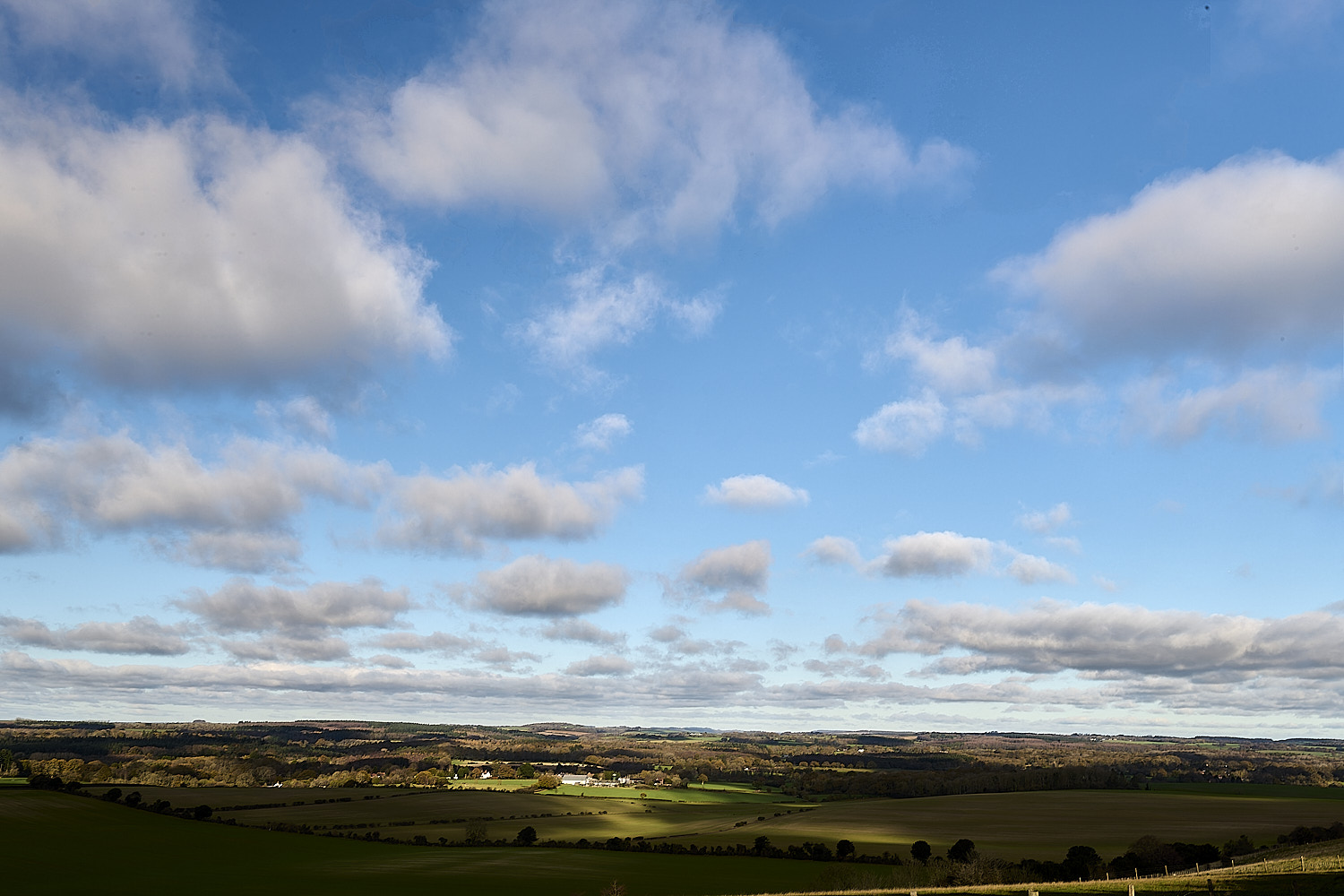
Cawston Woods
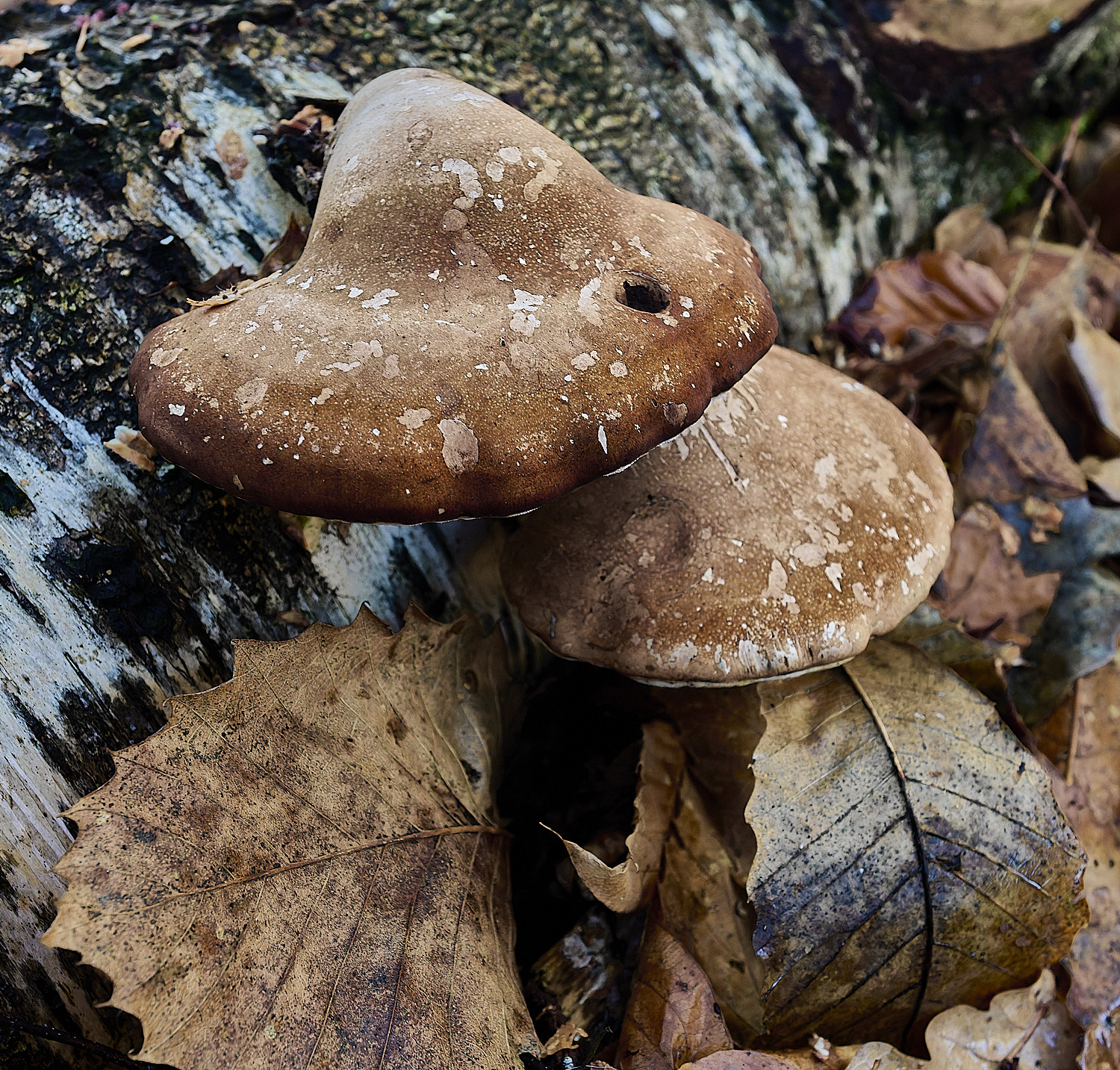
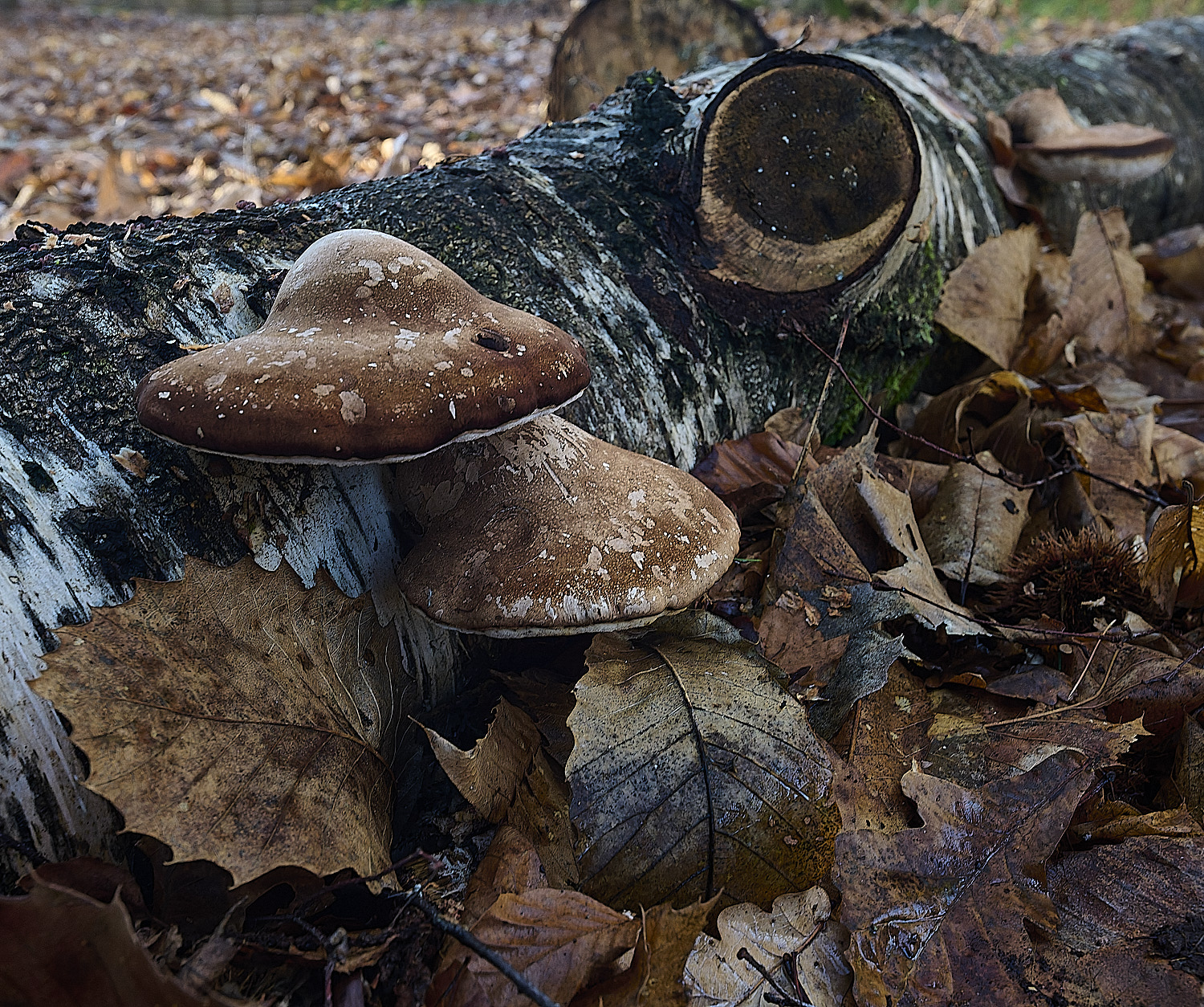
Birch Polypore (Fomitopsis betulina)

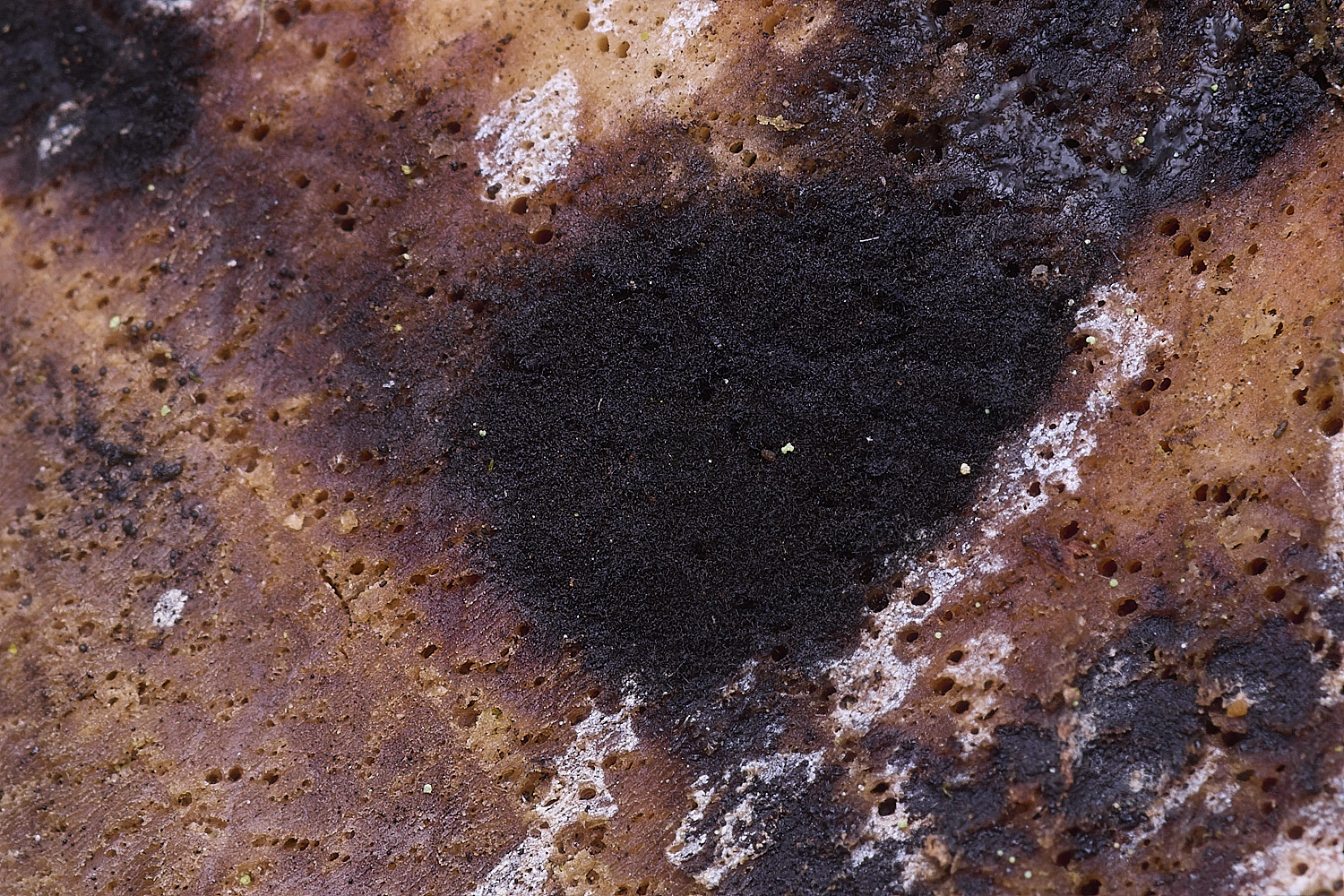
Melanomma pulvis-pyrius
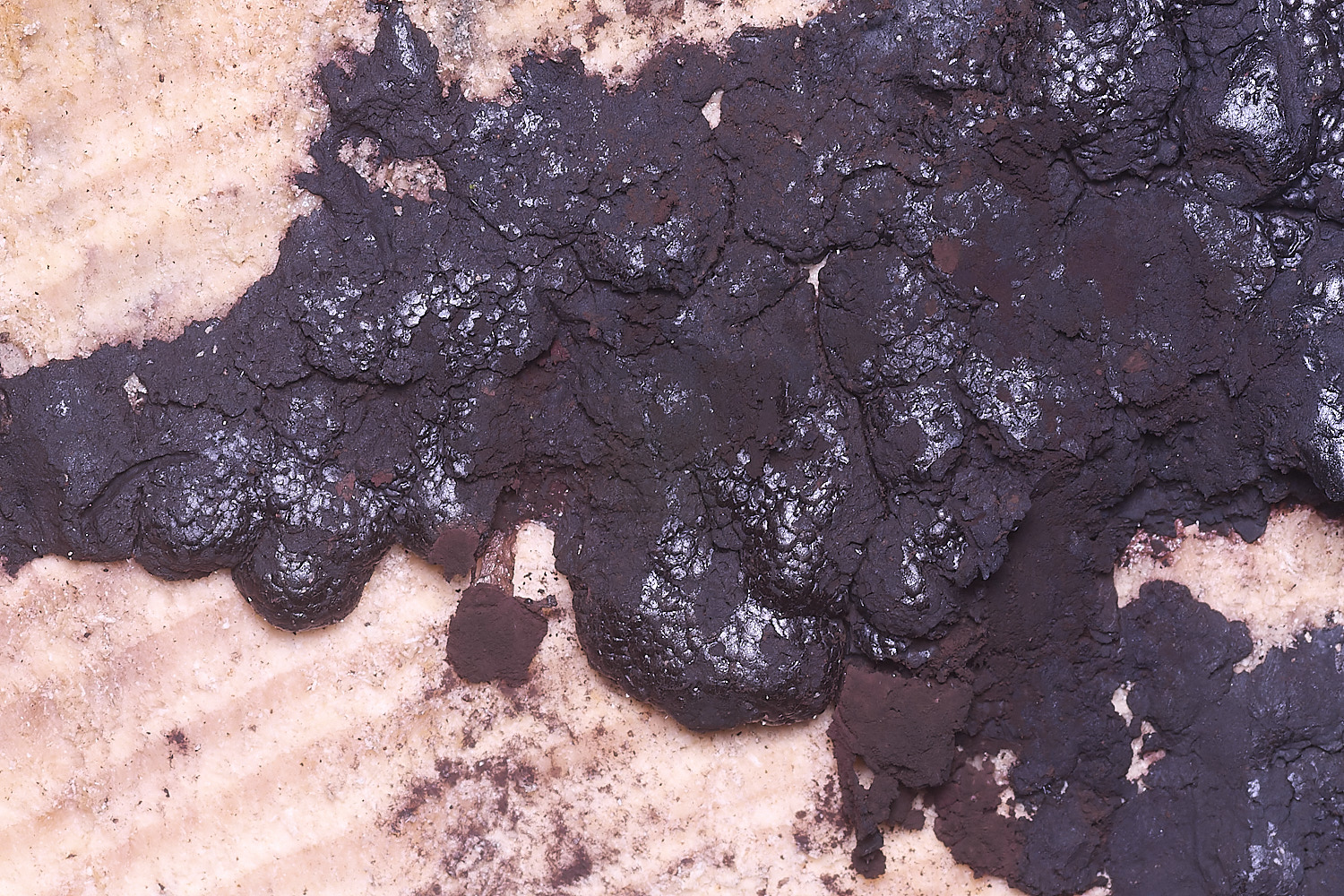
Something that originally looked like the image below.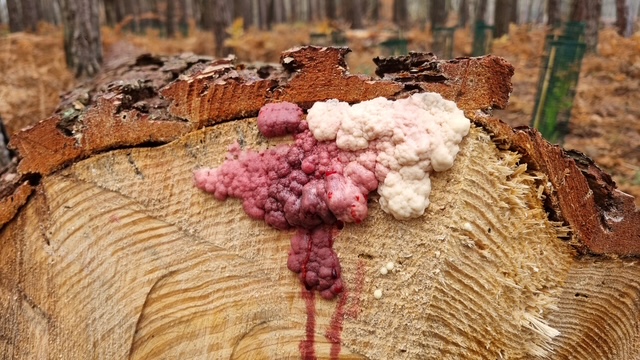
Thanks to Iestyn for the above image
From Tony L
The black myxomycete was Amaurochaete atra. Fortunately in his introduction Bruce Ing mentions that this species occurs on freshly cut conifer logs - and the features check out.
Lil Evans recorded it from two sites in Norfolk (Foxley and Bacton Woods) the last in 1997 - so a nice record.
Coppiced Sweet Chestnut (Castanea sativa)
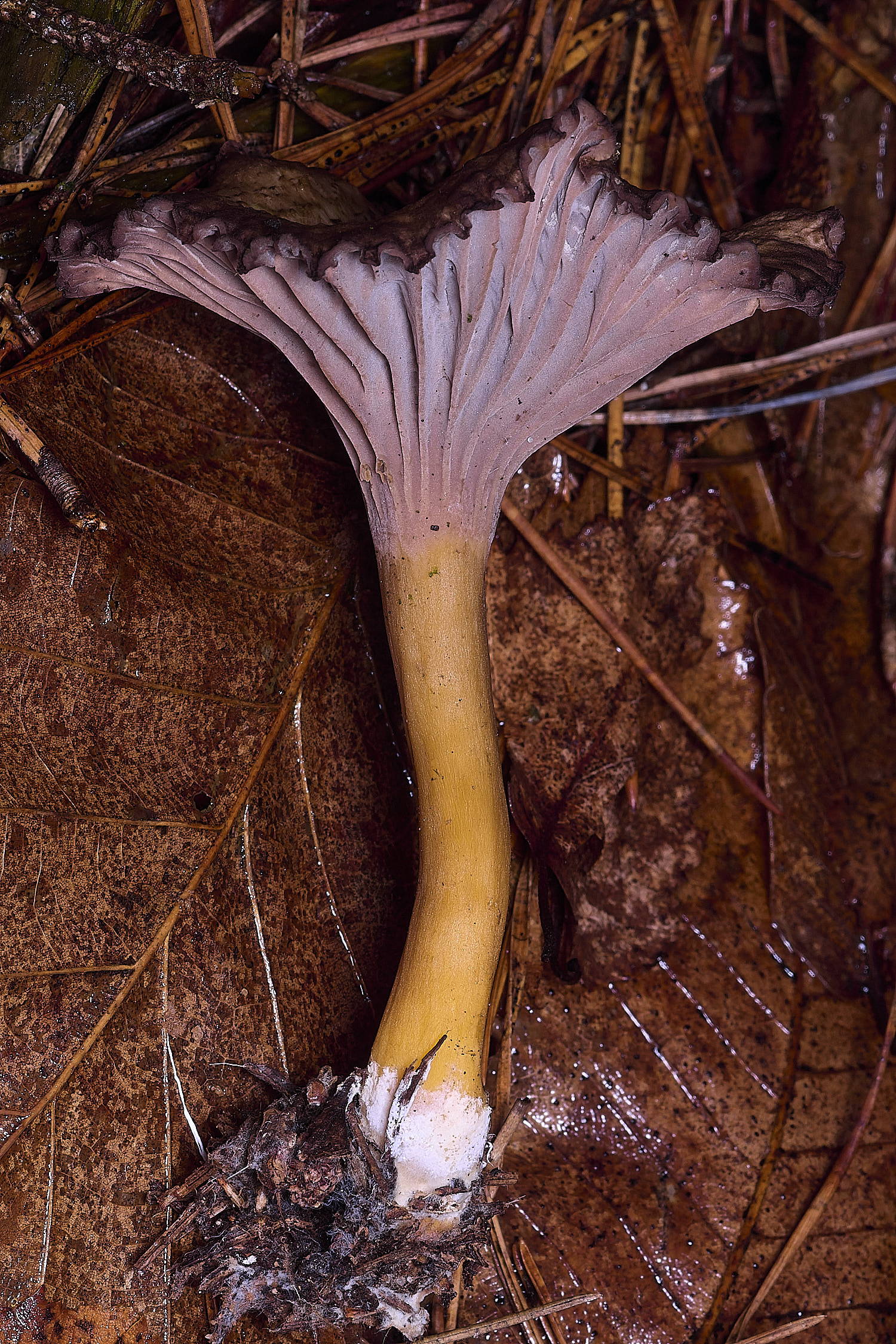
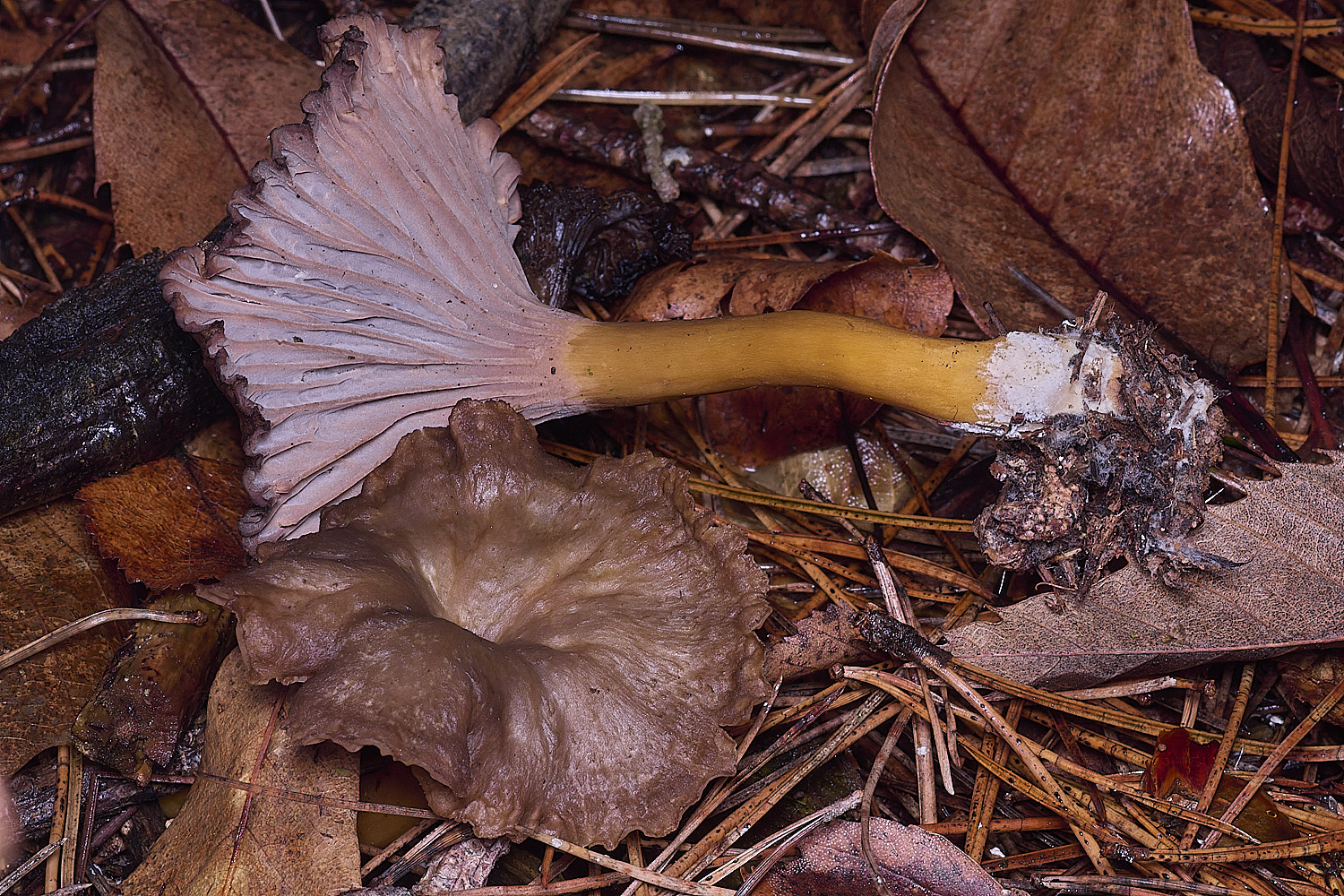
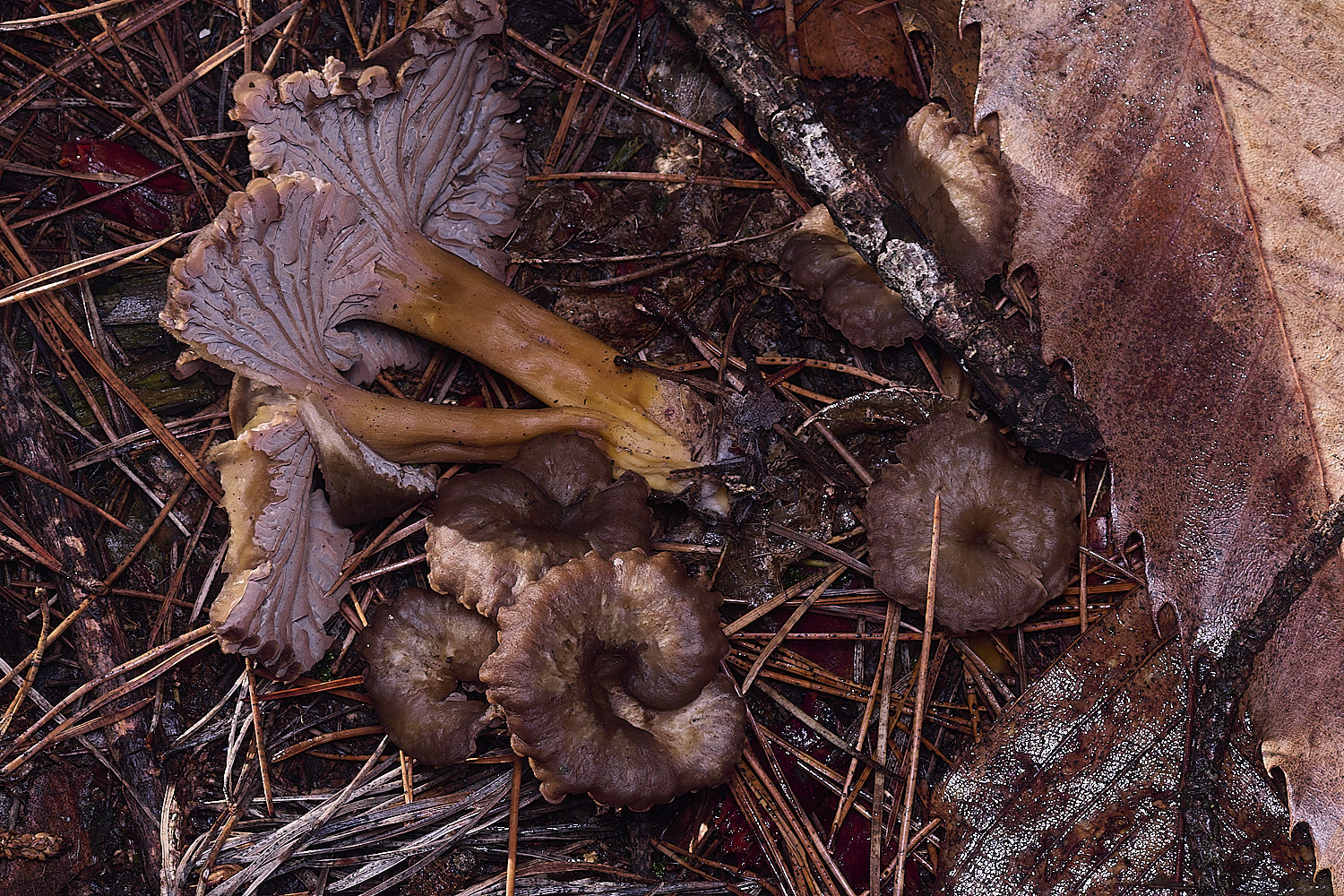
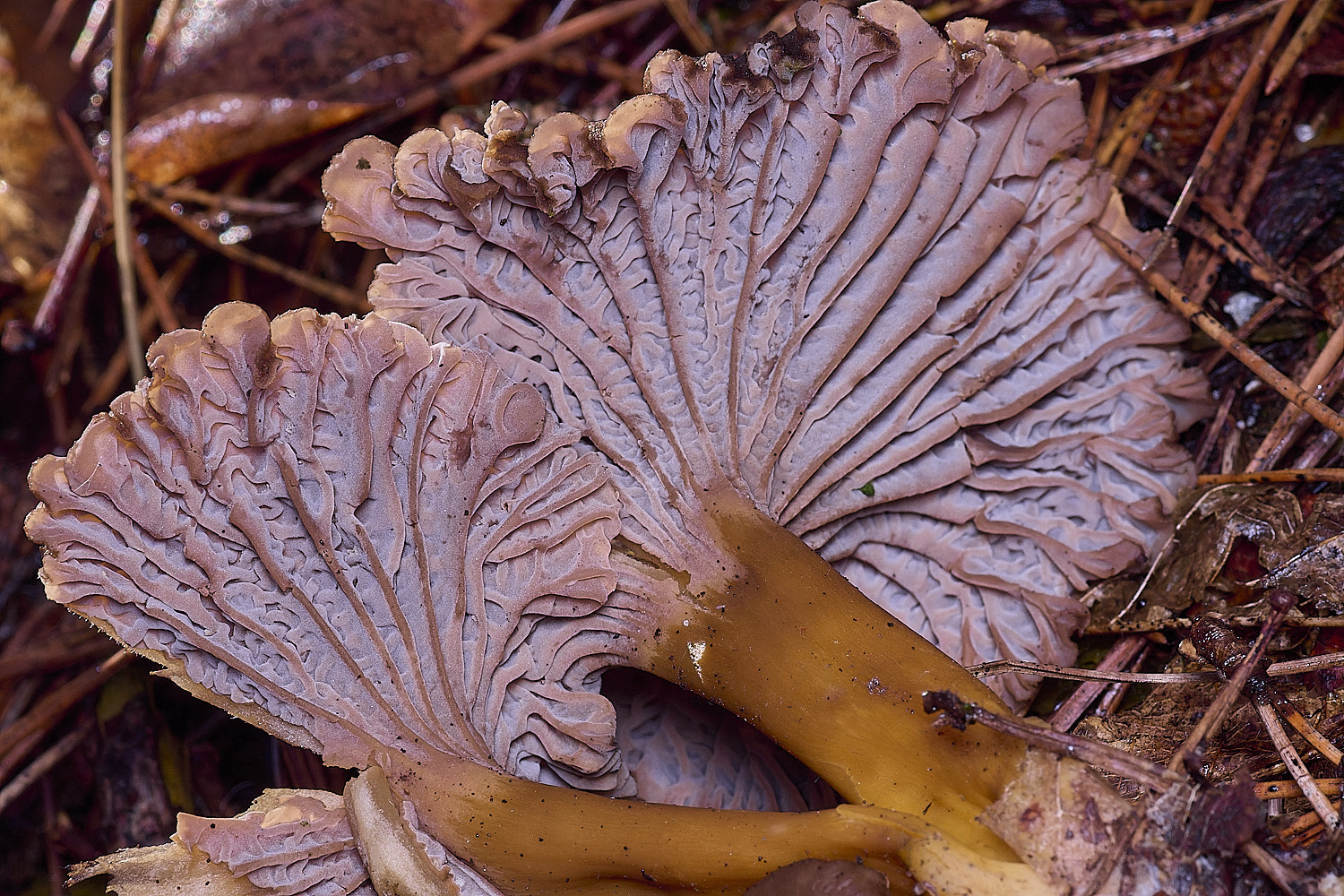
Winter Chanterelle (Craterellus tubaeformis)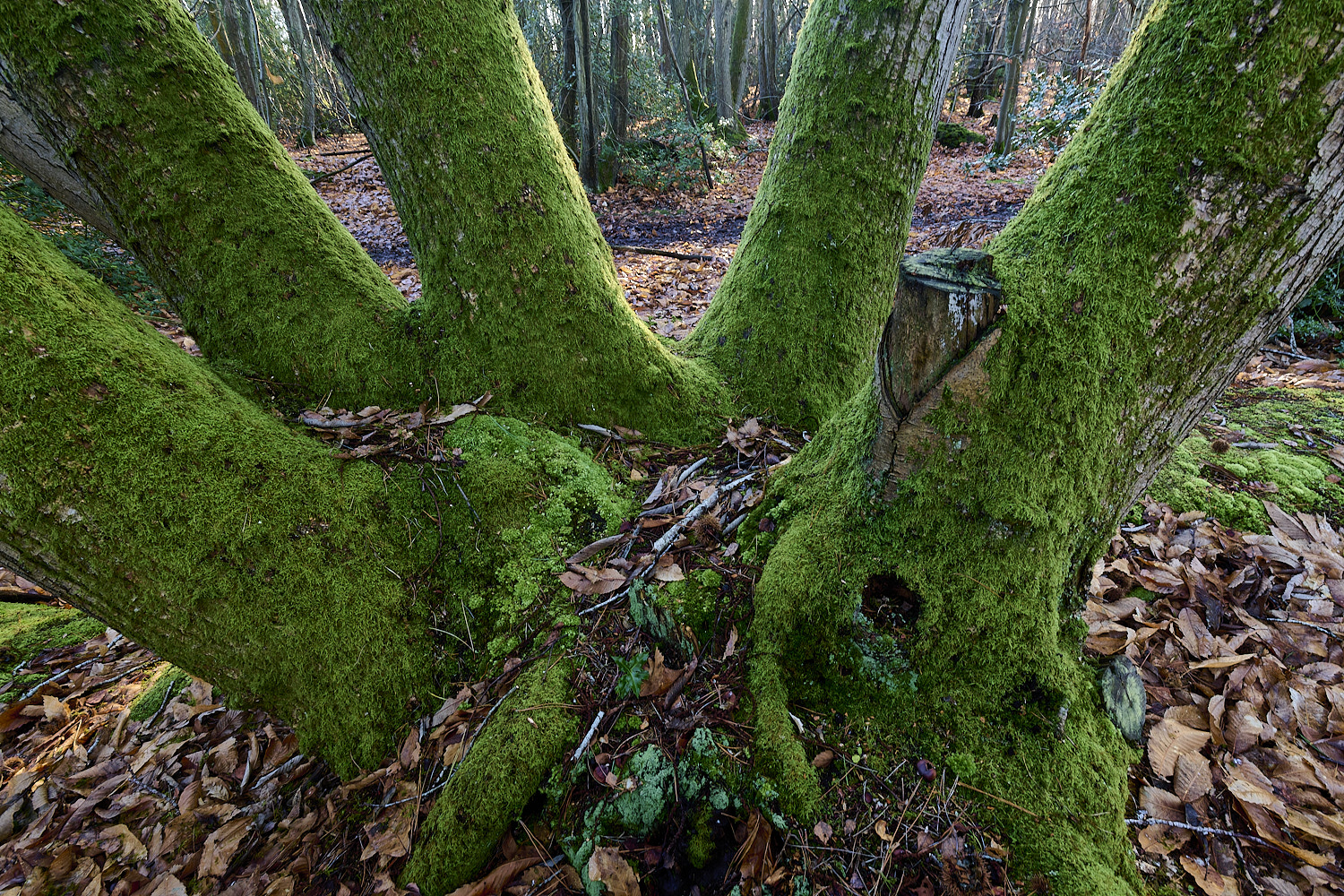

Coppiced Sweet Chestnut (Castanea sativa)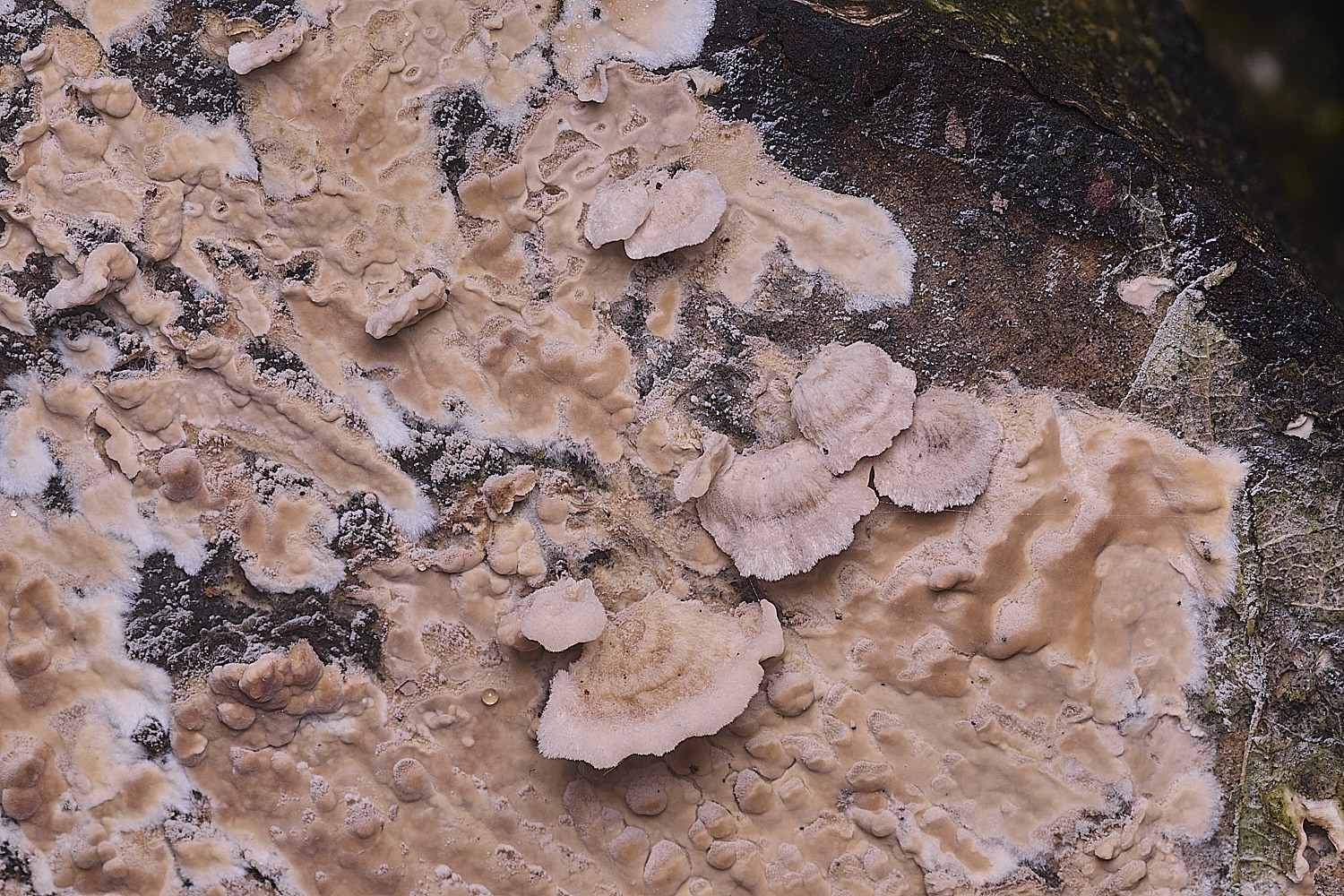
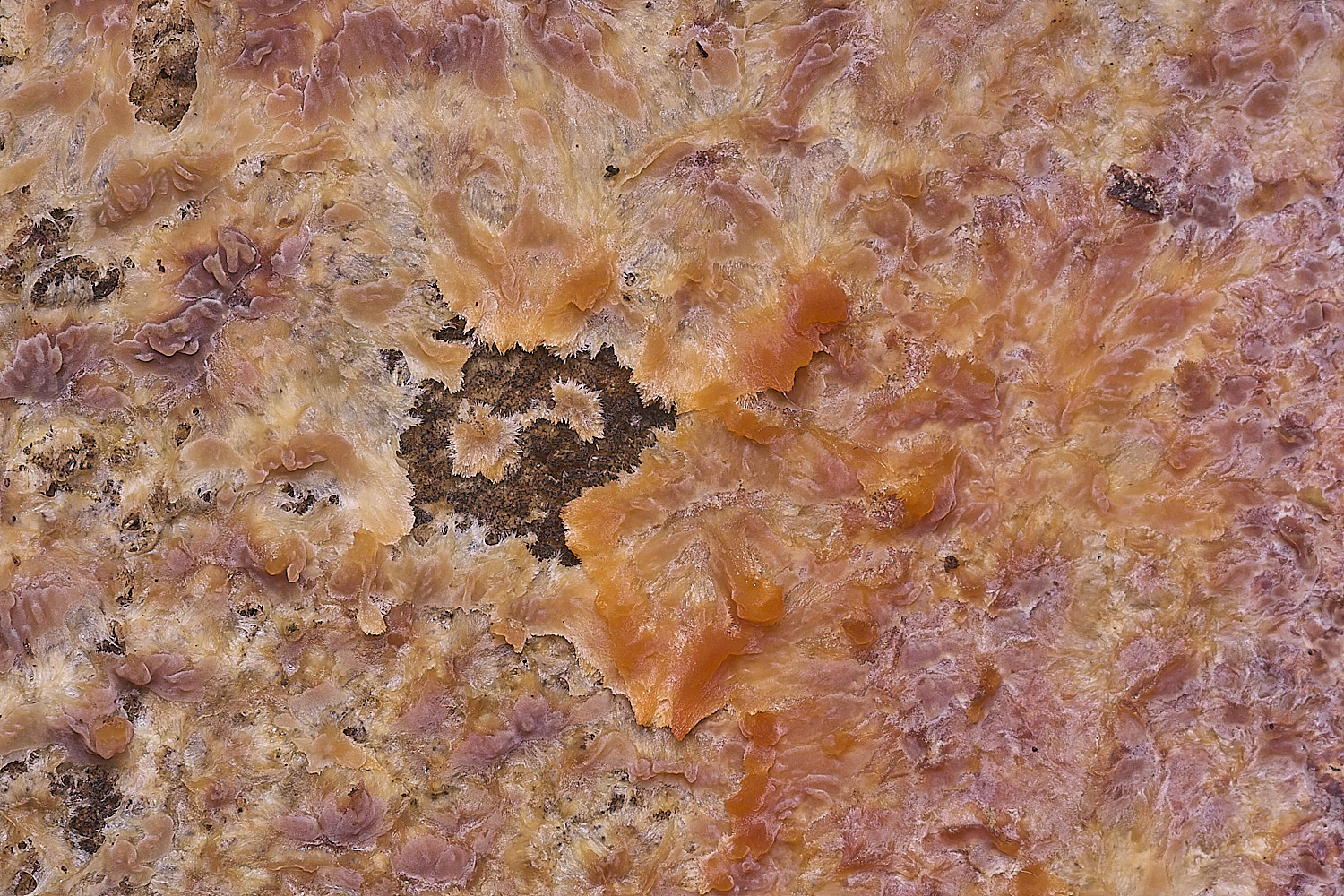
Wrinkled Crust (Phebia radiata)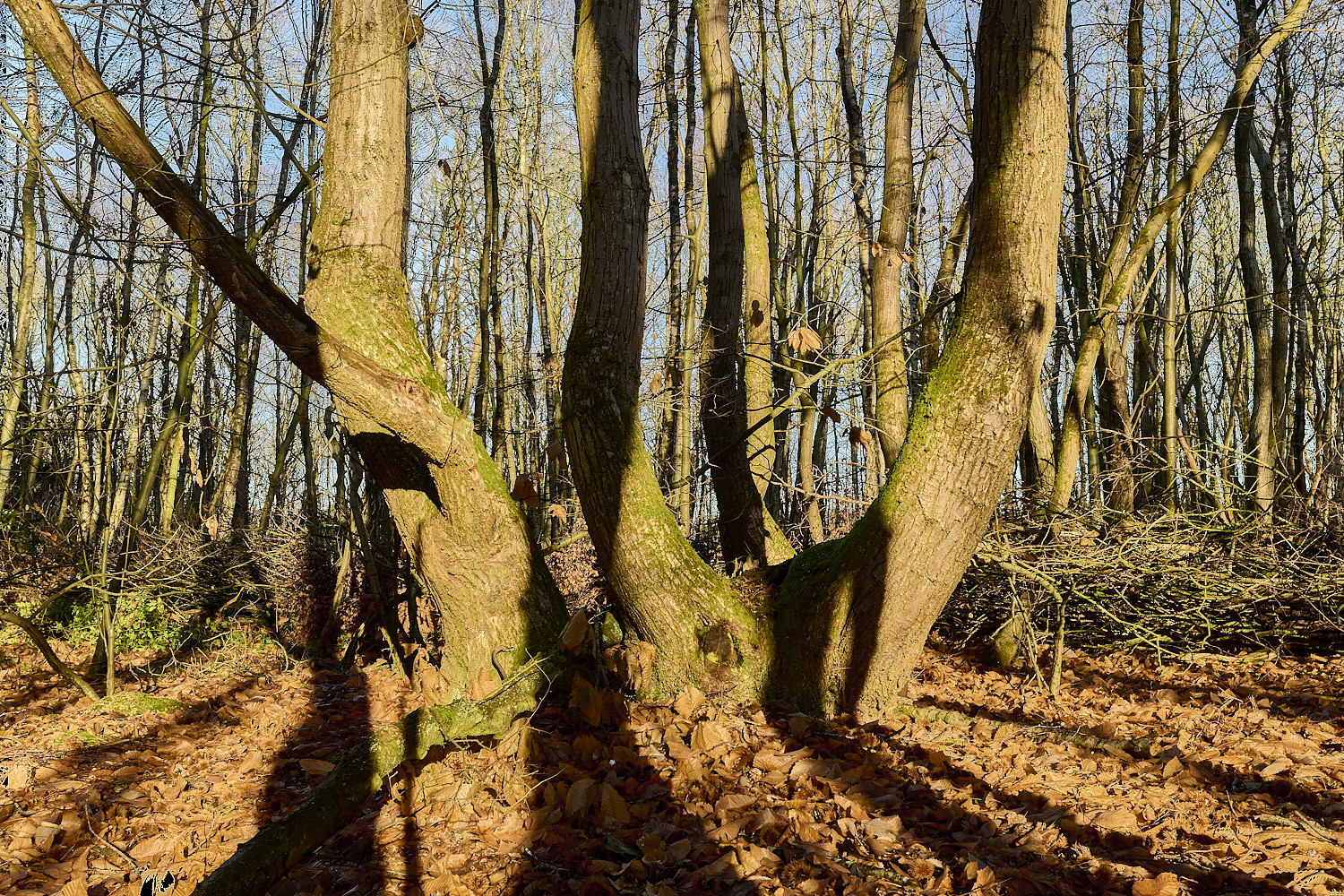
Coppiced Sweet Chestnut (Castanea sativa)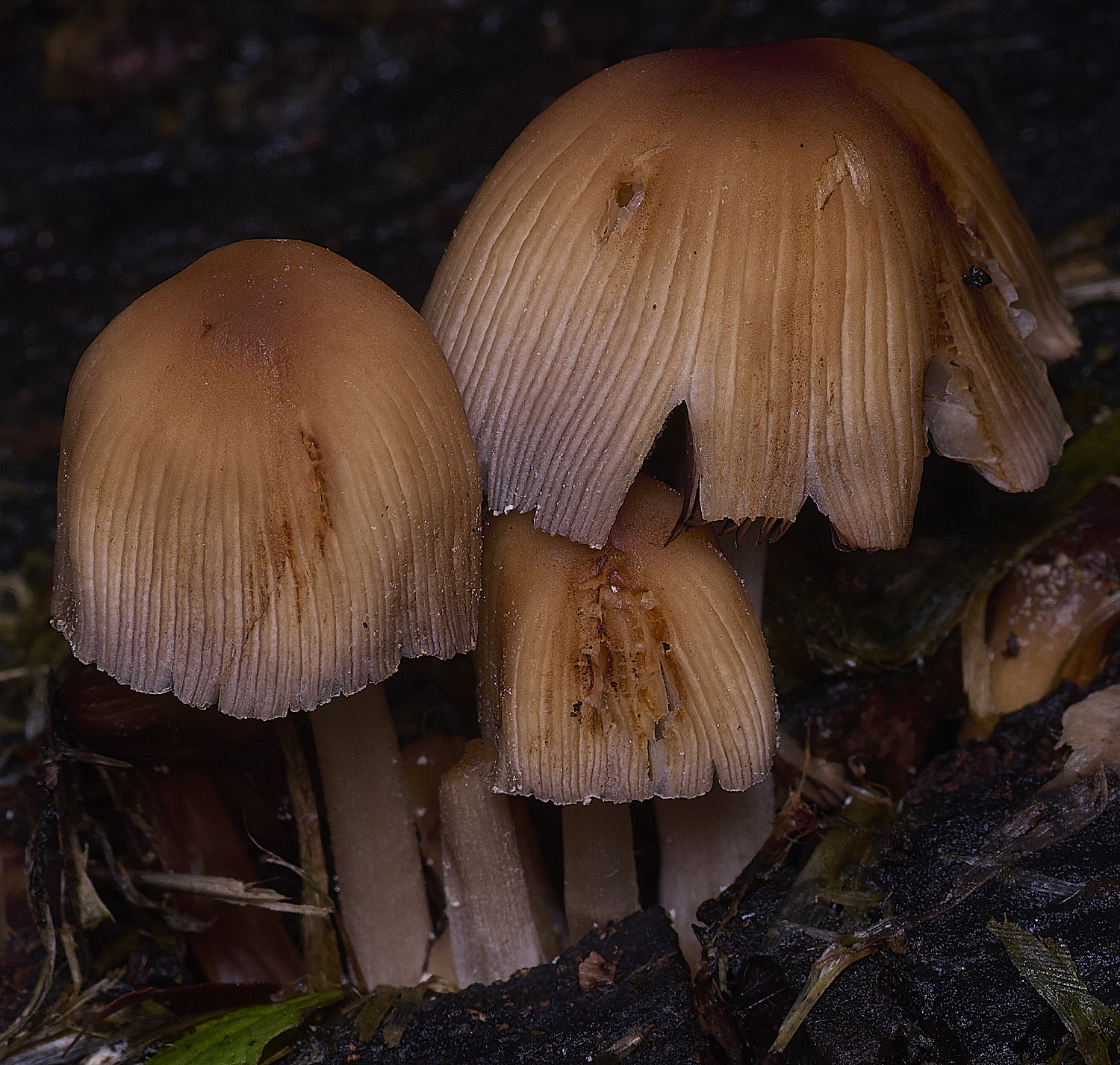
Glistening Inkcap (Coptinellua micaceus)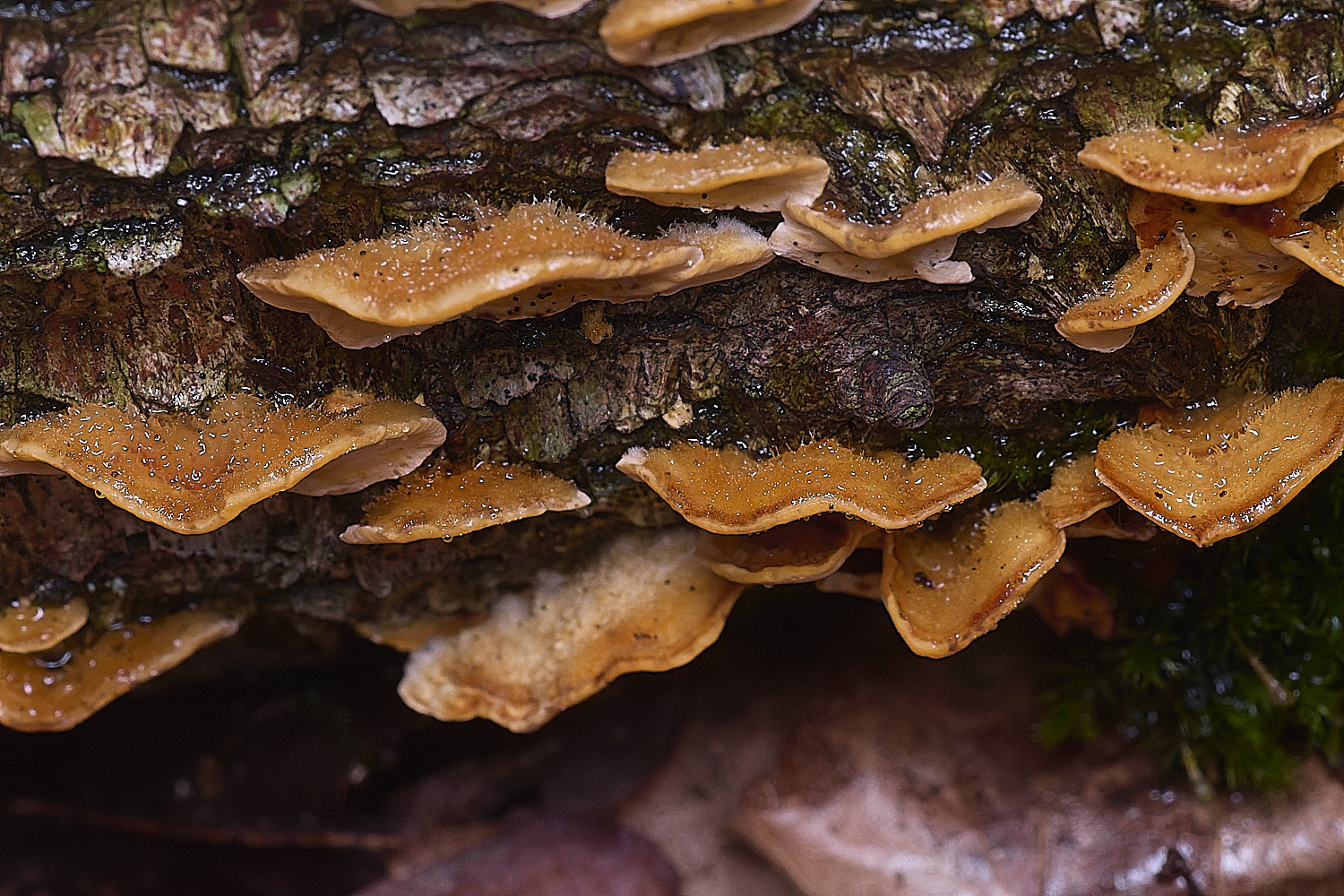
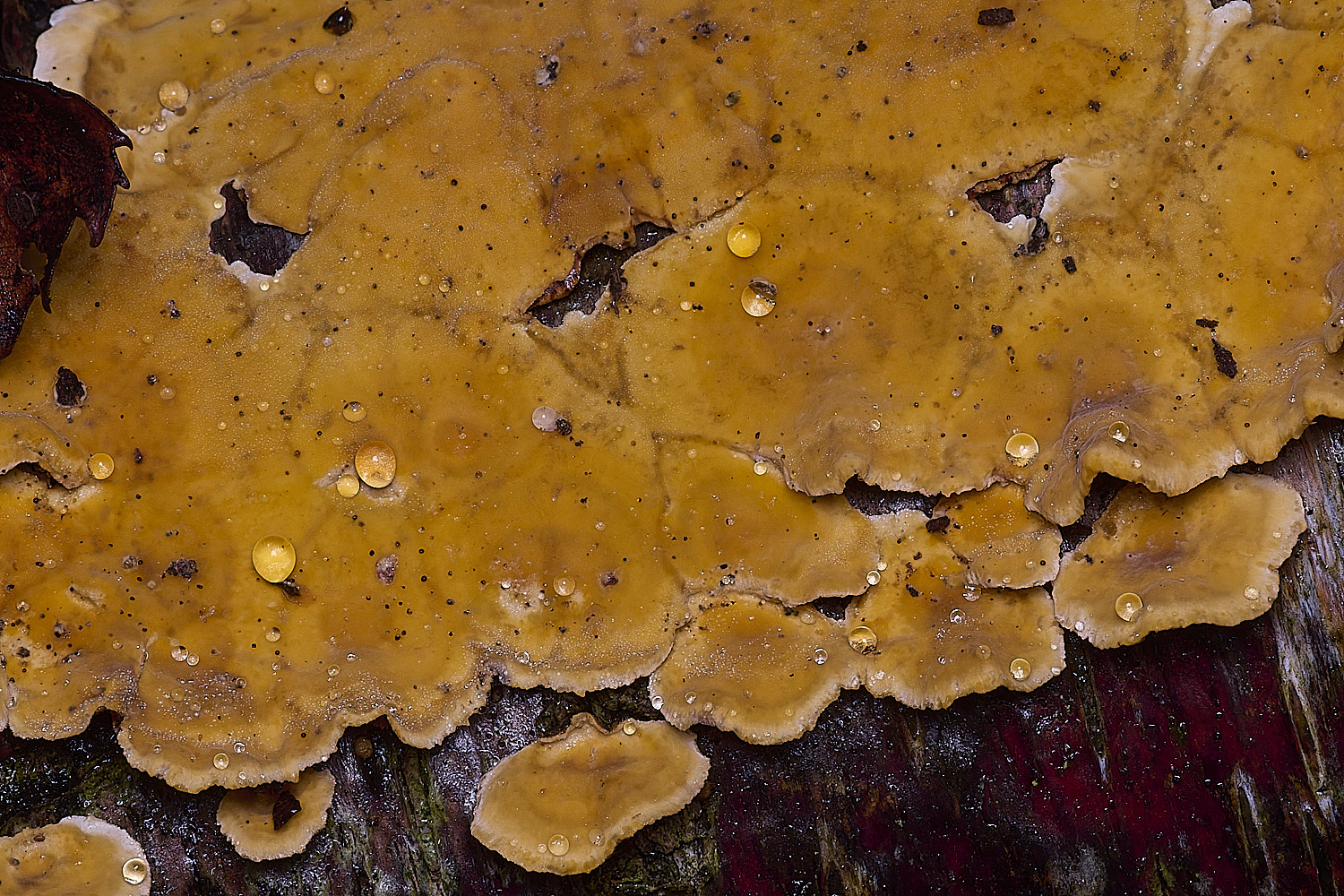
Hairy Curtain Crust (Stereum hirsutum)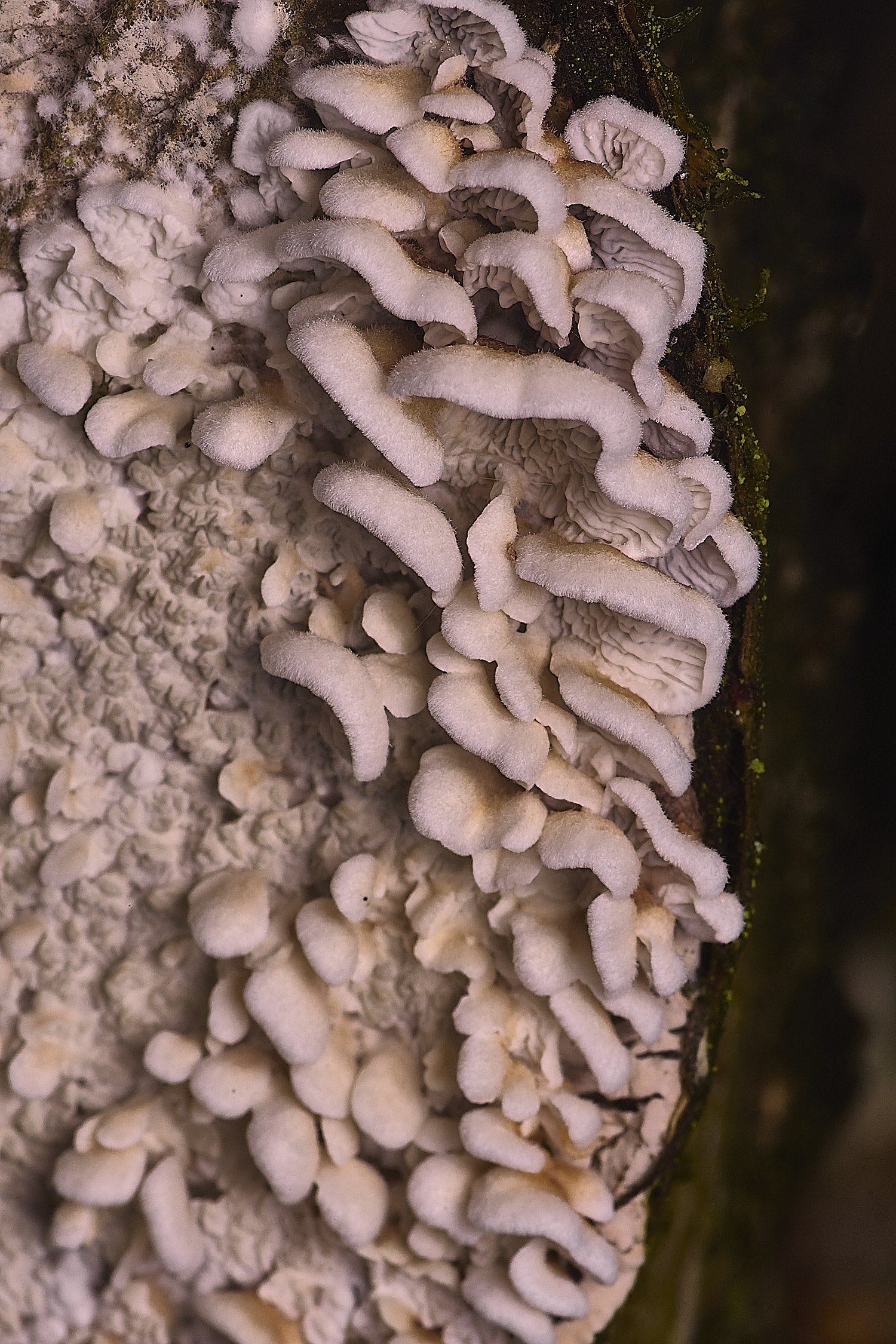
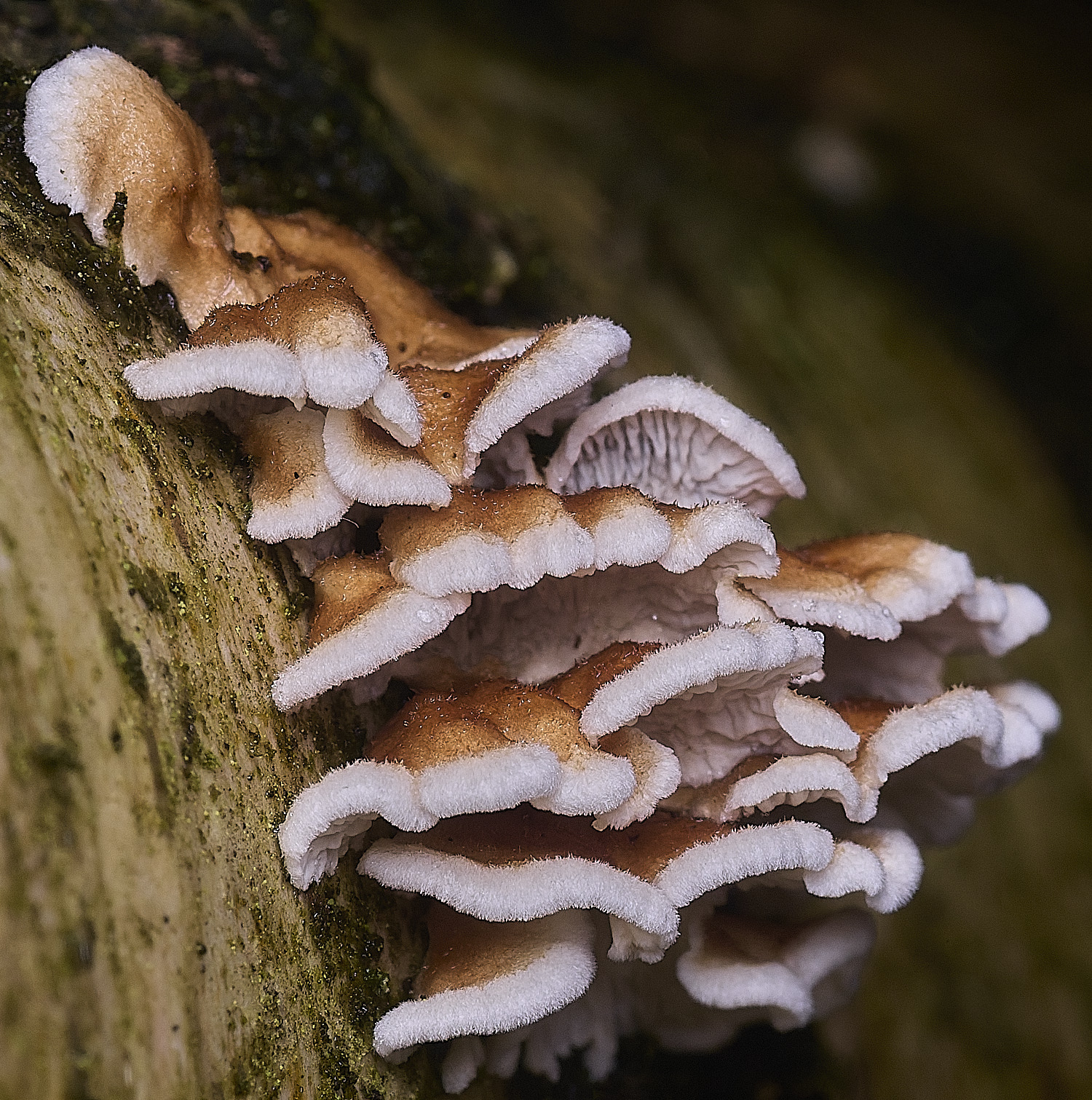
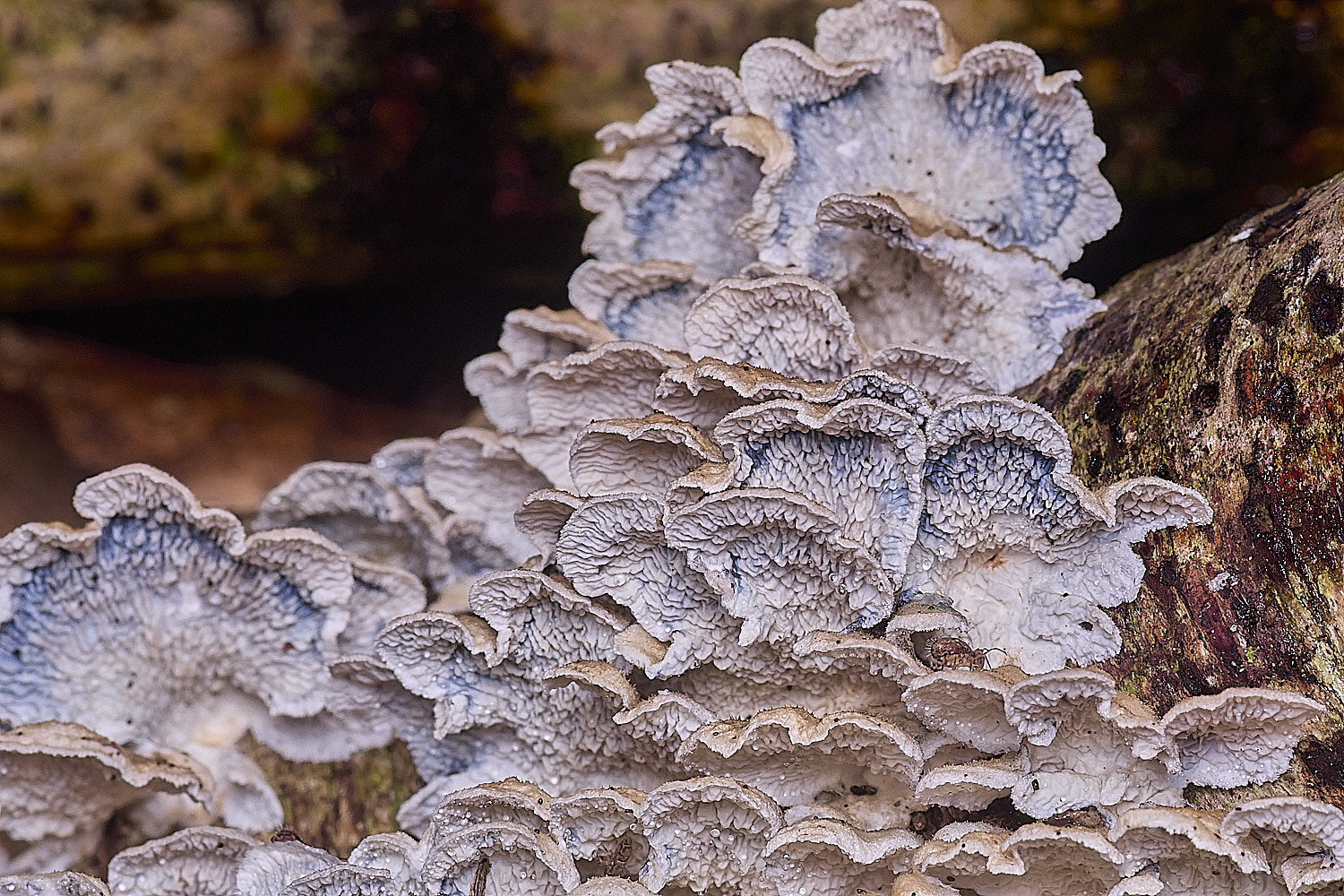
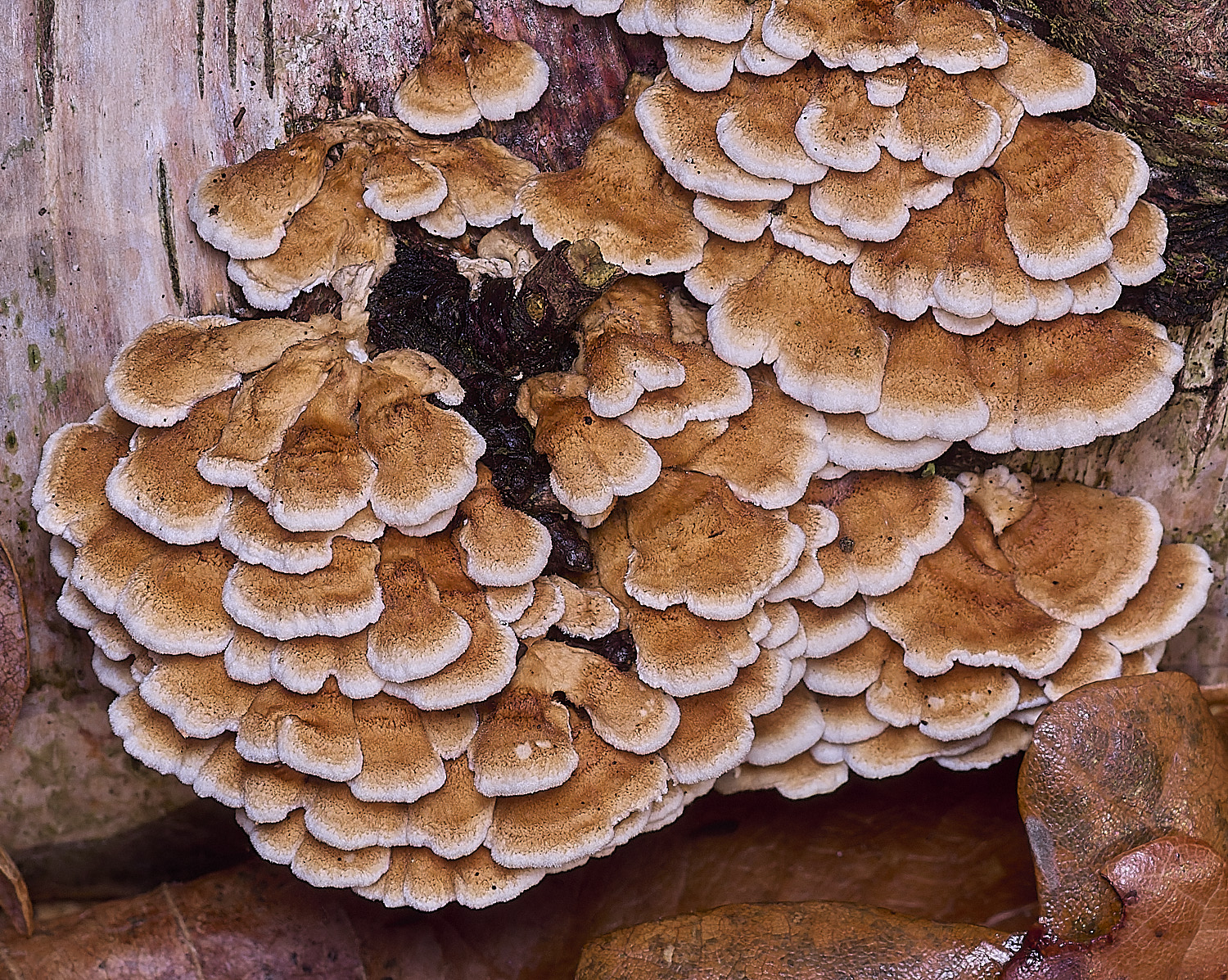
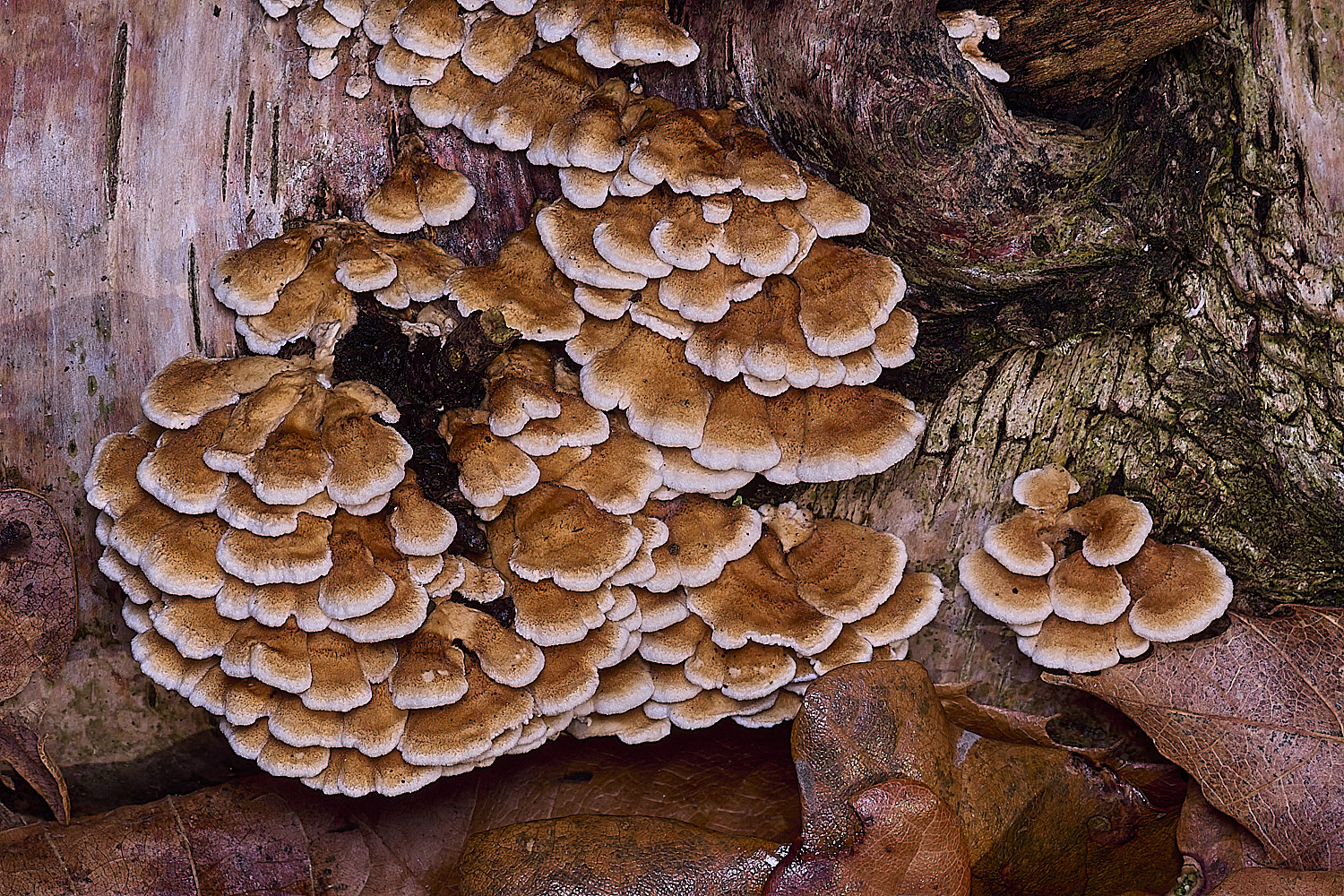
Crimped Gill (Plicatura crispa)
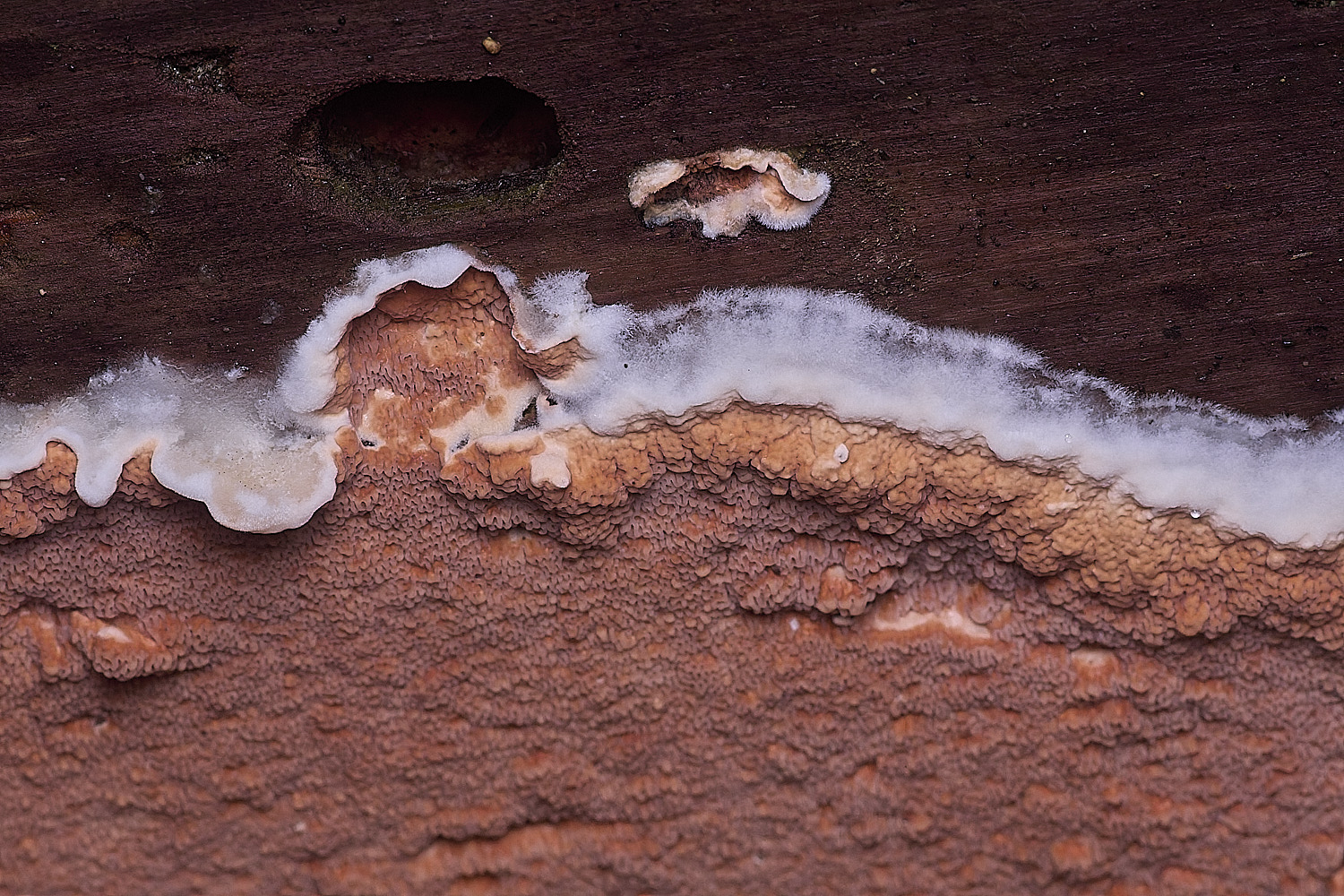
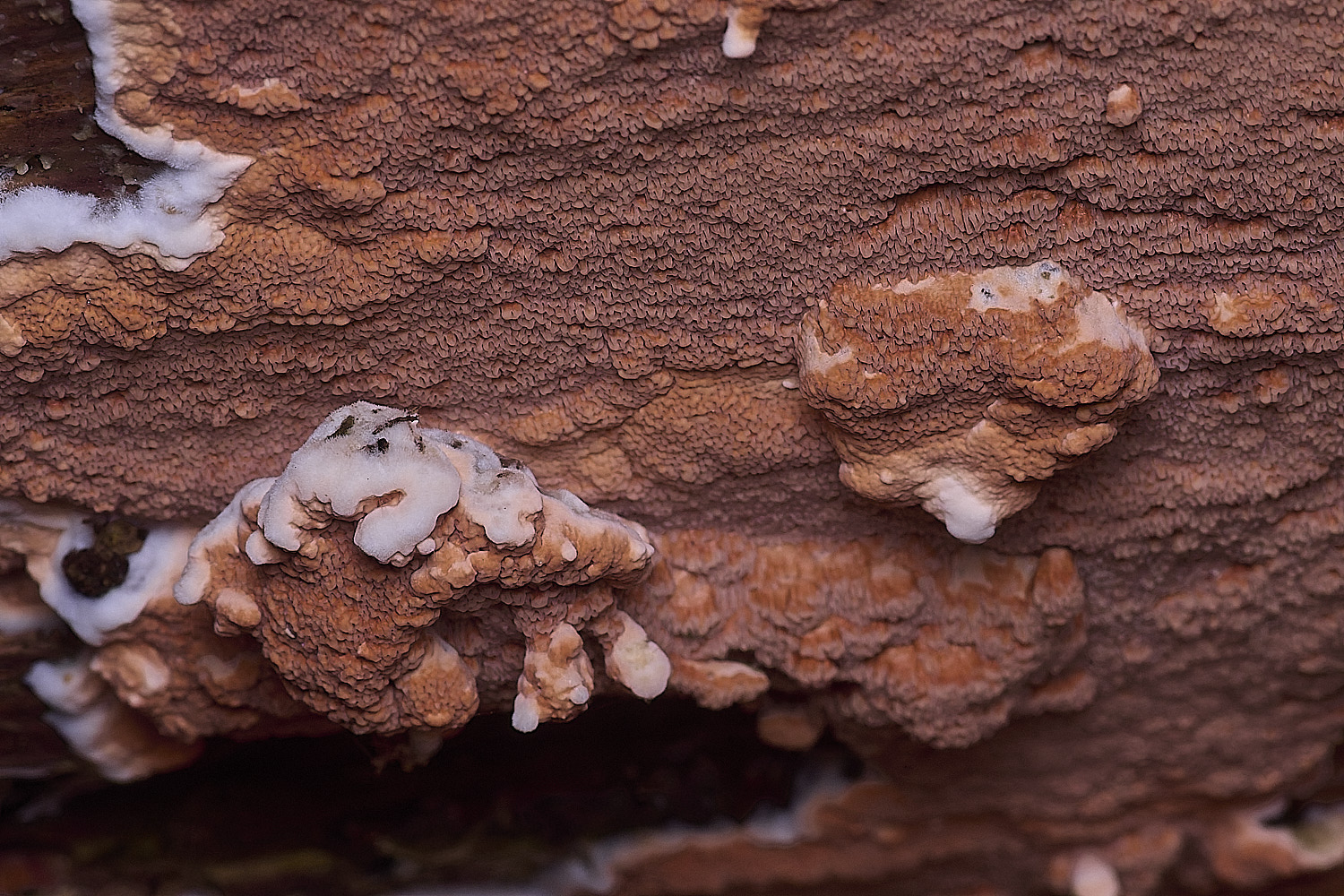

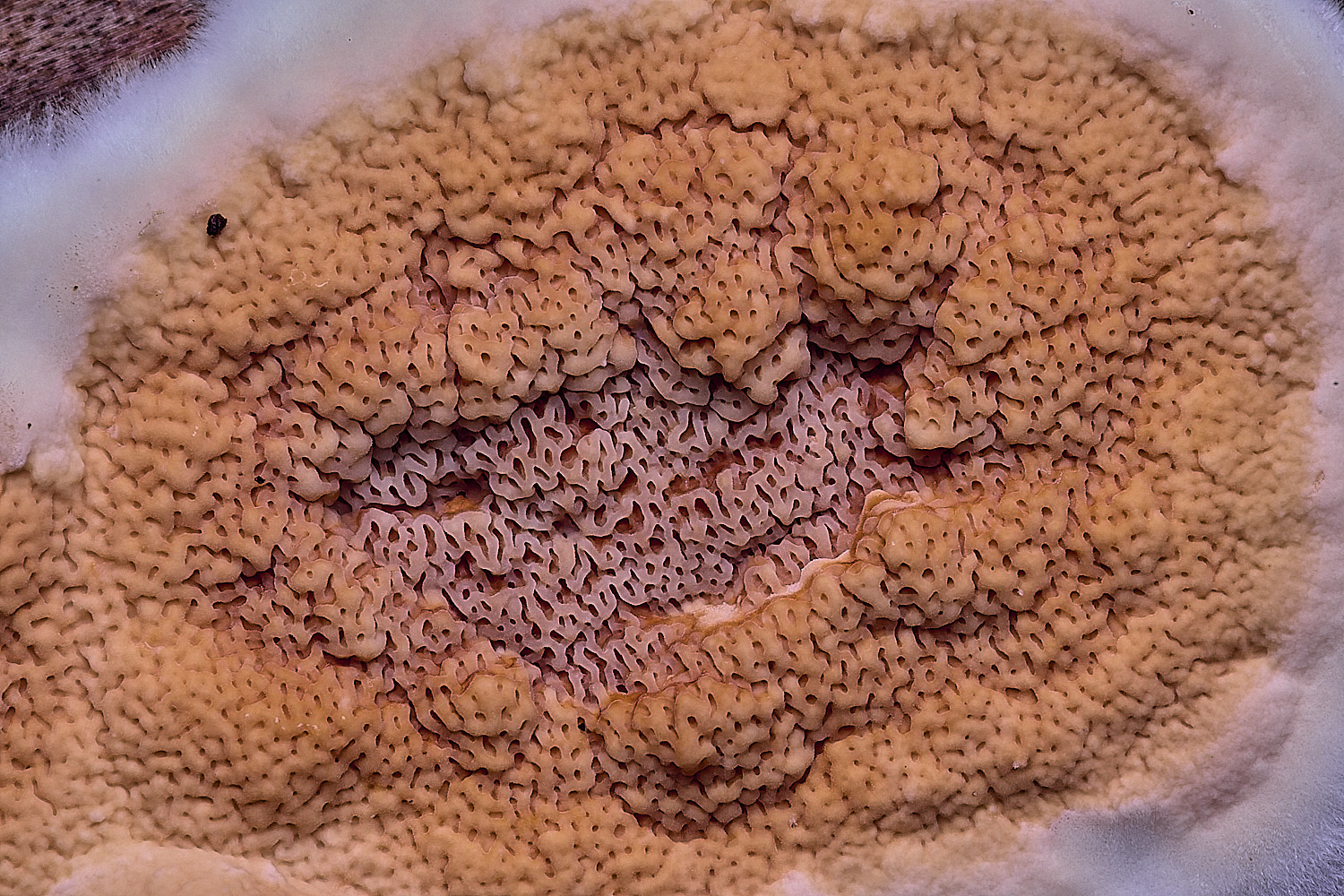

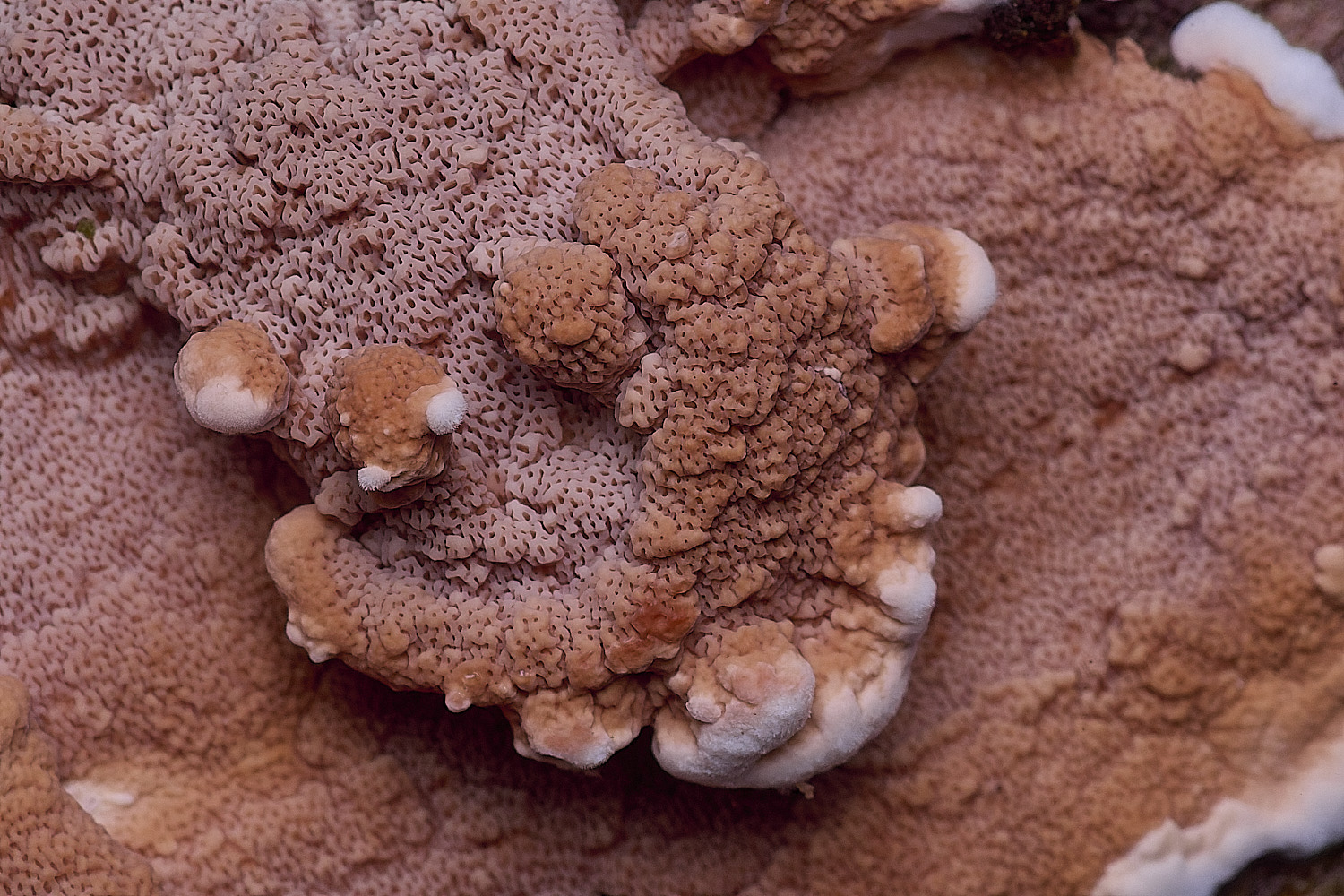
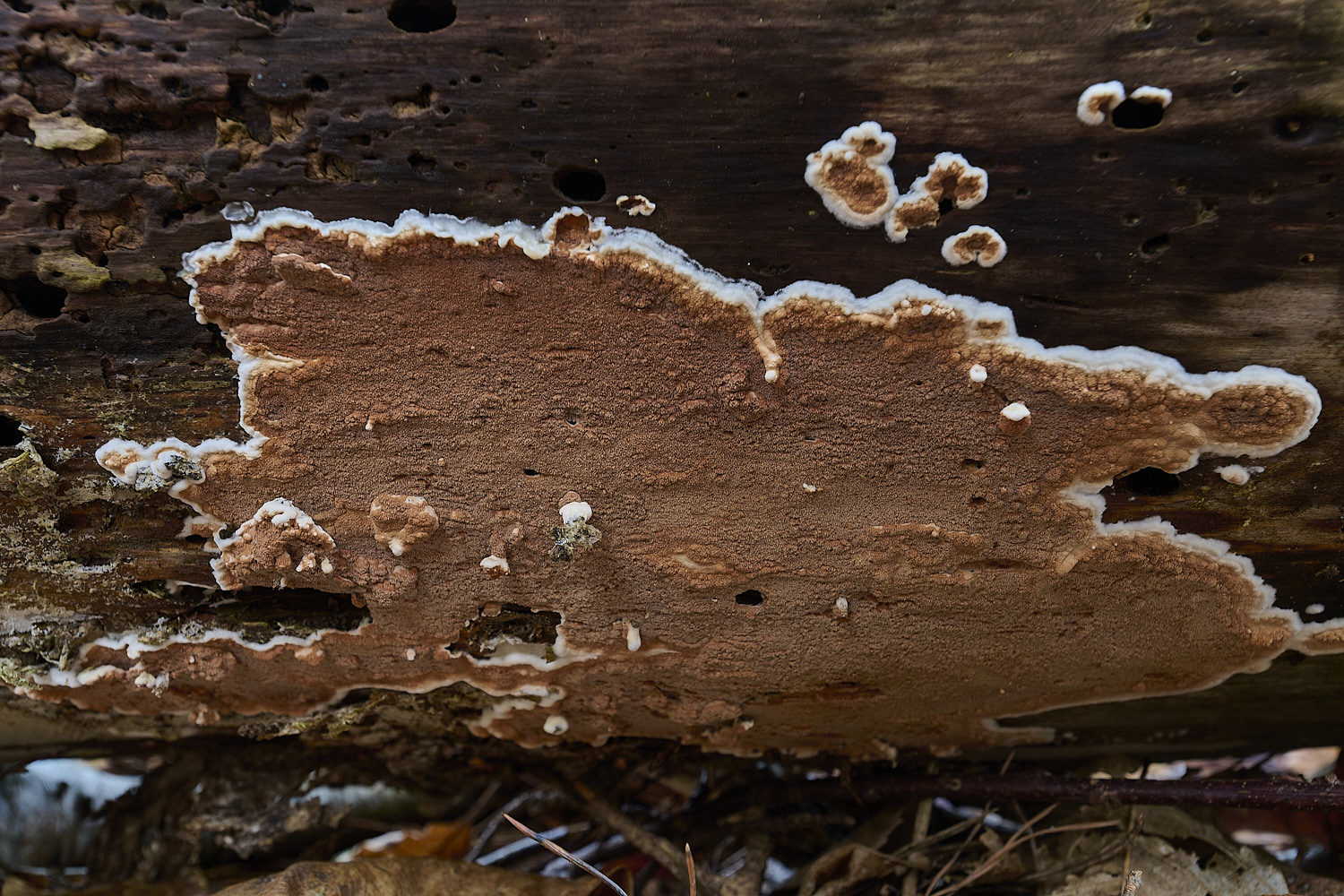
Resupinate on Pine
From Anne
The lovely orange meruloid fungus on the underside of the Scots pine was Gloeoporus taxicola.
This has 4 records on the Mycota, but I hadn’t seen it before.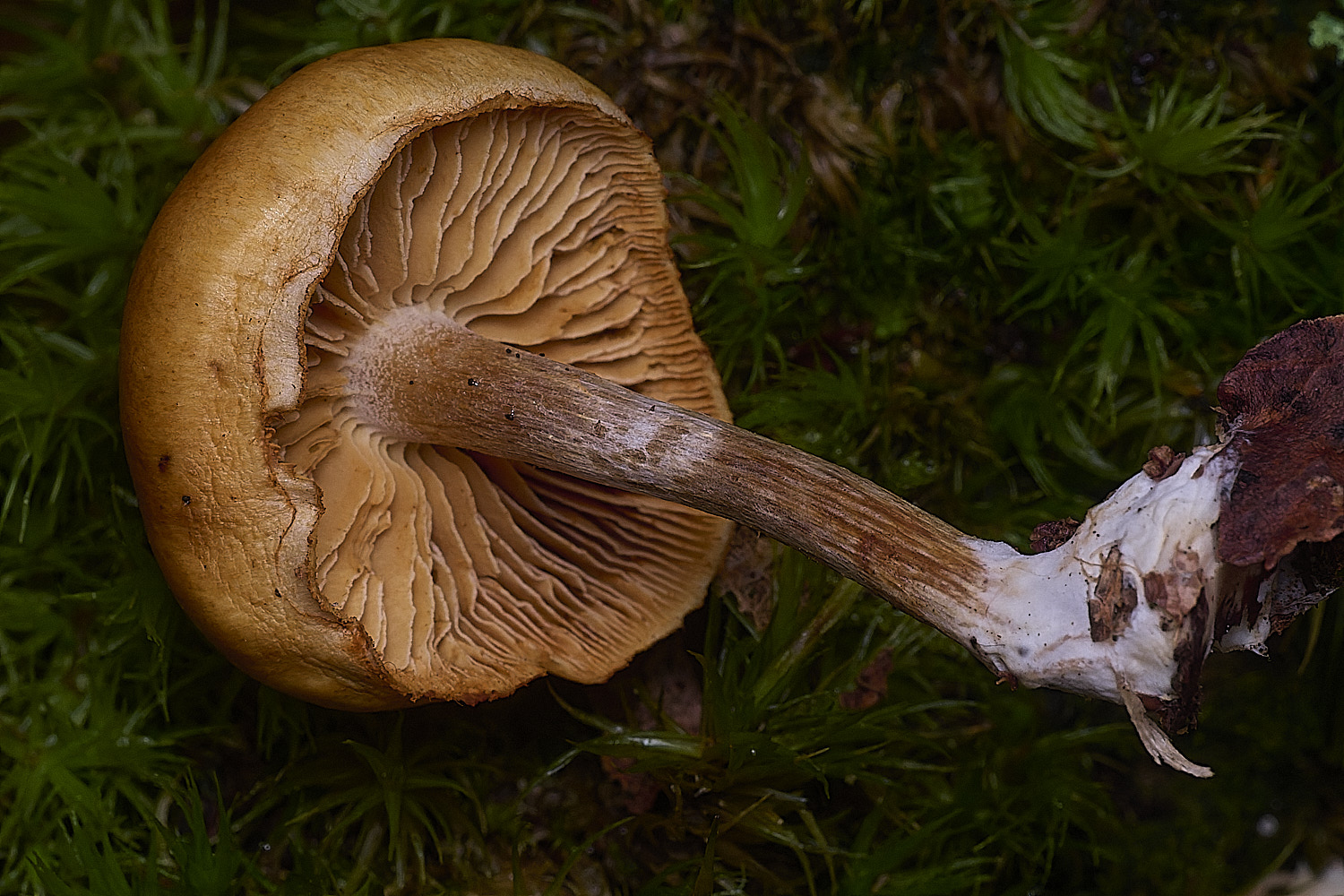
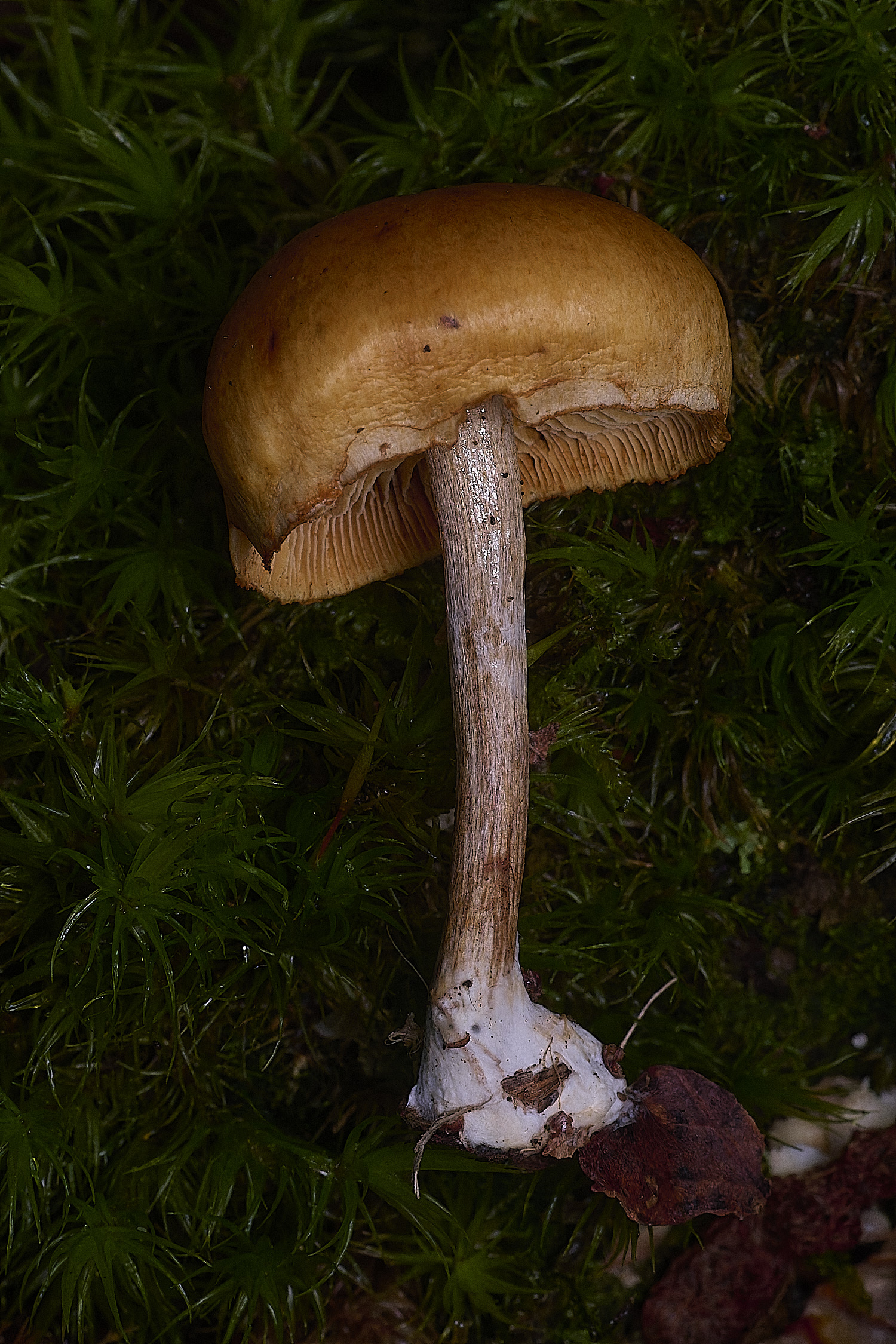
Rustgill Sp (Gymnopilus sp)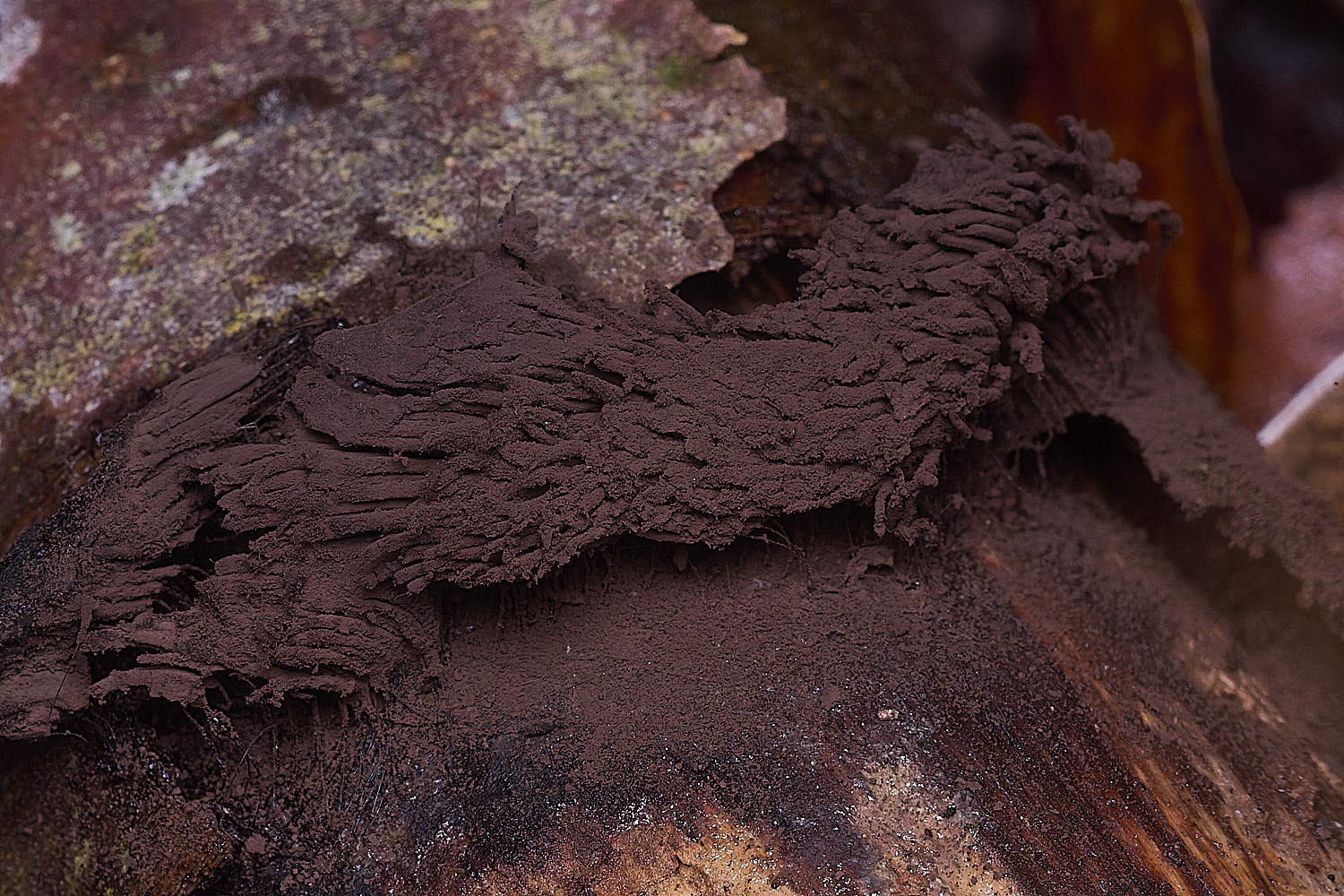
Slime Mold Sp (Stemonitis fusca?)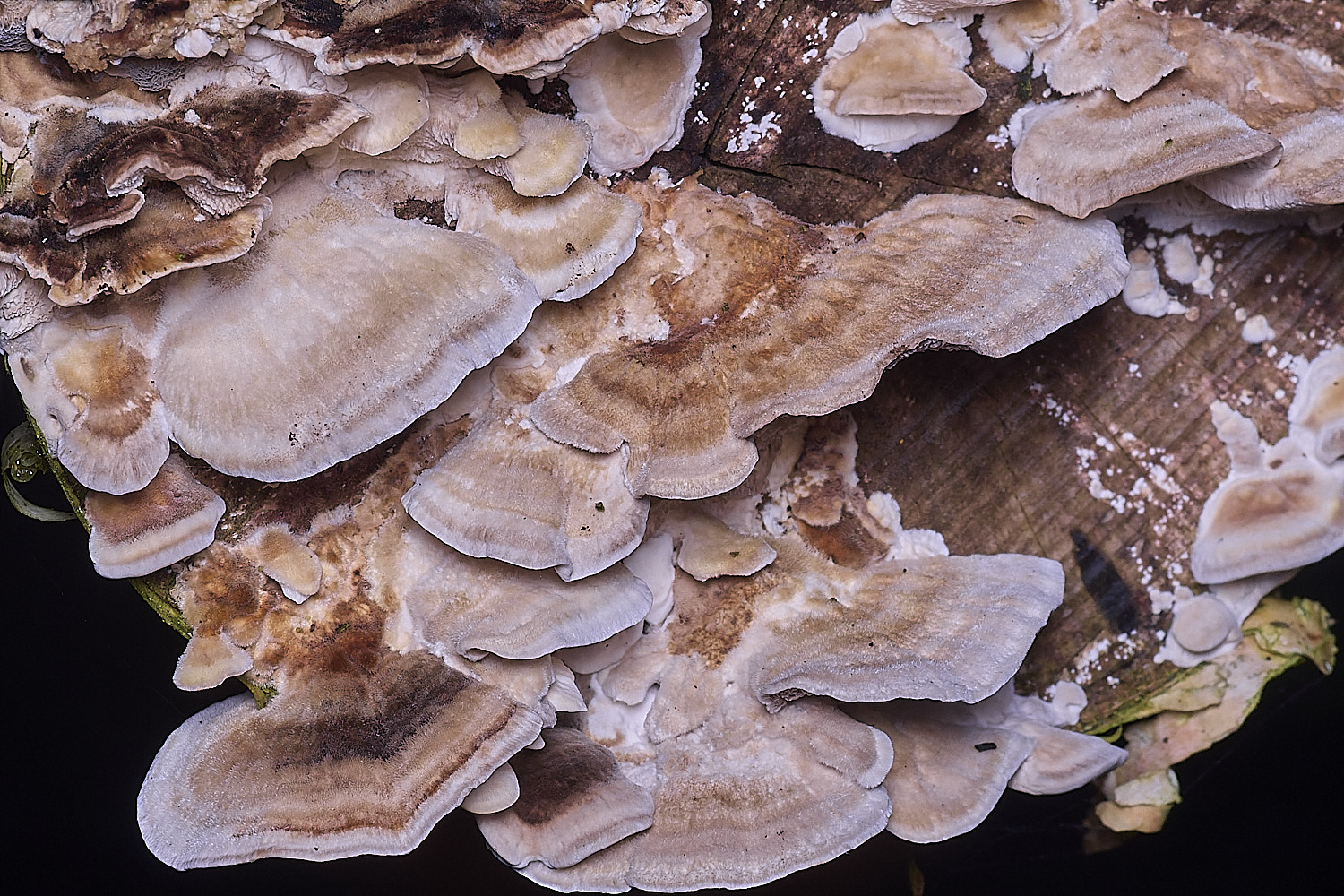

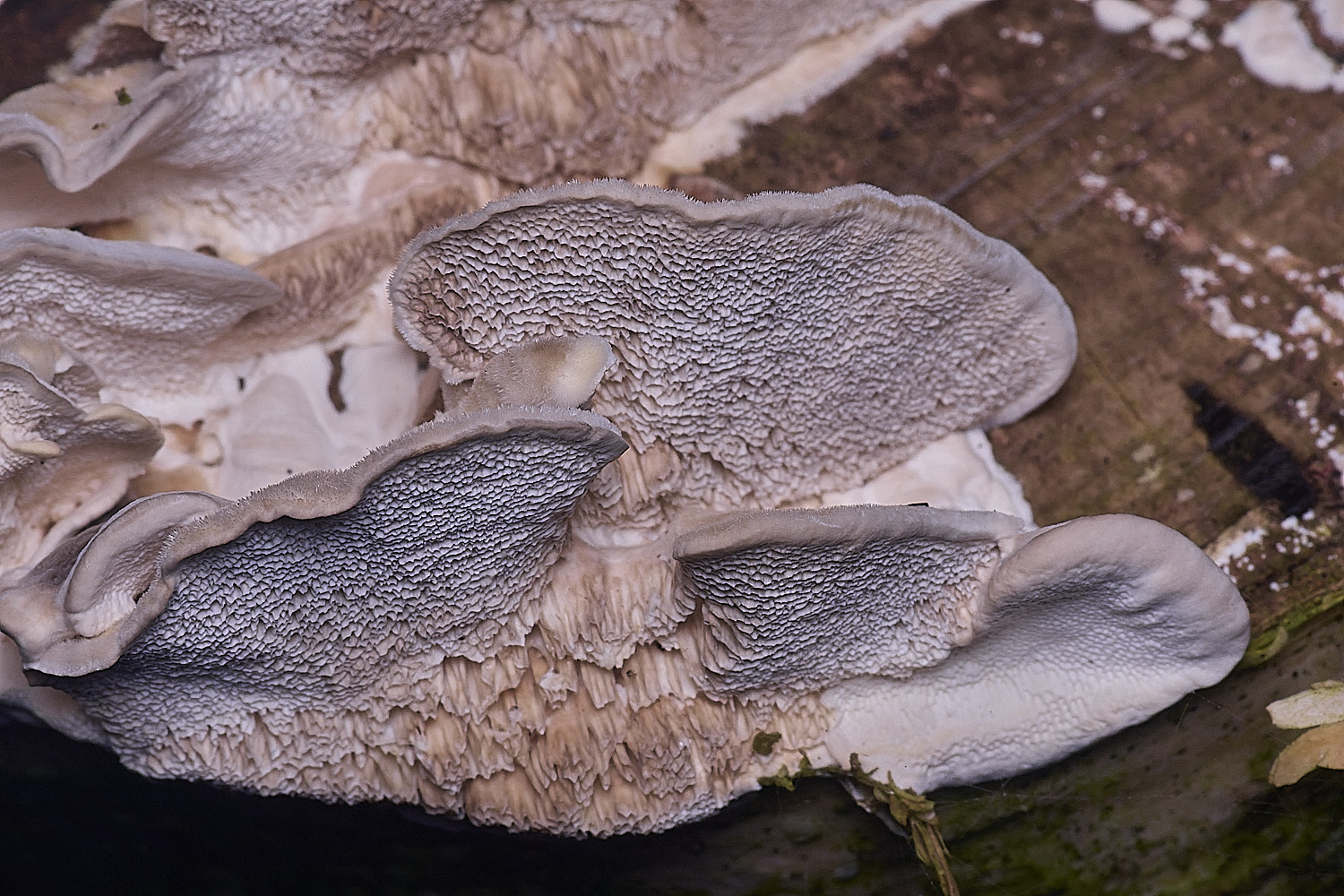
Trametes pubescens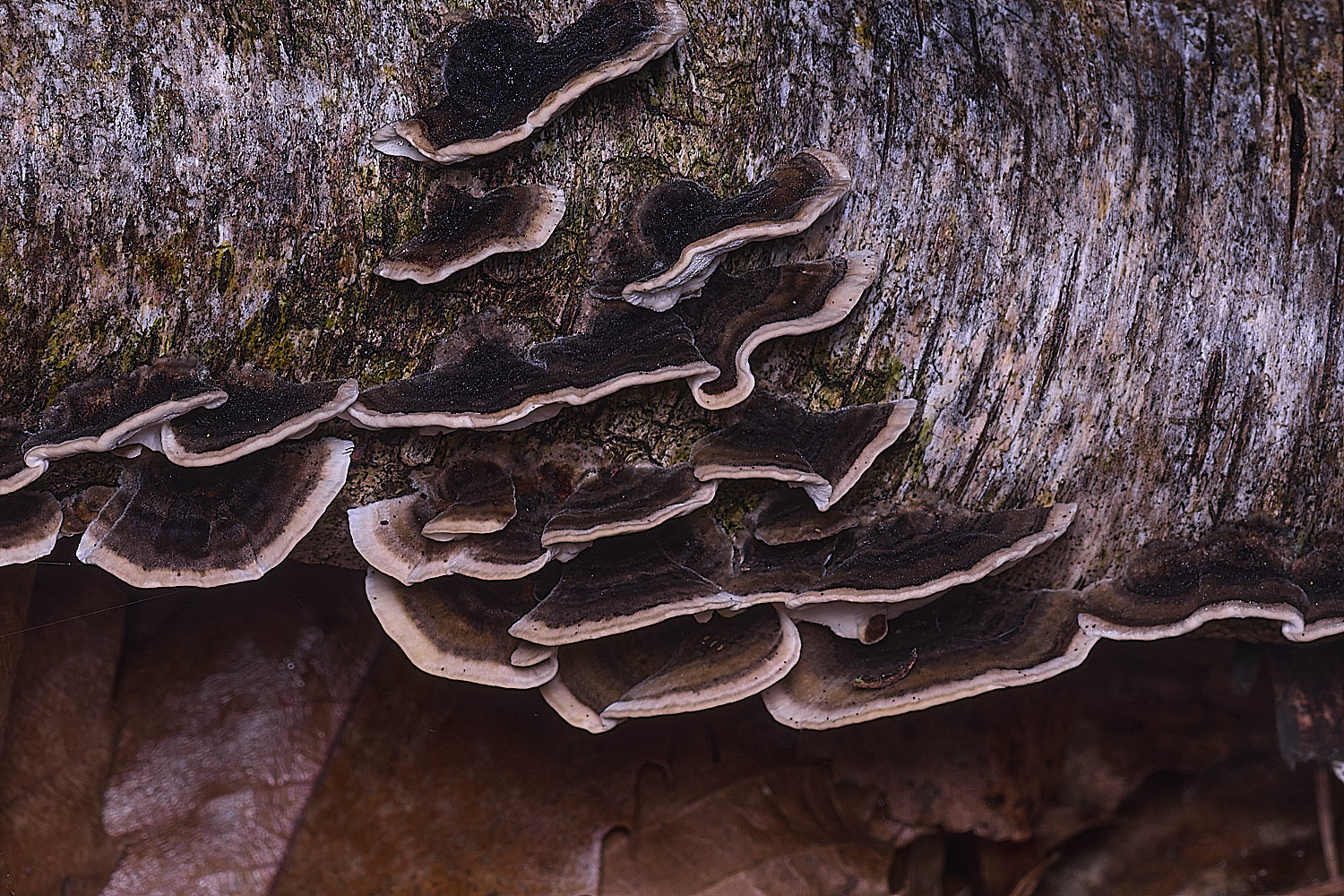

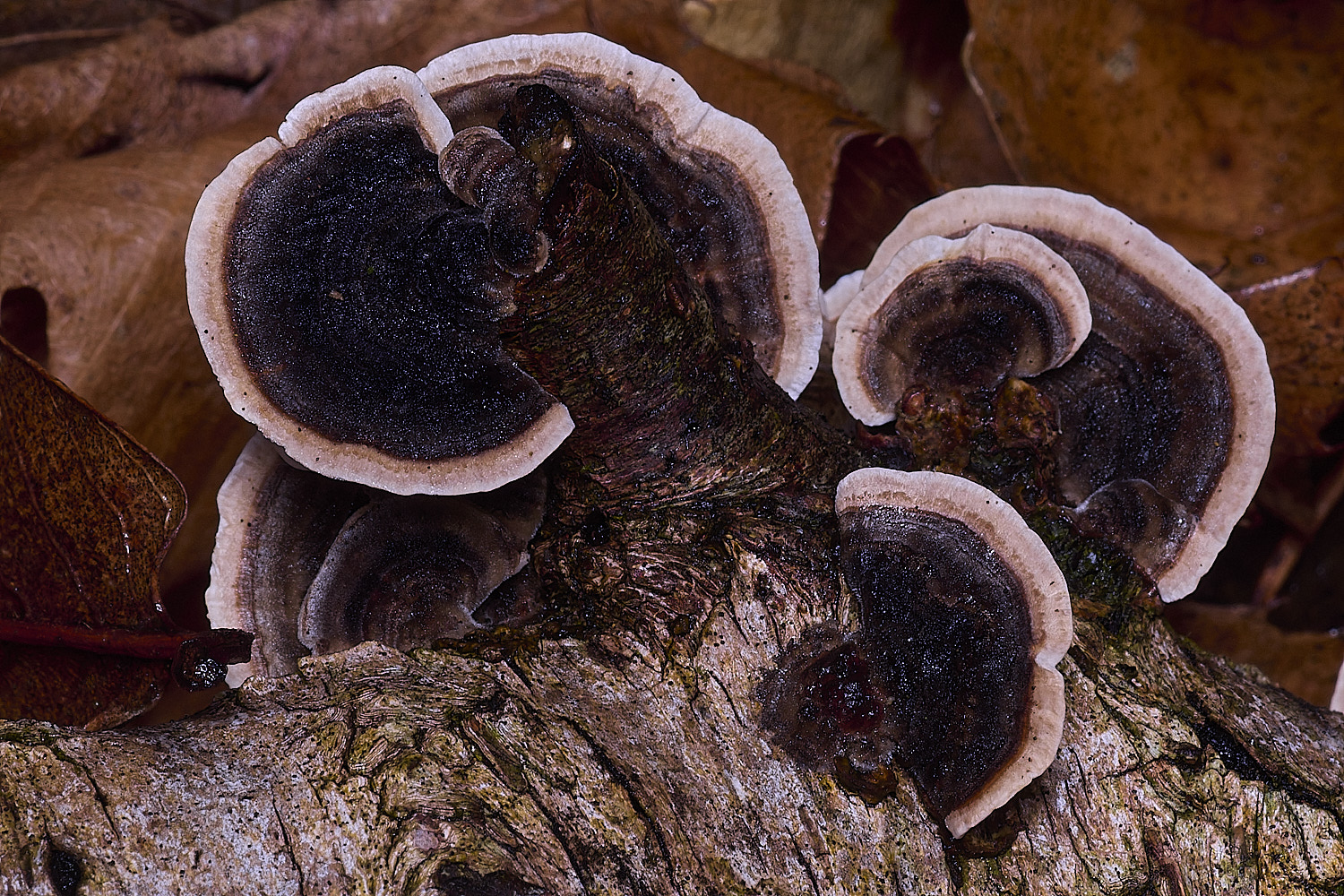
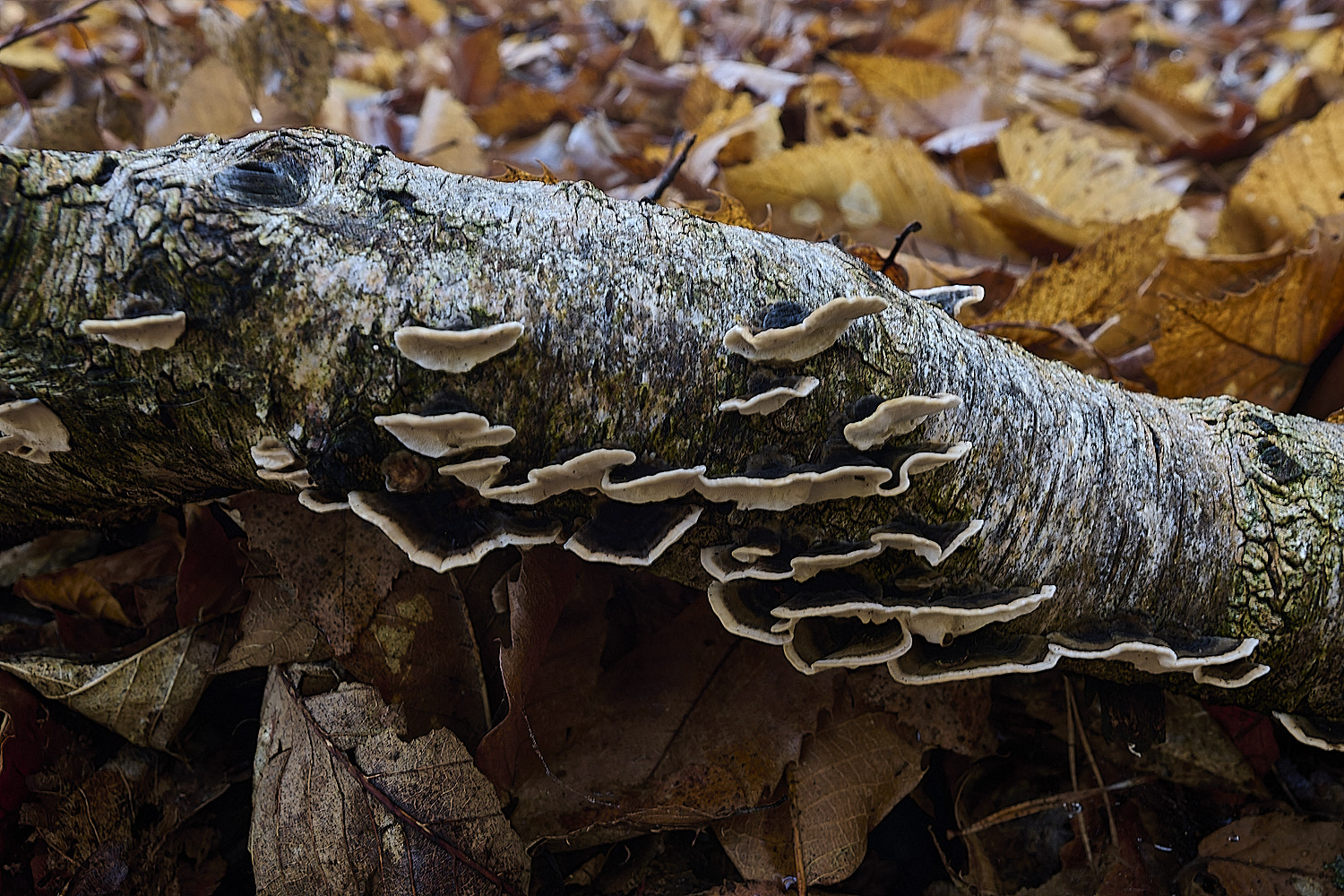
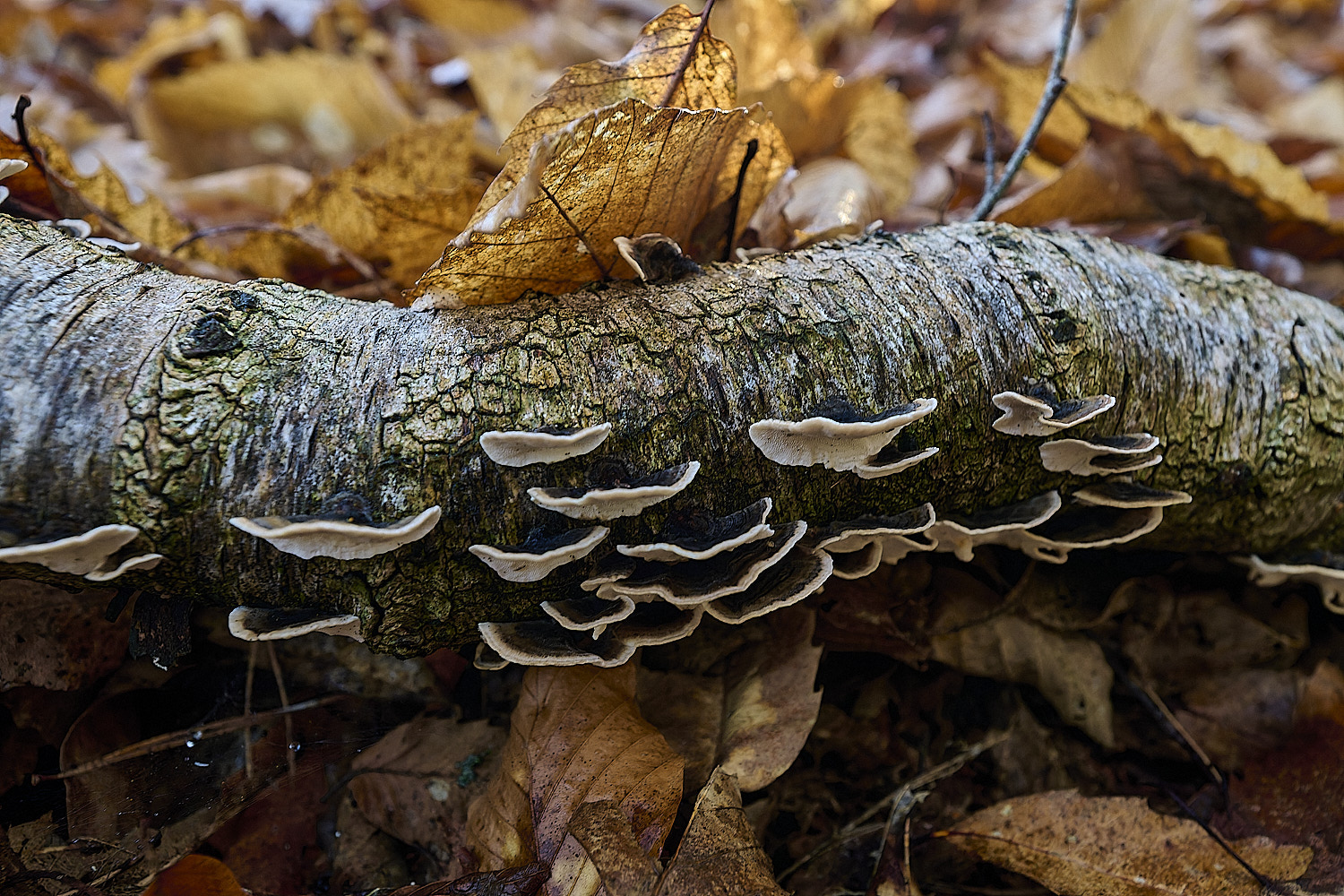
Turkey Tail (Trametes versicolor)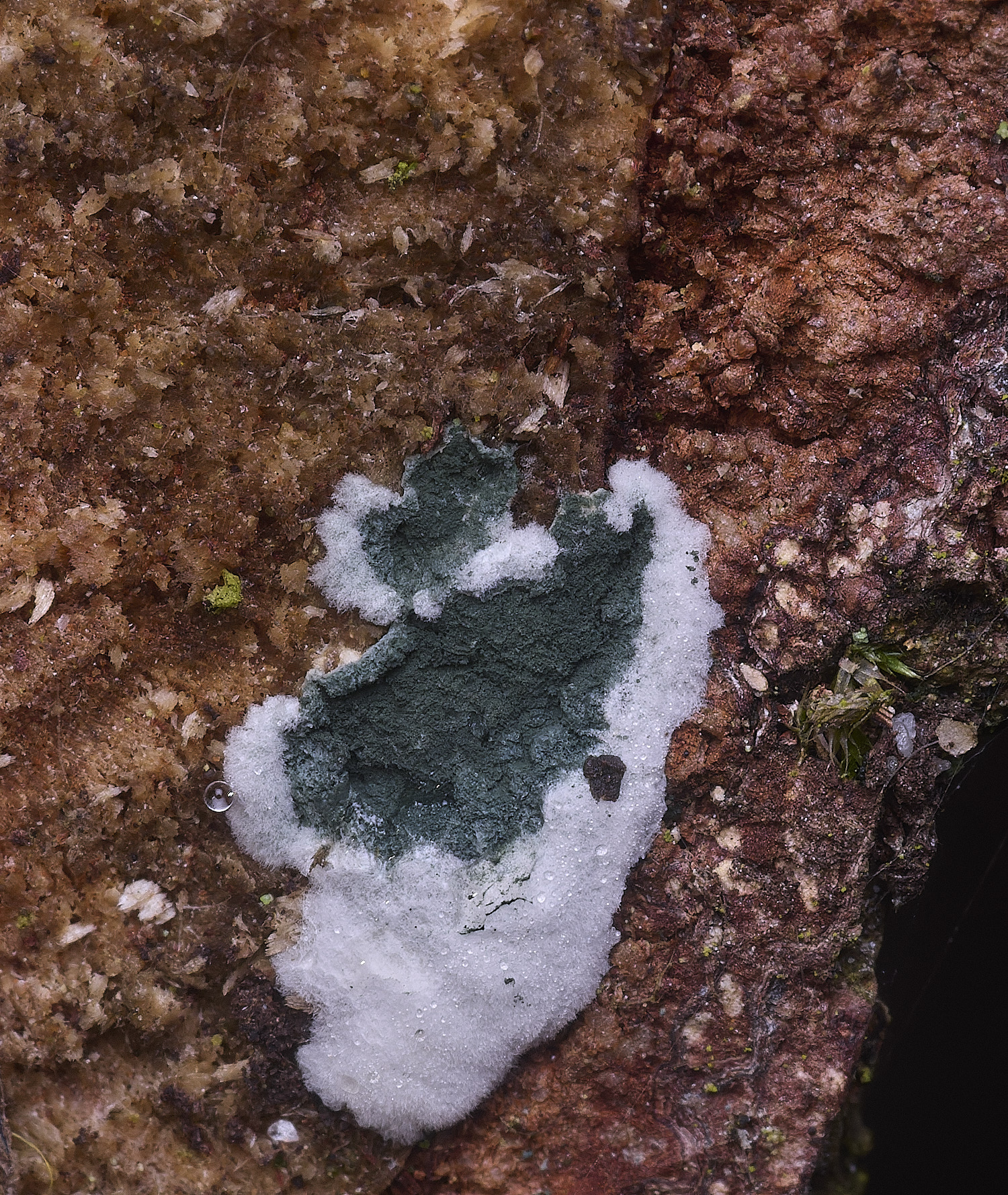
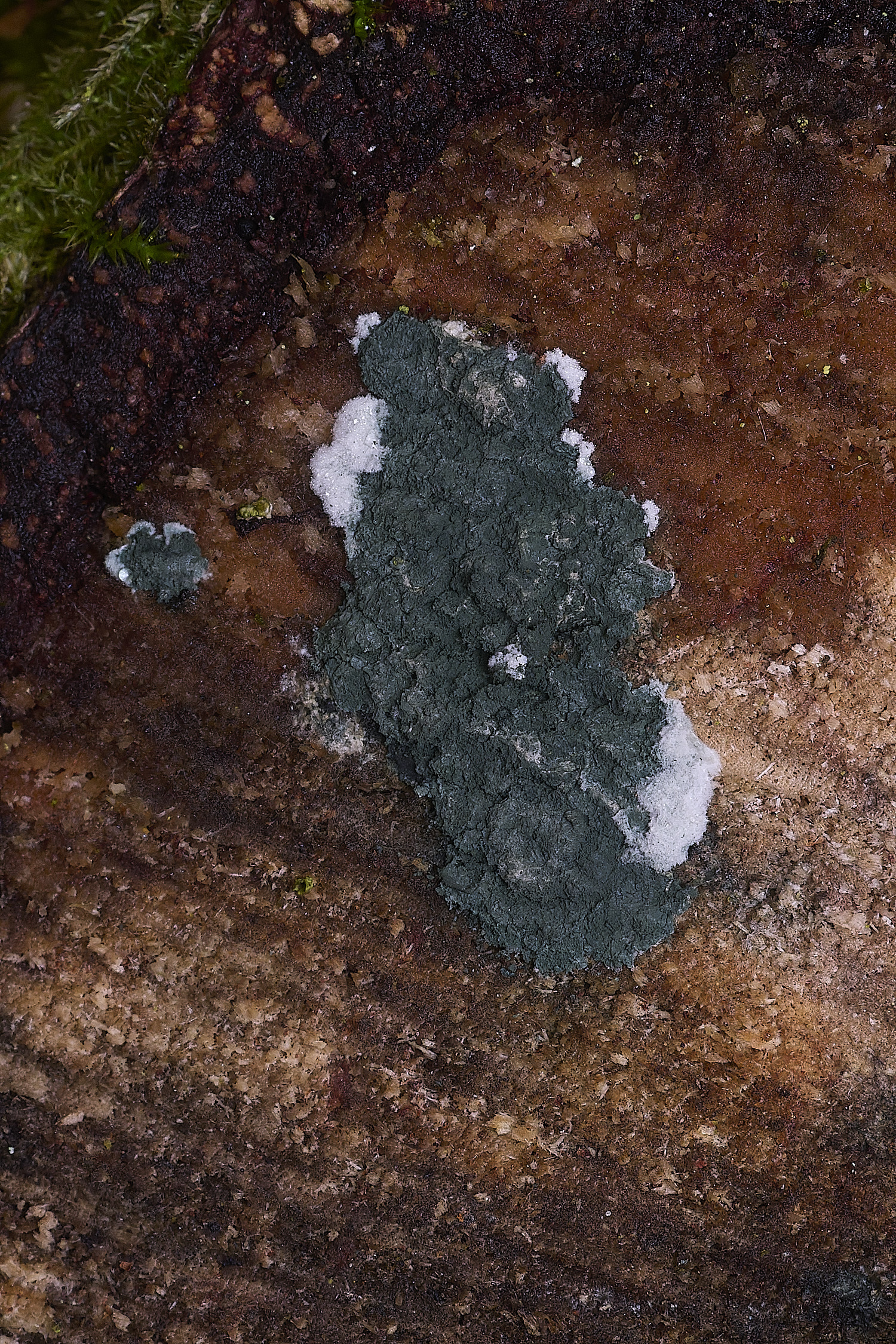
Trichoderma viride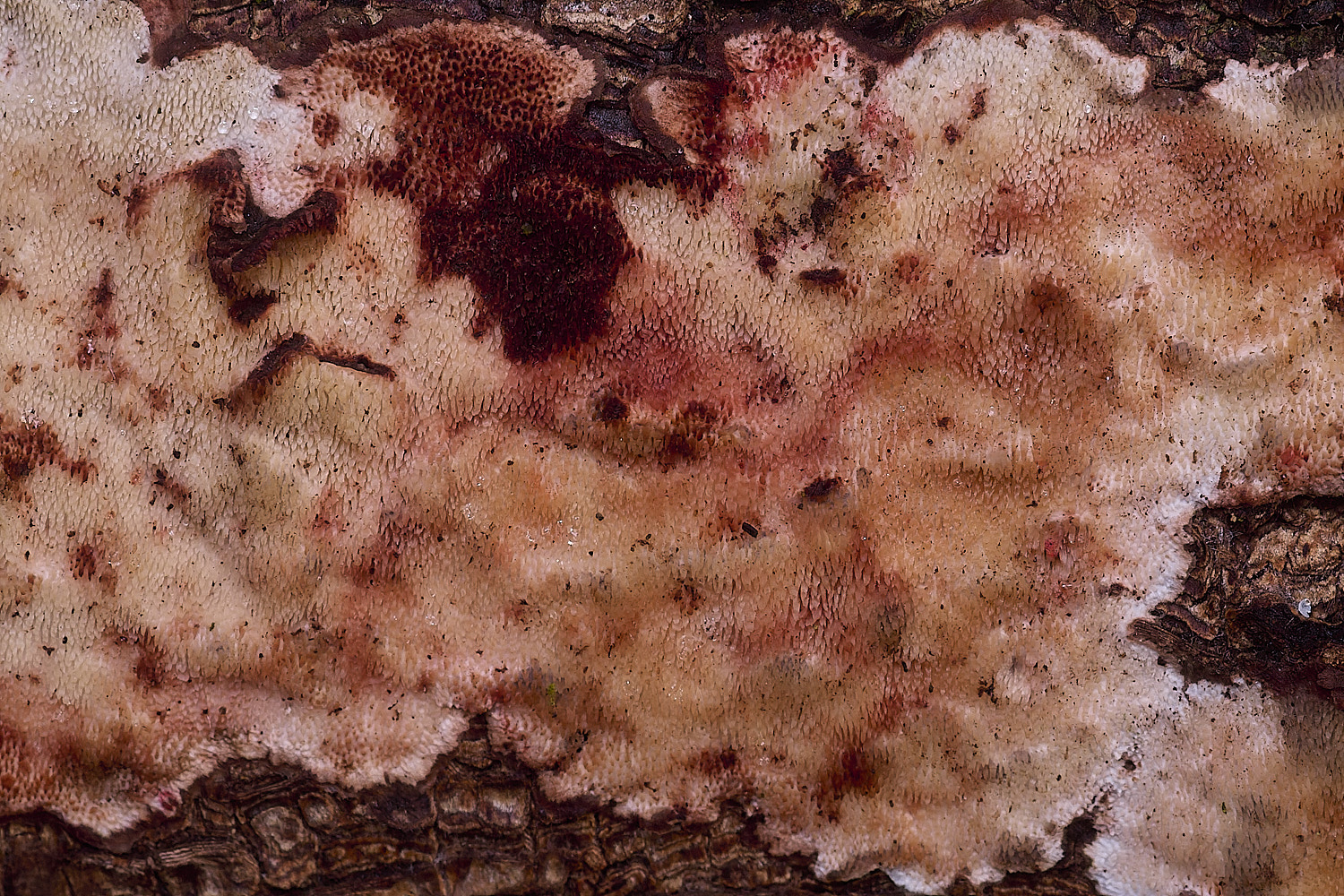
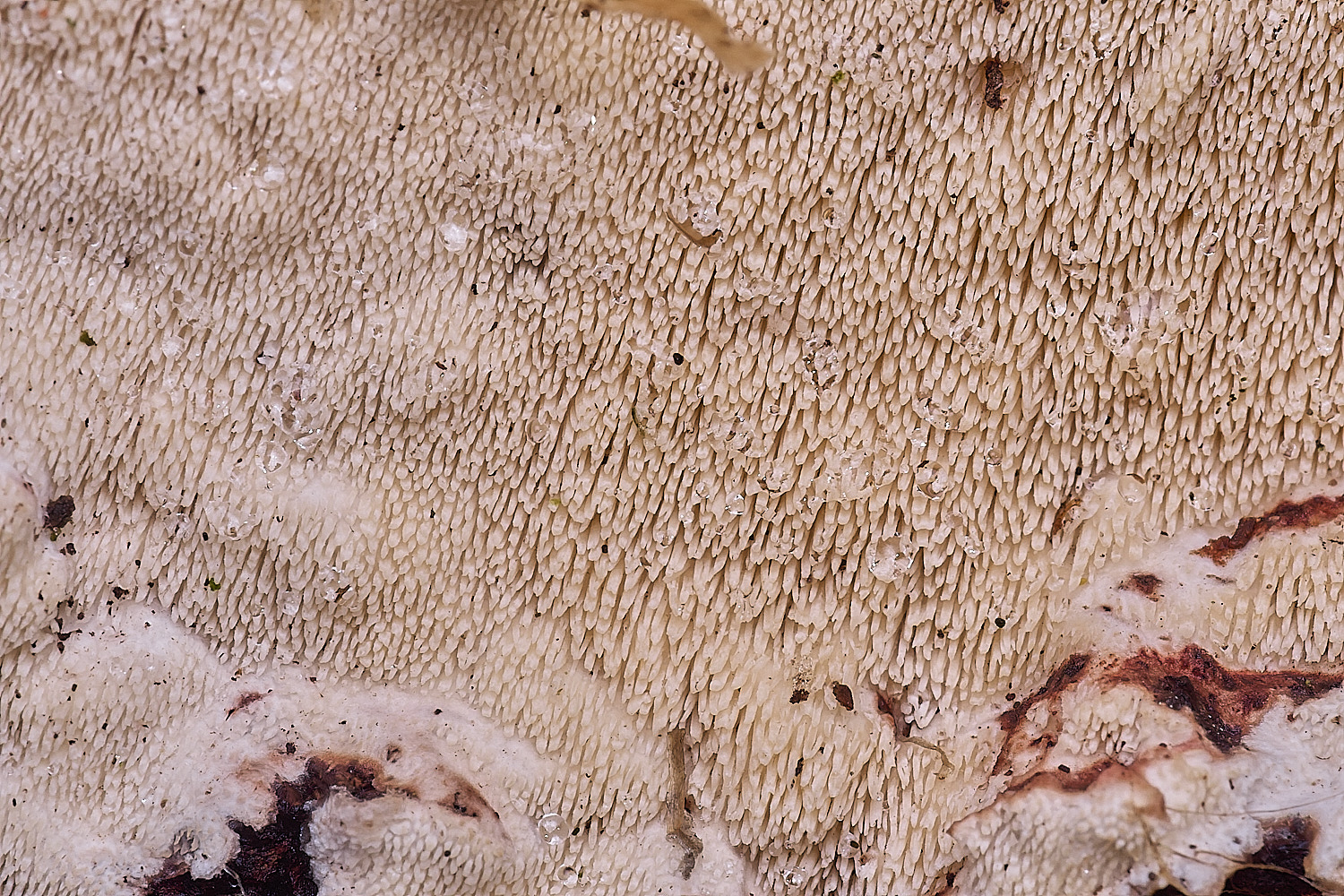
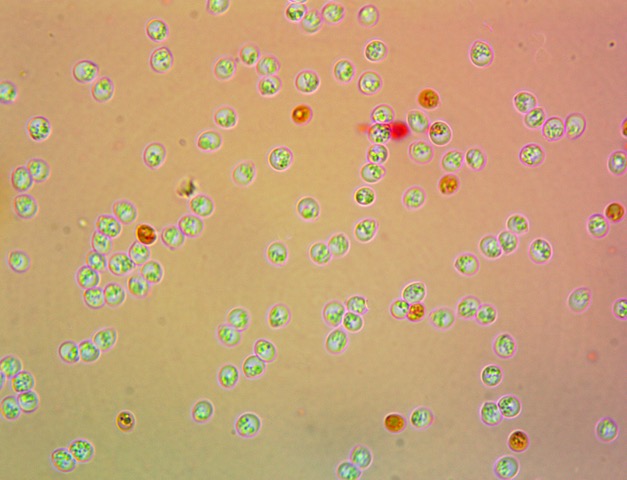
Anne's microscopy image
I spent ages on the other resupinate that Mike kindly gave me!! It was growing on a birch log and it had teeth, so I assumed it would be something I had seen before.
The fruiting body resembled Steccherinum ochraceum, but the spores were the wrong shape. In FTE it mentions S.bourdotii, so I googled this and my micrsocopy matched this species.
It is mentioned in englishfungi.org that it was found on birch by the Hampshire Fungus Group in 2023, so it is a species in the UK.
Steccherinum bourdottii from English Fungi.org
From a Spanish website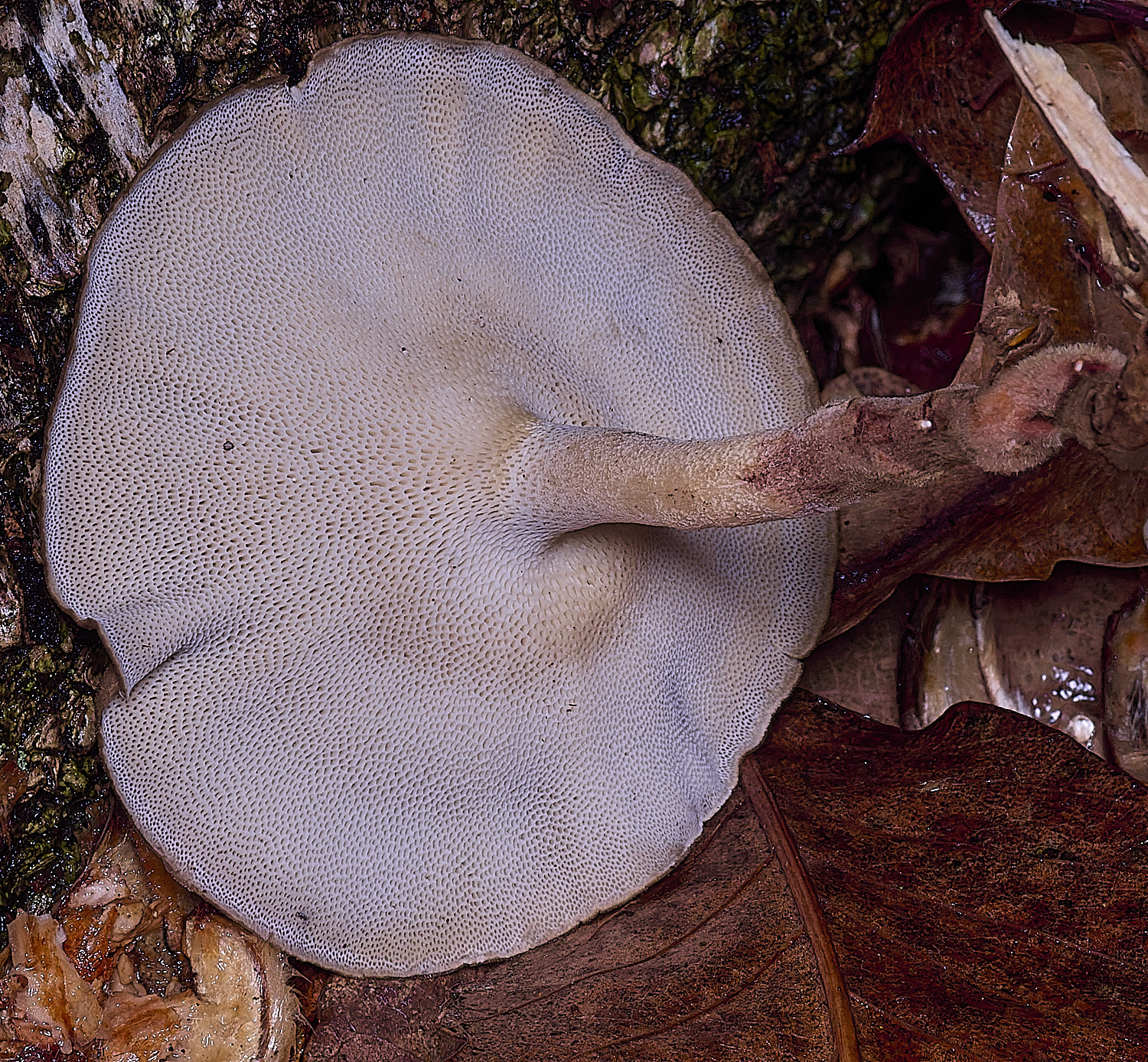
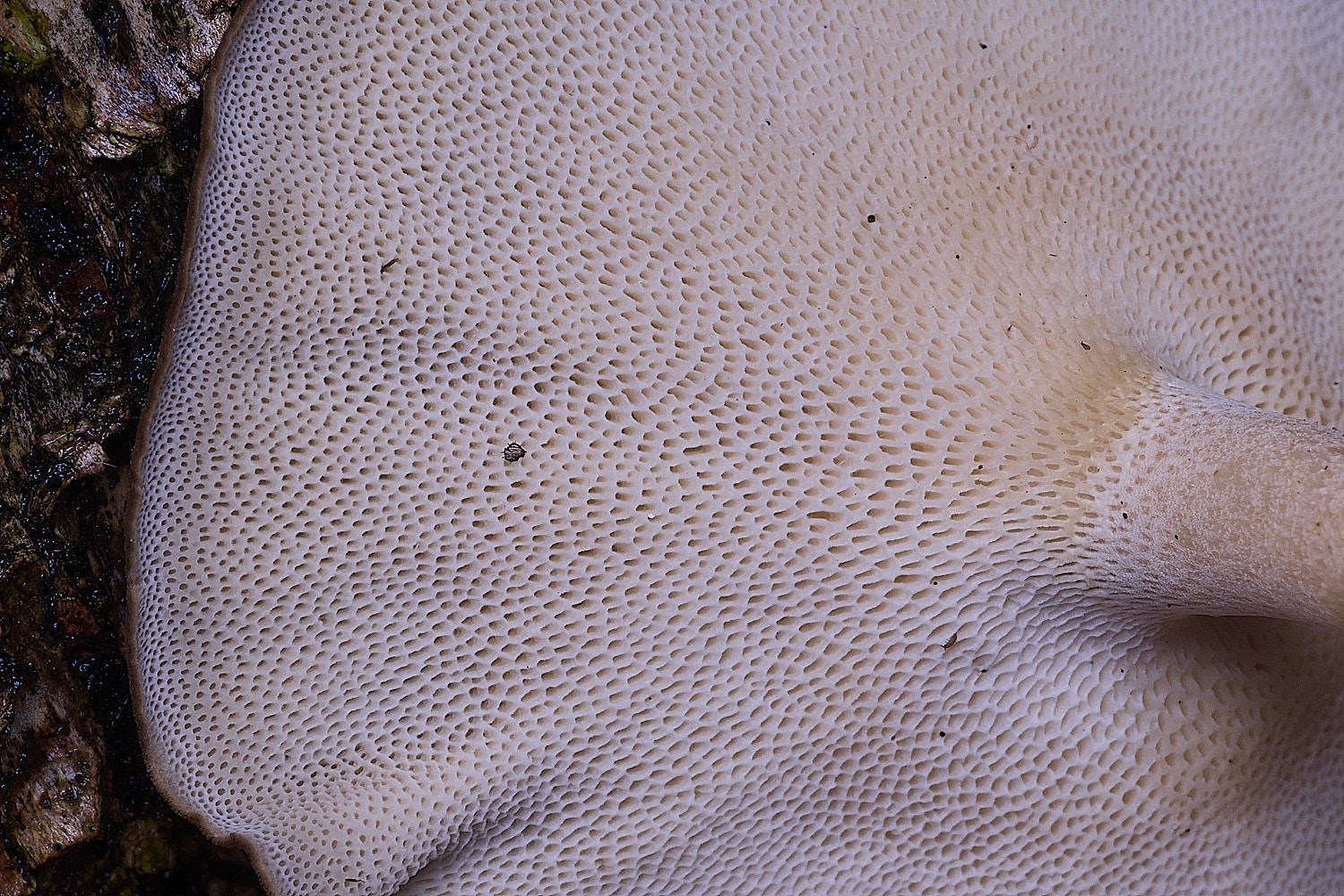
Winter Polypore (Polyporus brumalis)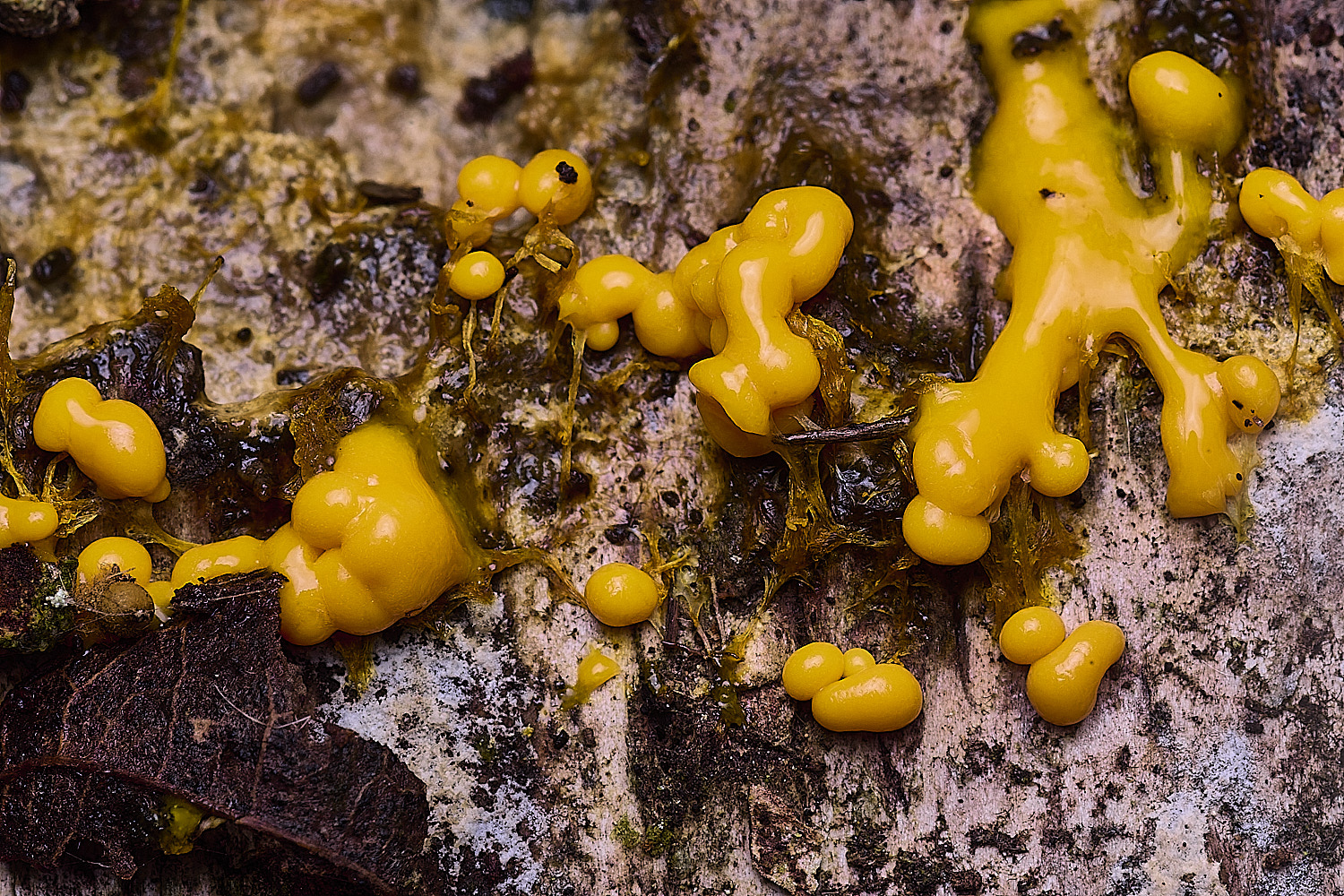
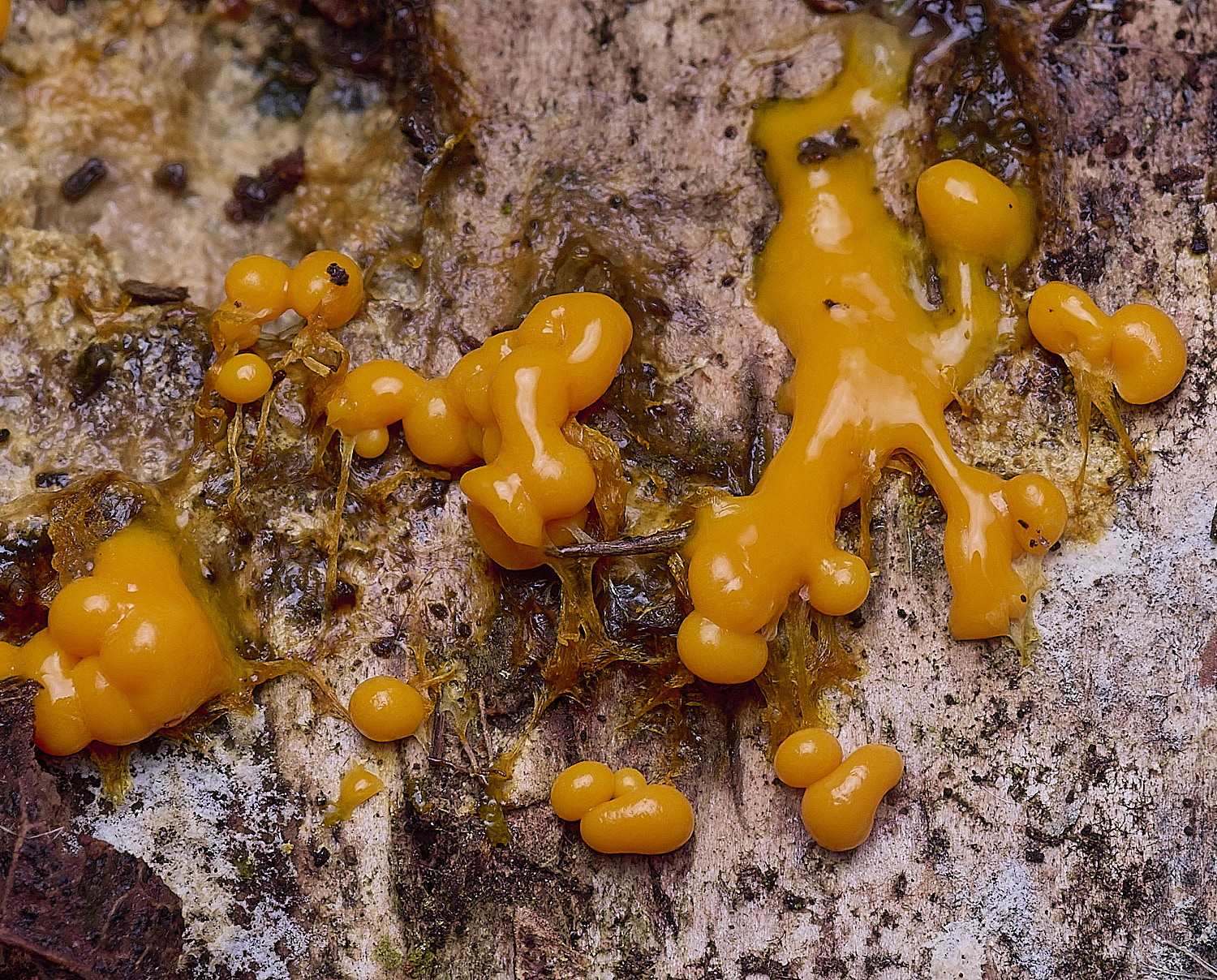
Egg shell Slime Mold (Leocarpus fragilis)?
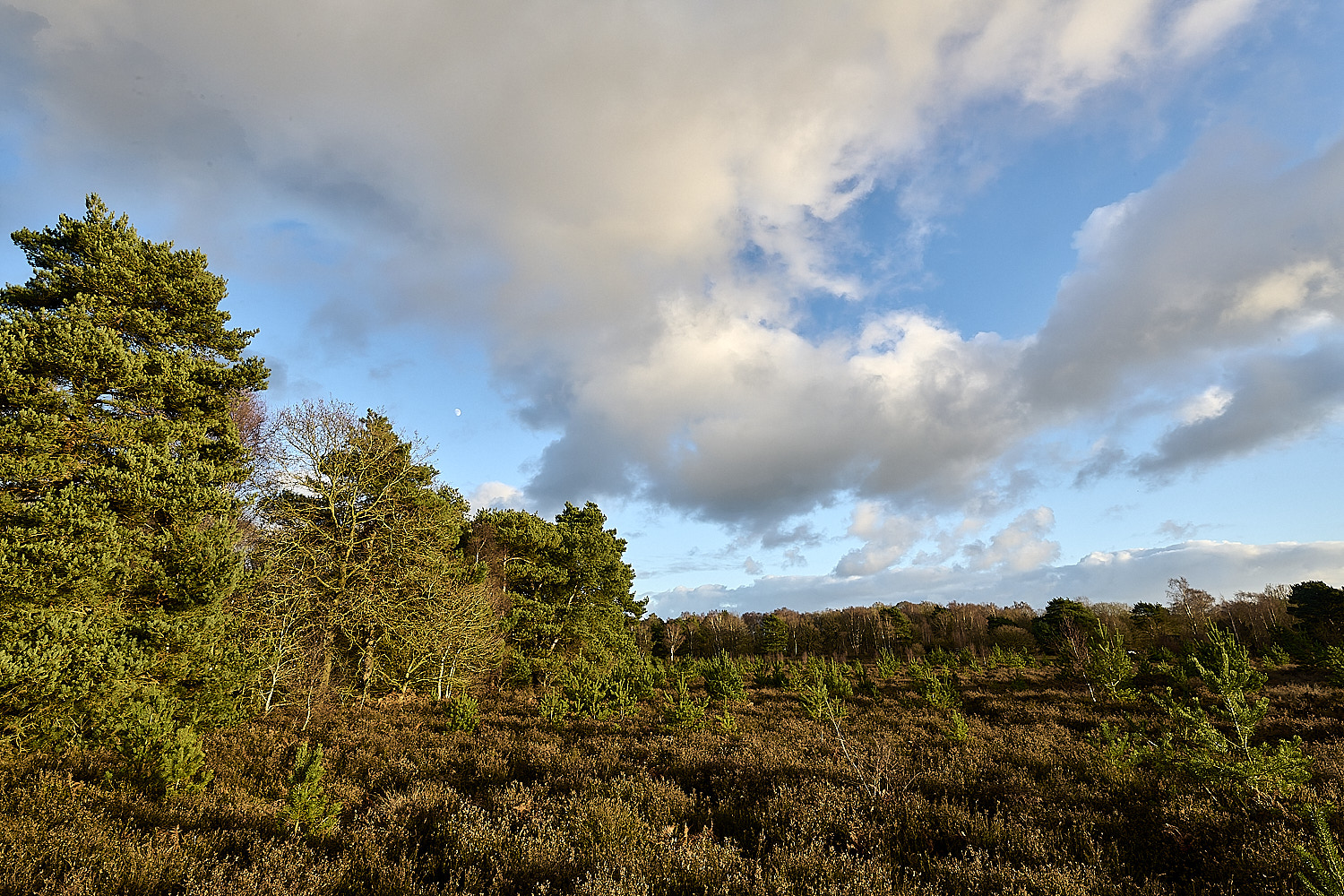
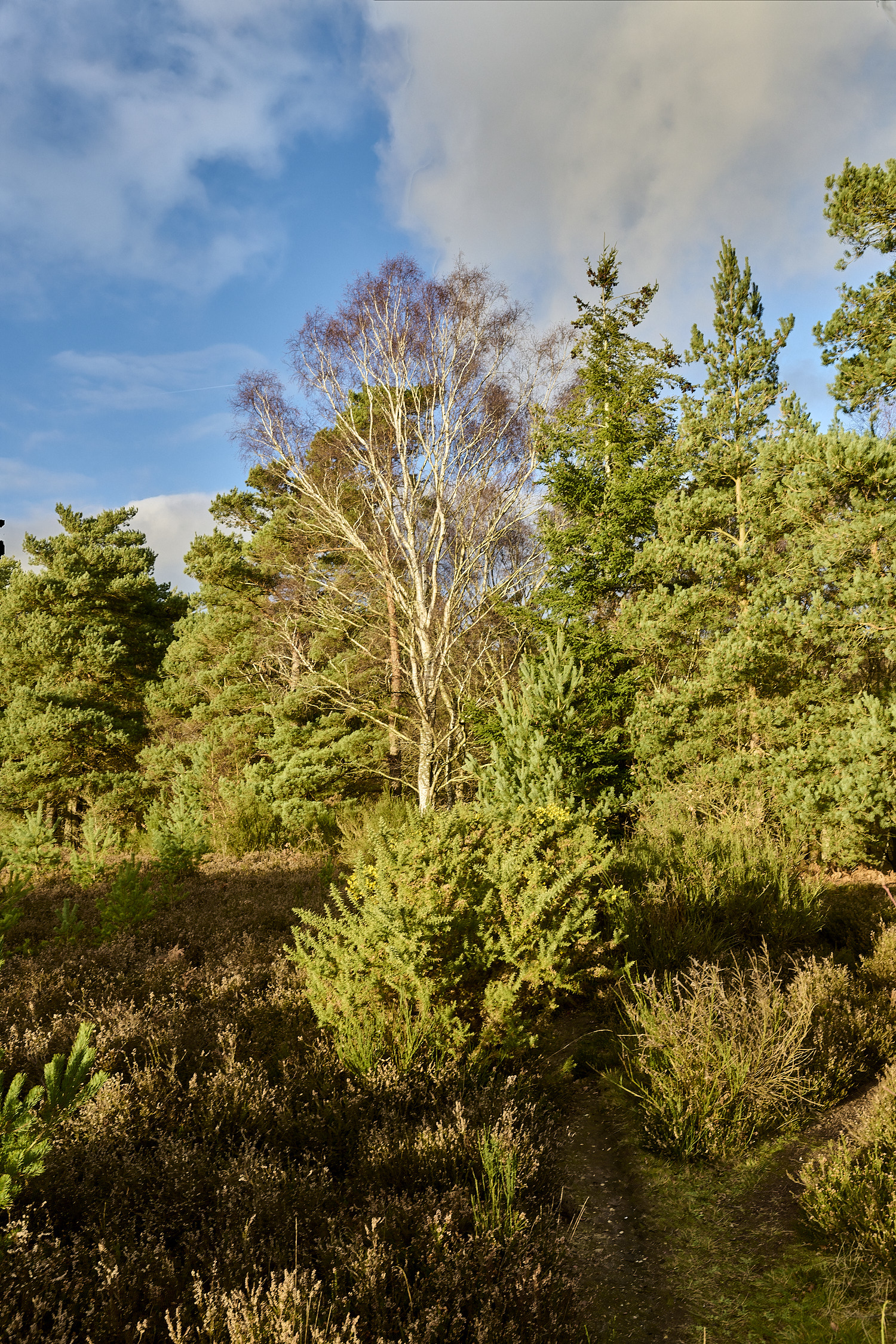
Cawston Heath
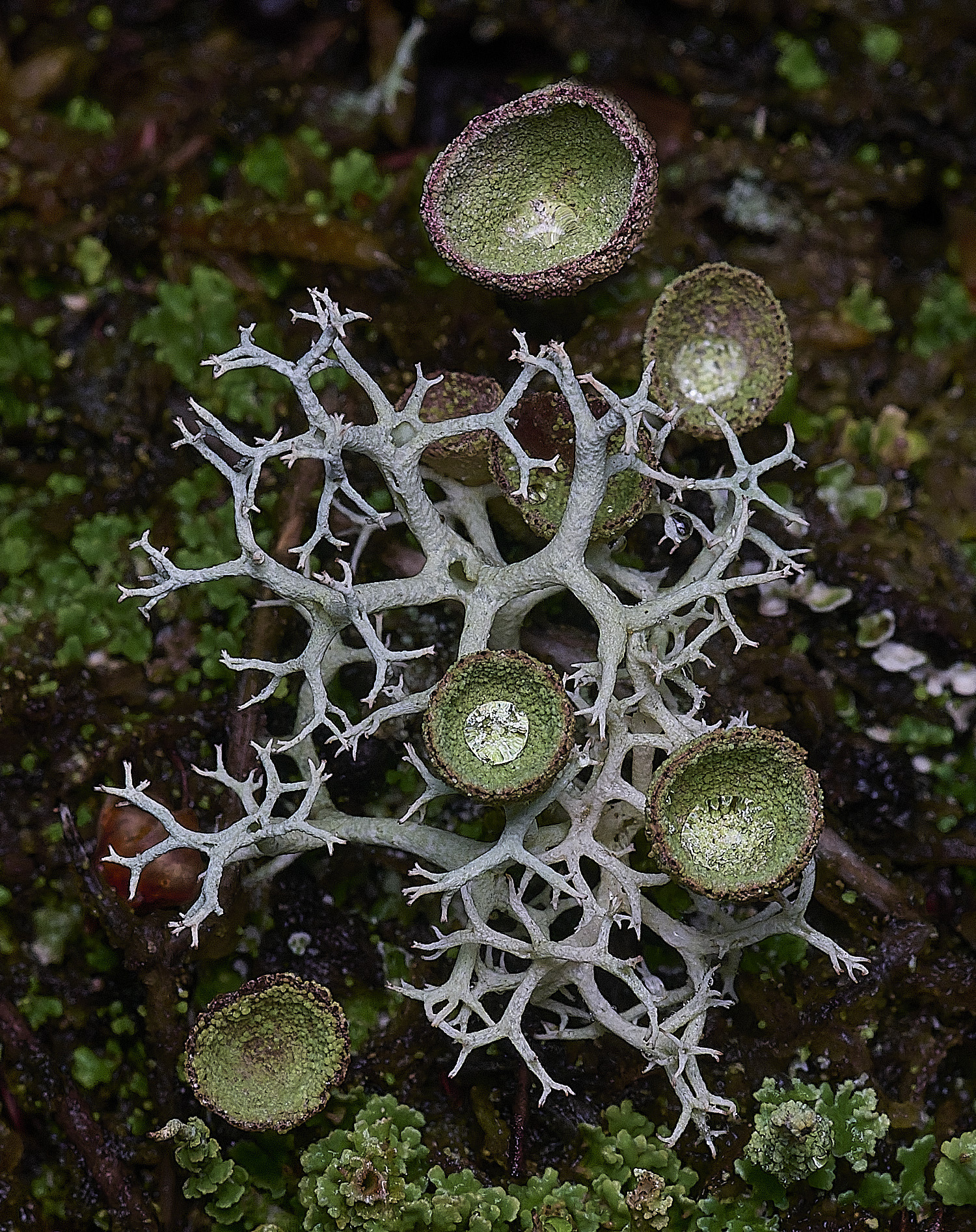
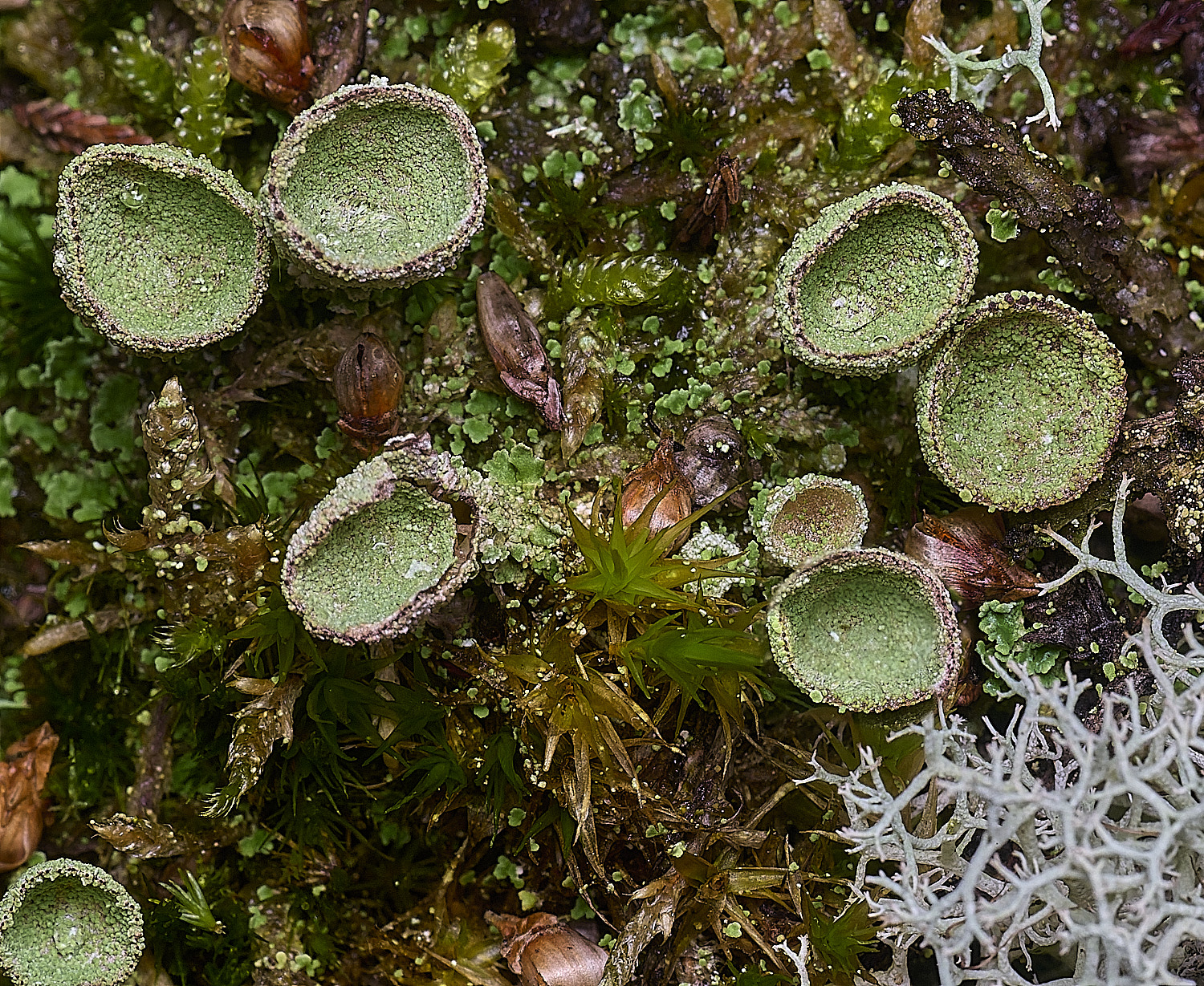
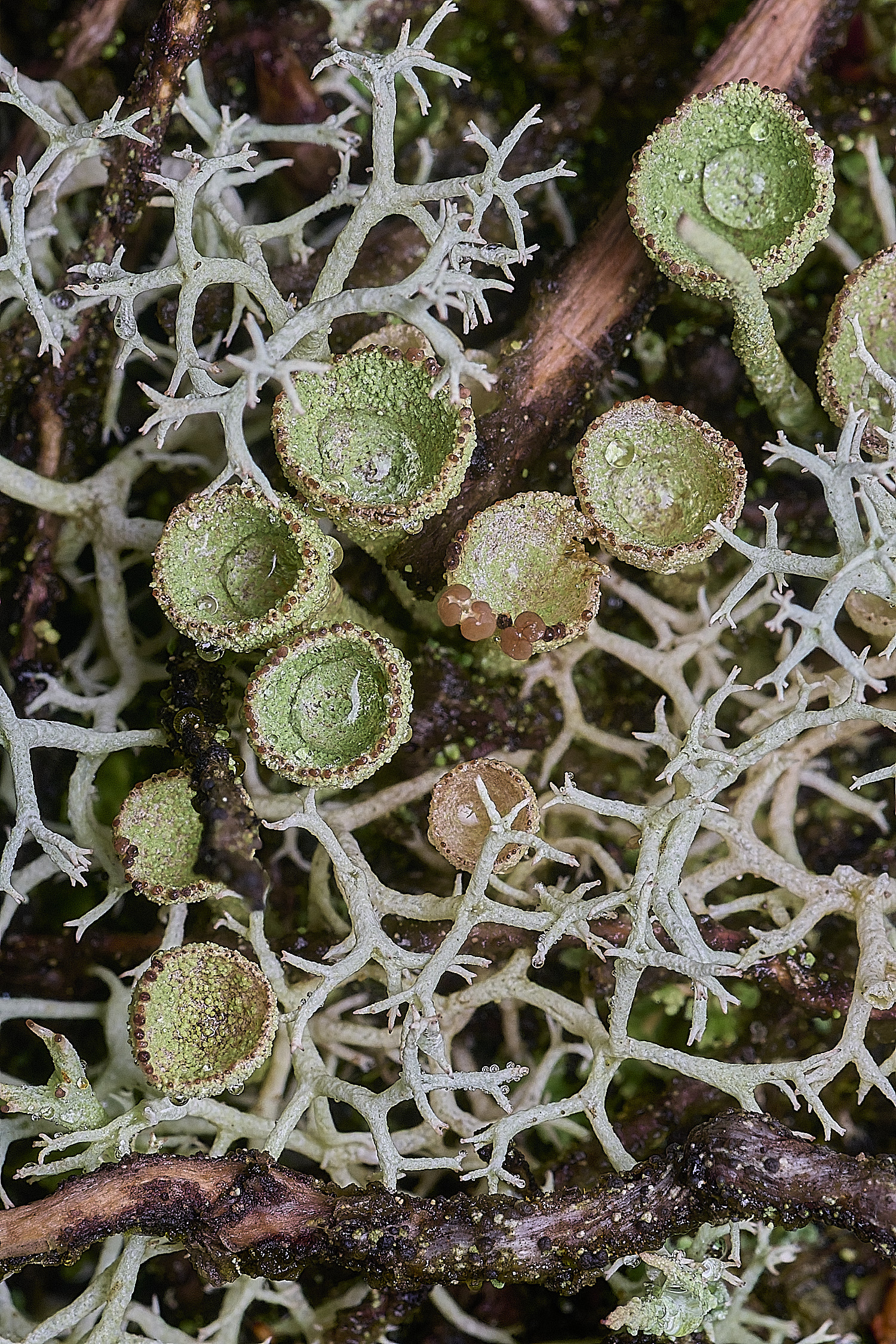
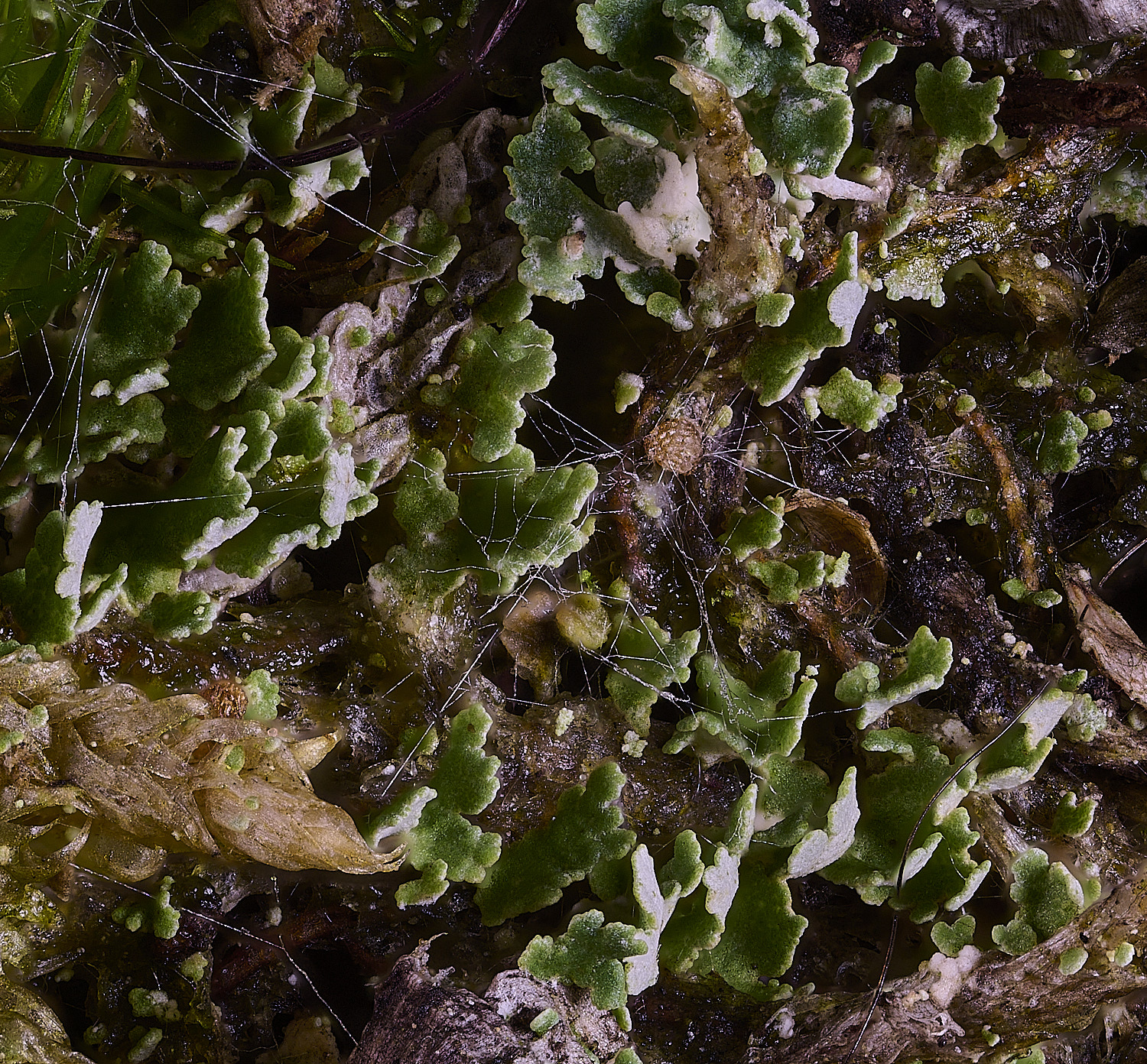
x2.5
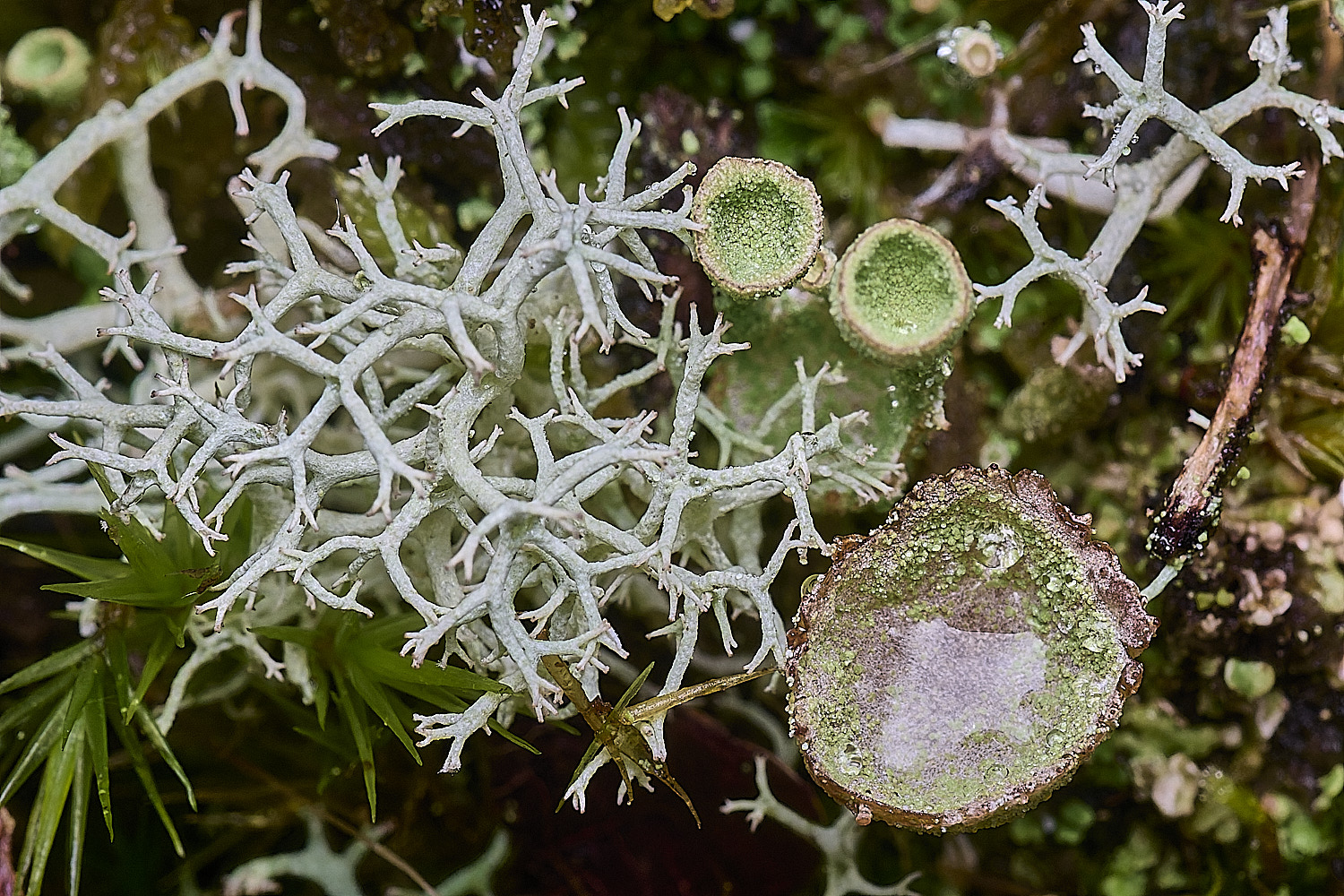
Cladonia fimbriata accompanied by Cladonia portentosa
Generic Key - Thallus squamulose Key C Pg 35
Cladonia - green, yellowish-green or grey mats of squamules, often erect and overlapping and bearing hollow podetia
Cladonia Key Pg 141
1 Apothecia brown, K- or if absent , squamules never with orange underside 10 Primary thallus squamulose. Podetia prominent or not.
11 Thallus of podetia or podetia growing from basal squamules.
12Thallus with podetia which are not usually interwoven, sparsely or not branched, and which may have a cup at the tip.
32 Podetia not split longitudinally. 34
Podetia without perforated tops and not forming tiers from one edge.
35 Podetia terminating in a wide cup
45 Podetia simple, regular (to 3cm tall), and/or long (to 6cm tall often slightly branched
(apothecia rarely on short stalks around rim of cup)
47 Podetia sorediate or squamulose warted 48 Podetia finely sorediate
50 KC - Cladonia fimbriata
LGB I3
1 Some squamules present, either scattered or forming a ± continuous, persistent basal thallus
and/or dispersed on podetia (Cladonia morphotype) .................................................................................. 2
Apothecia flesh-coloured (rarely pinkish) to brown-black, K–, or absent; undersides of basal
squamules pale, grey-black or yellow-green, never K+ purple .................................................................20
Basal squamules not dominant, numerous to very sparse or restricted to the lower part of
the podetia only; podetia dominant ...........................................................................................................43
Podetia and squamules C– .........................................................................................................................44
Scyphi present, mostly as wide as or wider than the podetial stalk ...........................................................45
Podetia not yellow tinged (without usnic acid) .........................................................................................53
Podetia entirely or at least partly sorediate or with delimited convex corticate granules ..........................66
Podetia and scyphi ± sorediate ..................................................................................................................70
Scyphi not centrally perforate ....................................................................................................................71
Difficult to go beyond here without PD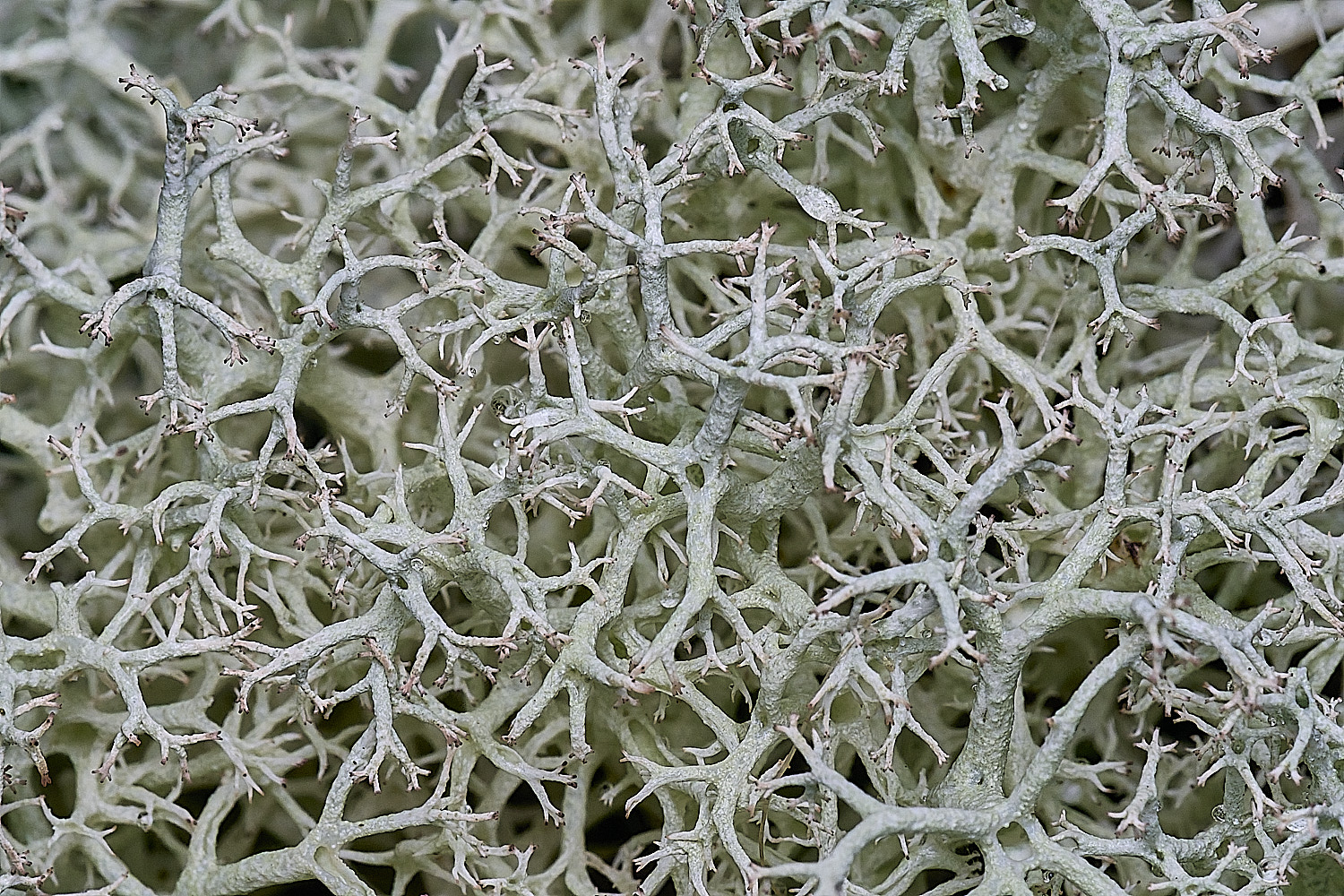
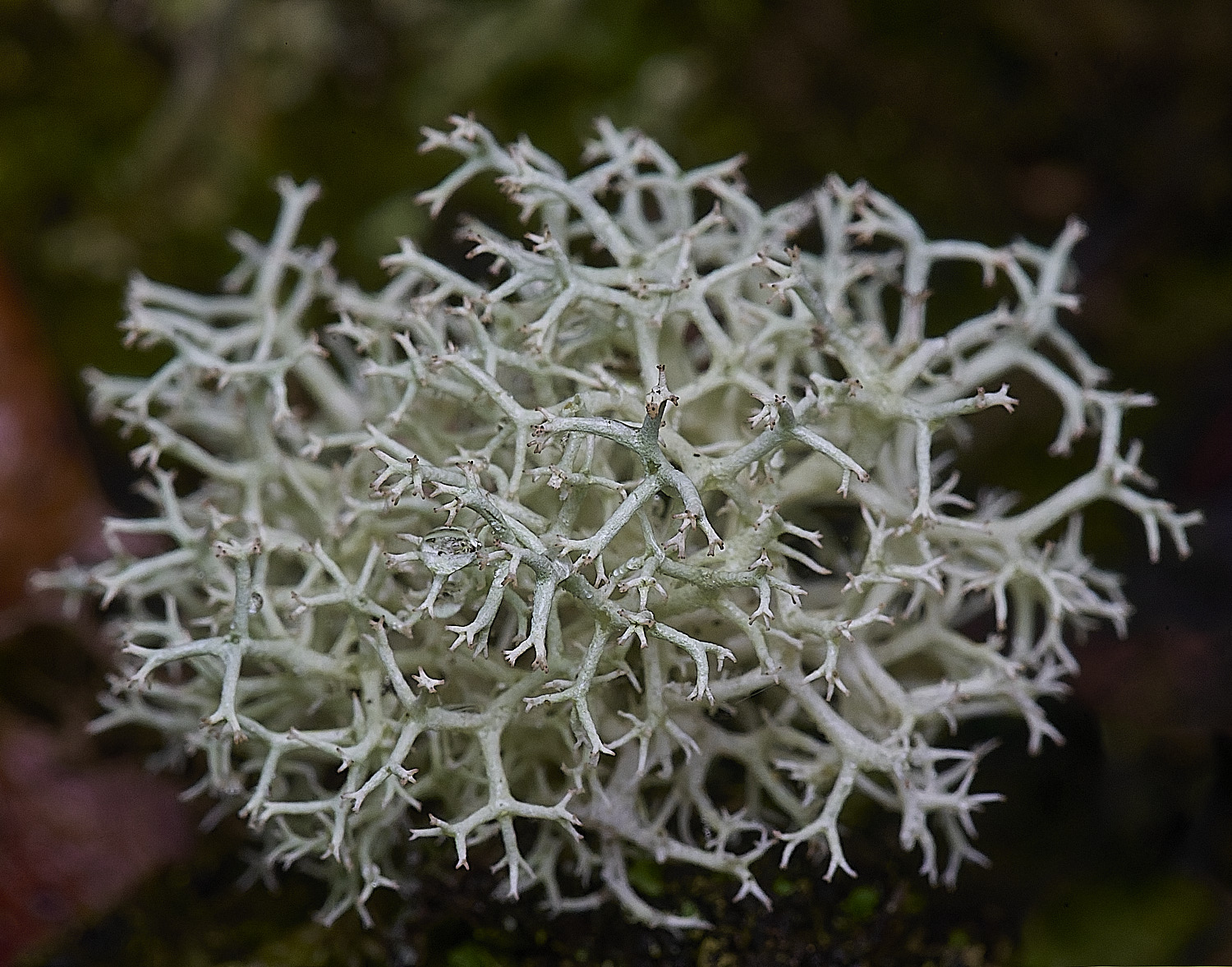
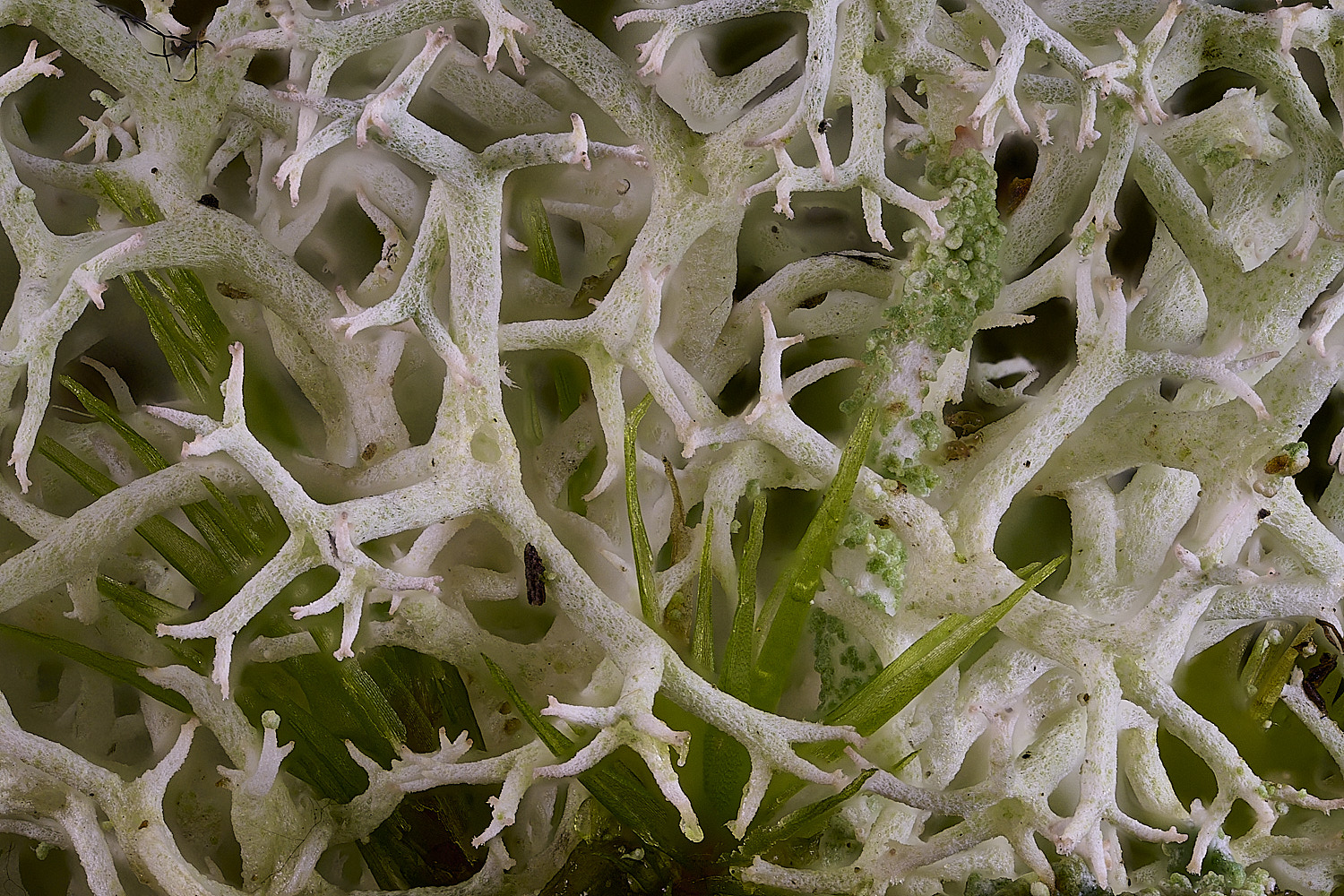
Cladonia portentosa
DOBSON - Main Key - Thallus fruticose
Generic Key - Thallus clearly hollow or orange Key Q Pg 47
Cladonia - Tangled mat of greyish or yellow green brancjes of hollow podetia which often grow from basal squamules.
Cladonia Key Pg 141
1 Apothecia brown, K- or if absent , squamules never with orange underside
10 Primary thallus squamulose. Podetia prominent or not.
11 Thallus of podetia or podetia growing from basal squamules.
12Thallus an interwoven often much branched mat of tubular podetia.
13 K-
16 A P reaction needed
But 17 Thallus pale grey to green grey, richly branched C portentosa
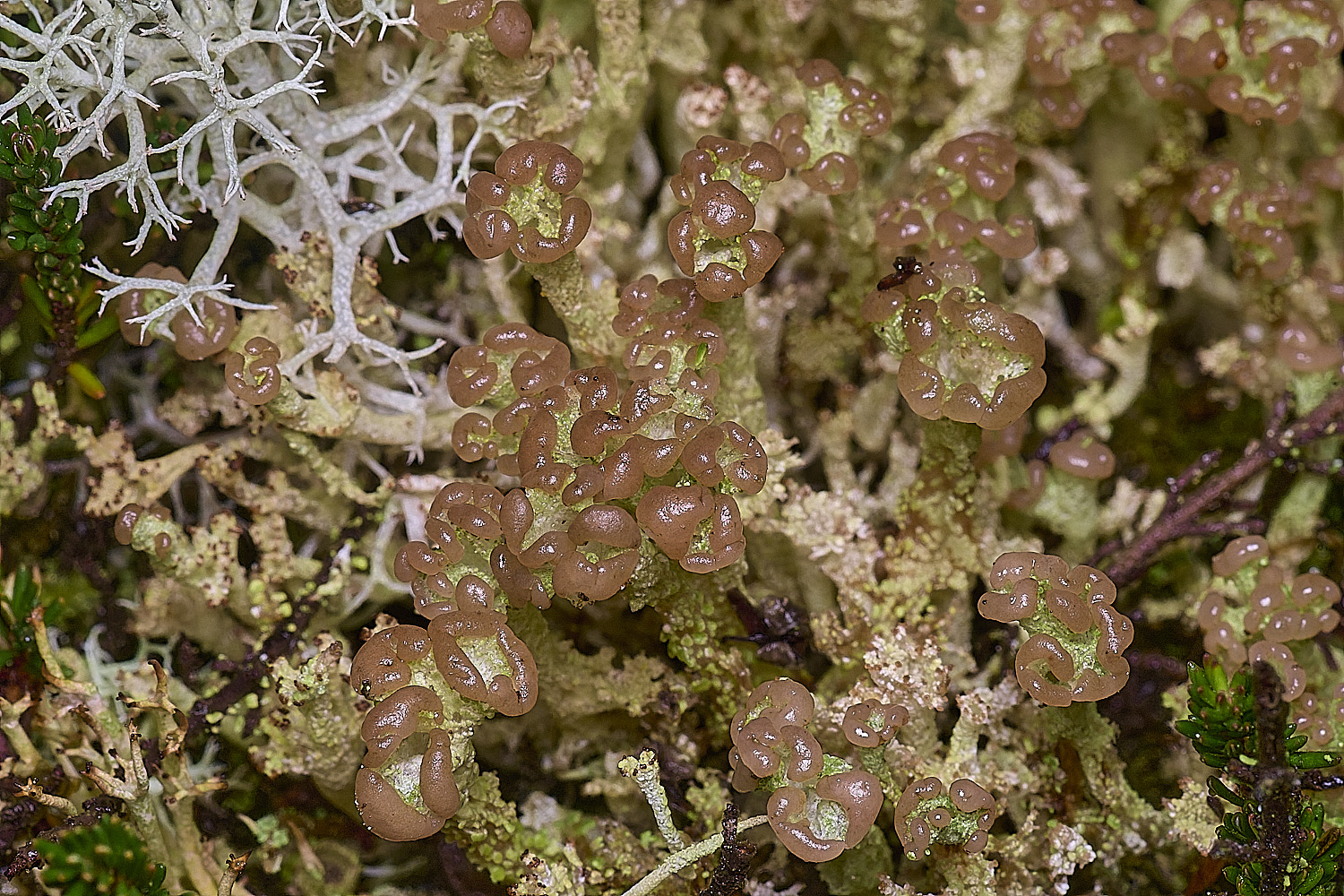
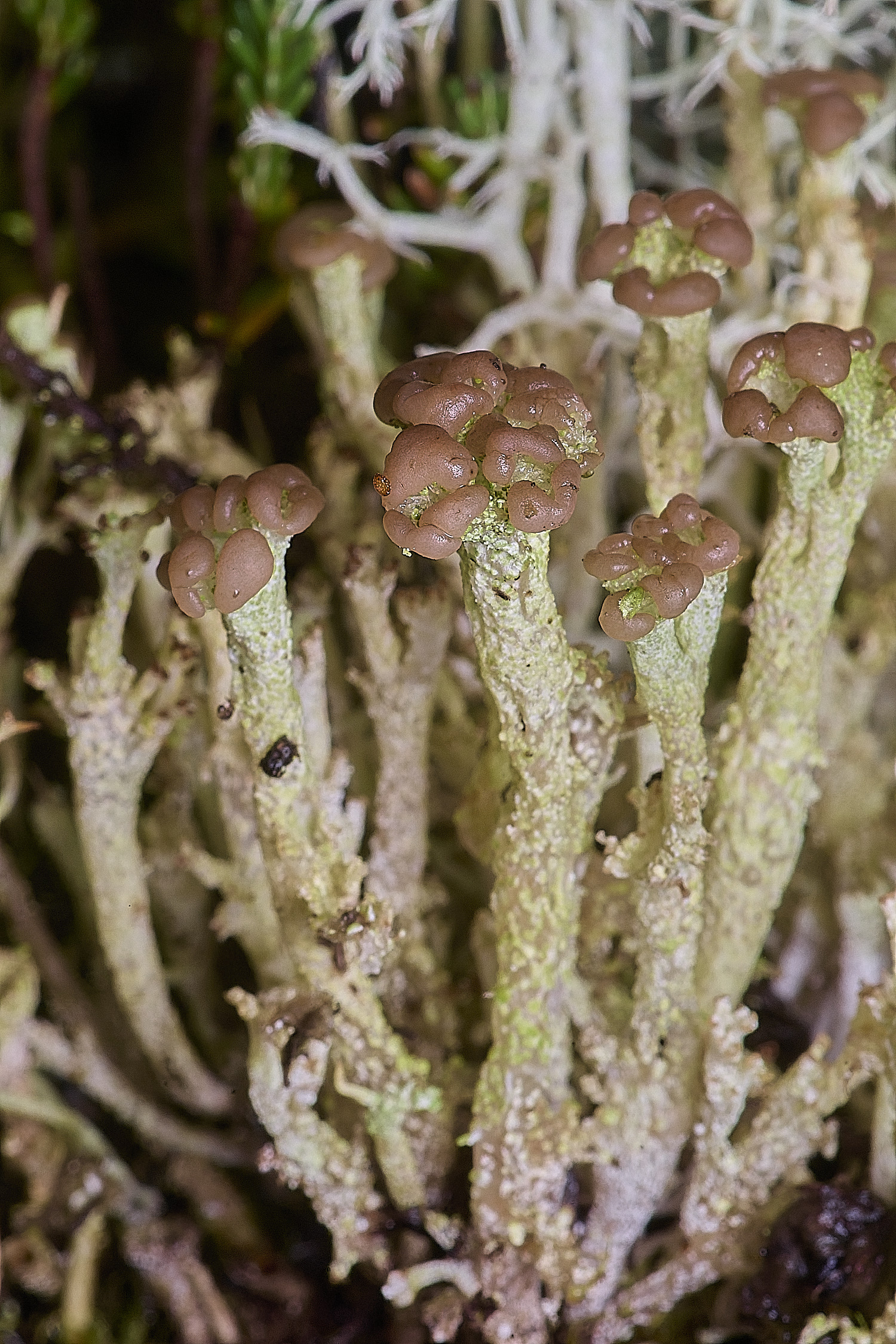
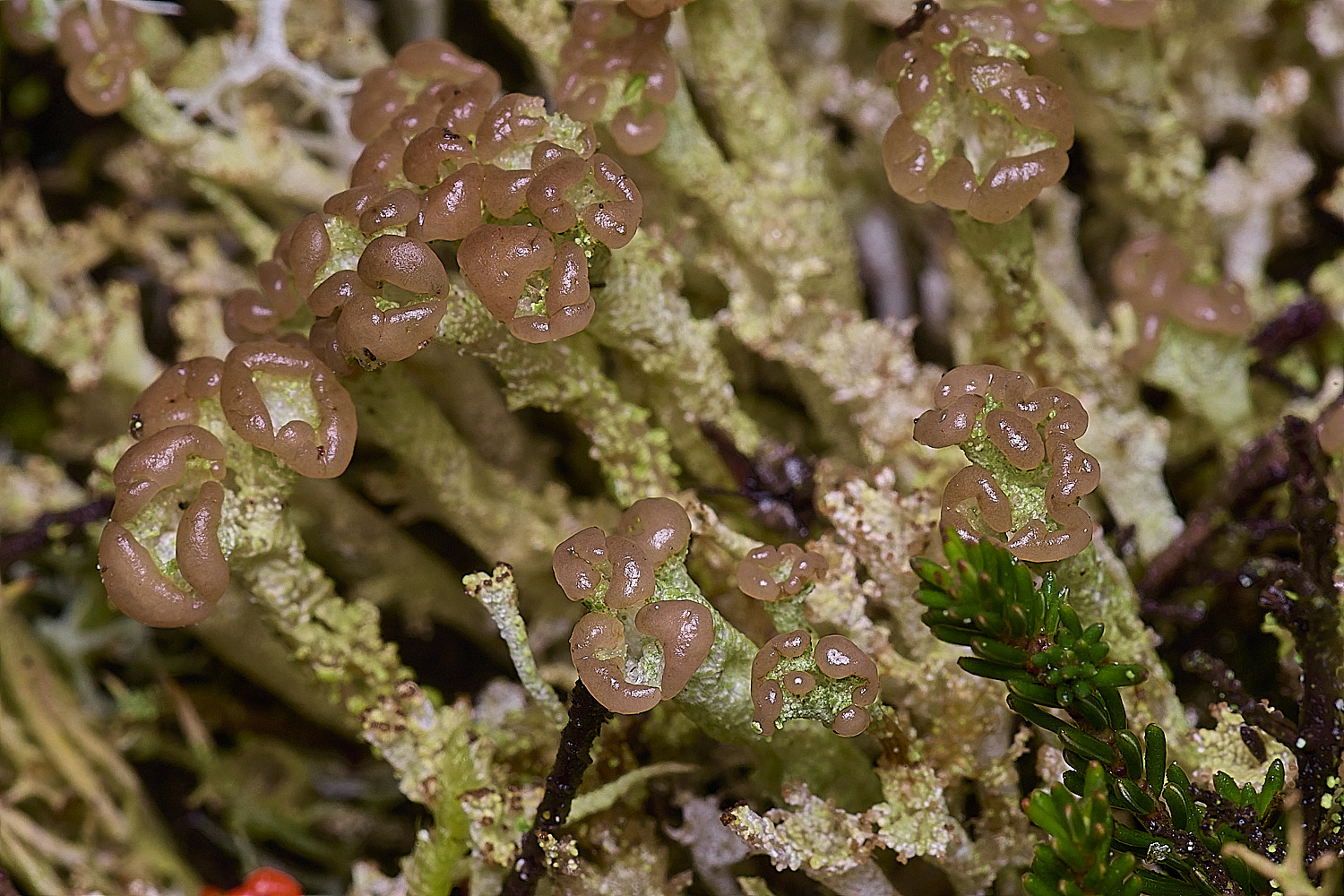
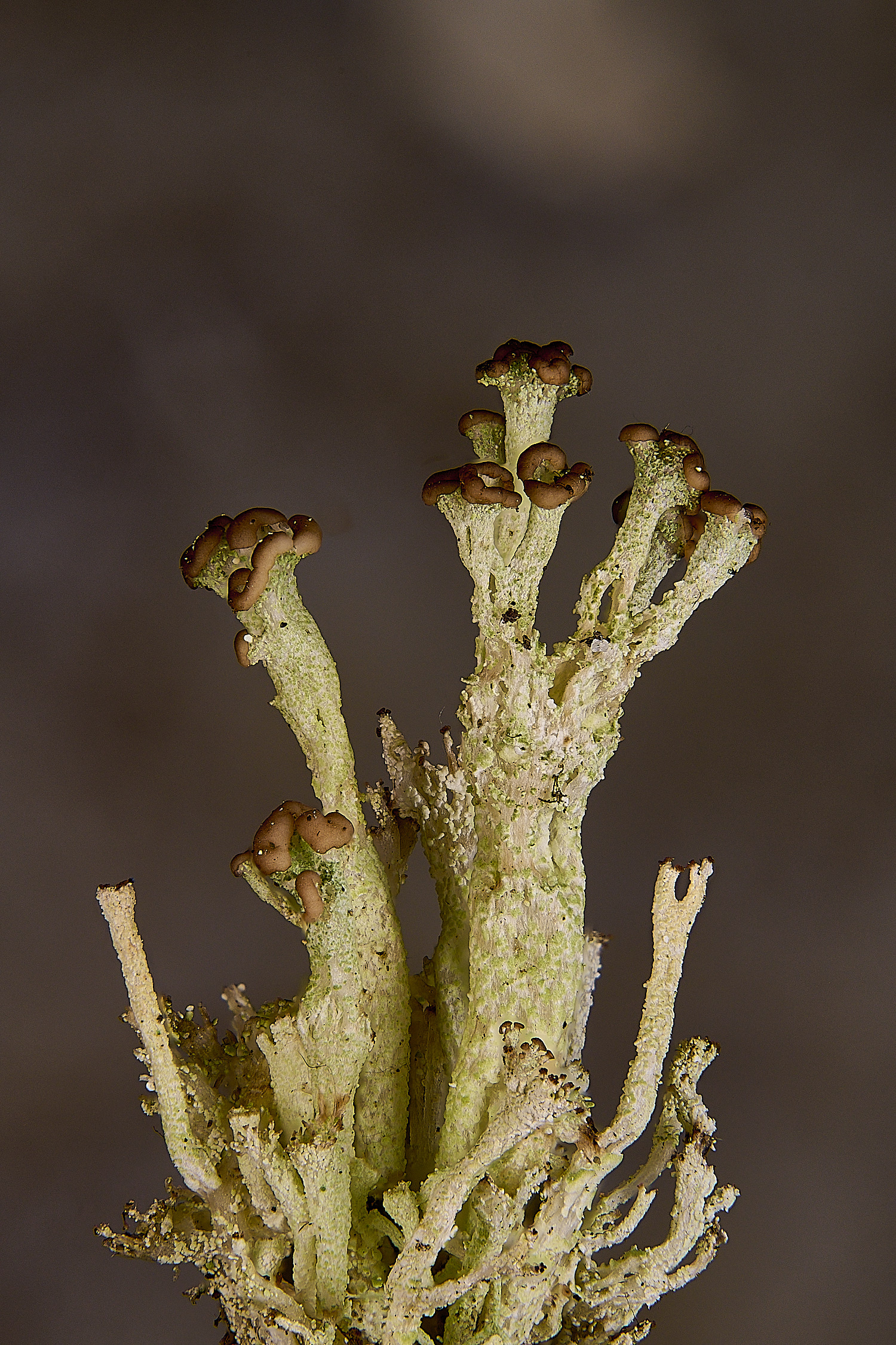
Cladonia ramulosa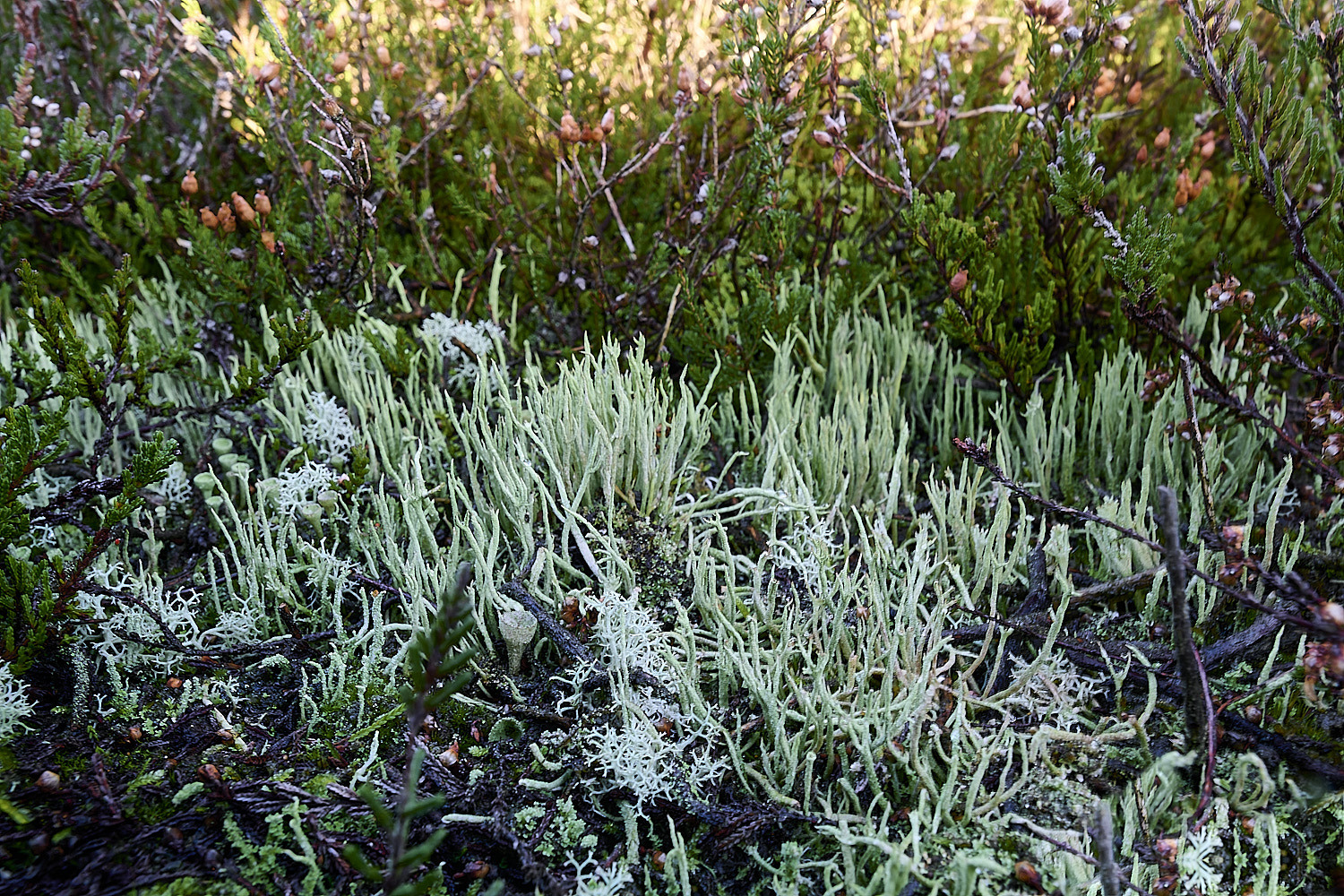
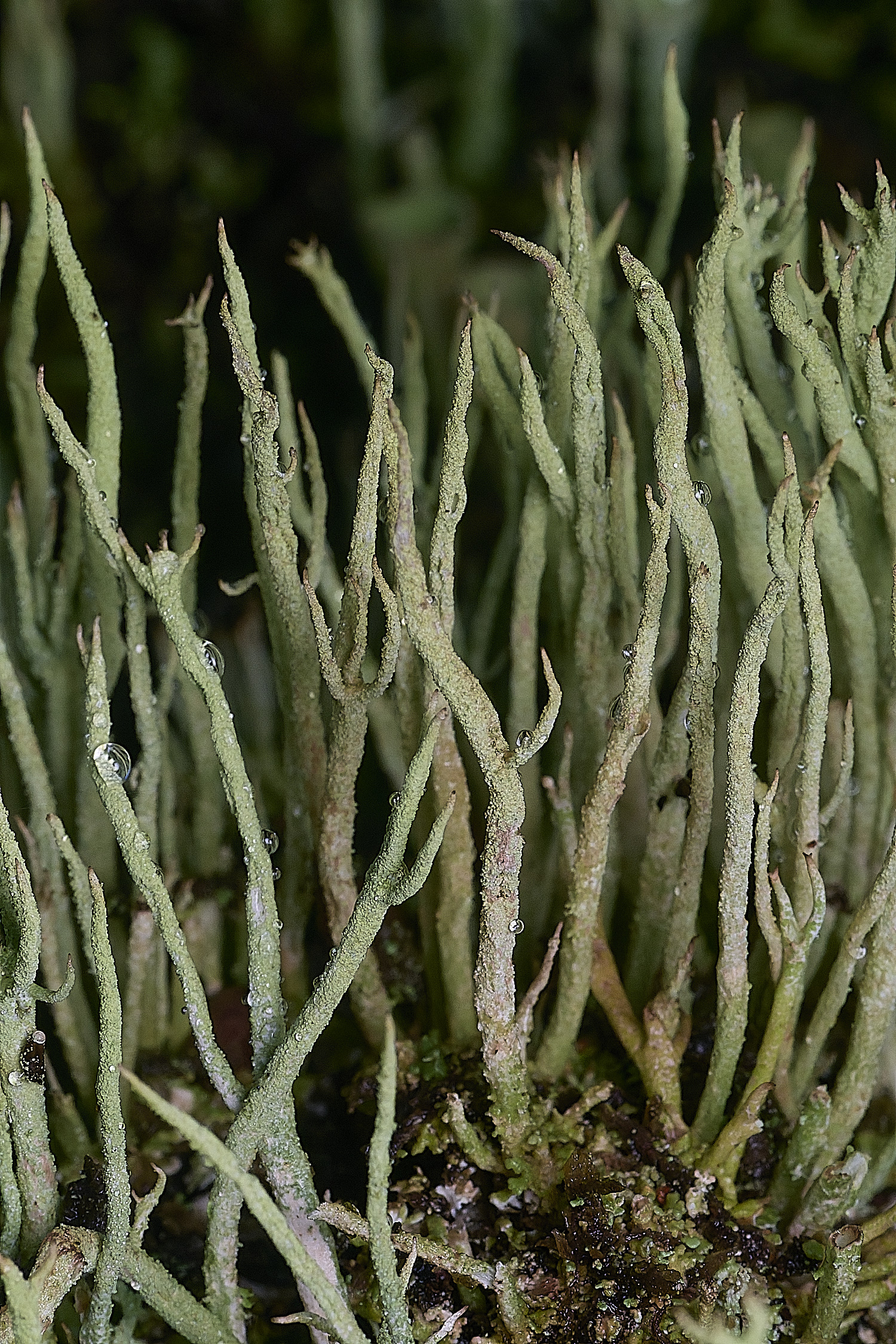

Cladonia glauca
Dobson
1 Apothecia brown 10 Primary thallus squamulose. Podetia prominent or not. 11 Thallus of podetia or podetia growing from basal squamules. 12
Thallus with podetia which are not usually interwoven, sparsely or not branched, and which may have a cup at the tip. 32 Some podetia with longitudinal splits
33 K-, Podetia with soredia and squamules UV - ice blue - Cladonia glauca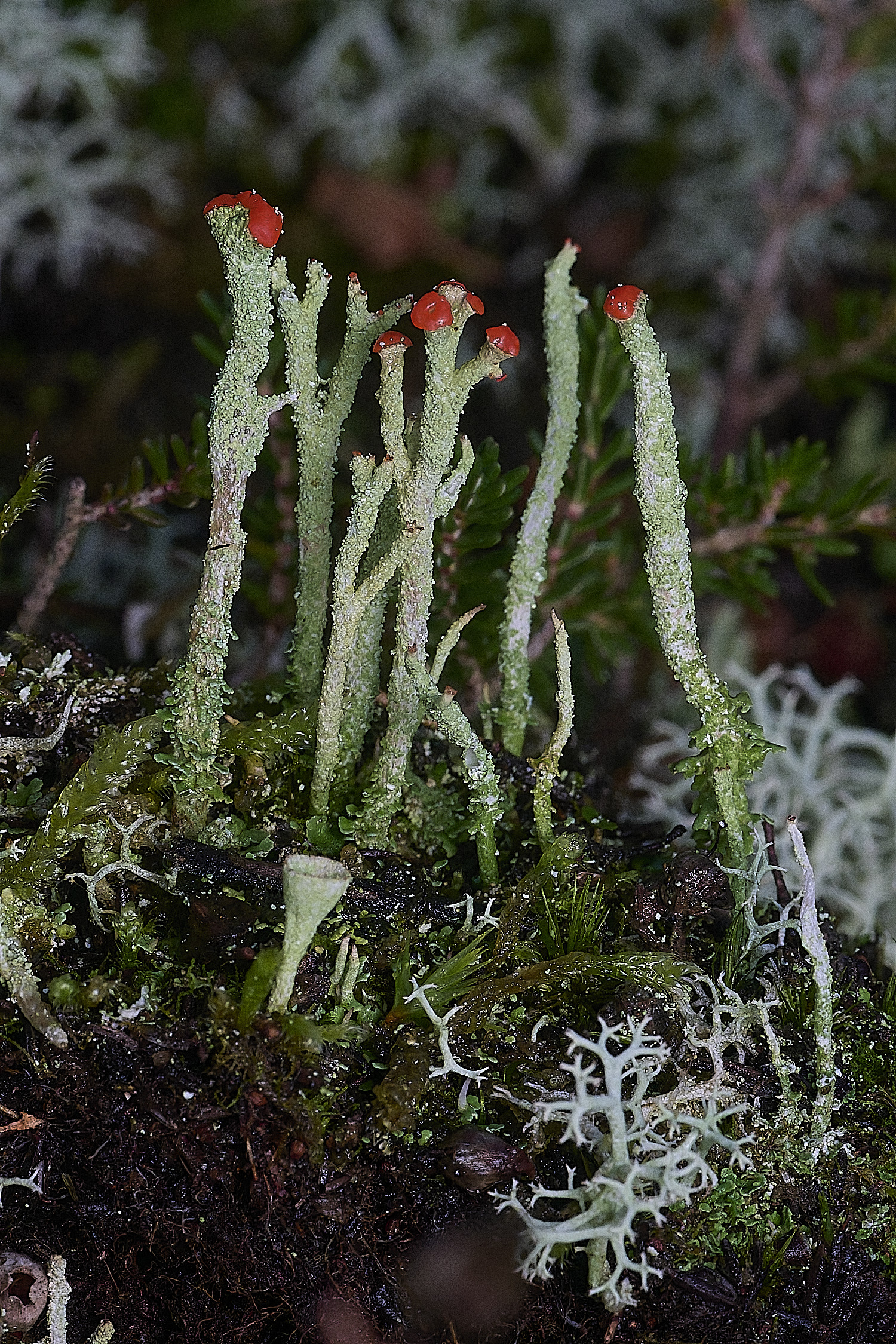
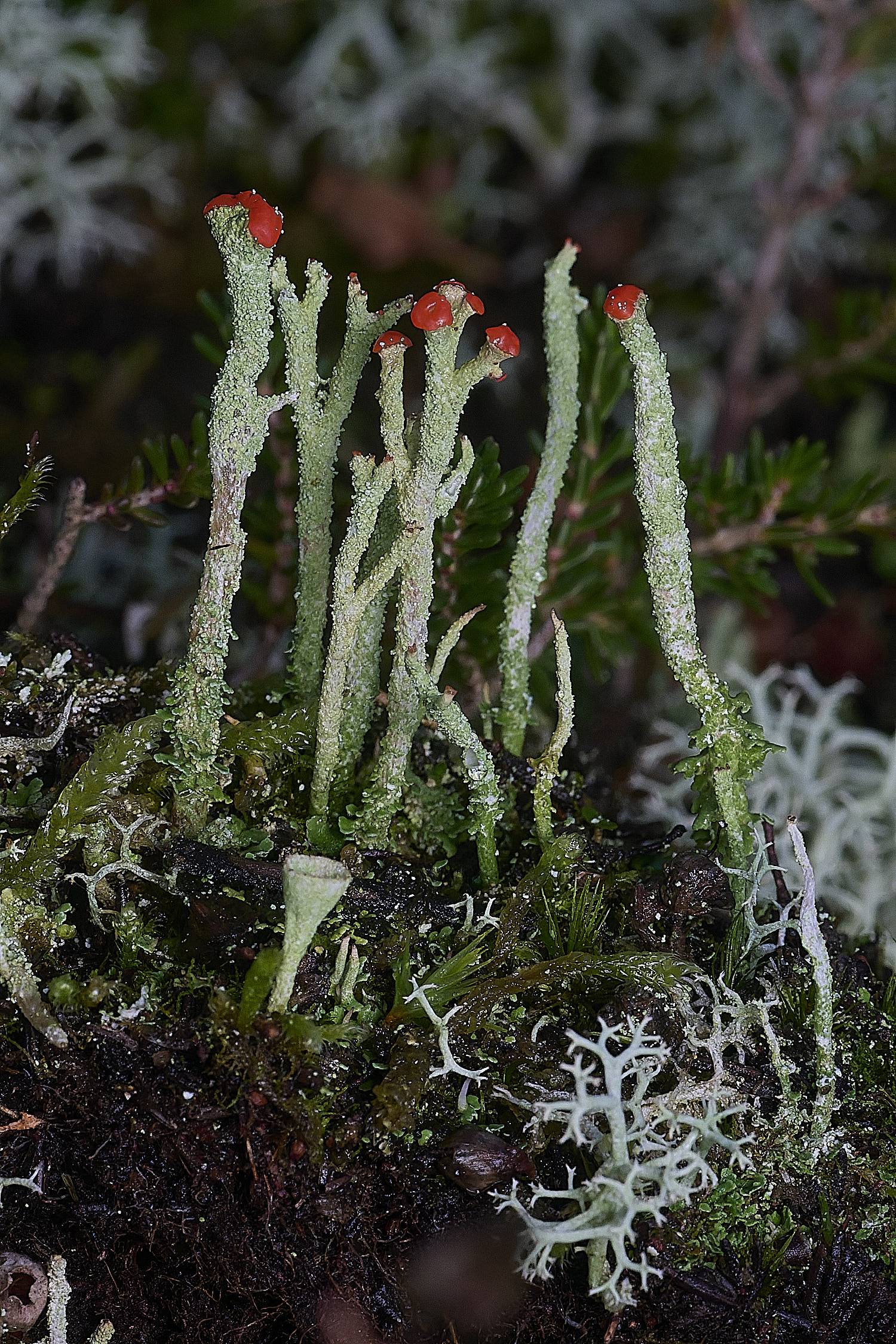
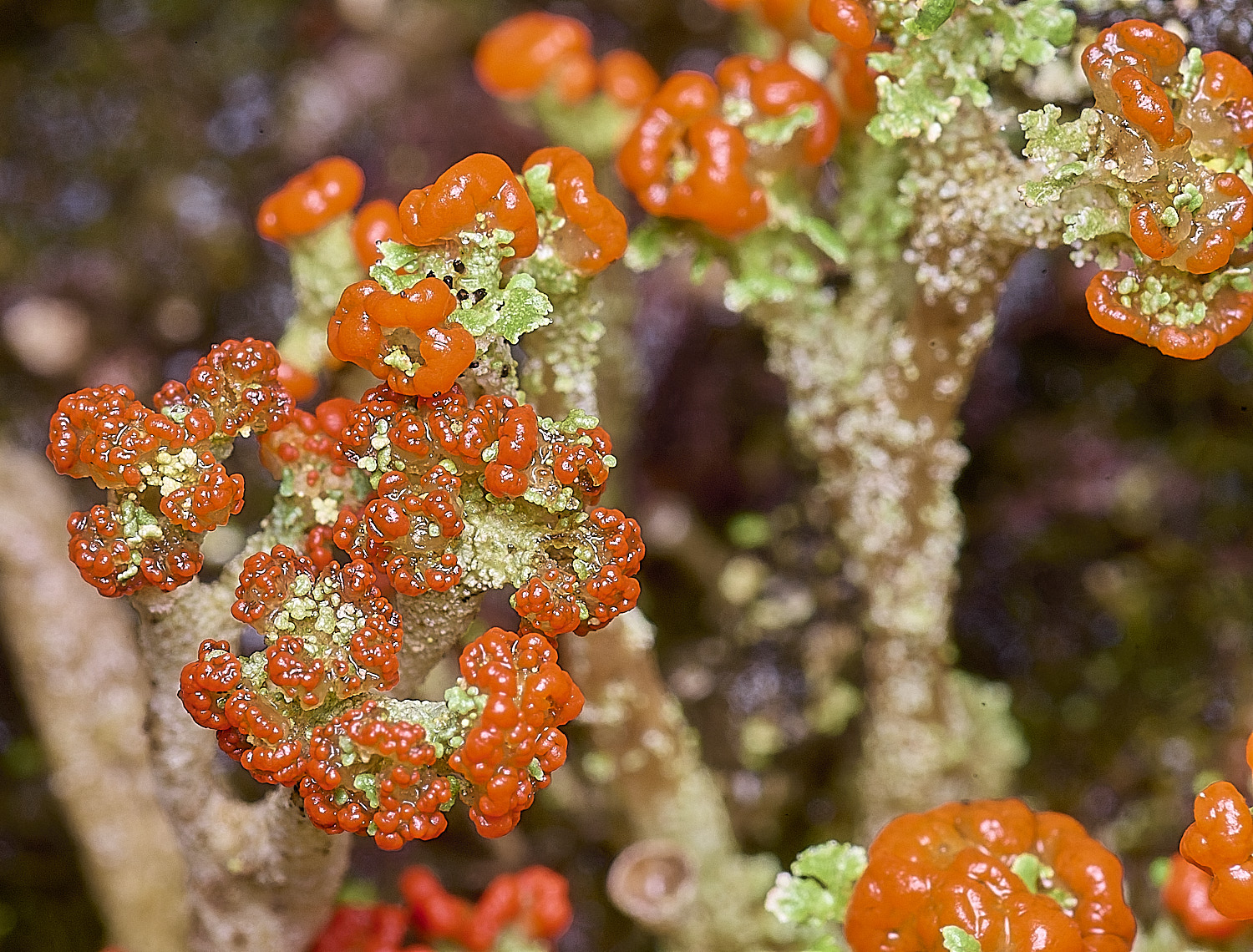

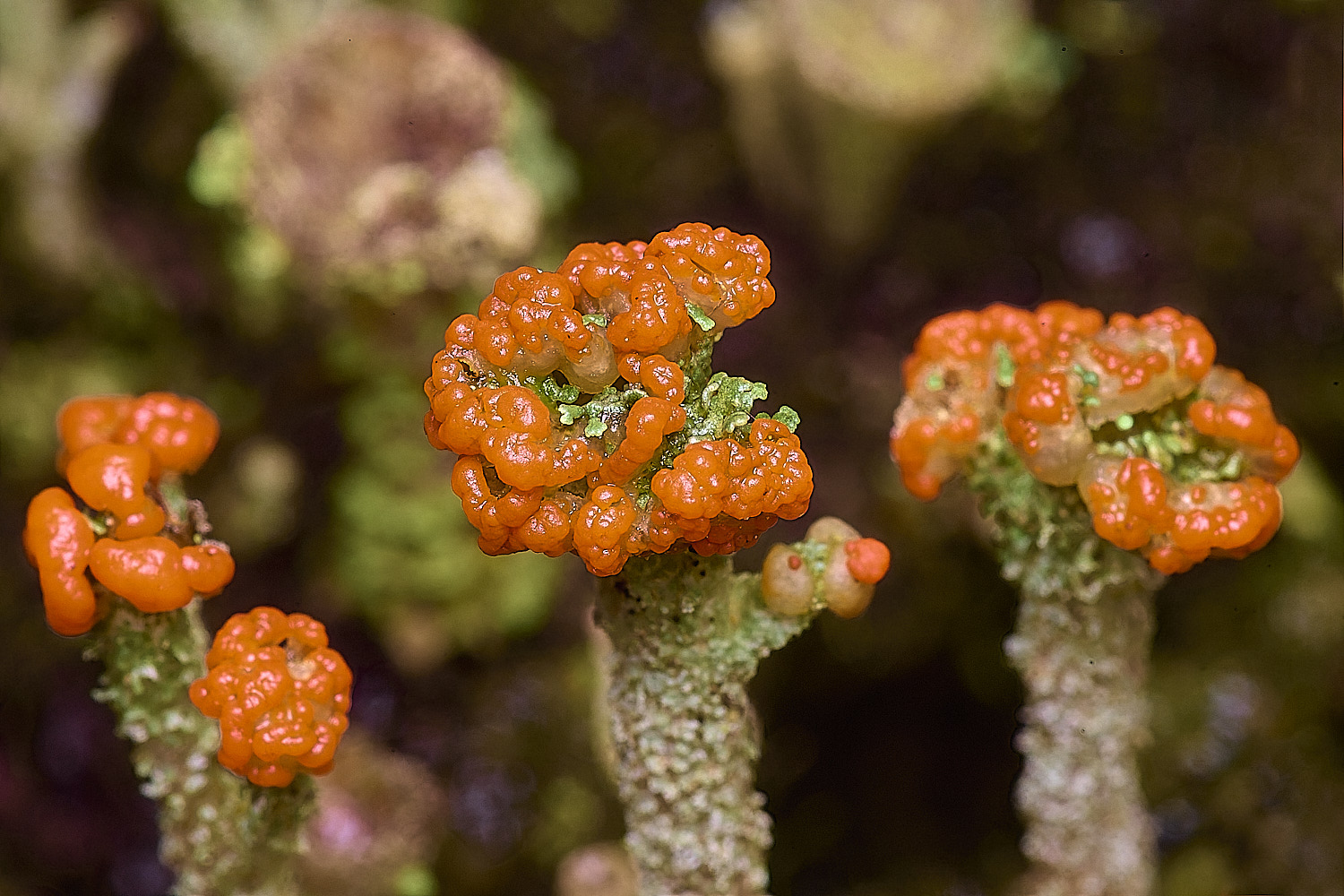
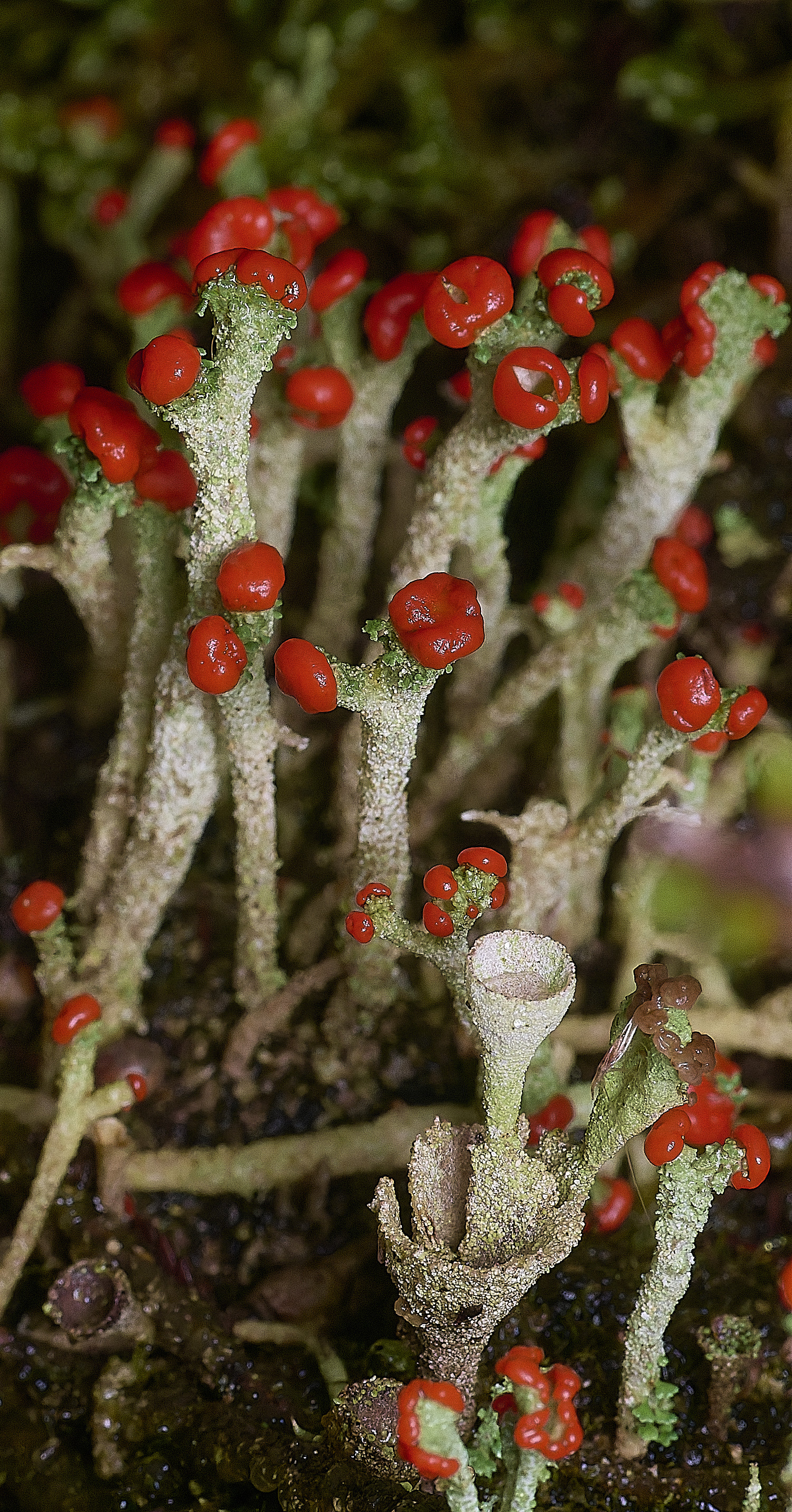
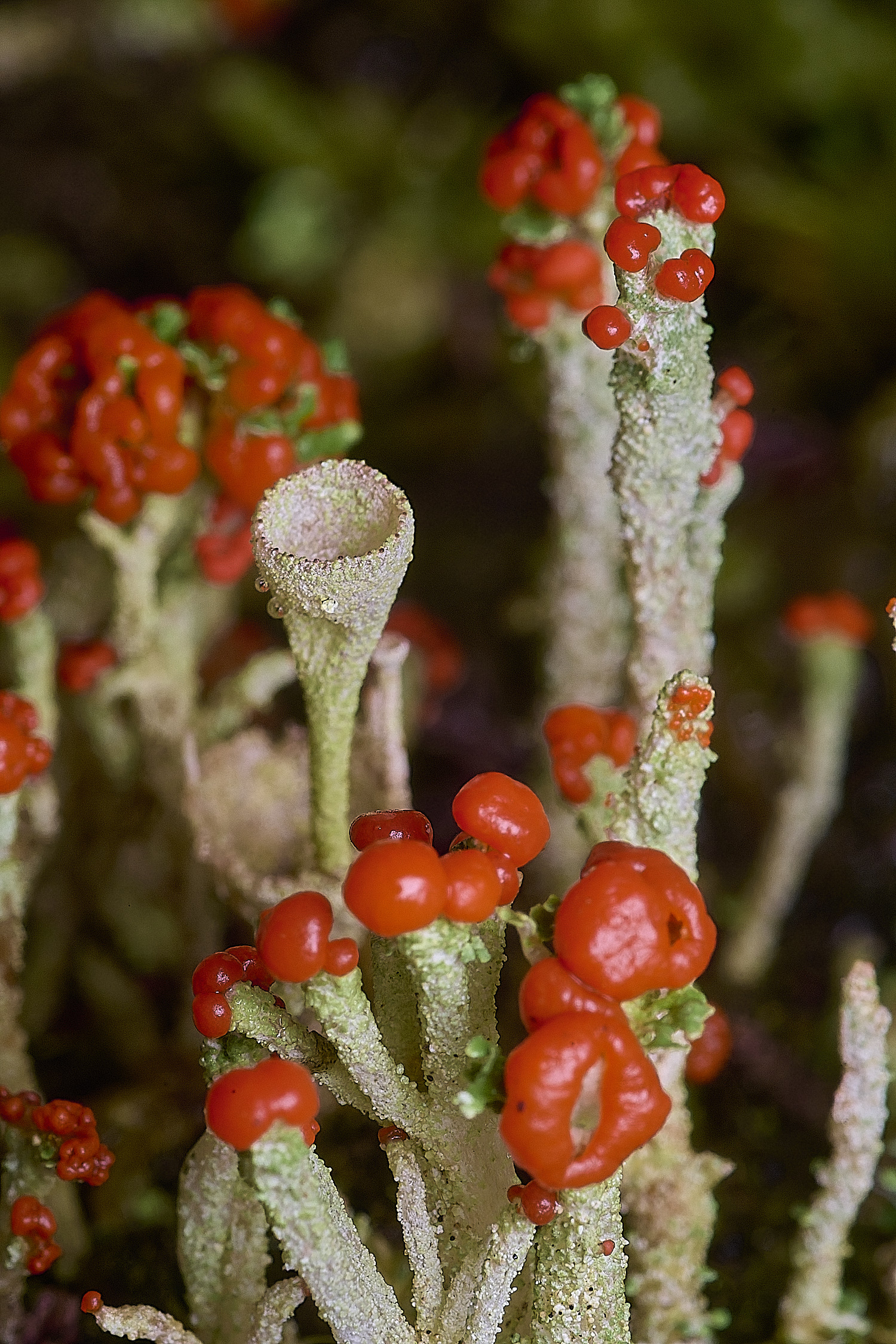
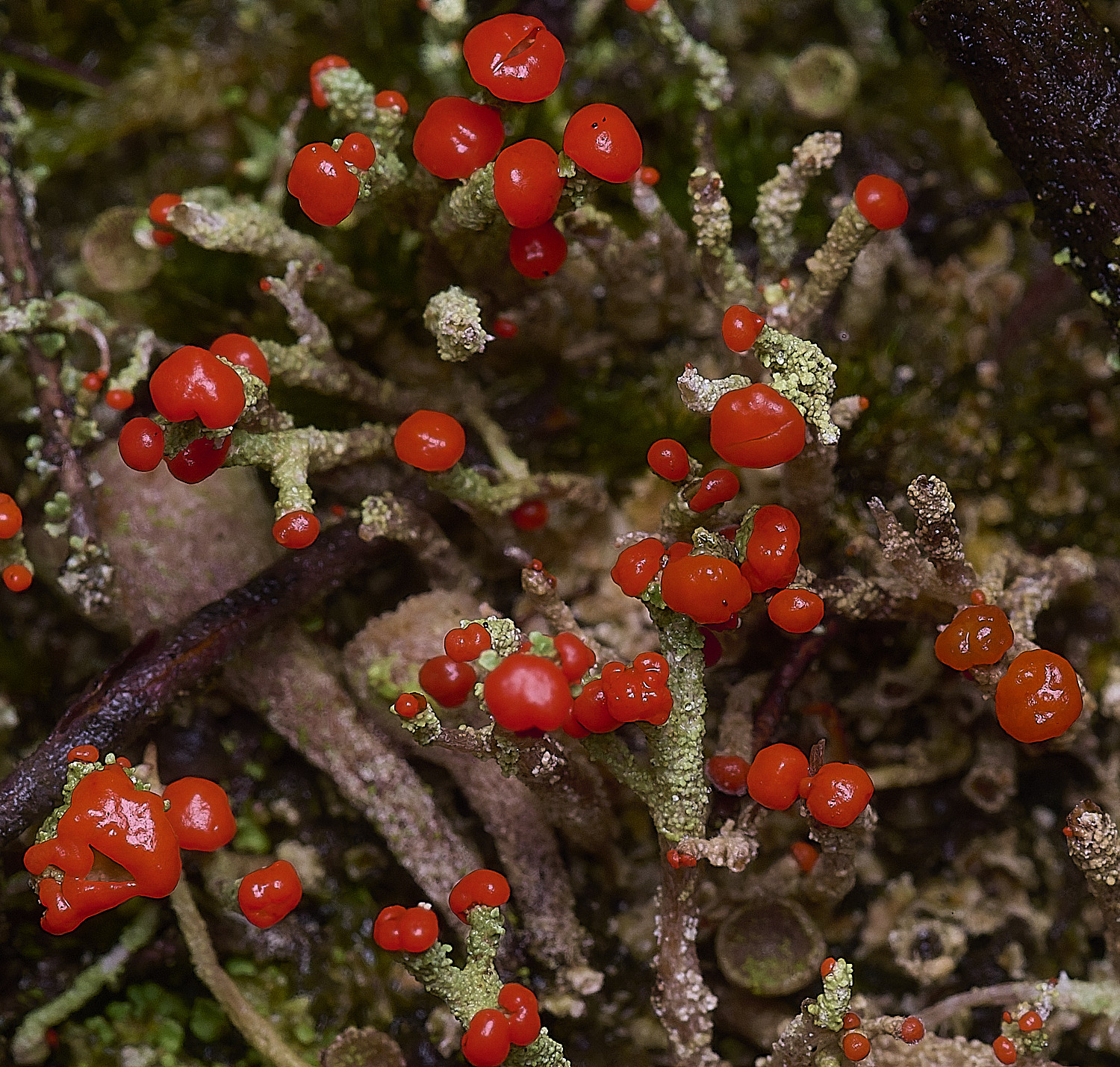
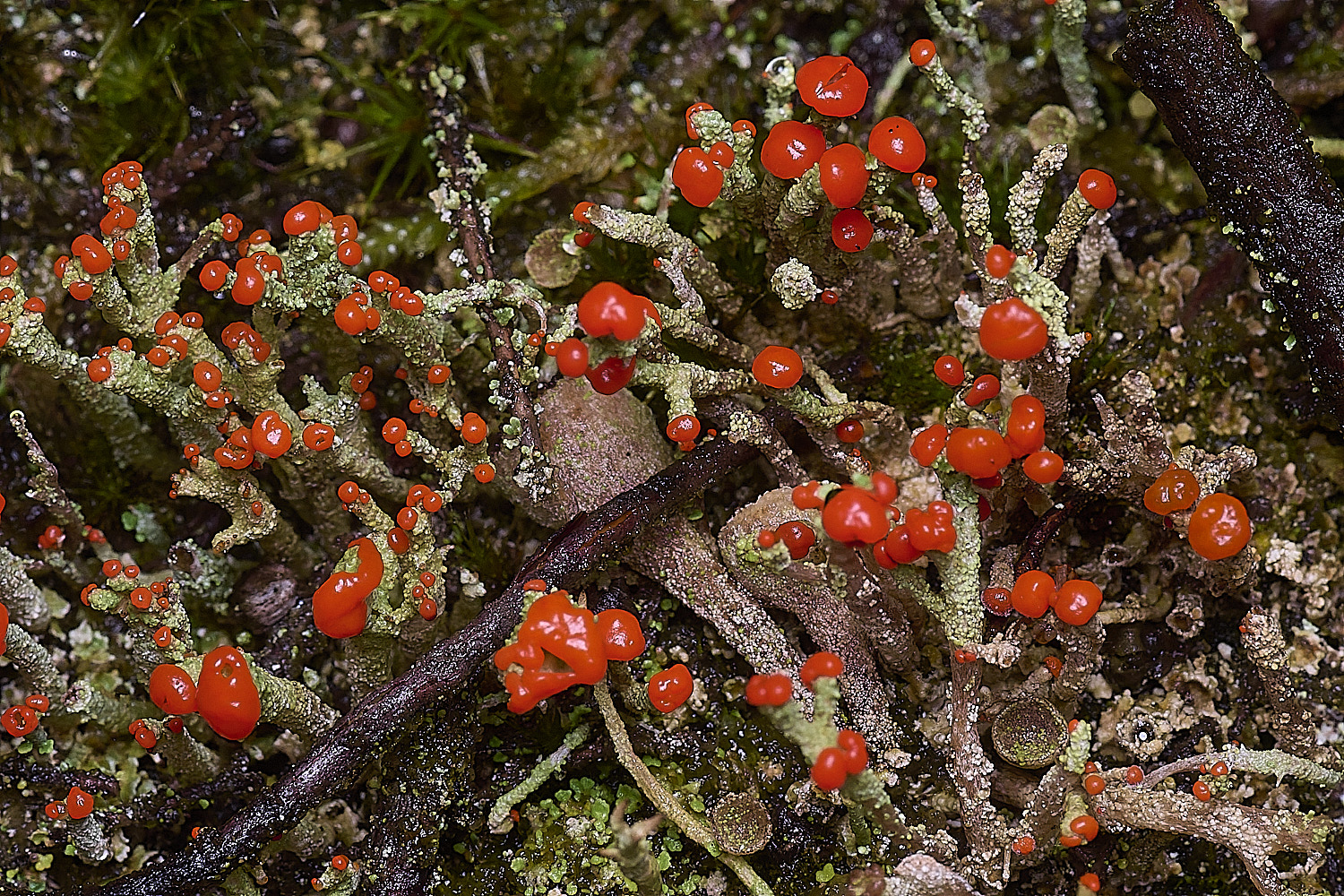
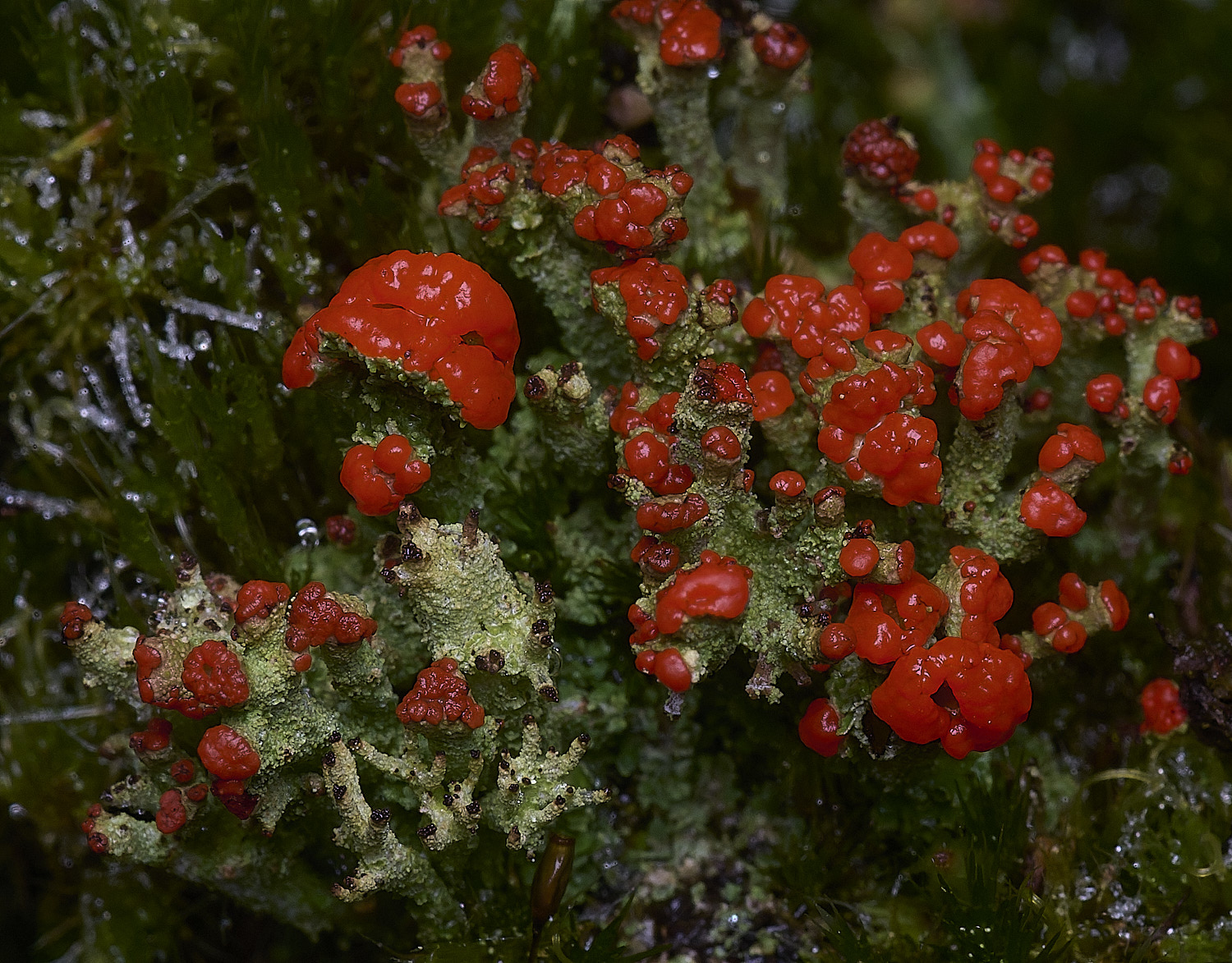
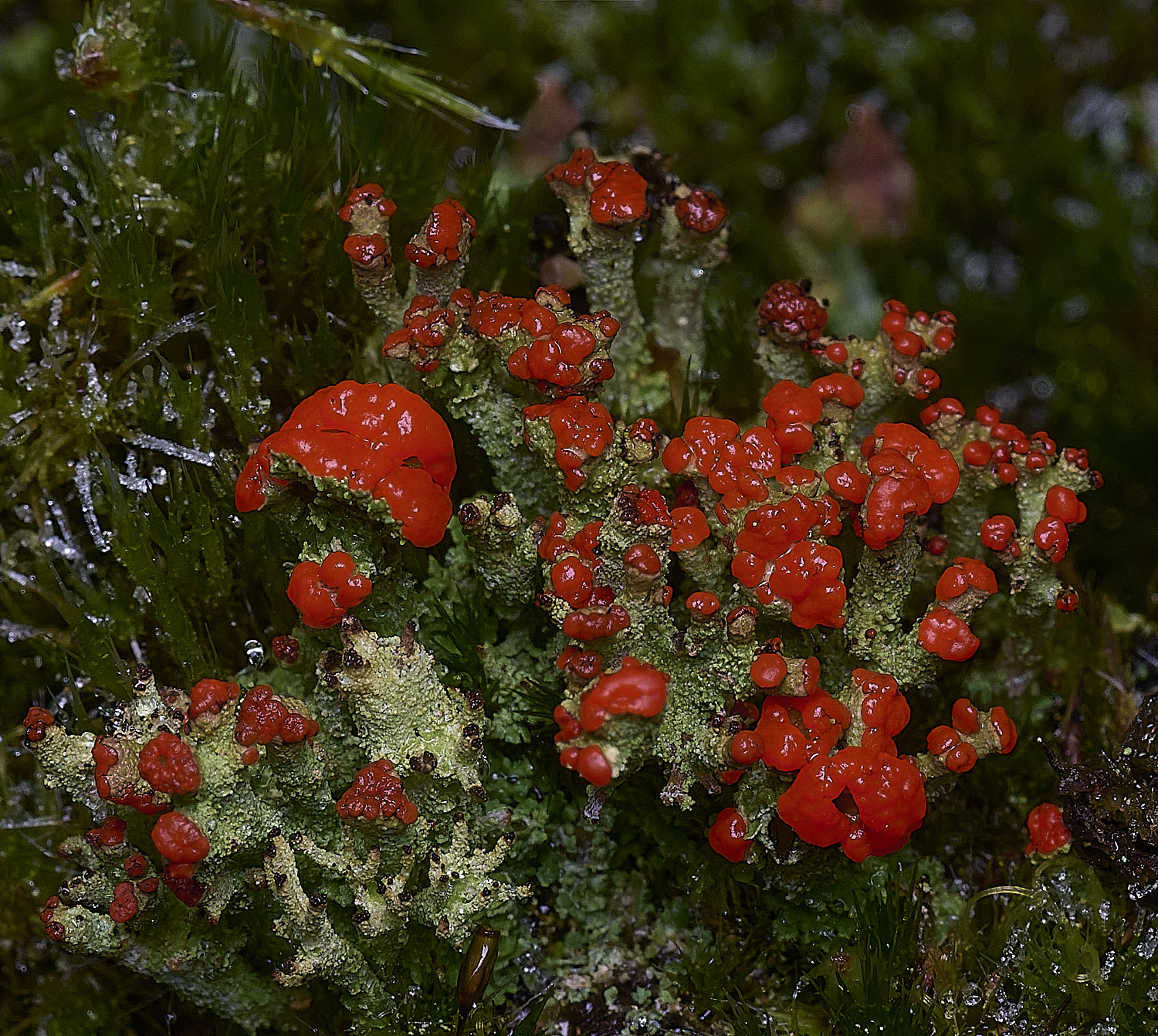
Cladonia floerkeana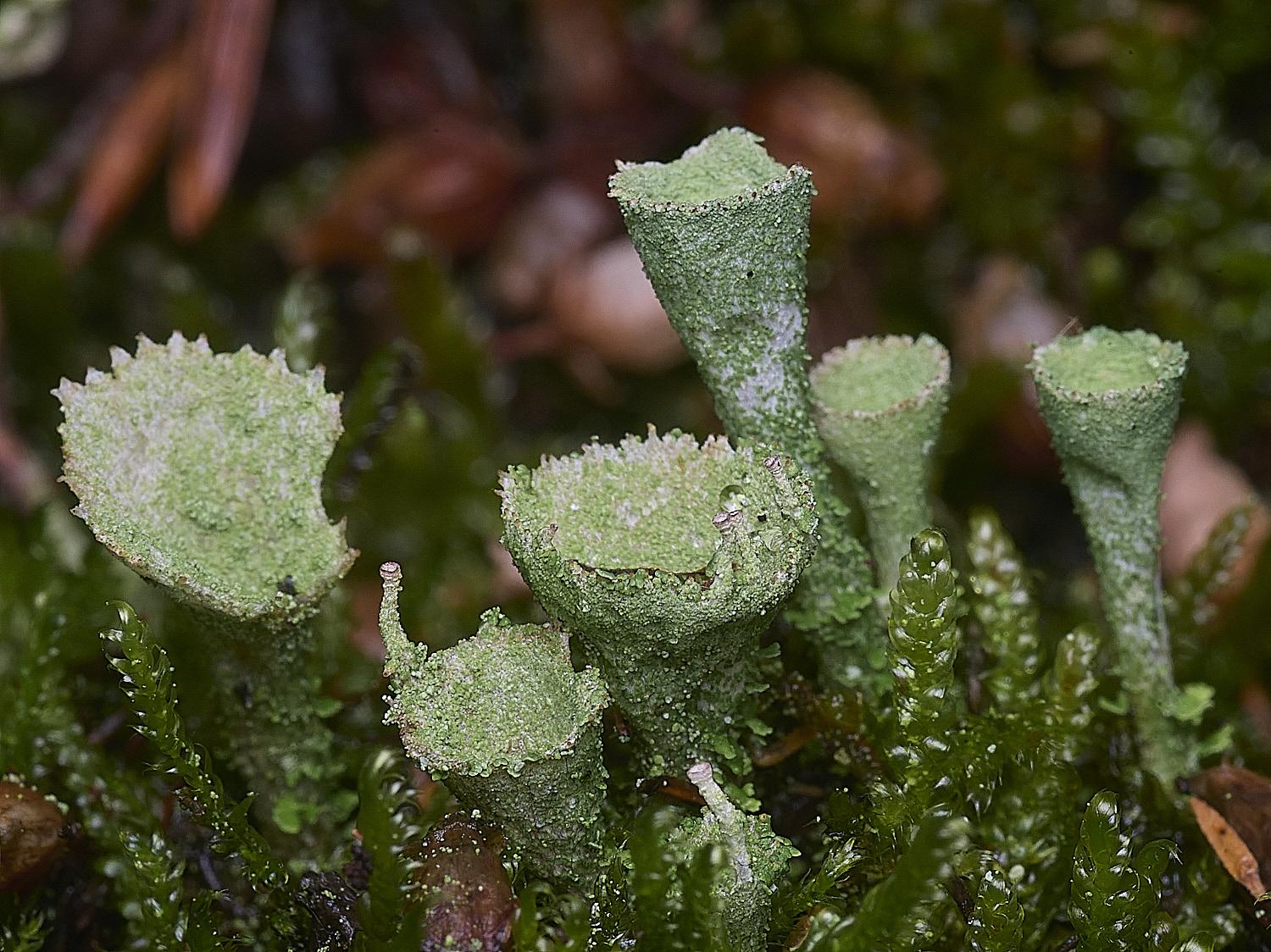

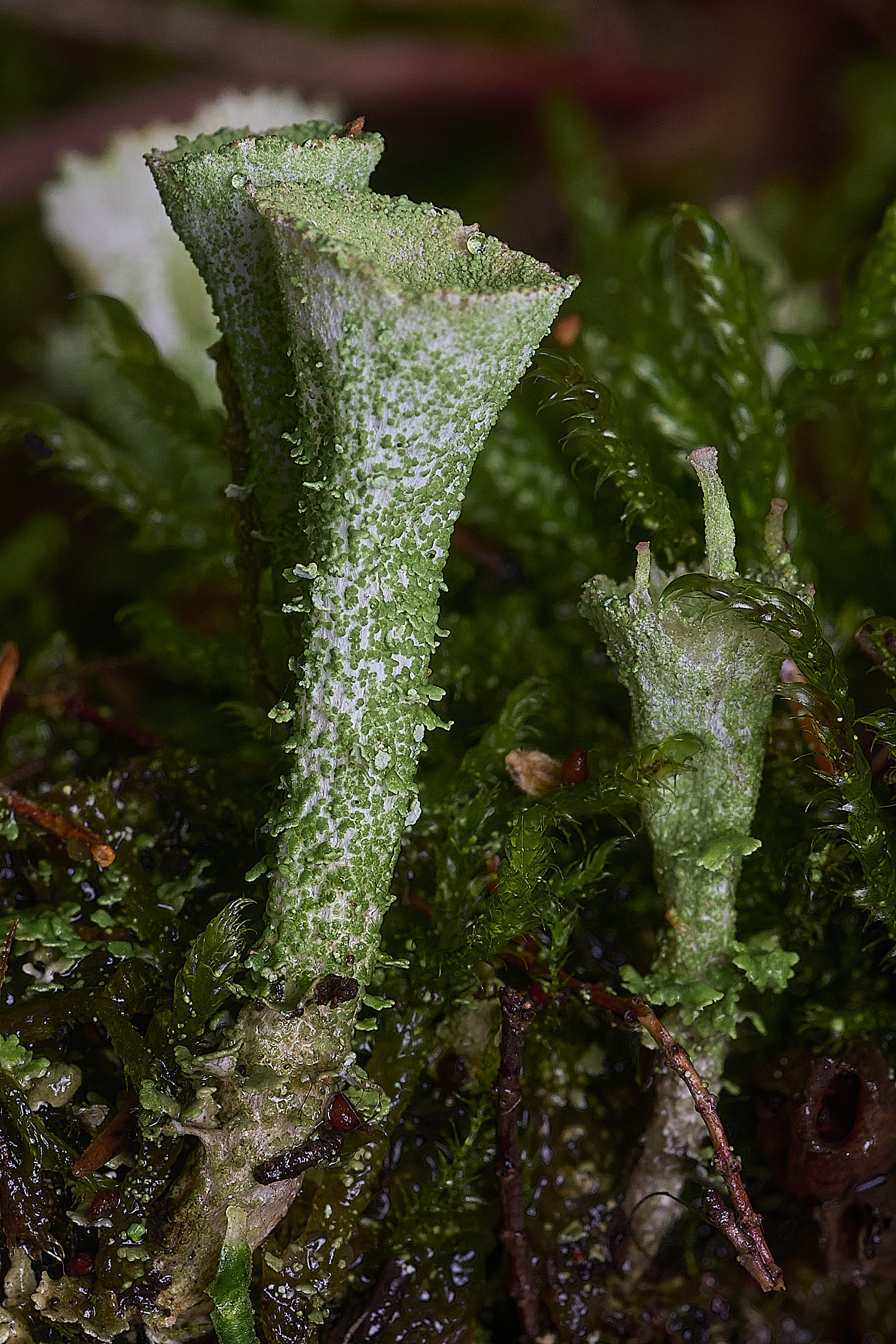
Cladonia Sp? 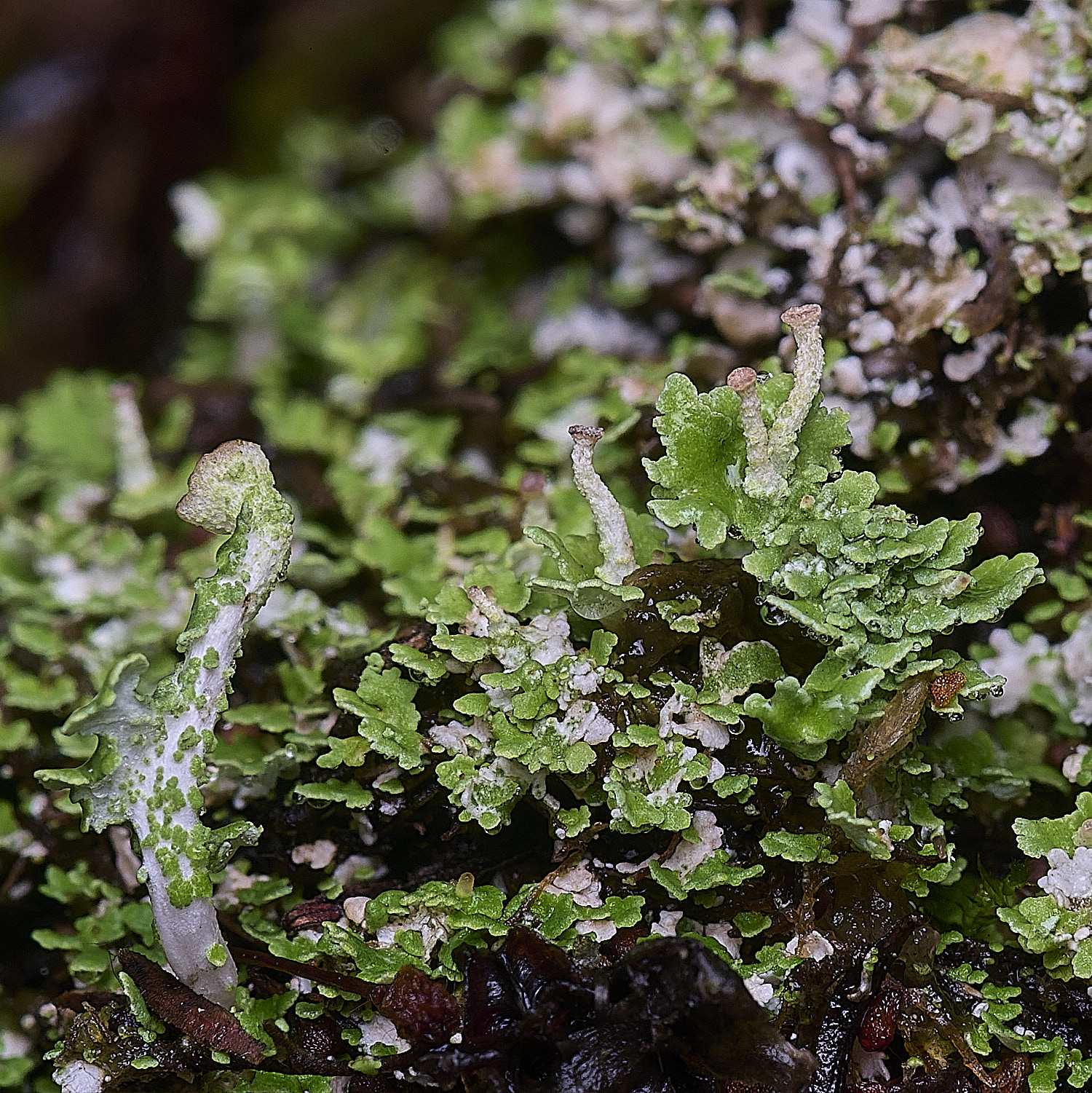
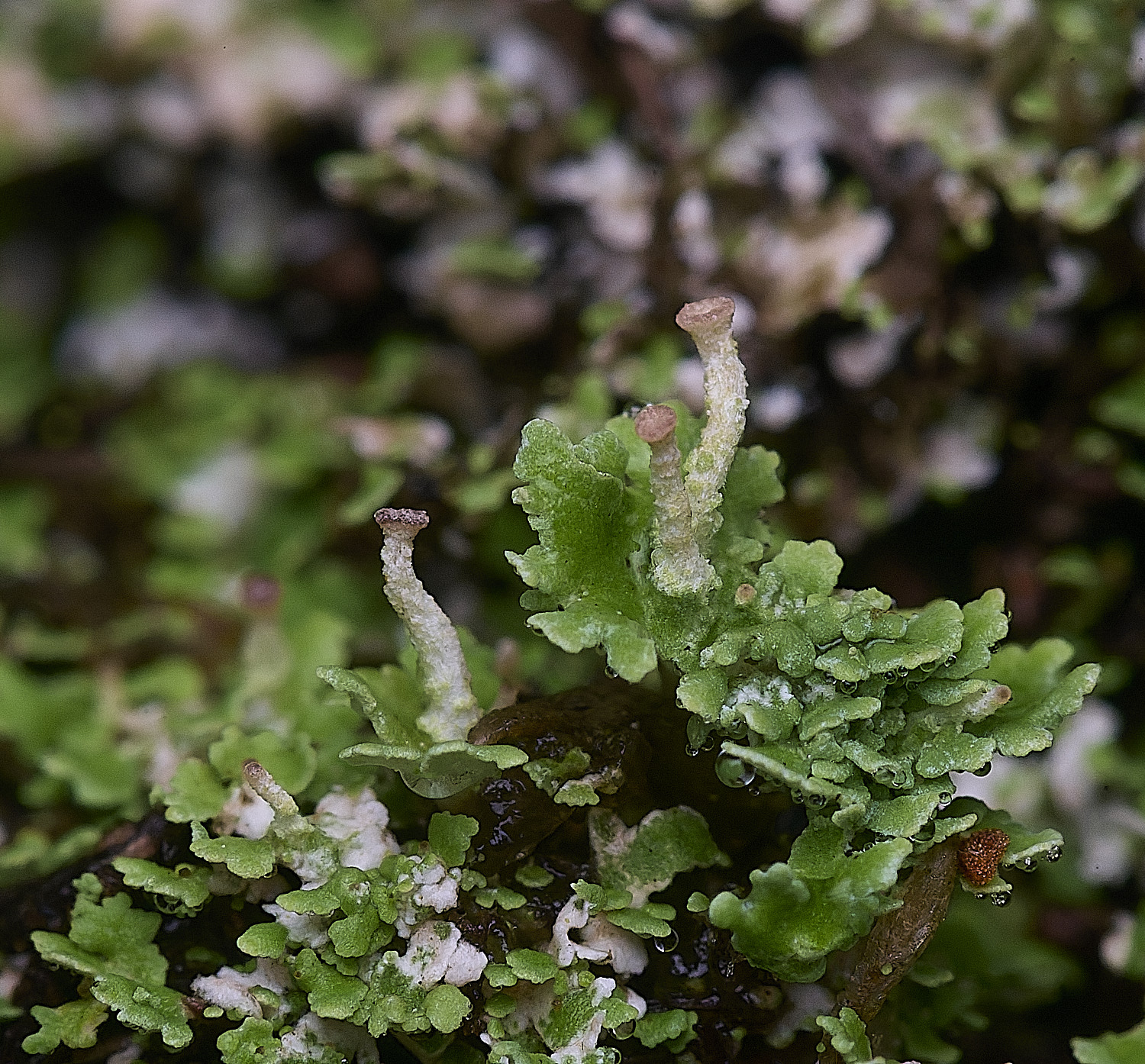
Cladomia Sp?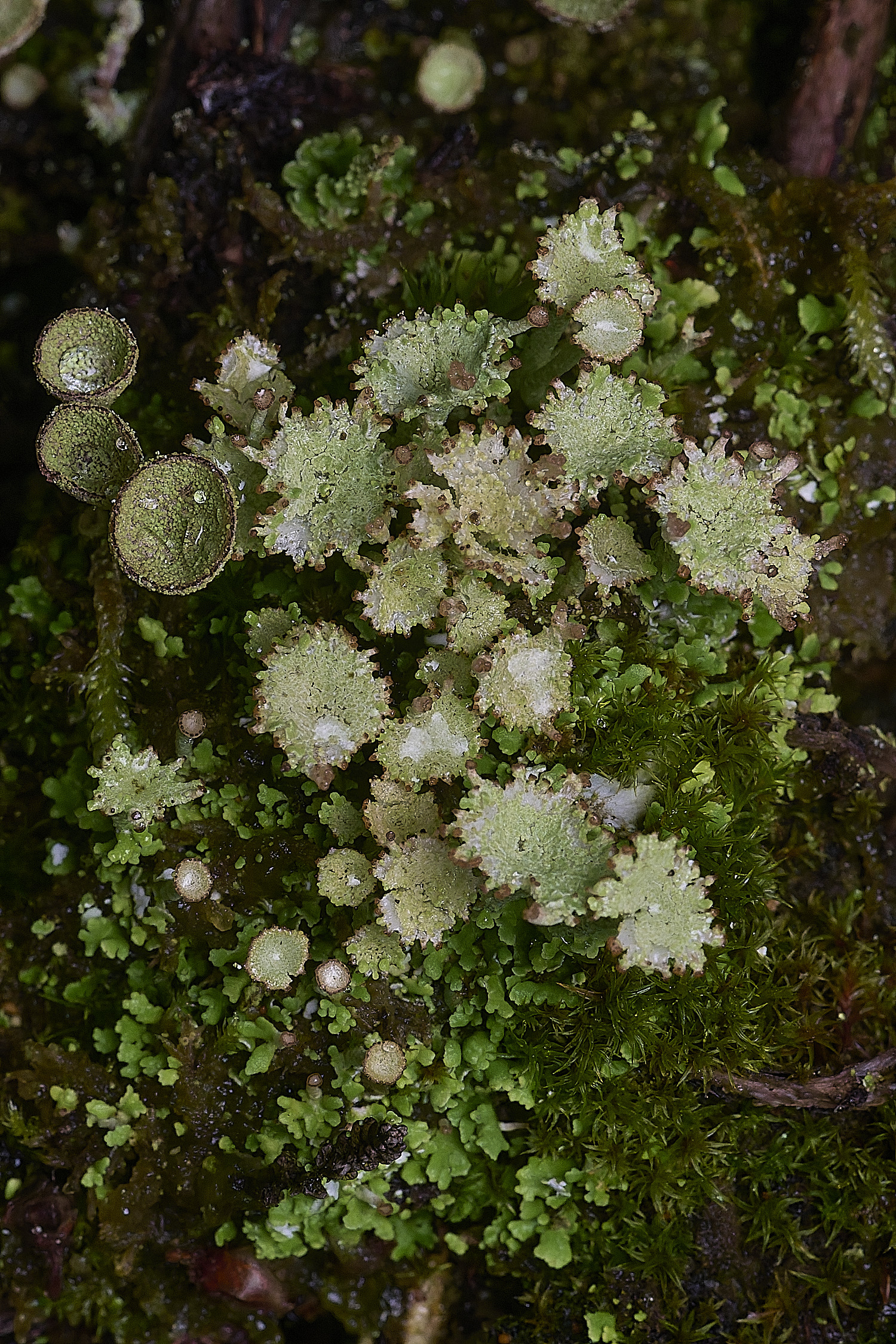

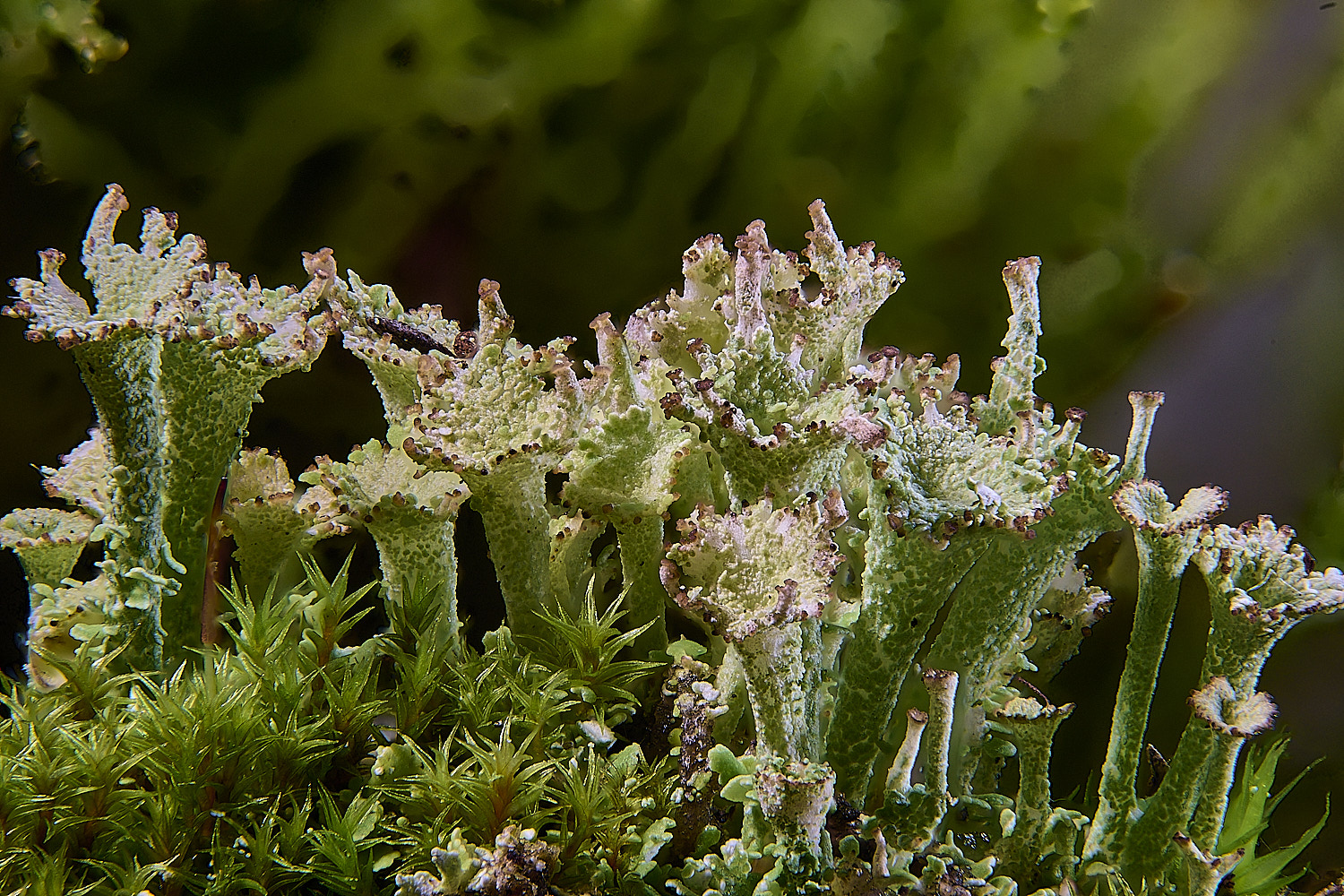
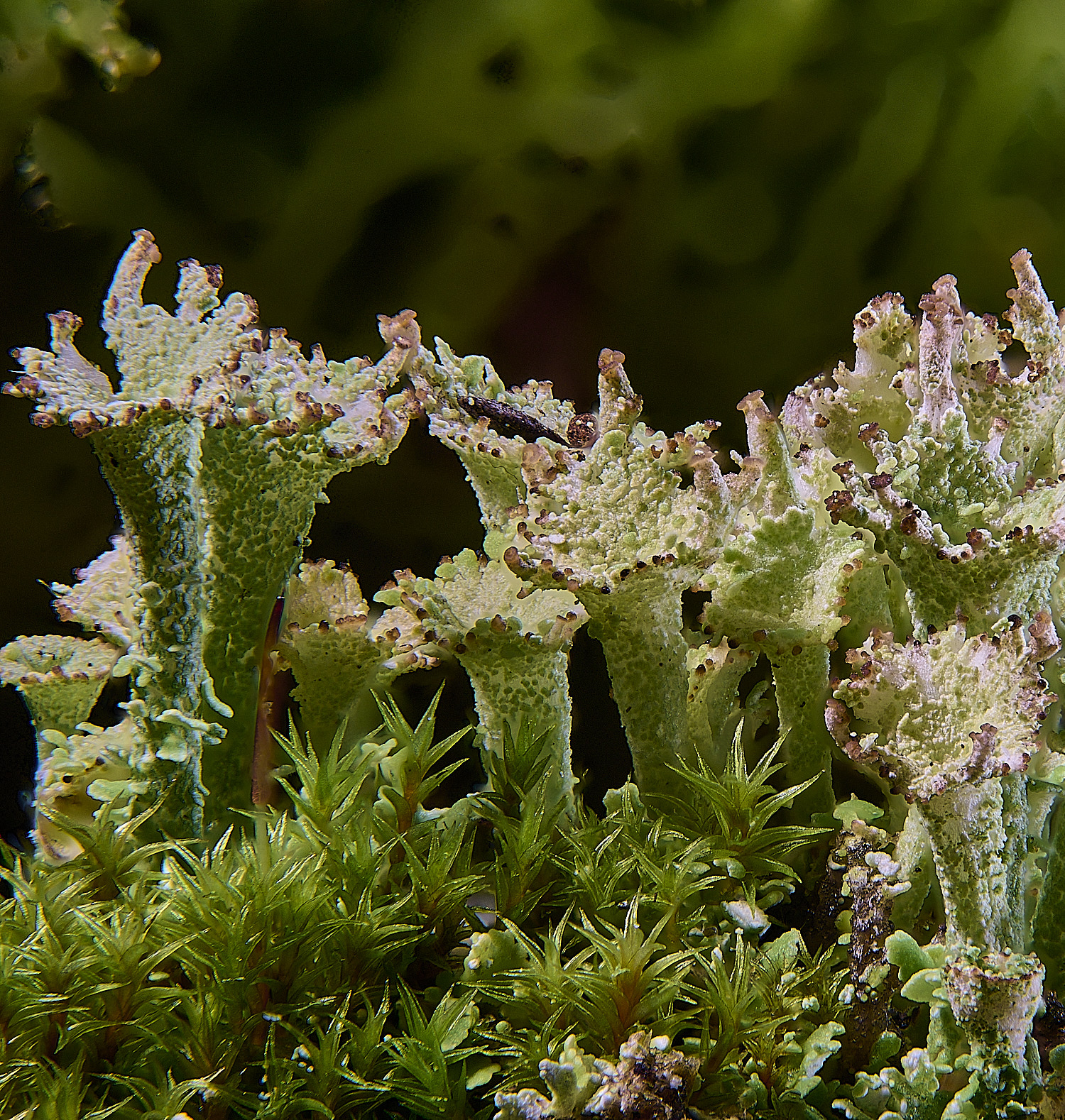
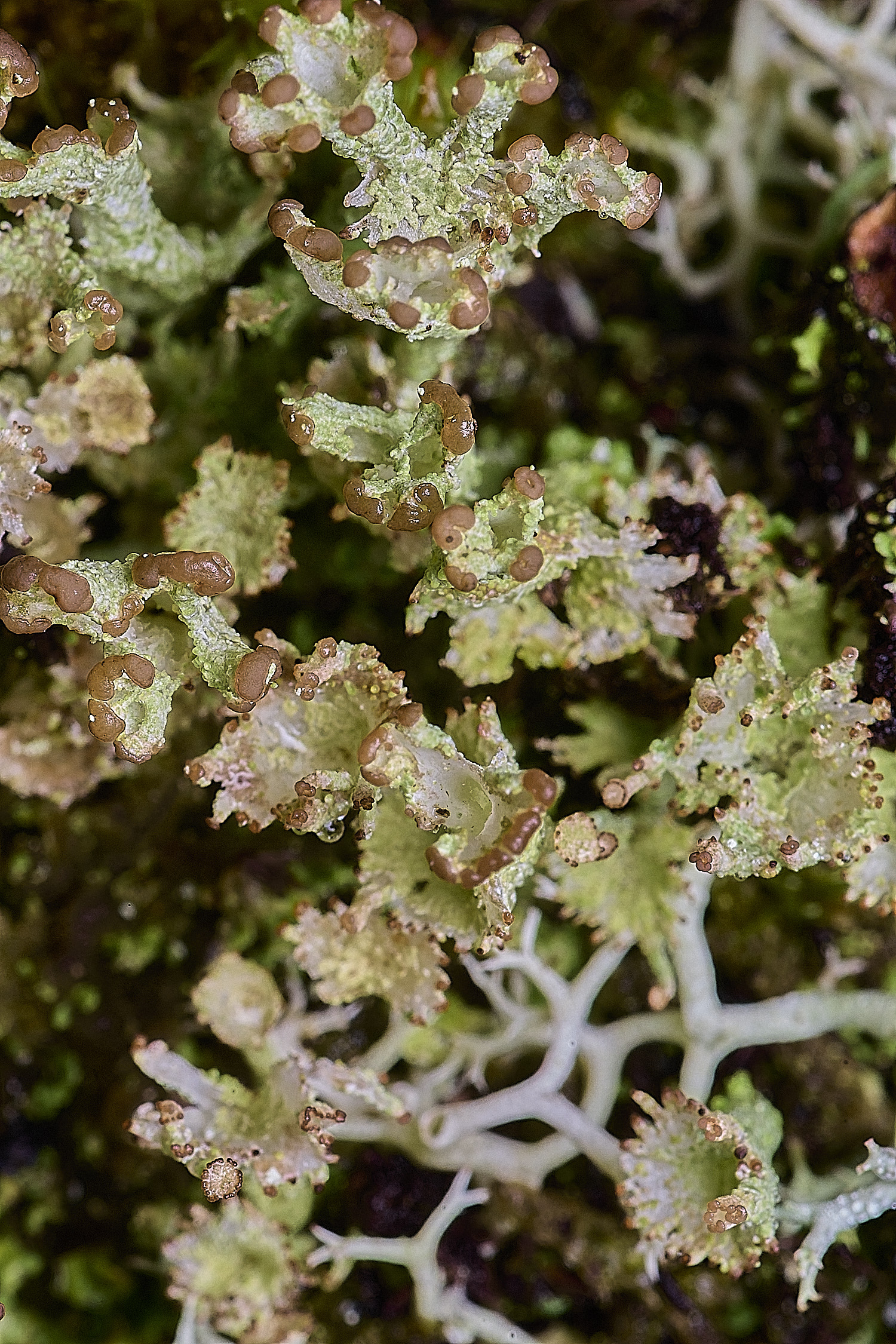
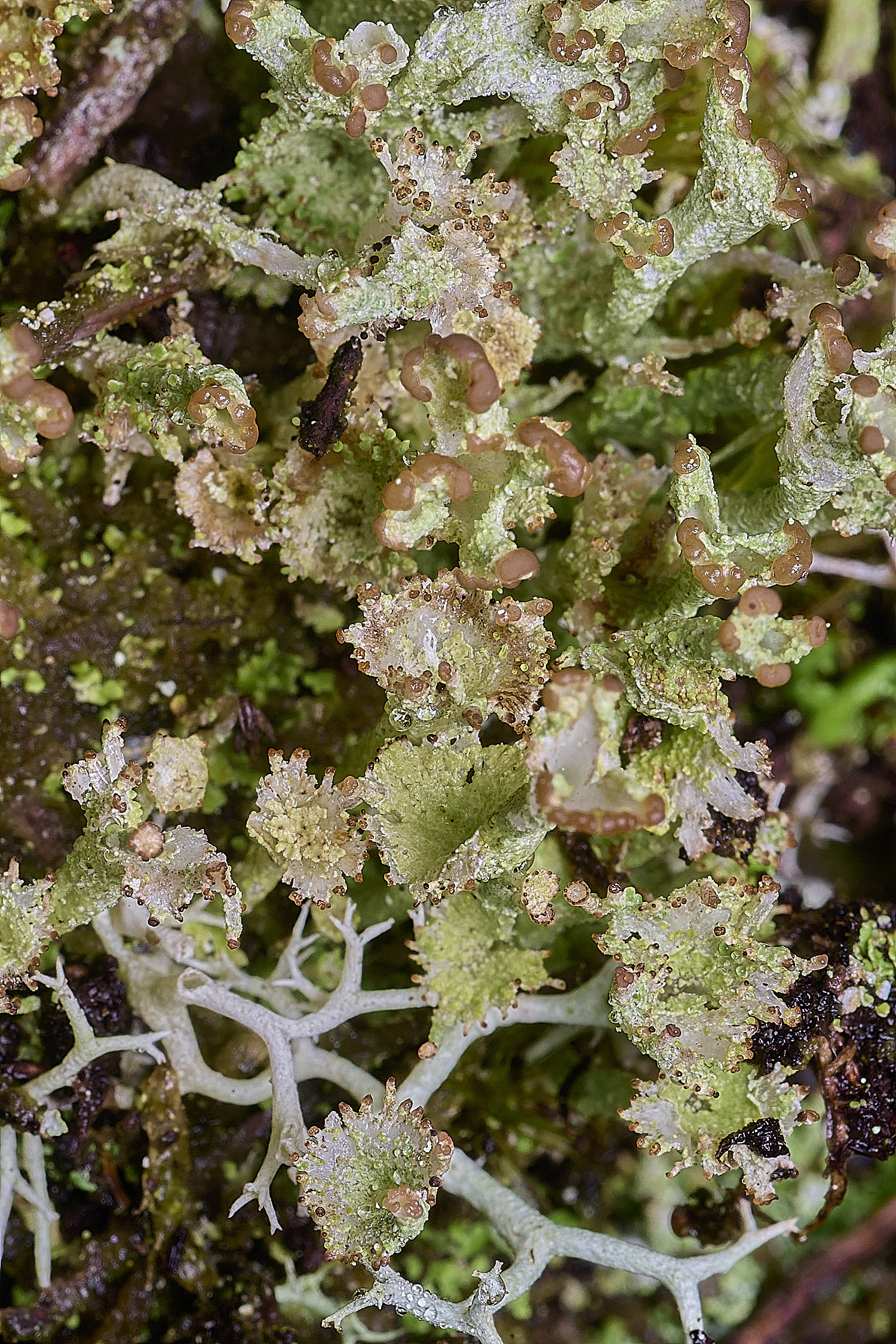

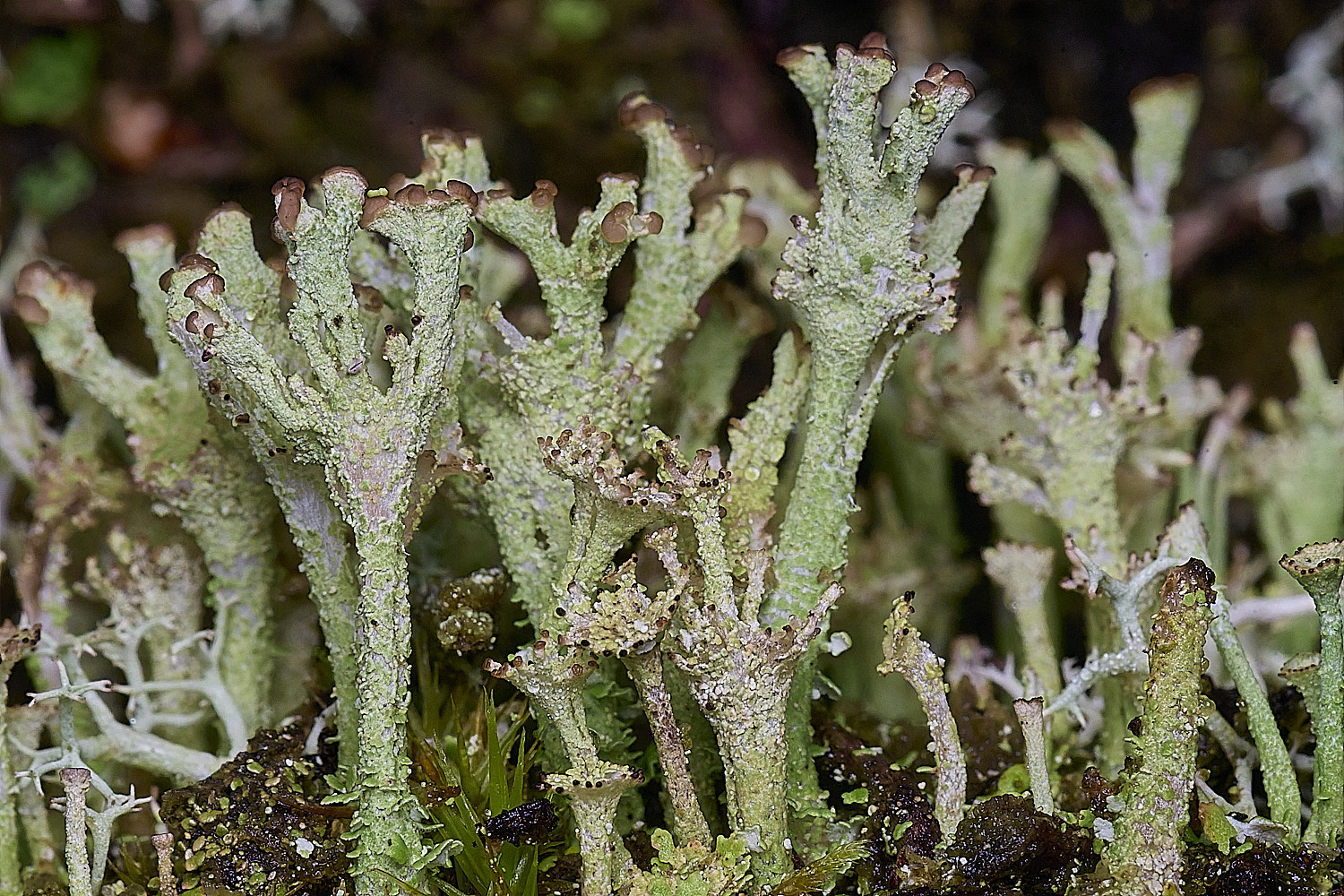
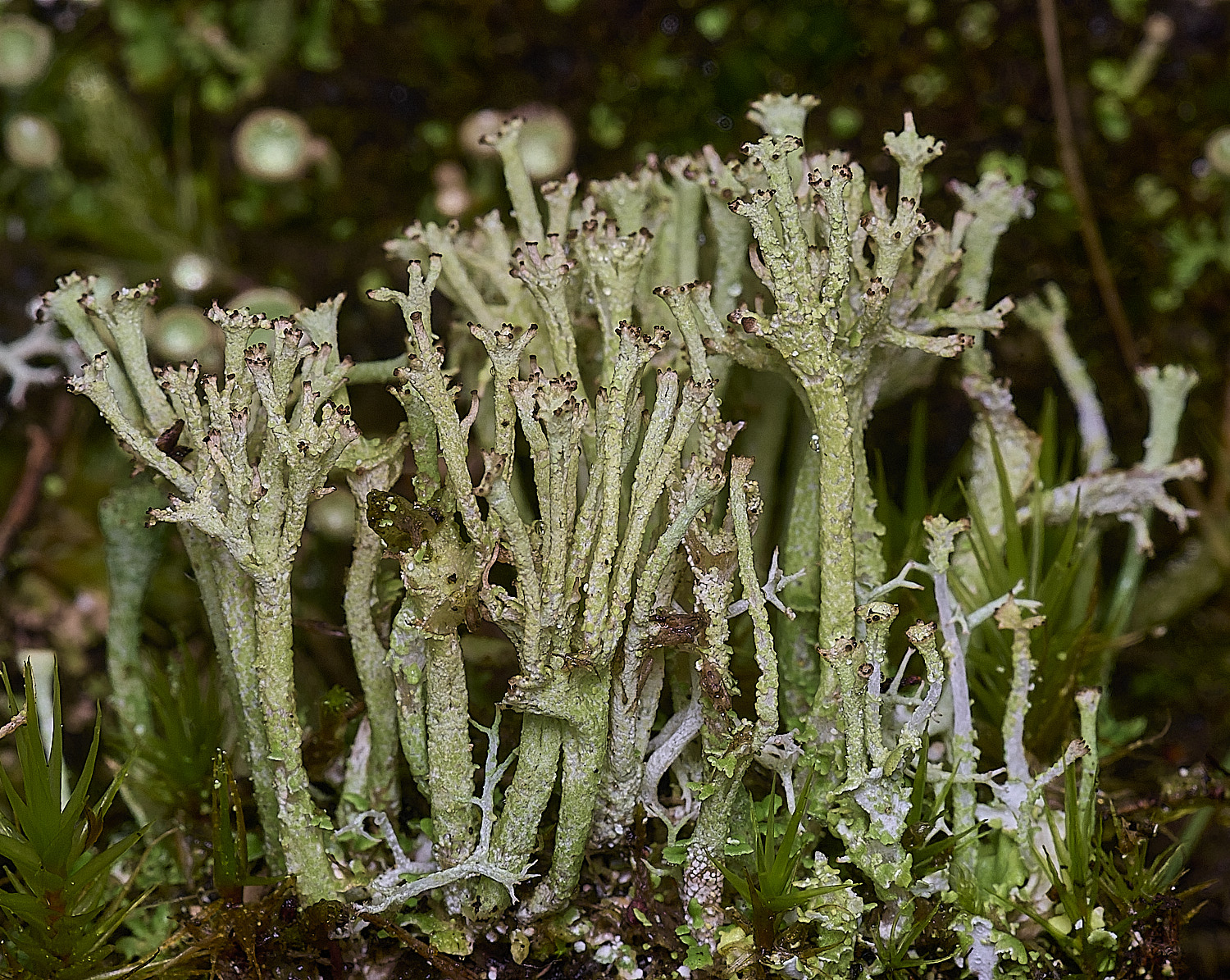

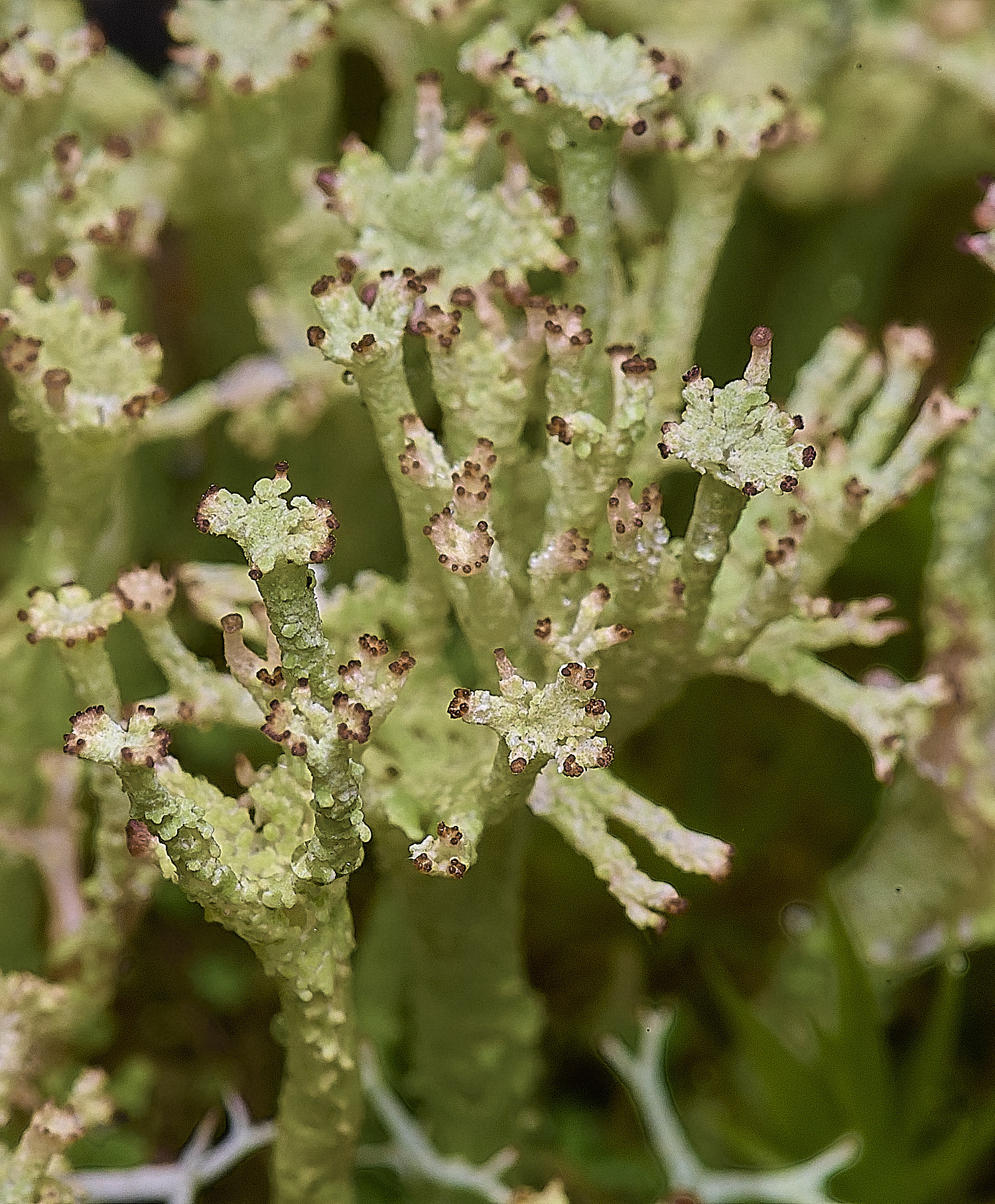
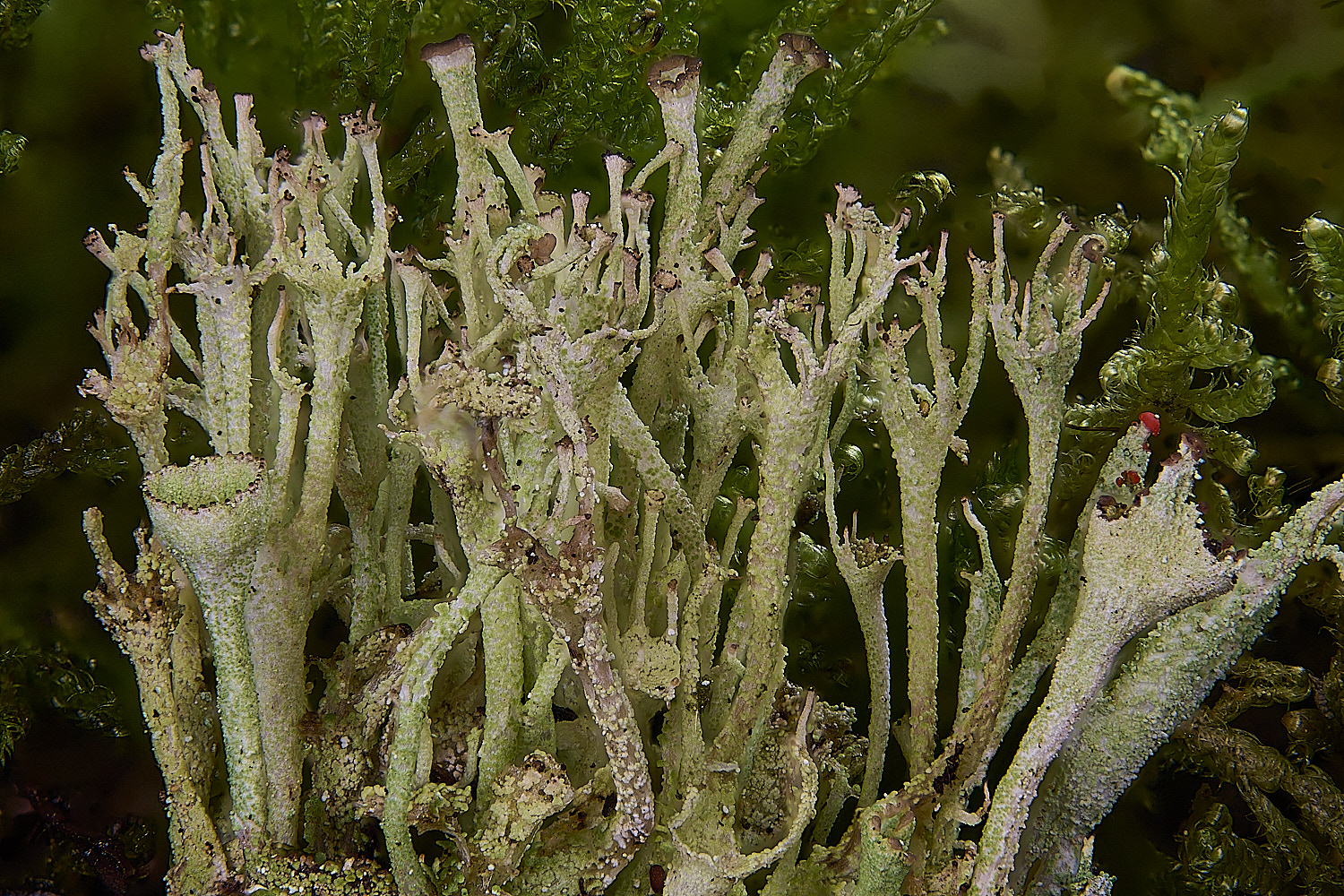
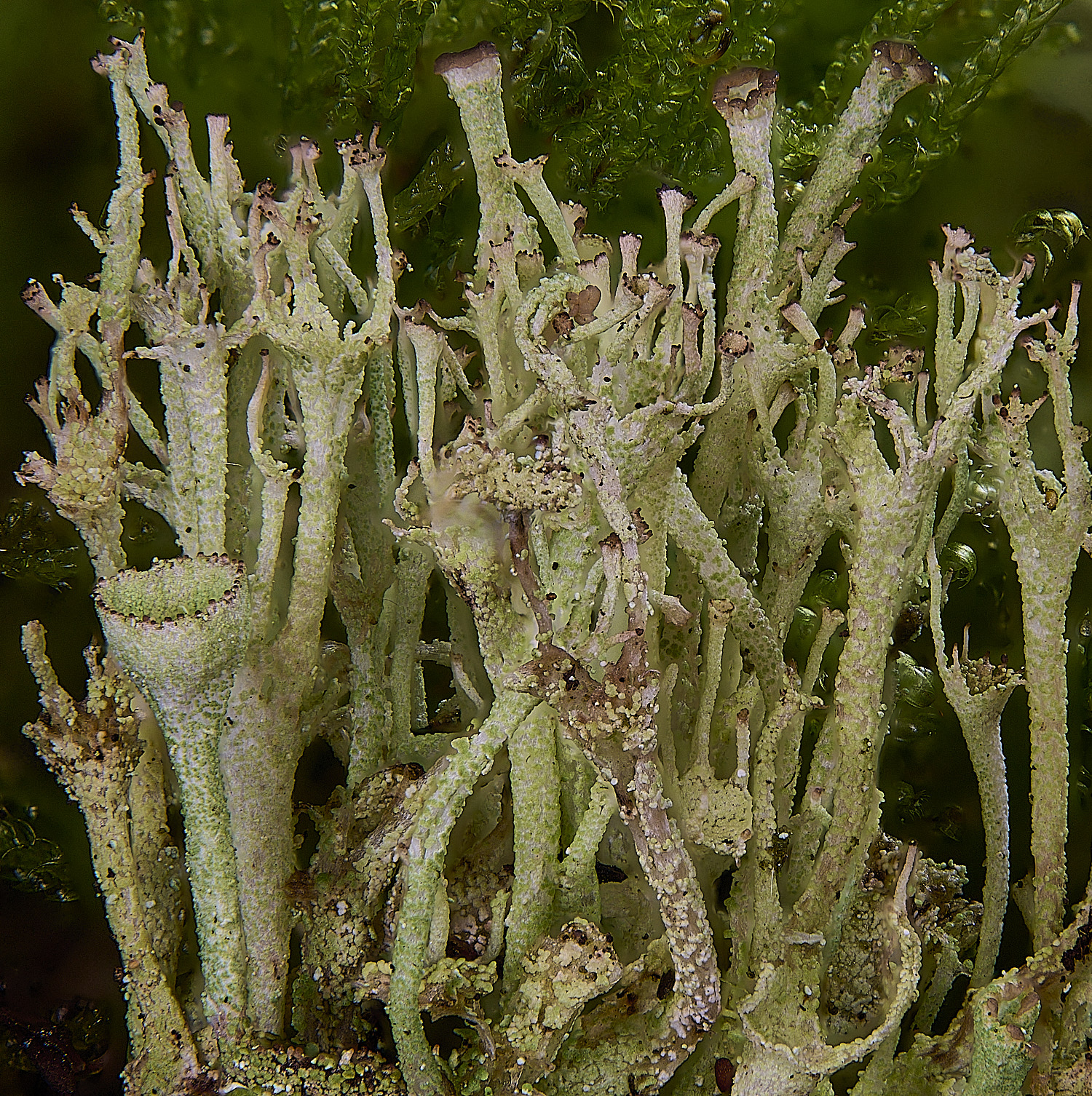
All forms of Cladonia chlorophaea???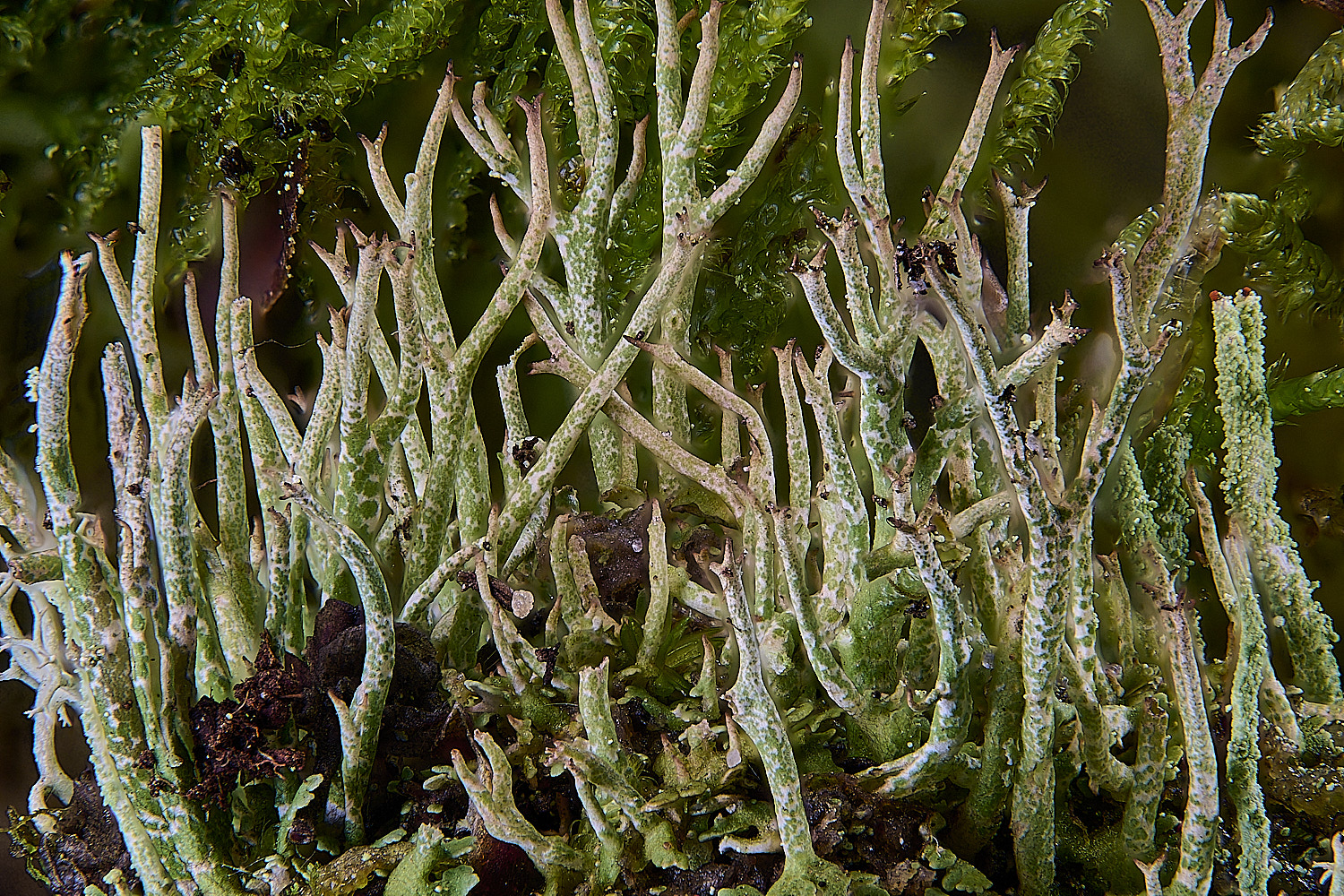
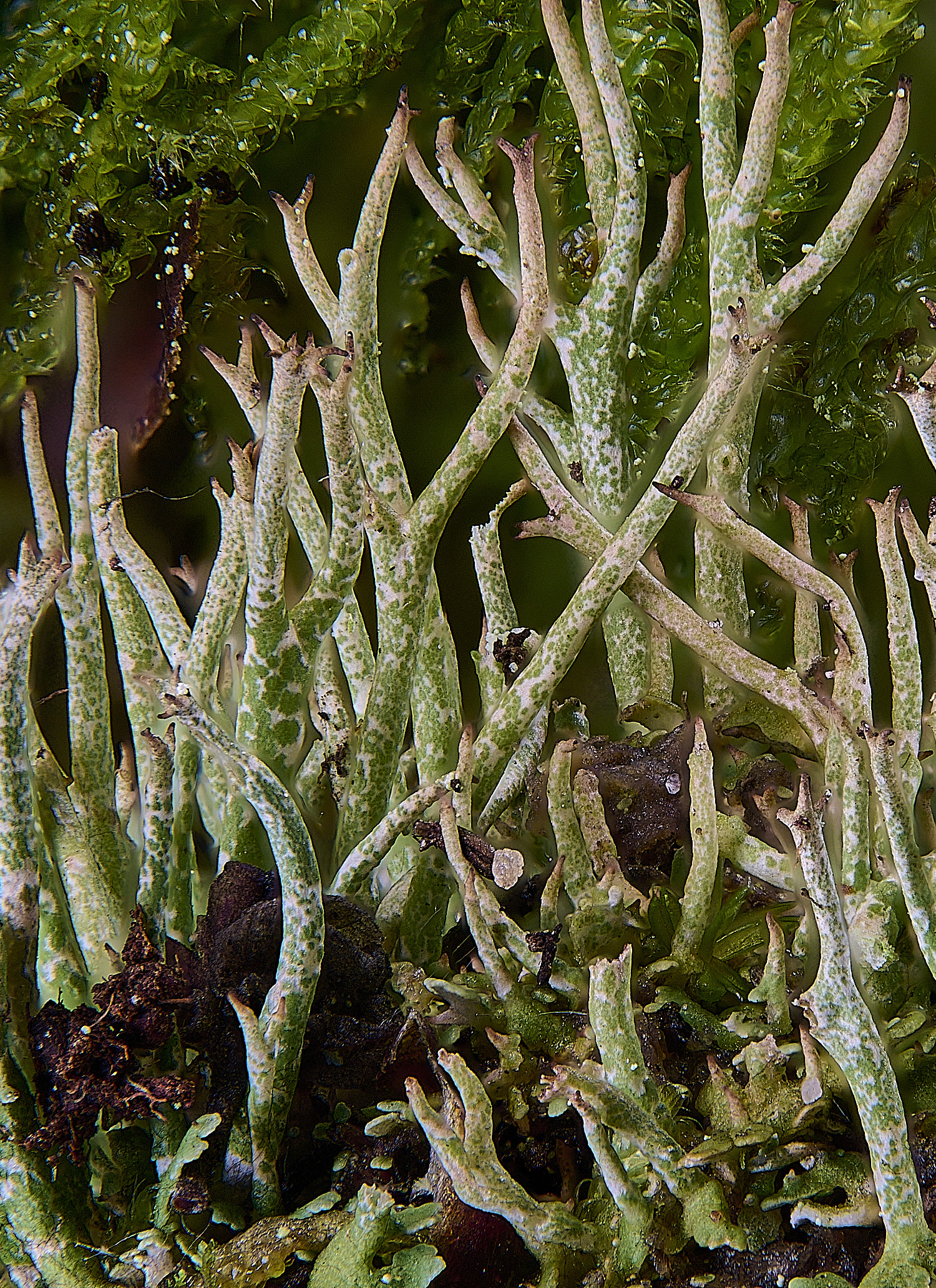
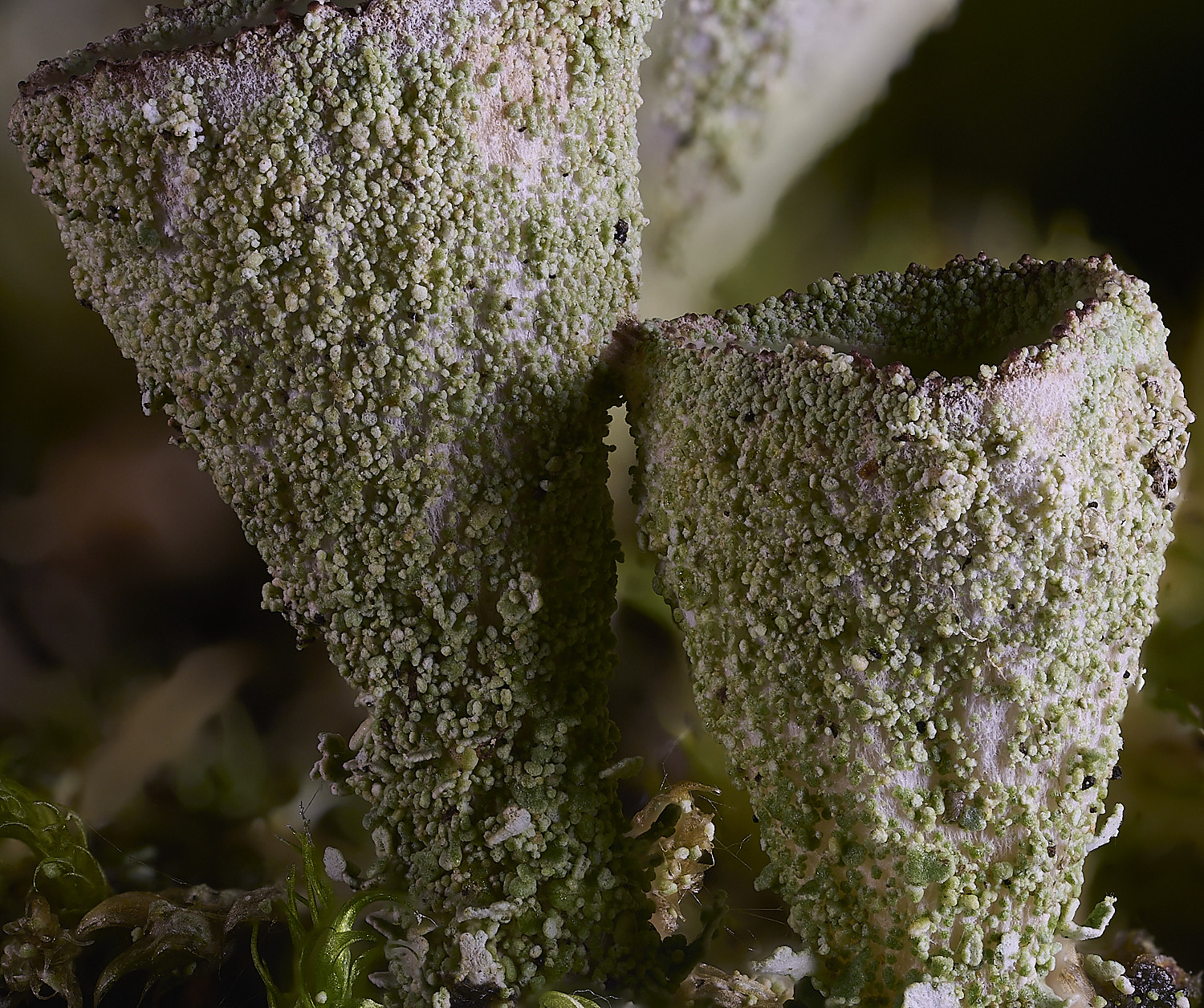
From the Norfolk Recorder
This one showed negative spot tests and UV blue/white thus Cladonia crispata (Although a very small specimen)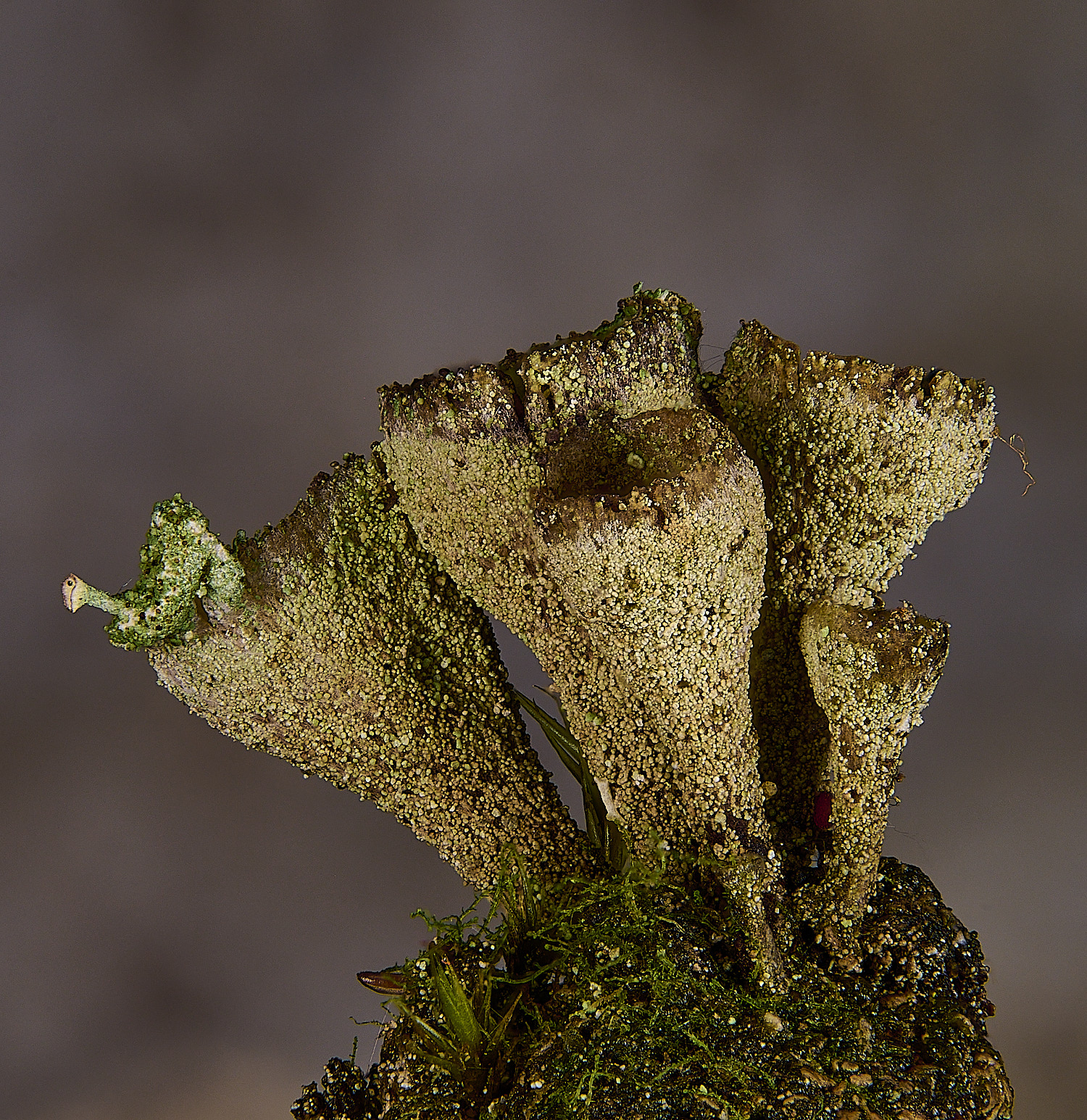
Again from the recorder, despite the brown colour of the cups
the spot tests were P+ red, K-, & UV- so they rest at C chlorophaea s. lat
Muckleburgh Hill
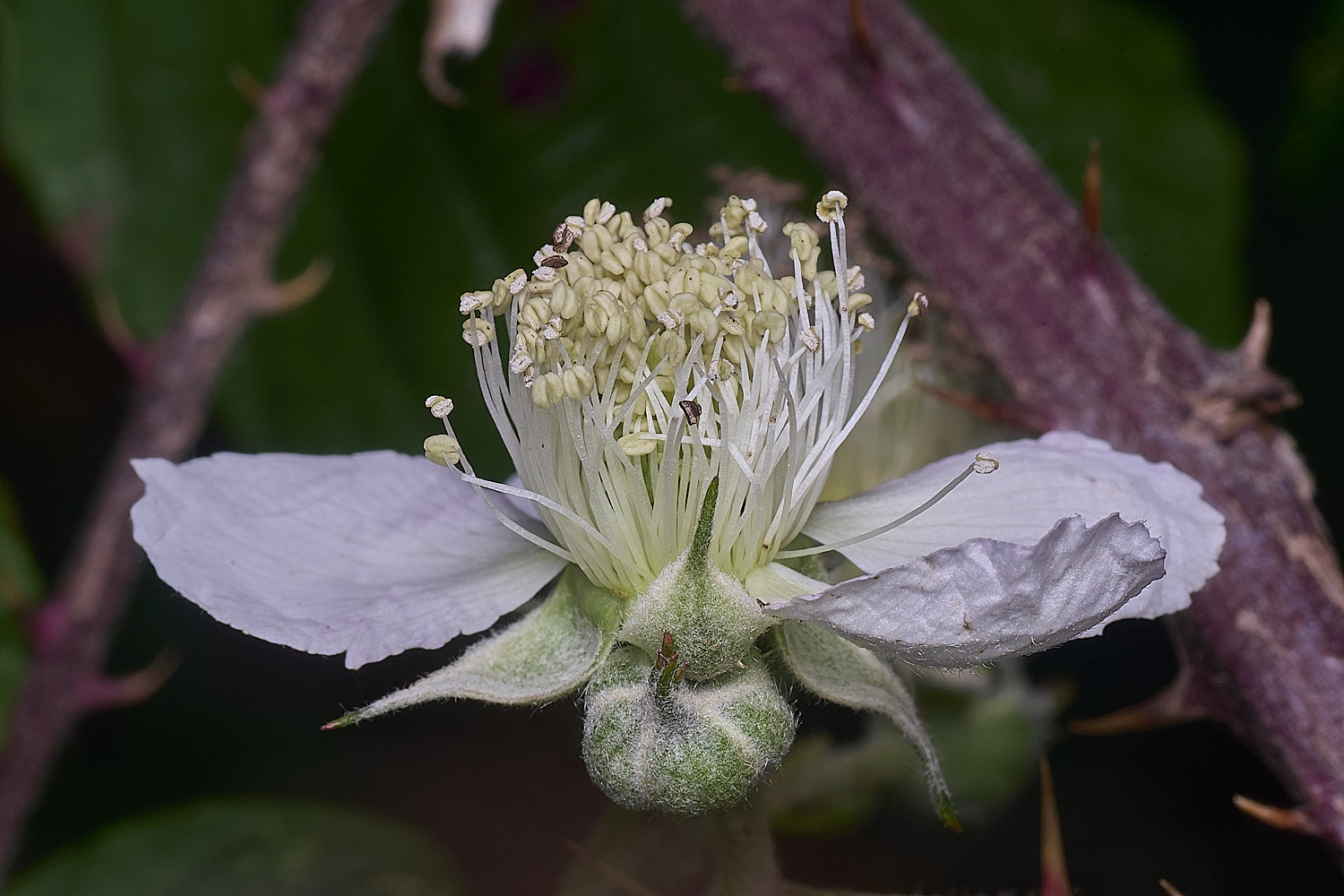
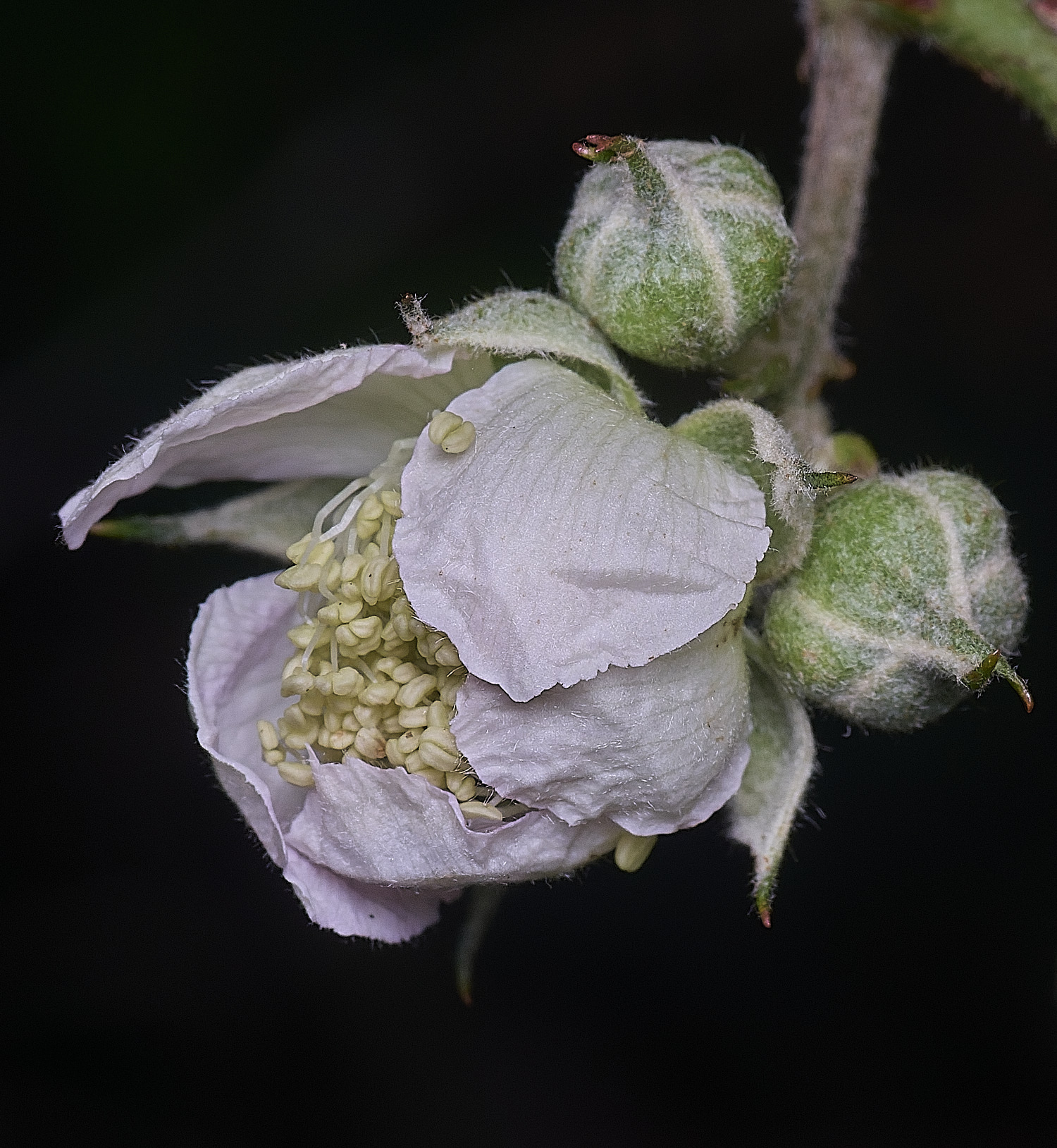
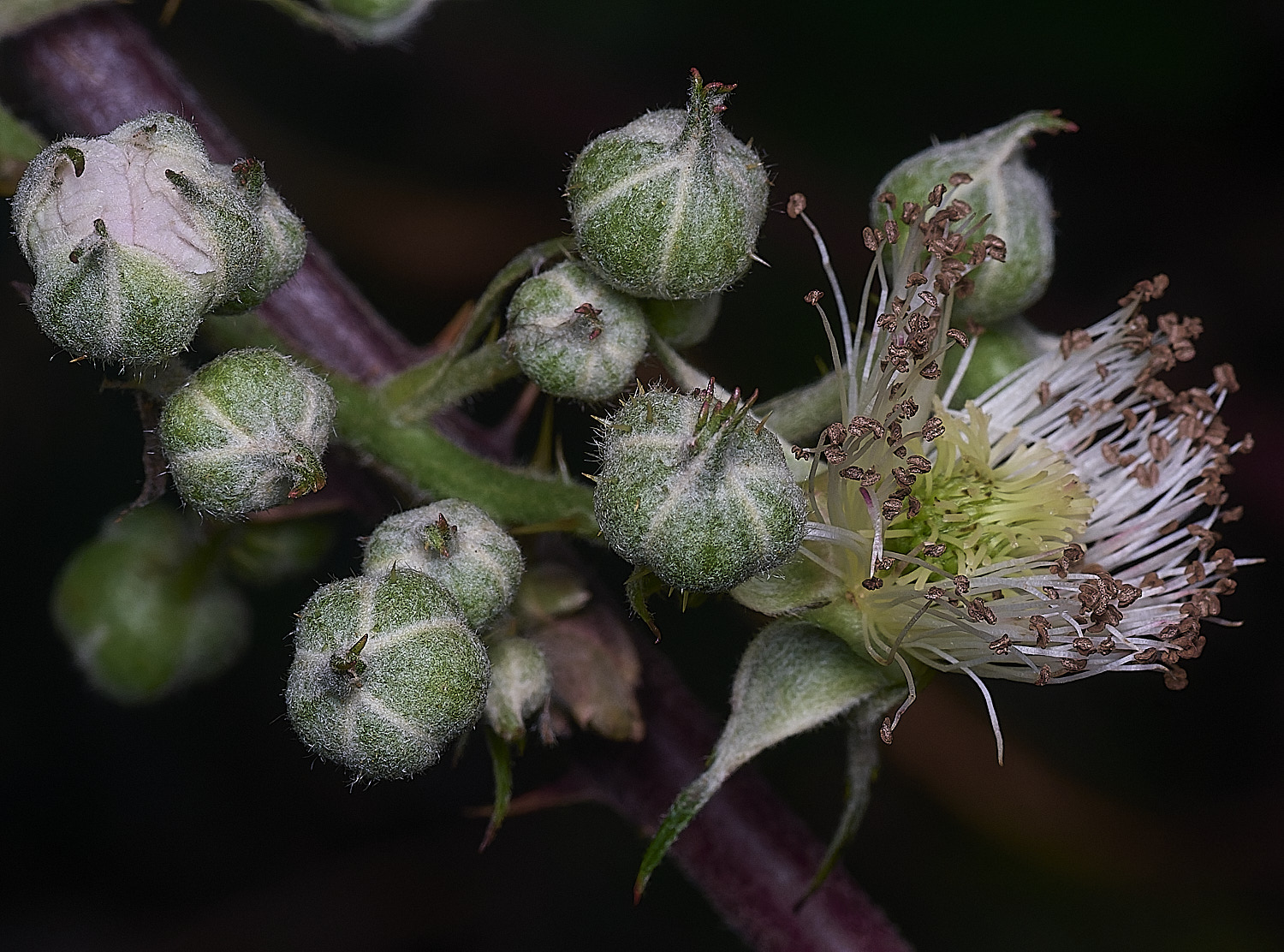
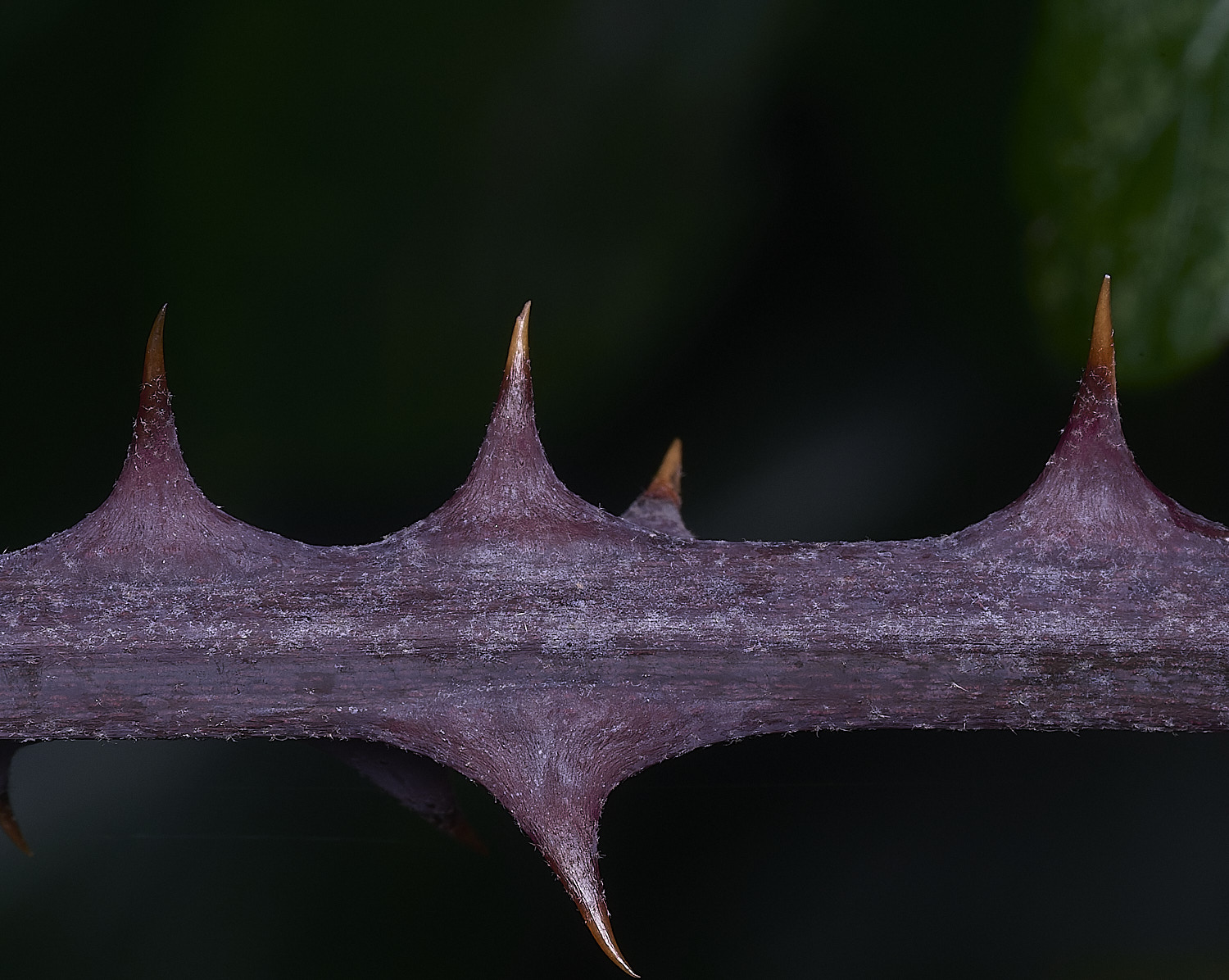
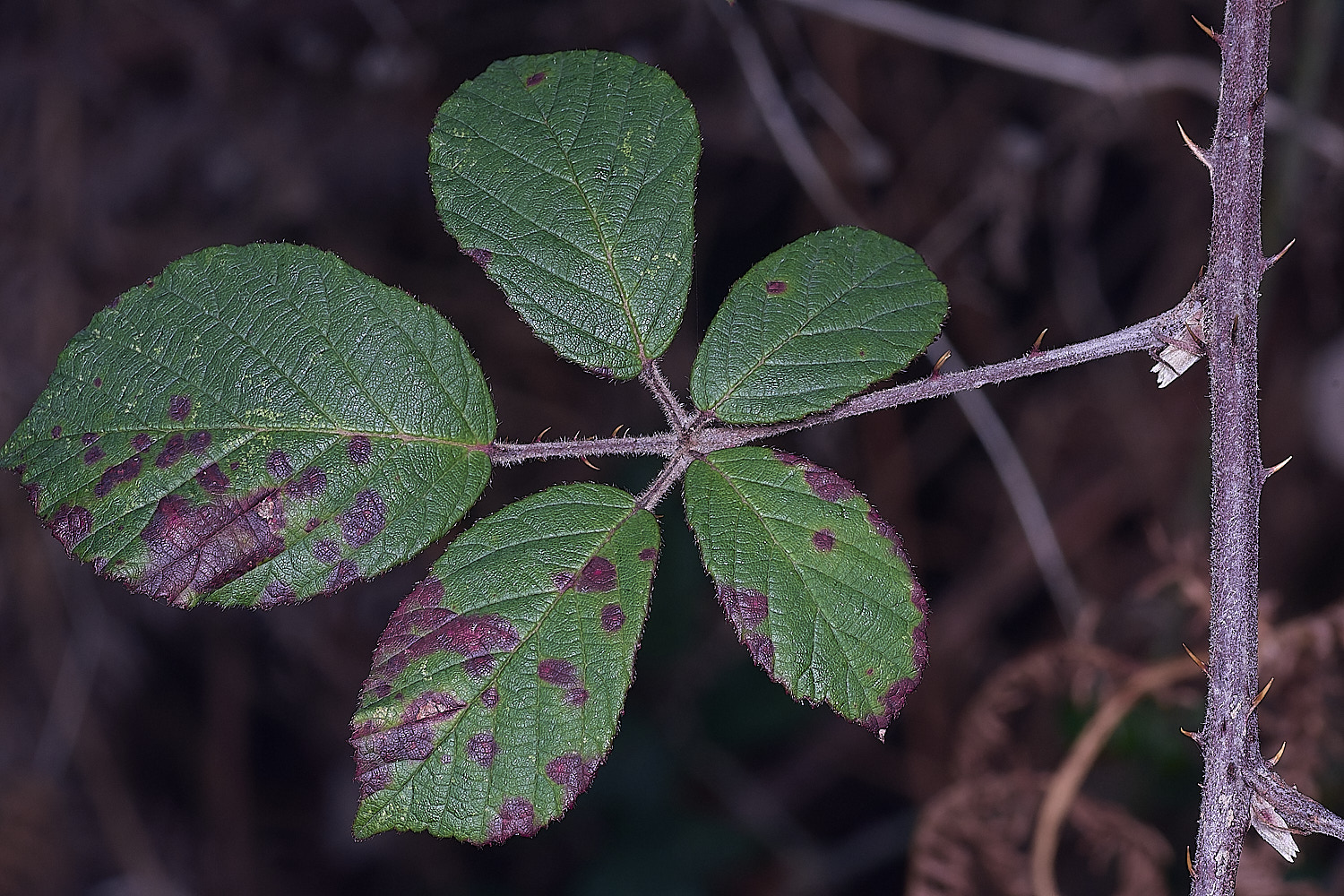

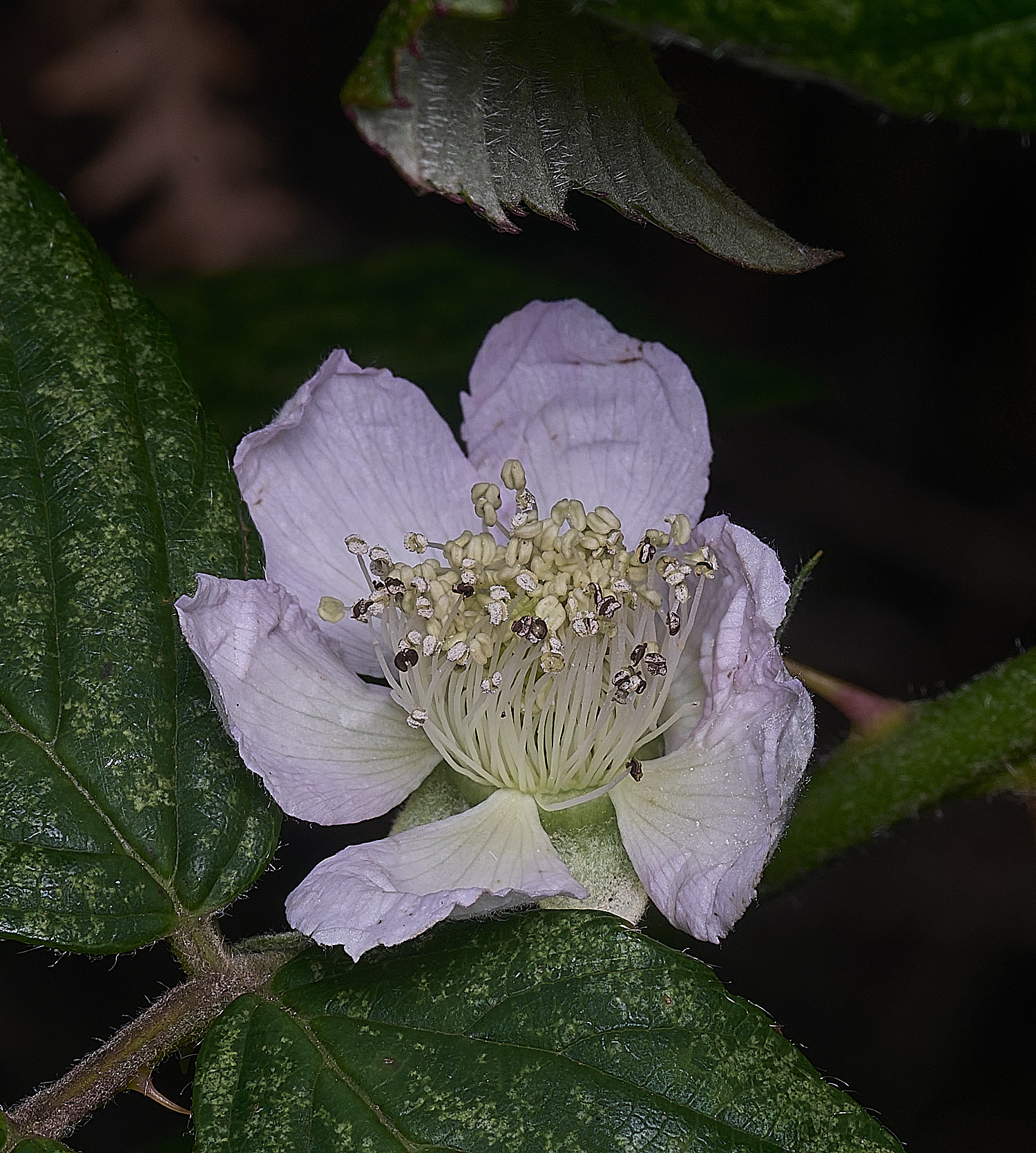
Bramble Sp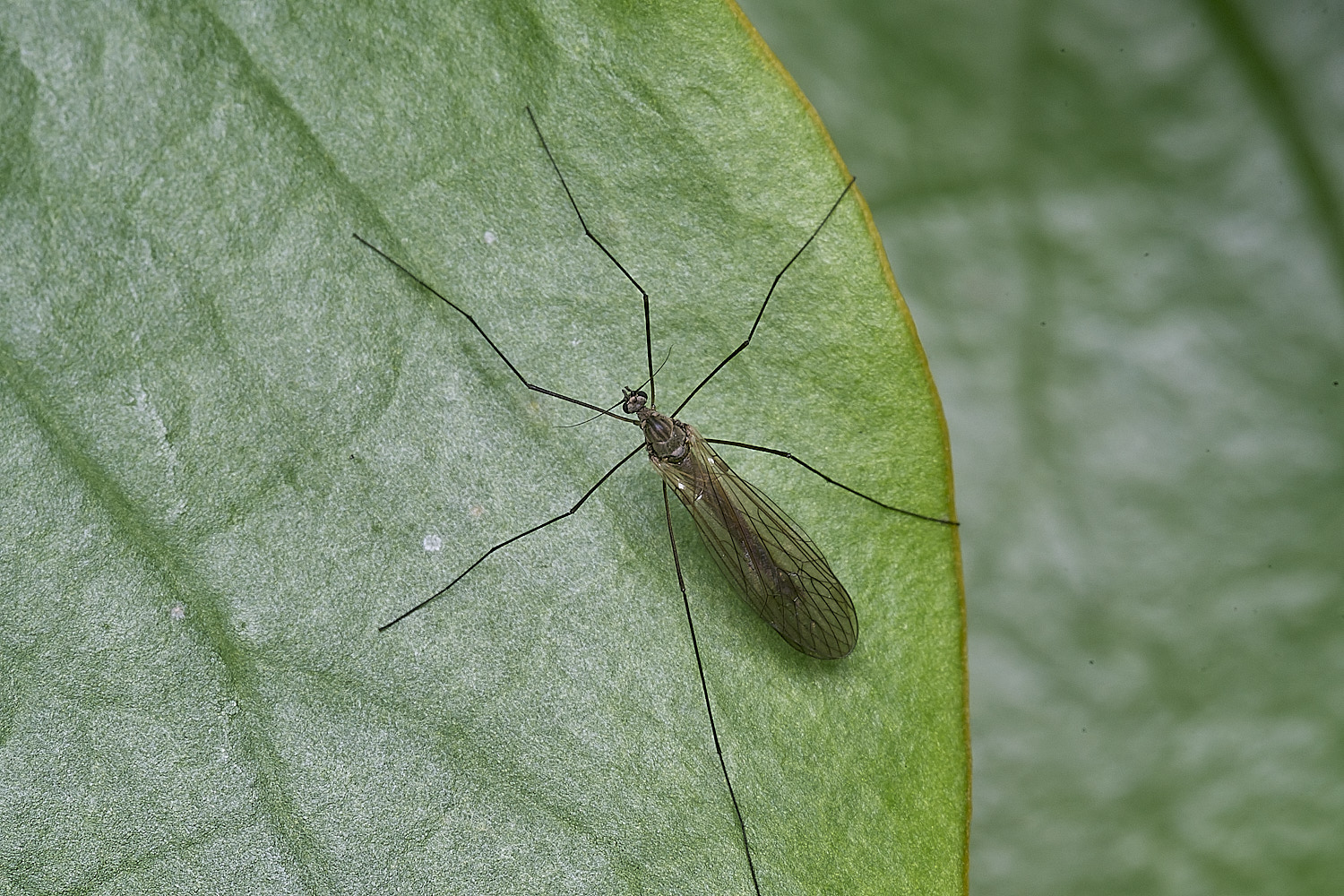
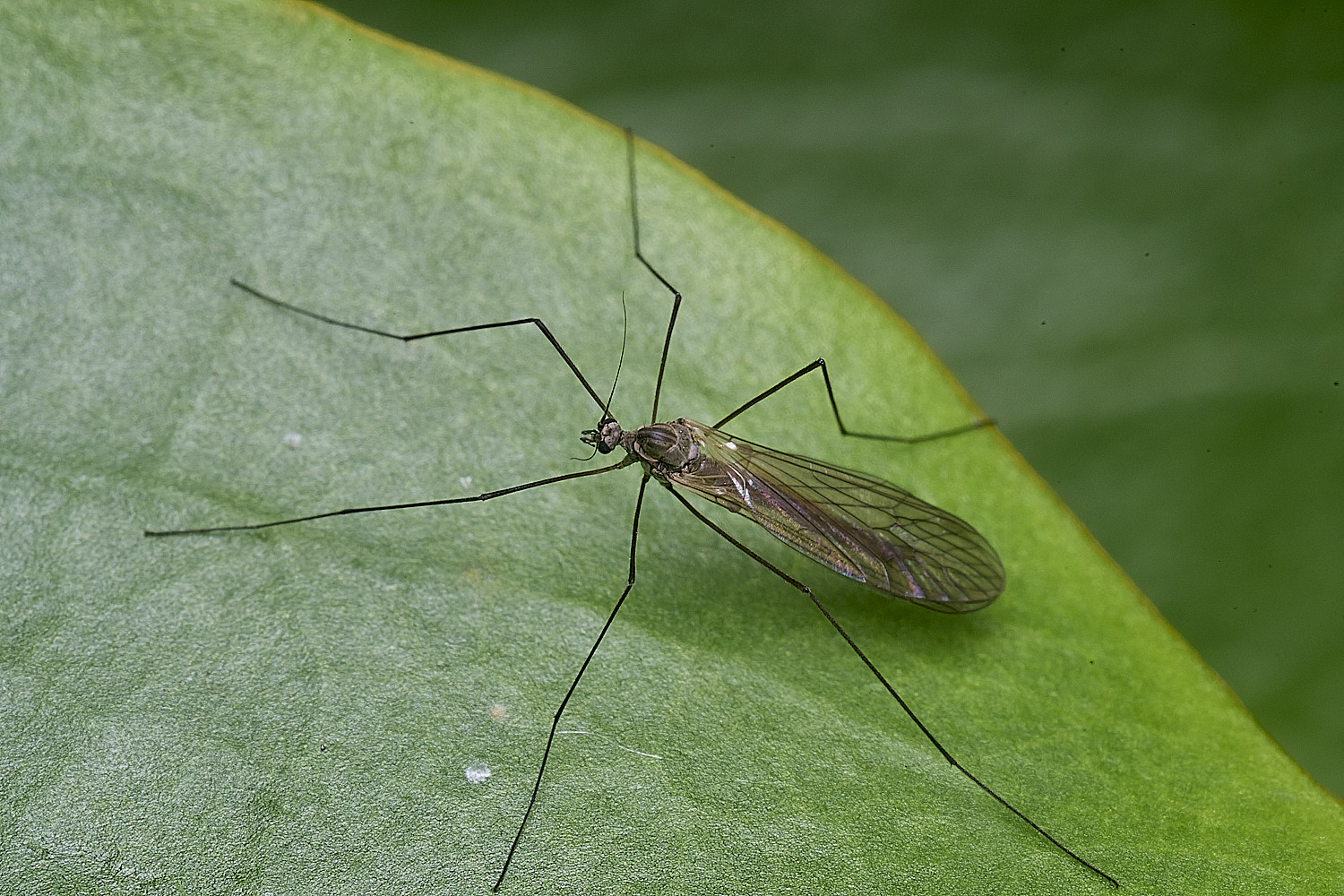
Fly Sp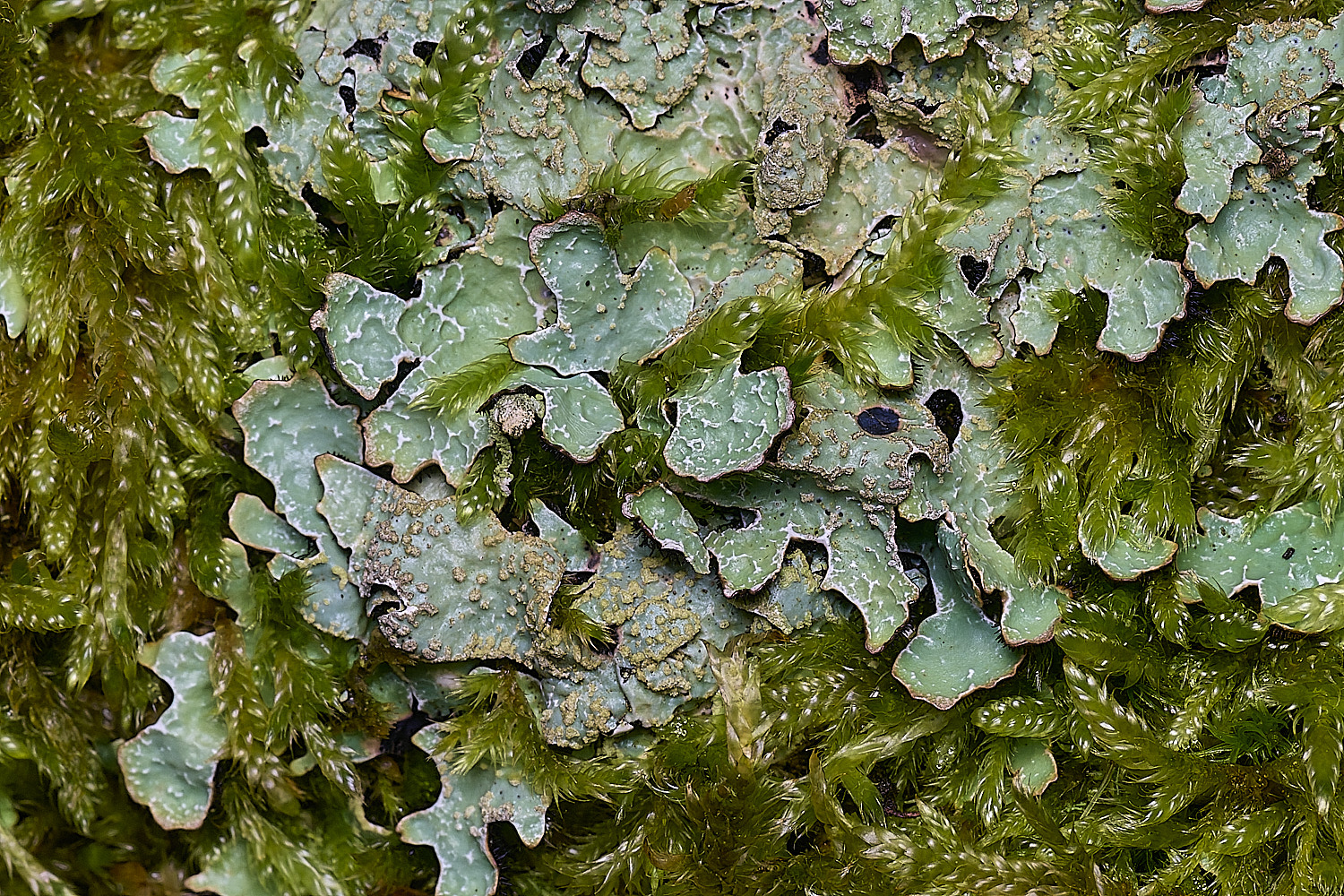
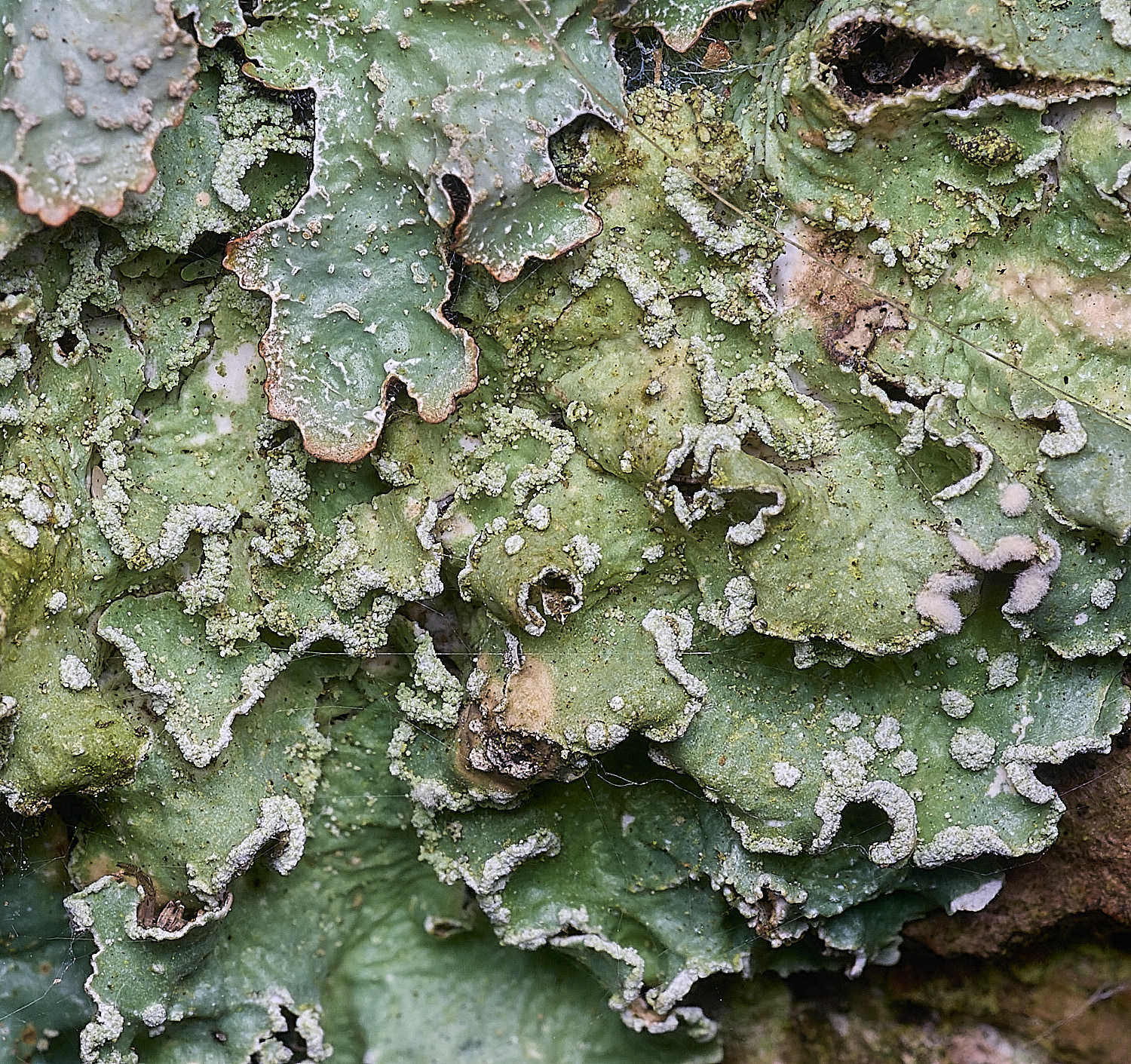
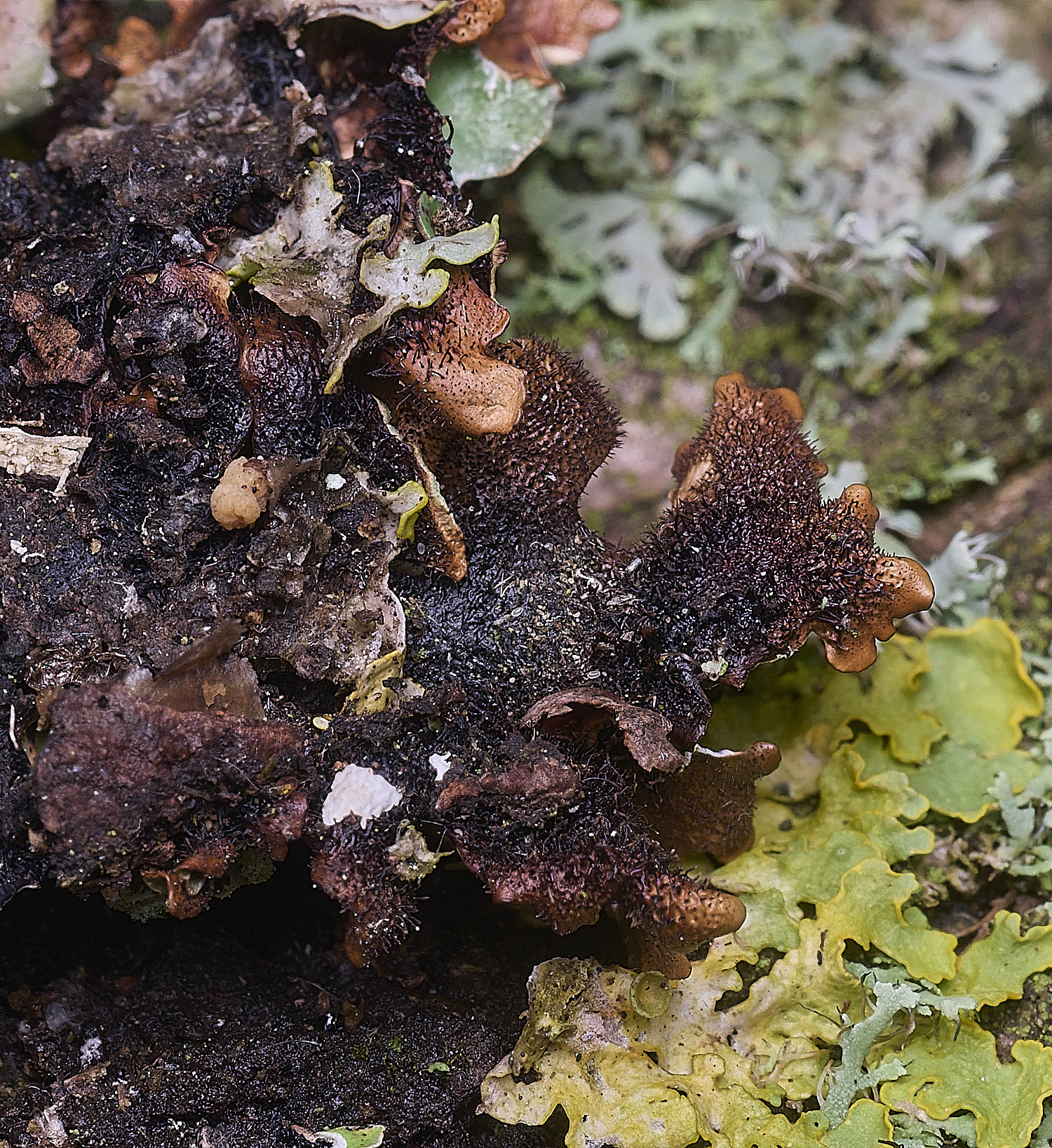
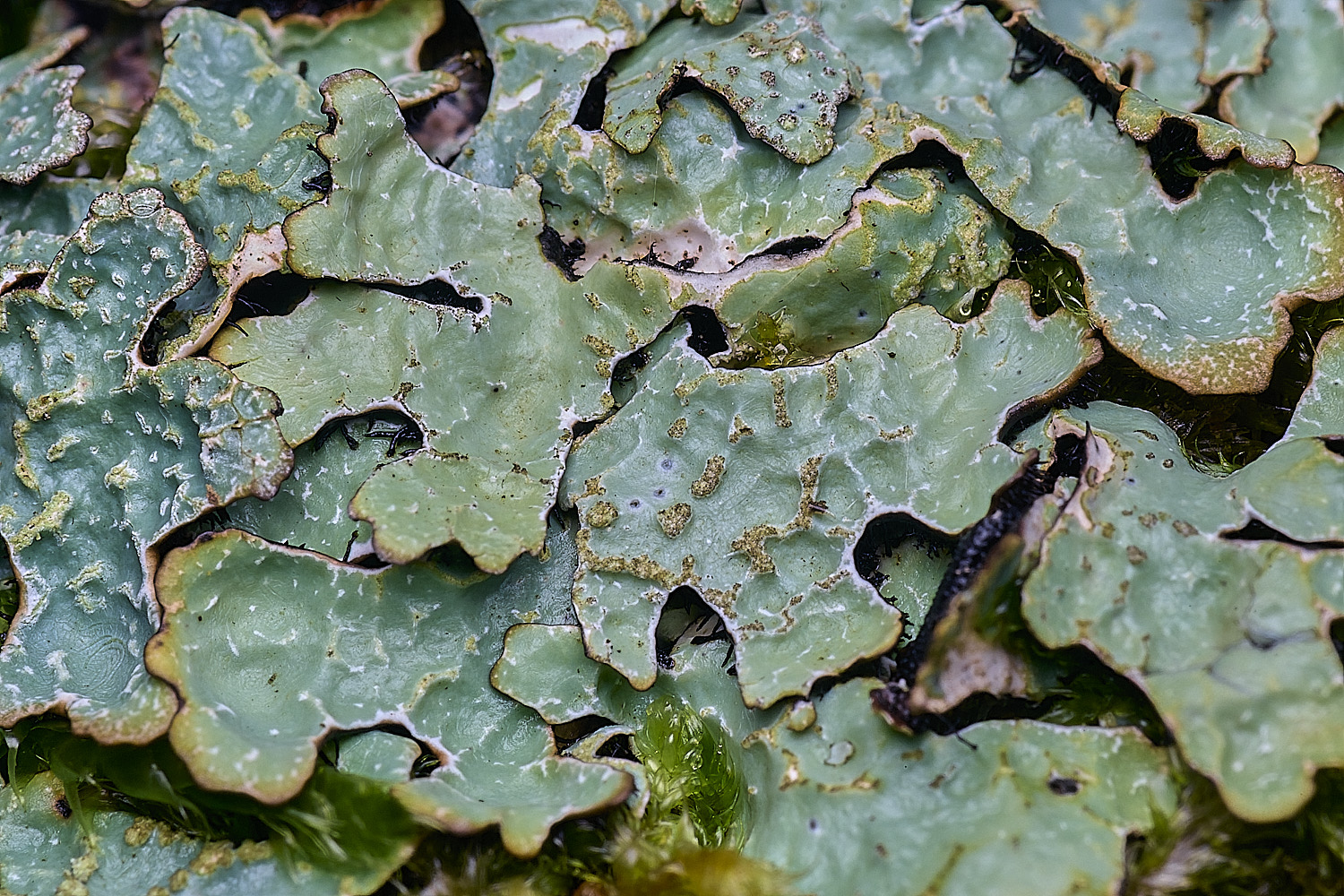
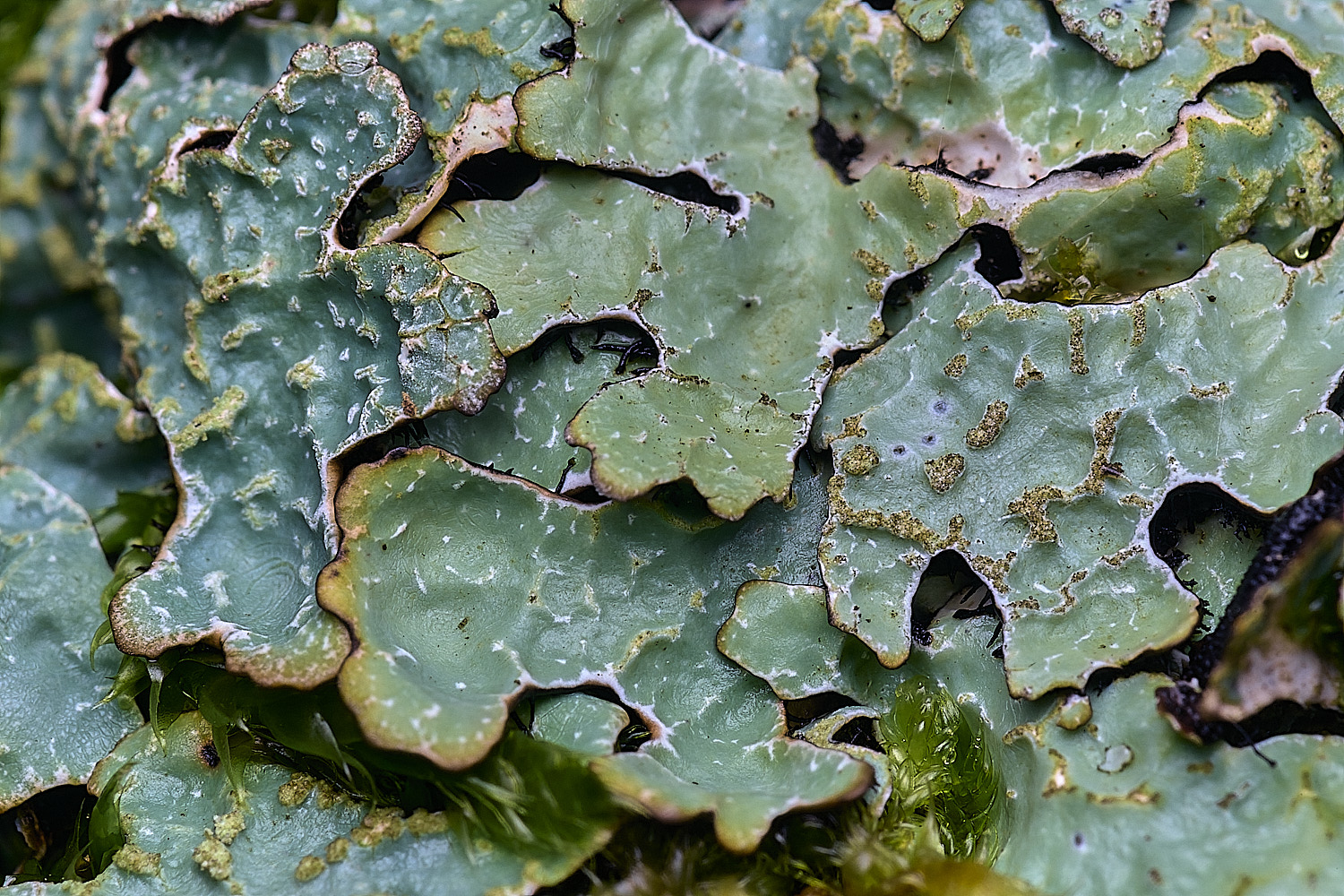
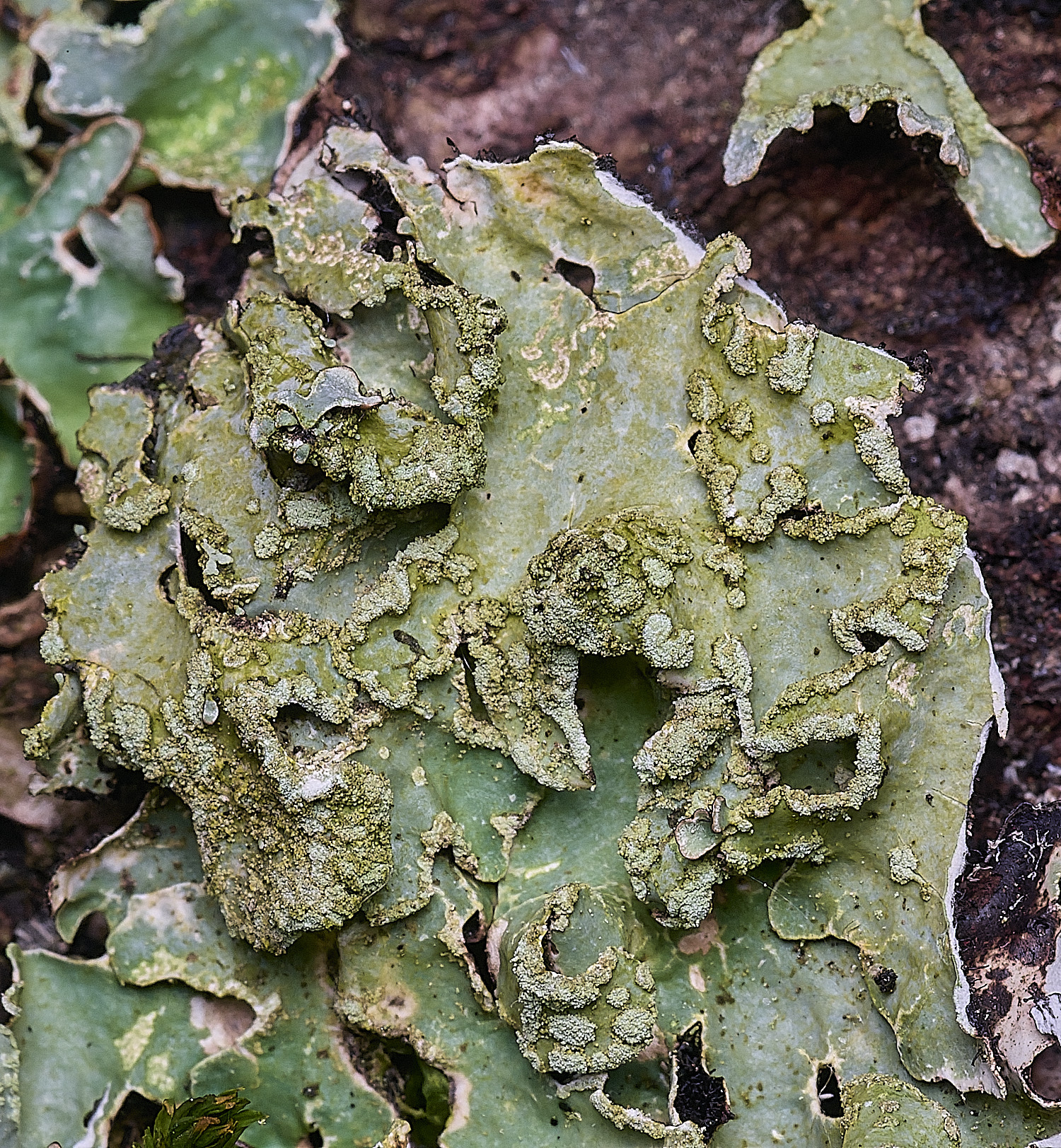
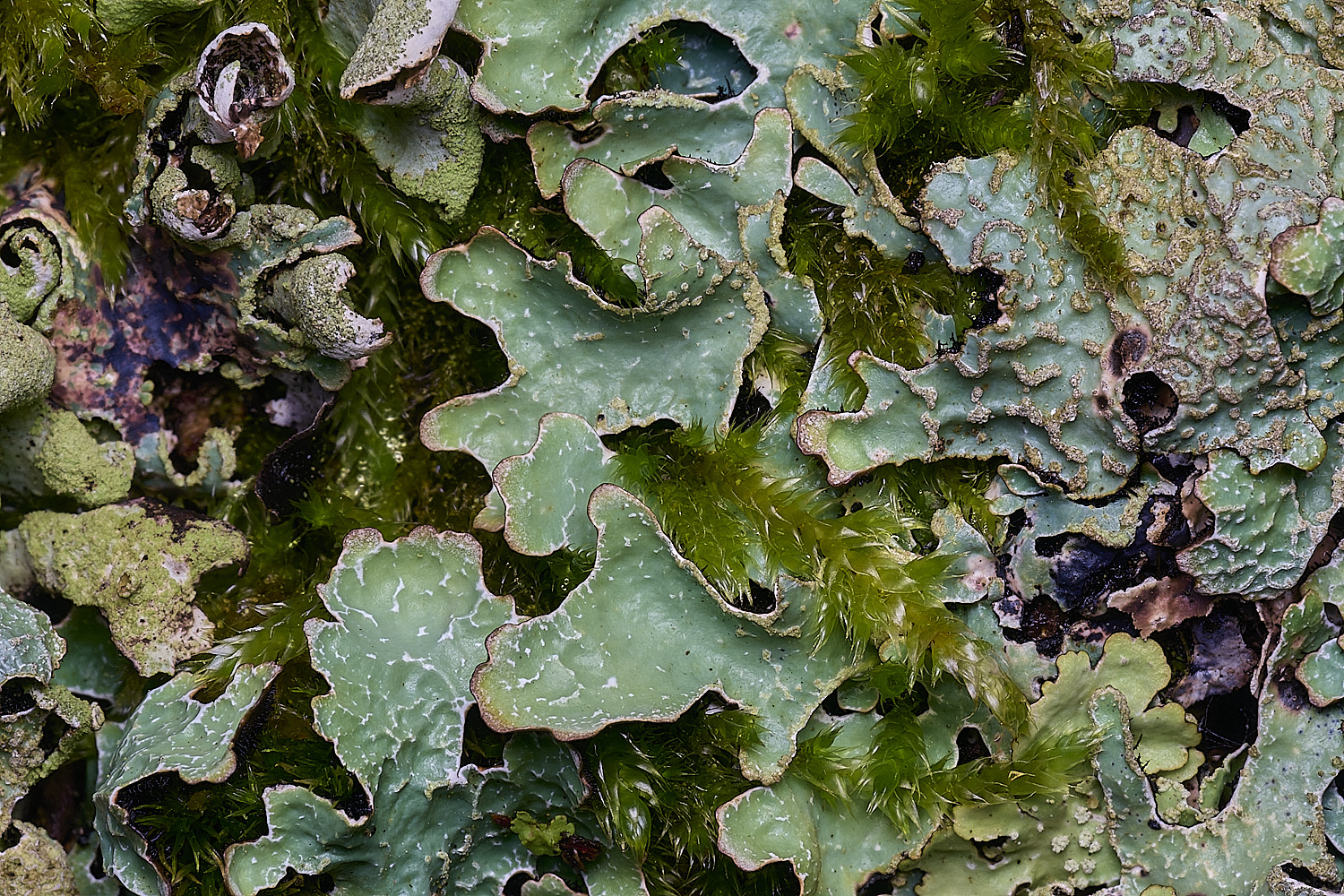
Hammered Shield (Parmelia sulcata)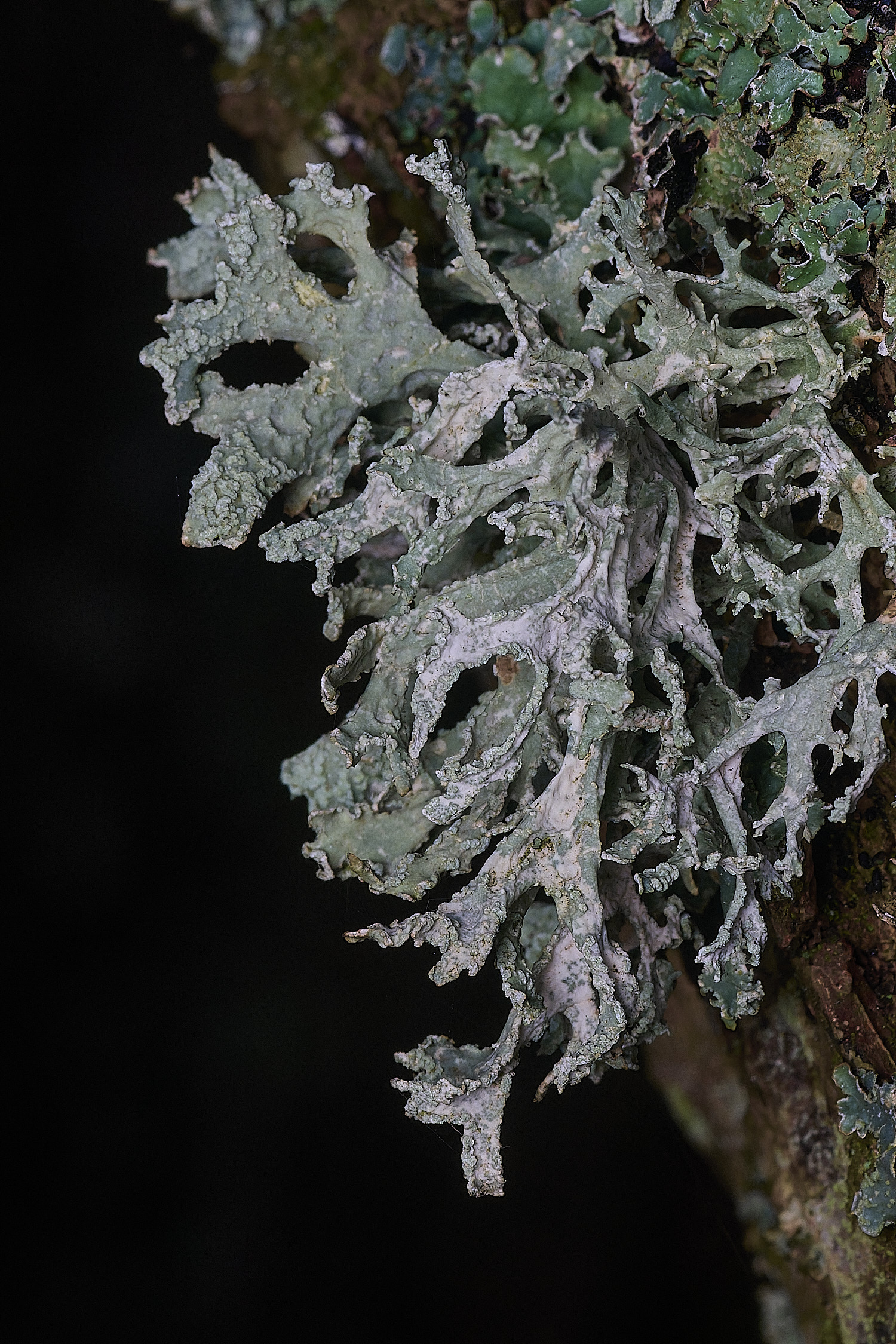
Oakmoss (Evernia prunastri)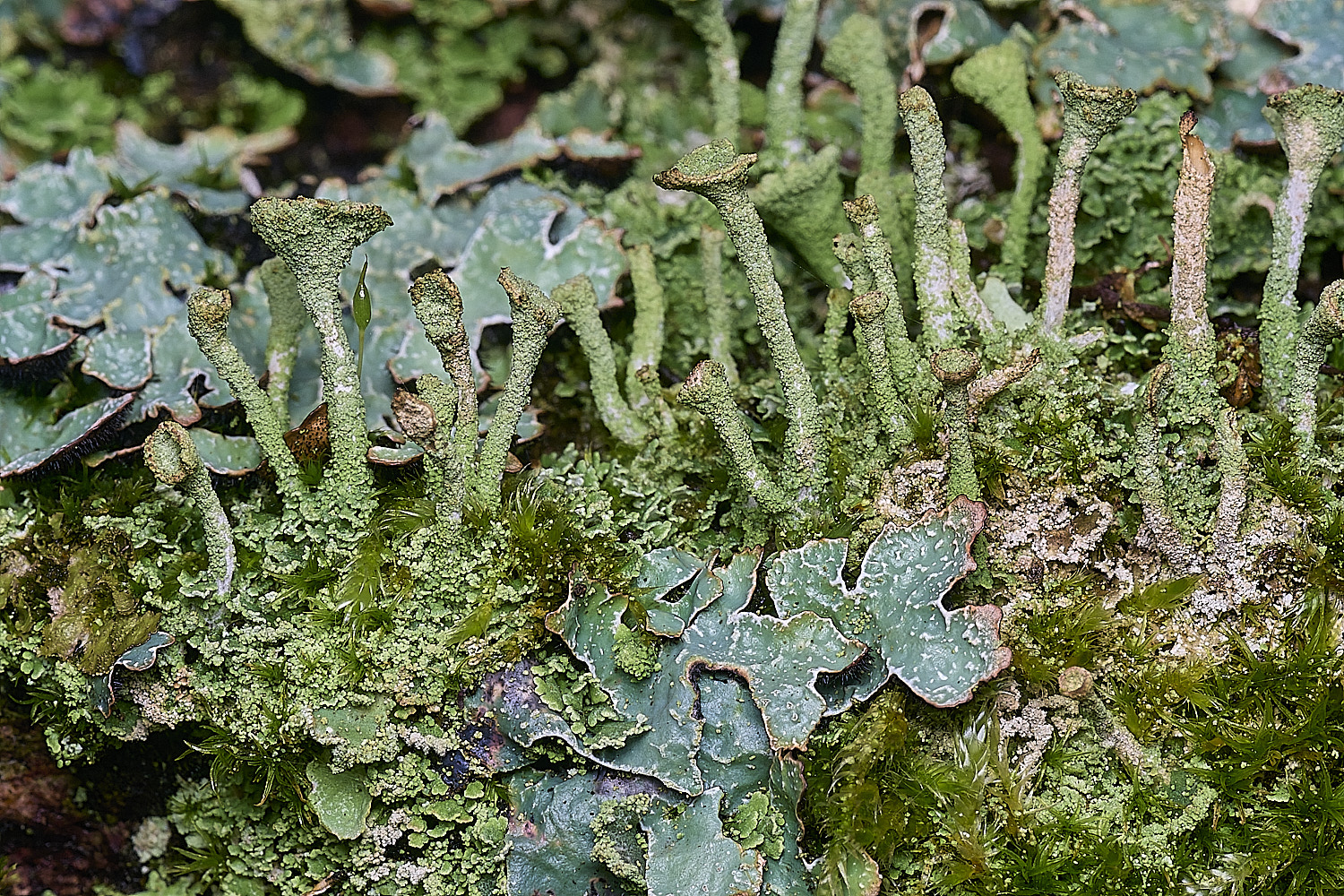
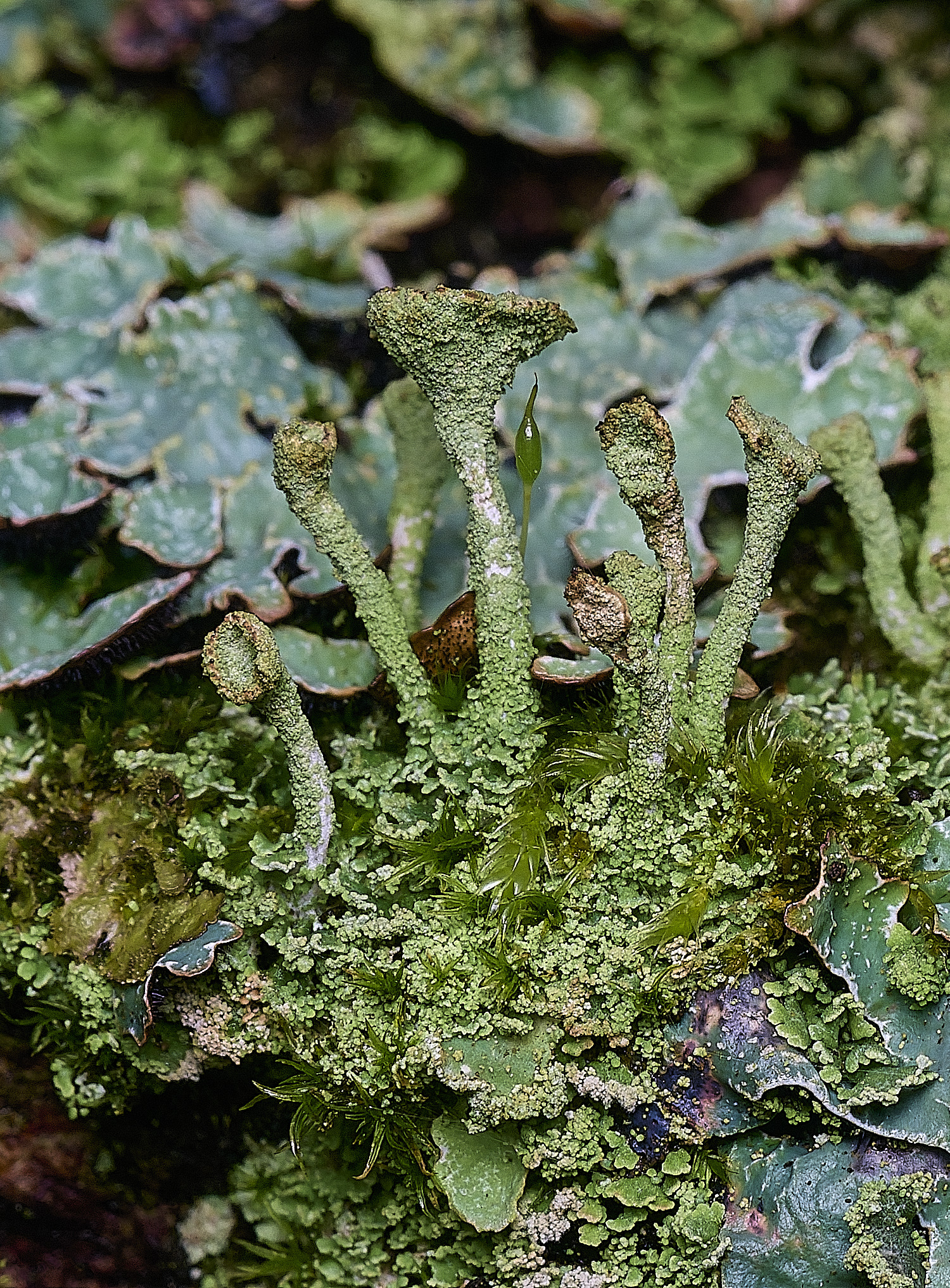
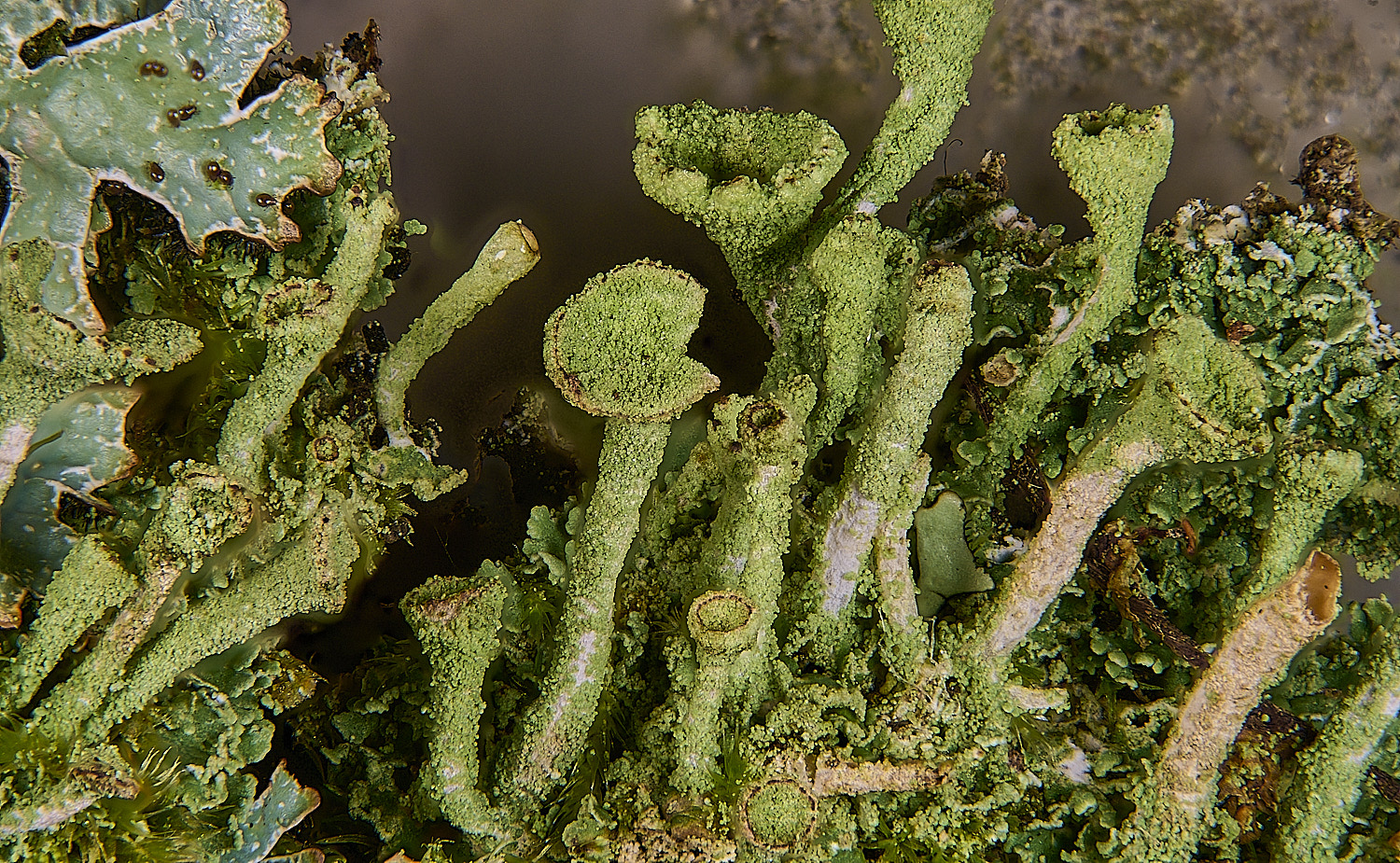
Cladonia Sp? Cladonia fimbriata?
Dobson
1 Apothecia brown 10 Primary thallus squamulose. Podetia prominent or not. 11 Thallus of podetia or podetia growing from basal squamules. 12
Thallus with podetia which are not usually interwoven, sparsely or not branched, and which may have a cup at the tip. 32 Podetia not split longitudinally. 34
Podetia without perforated tops and not forming tiers from one edge. 35 Podetia terminating in a wide cup 45 Podetia simple, regular (to 3cm tall), and/or long (to 6cm tall often slightly branched (apothecia rarely on short stalks around rim of cup) 47 Podetia sorediate or squamulose warted 48 Podetia finely sorediate 50 KC - Cladonia fimbriata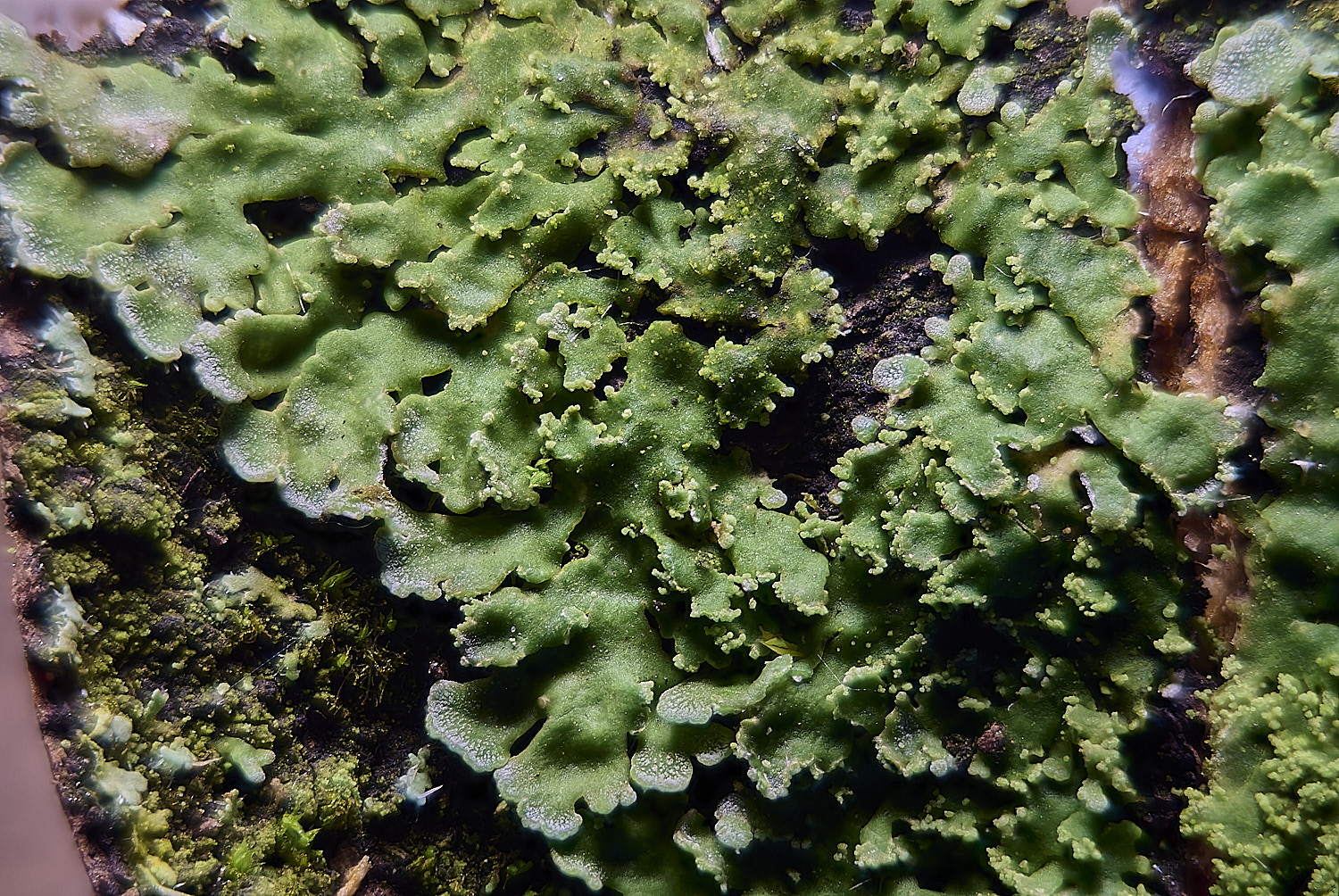
Physconia Sp?
Physconia grisea?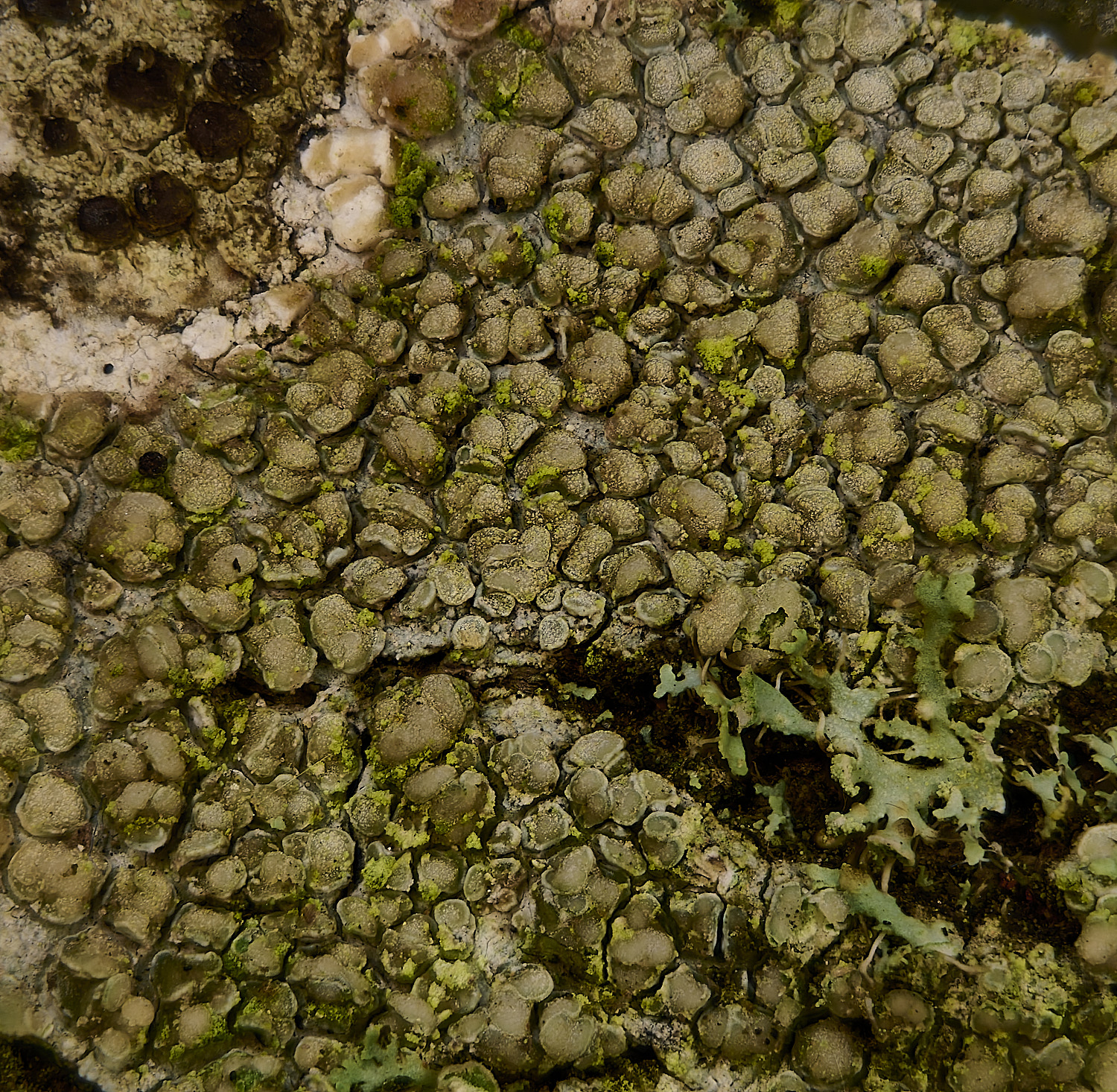
Lichen Sp Crustose Sp?

Spider Sp
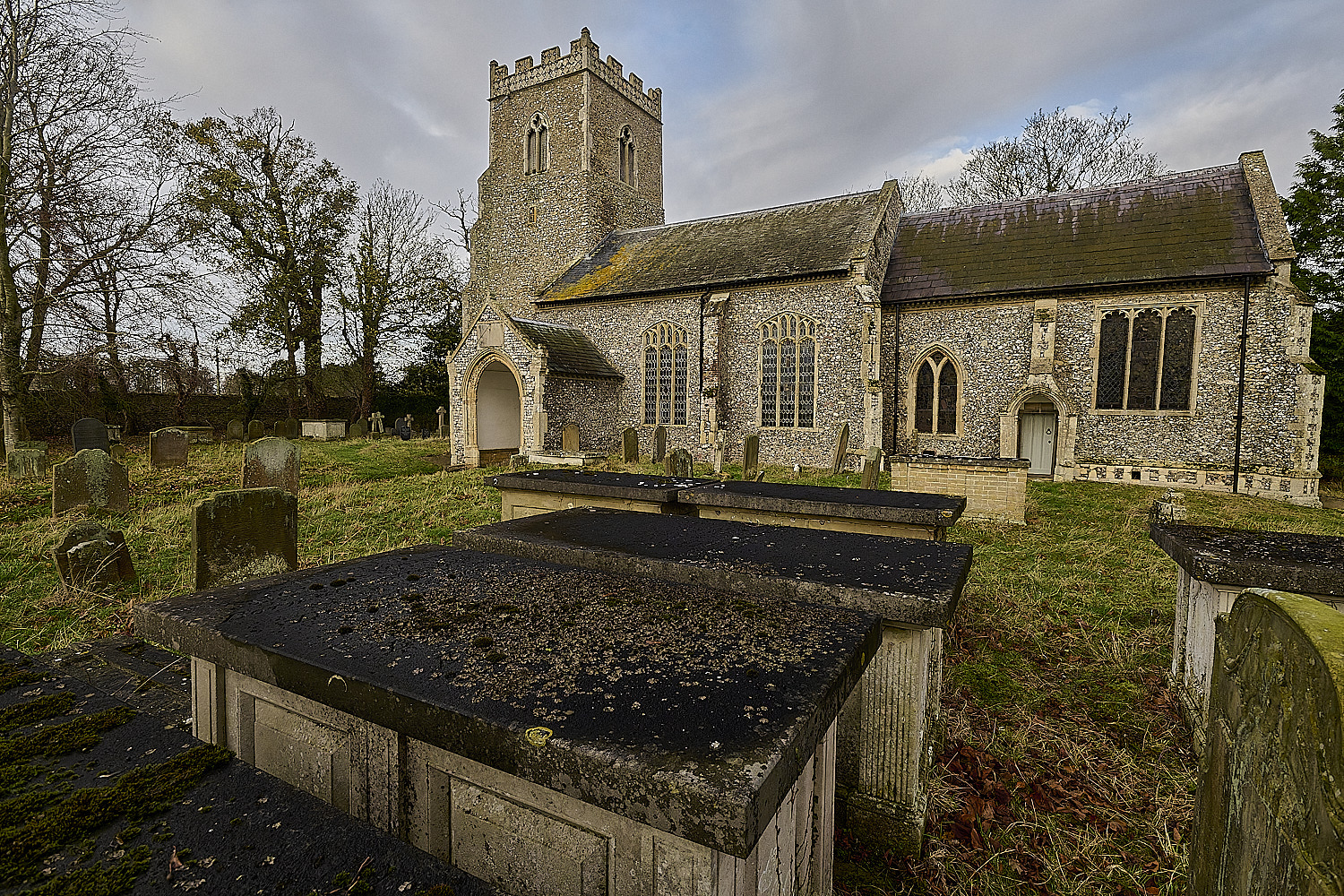
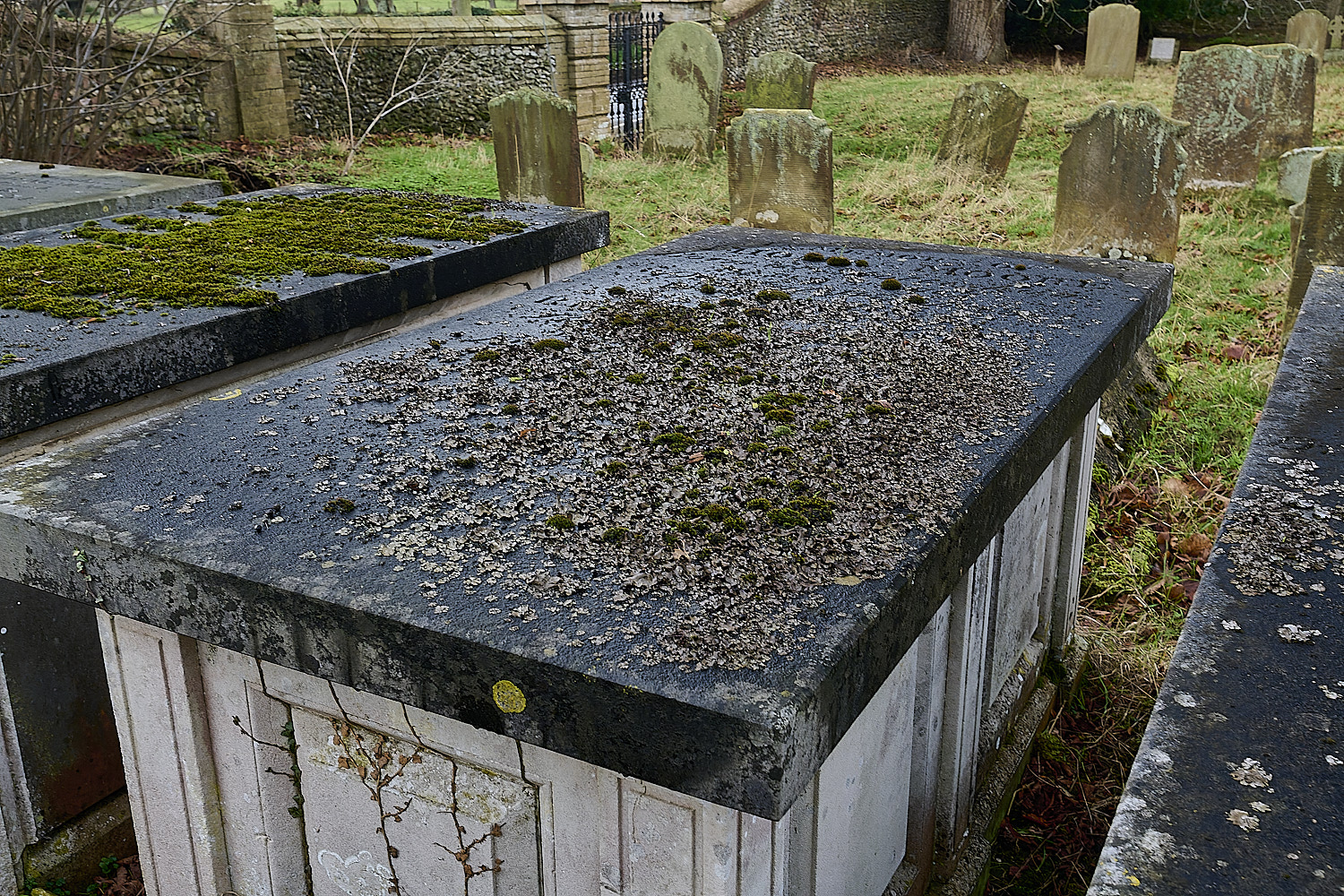
St Mary's Church Warham
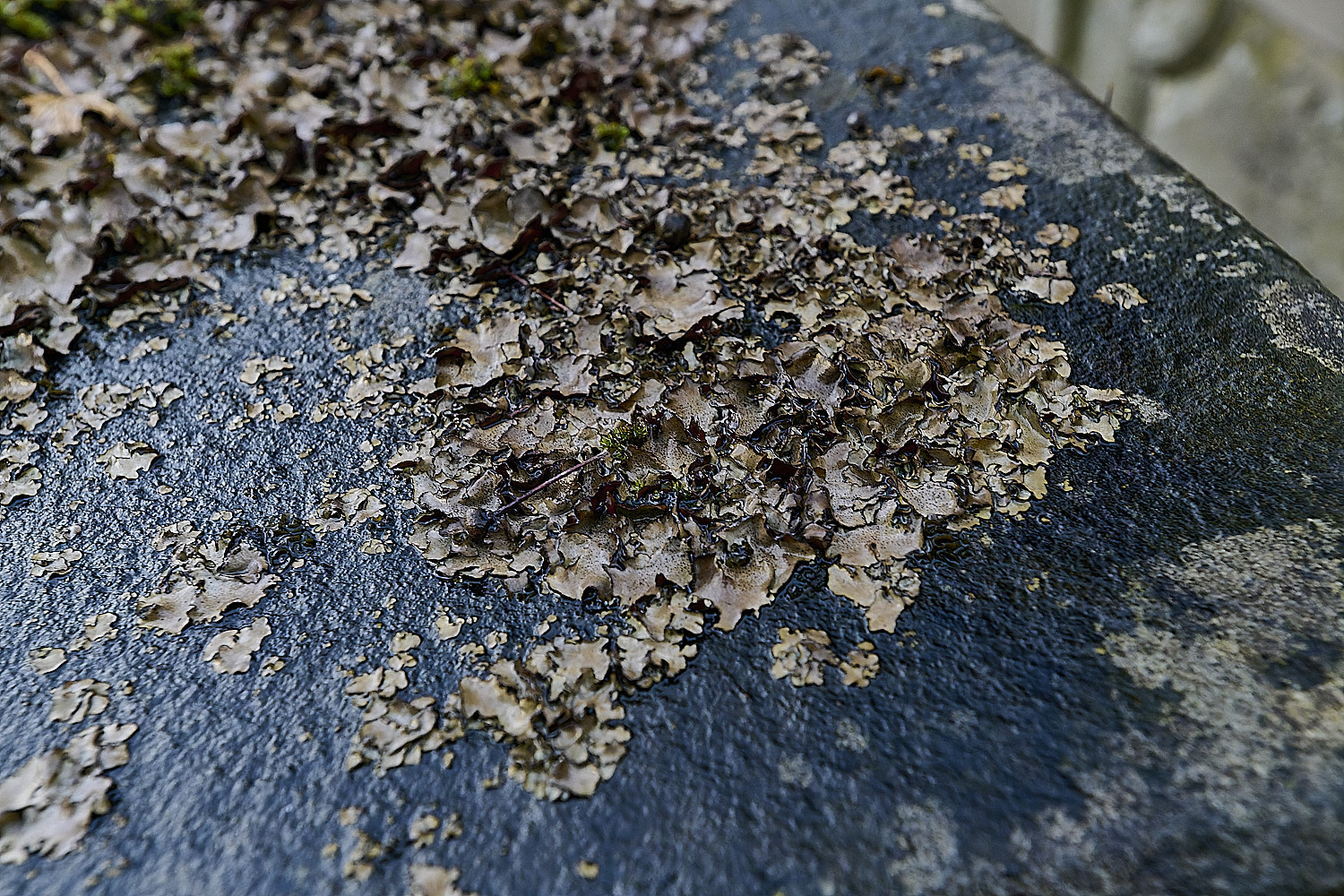
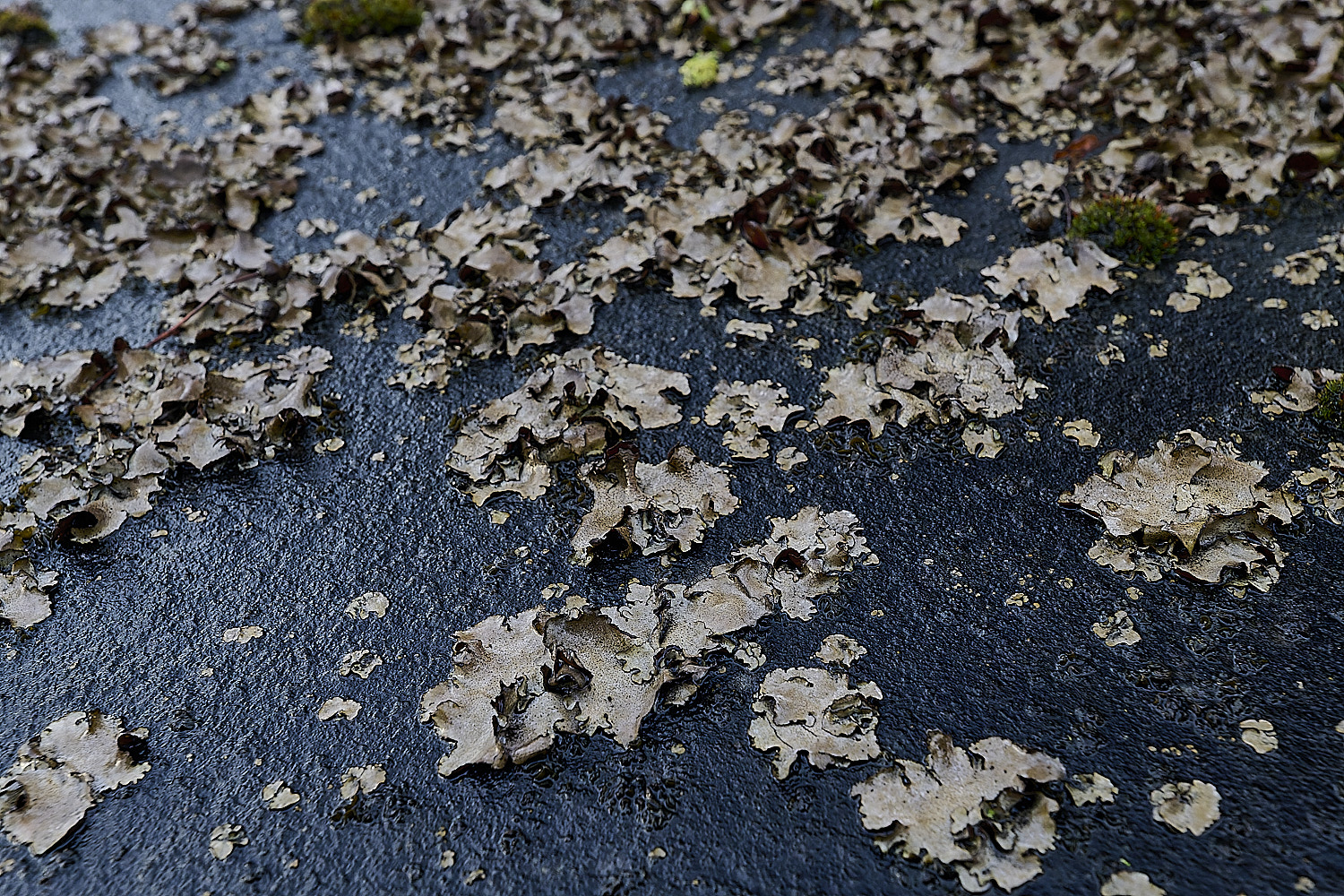
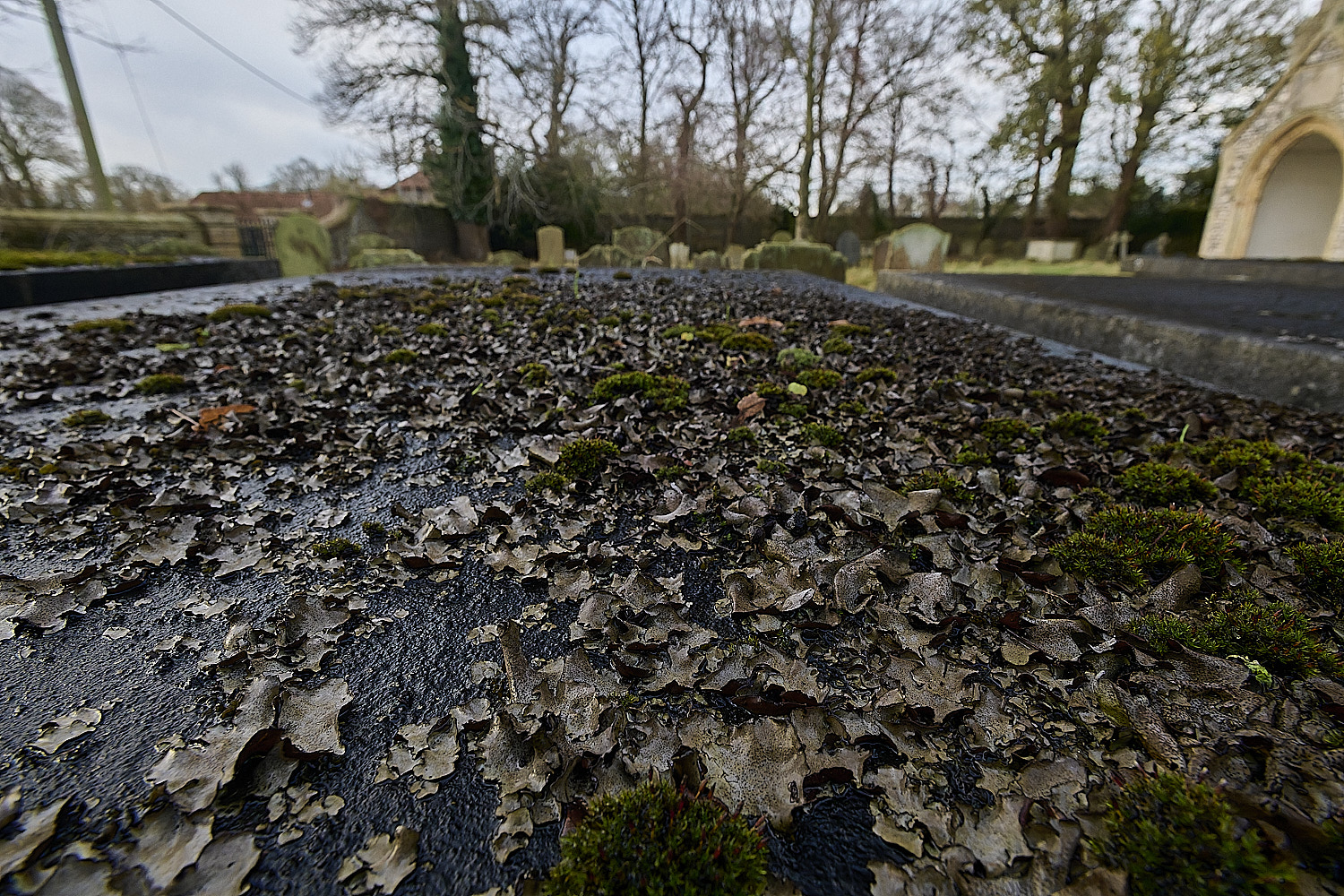

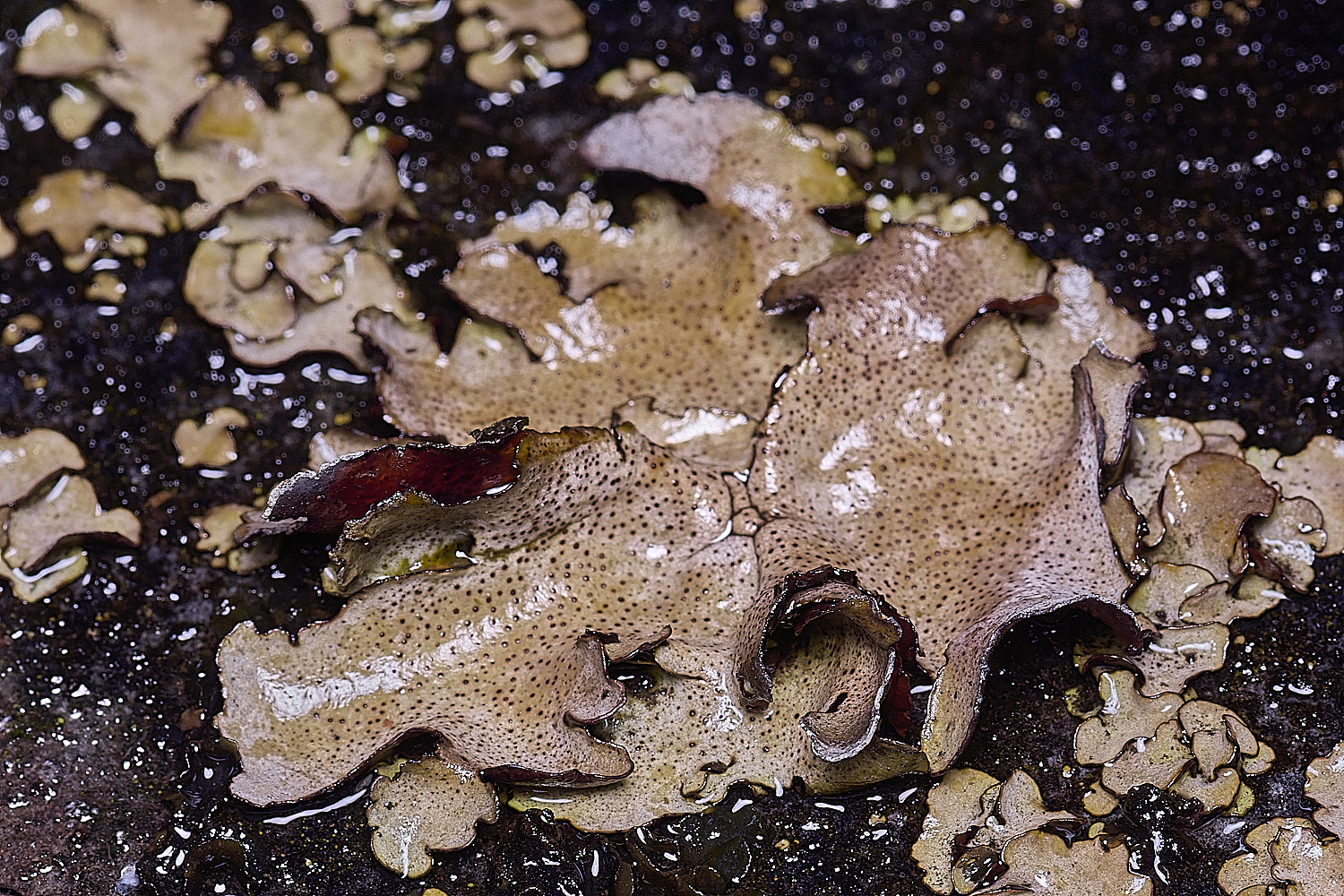

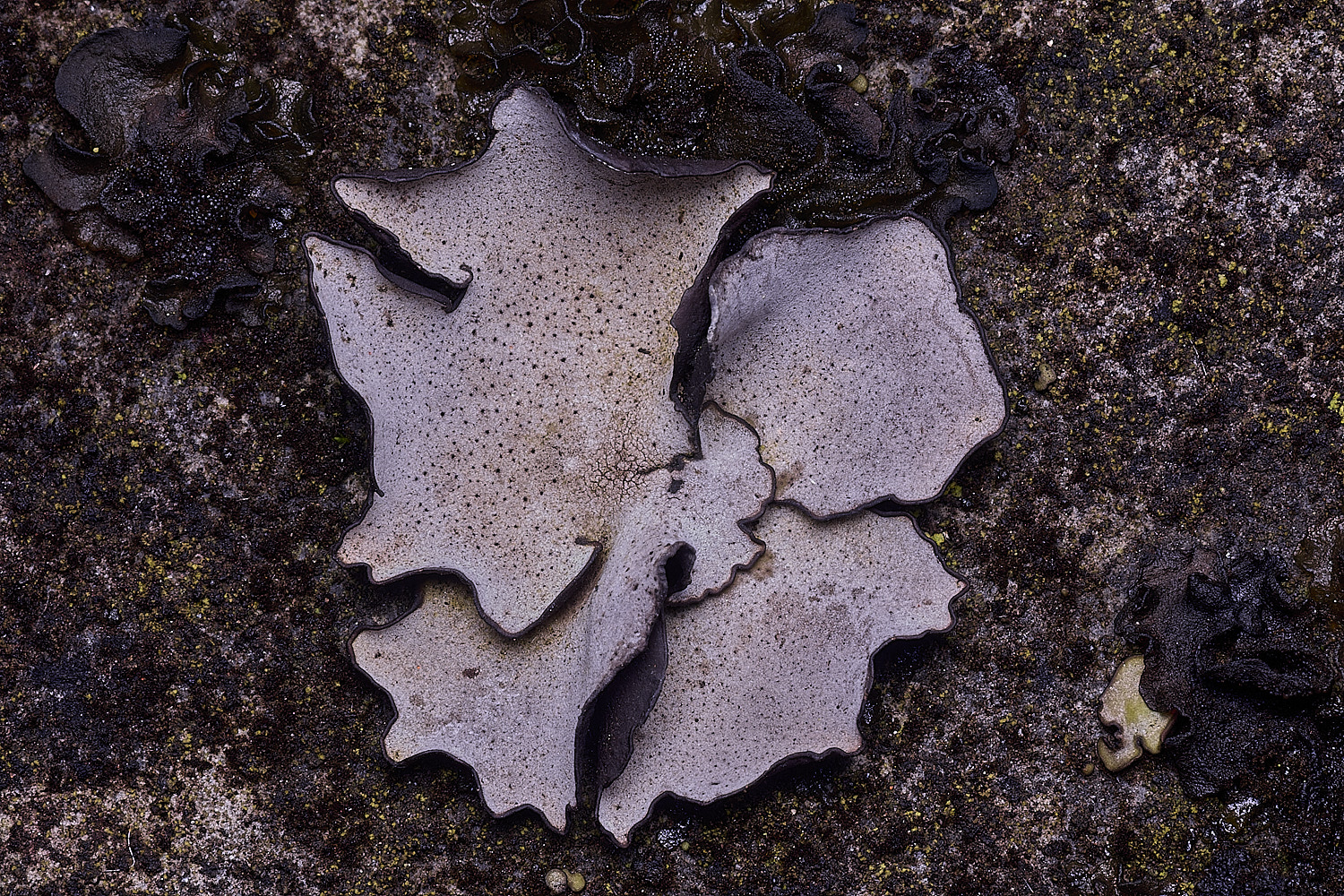
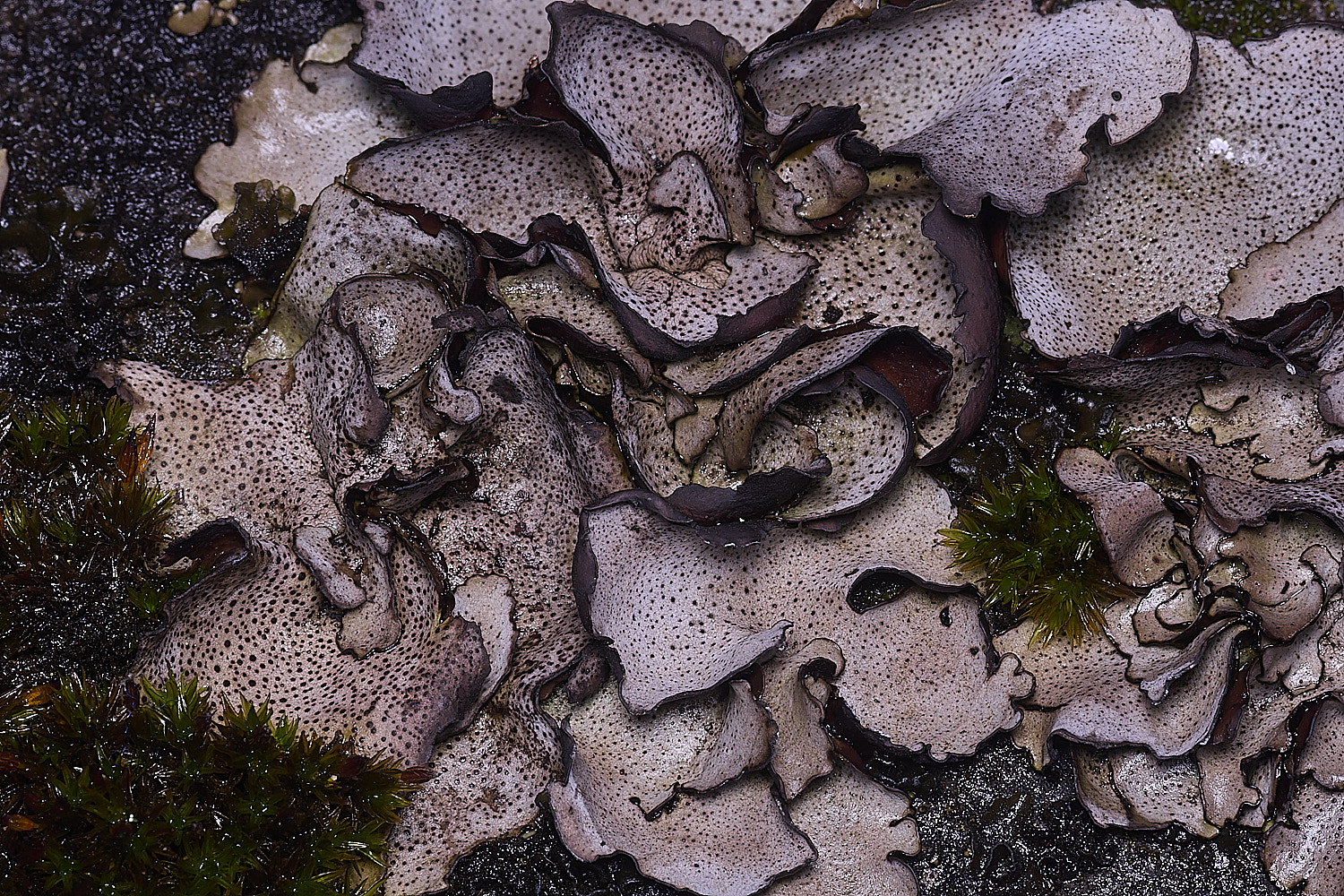
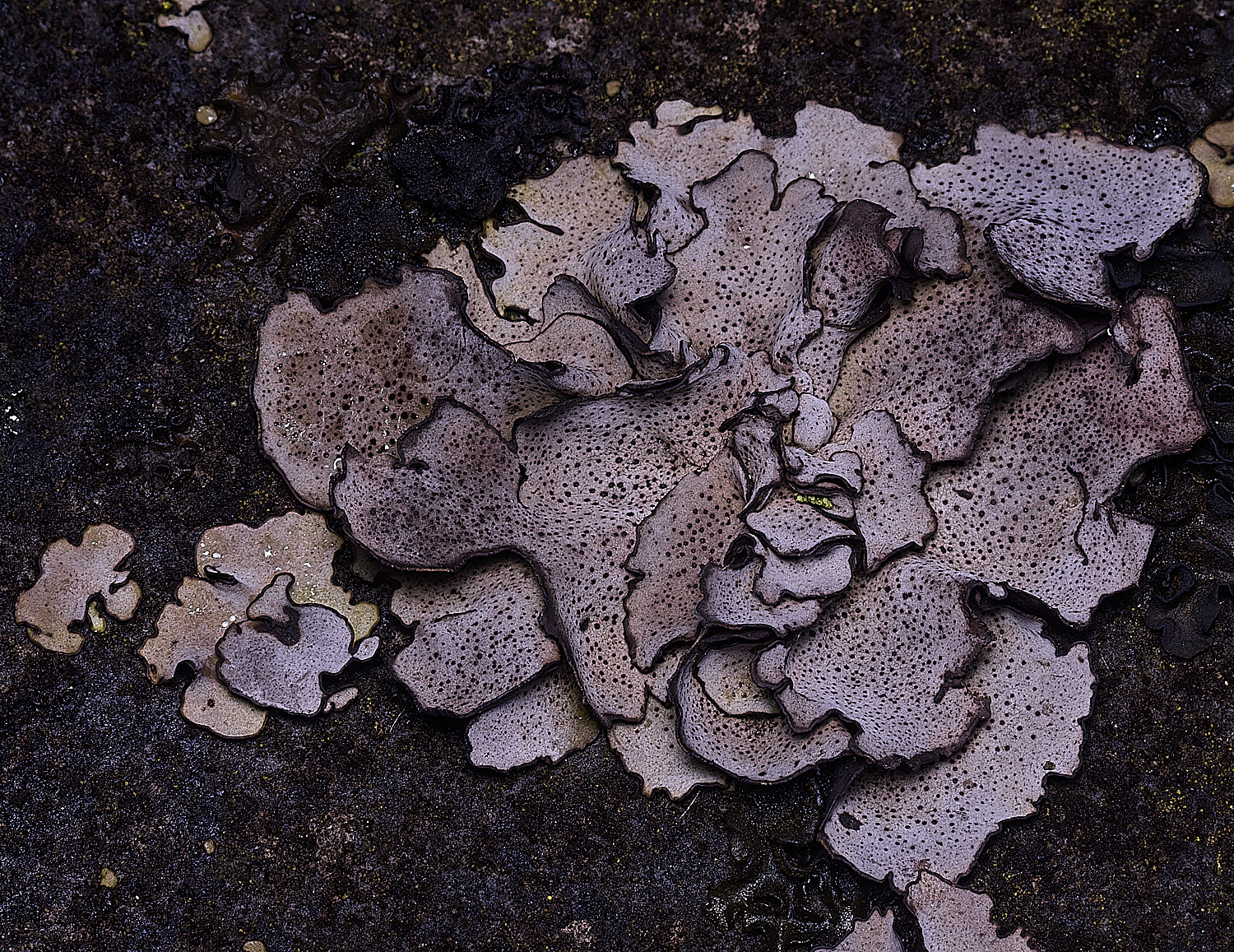
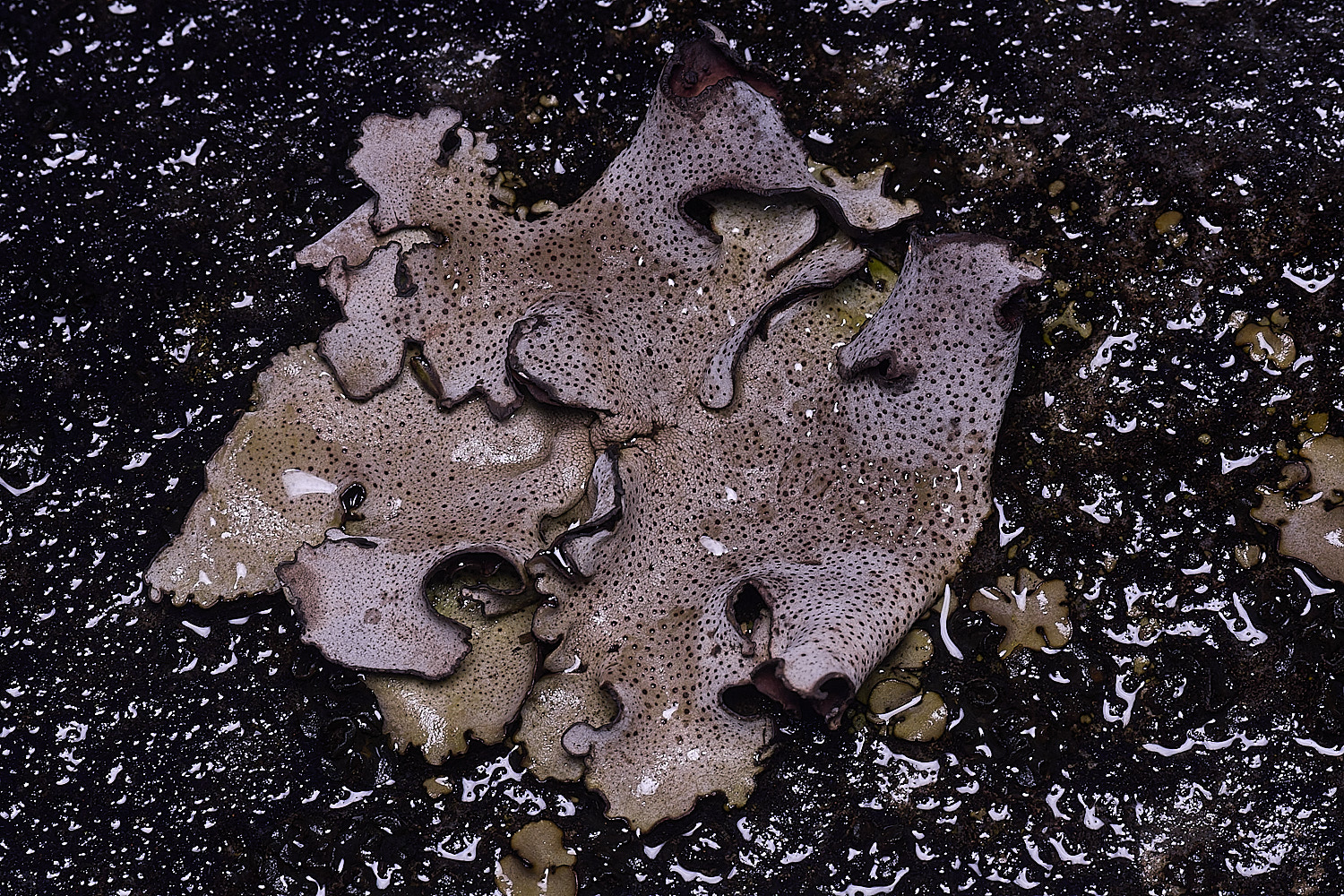
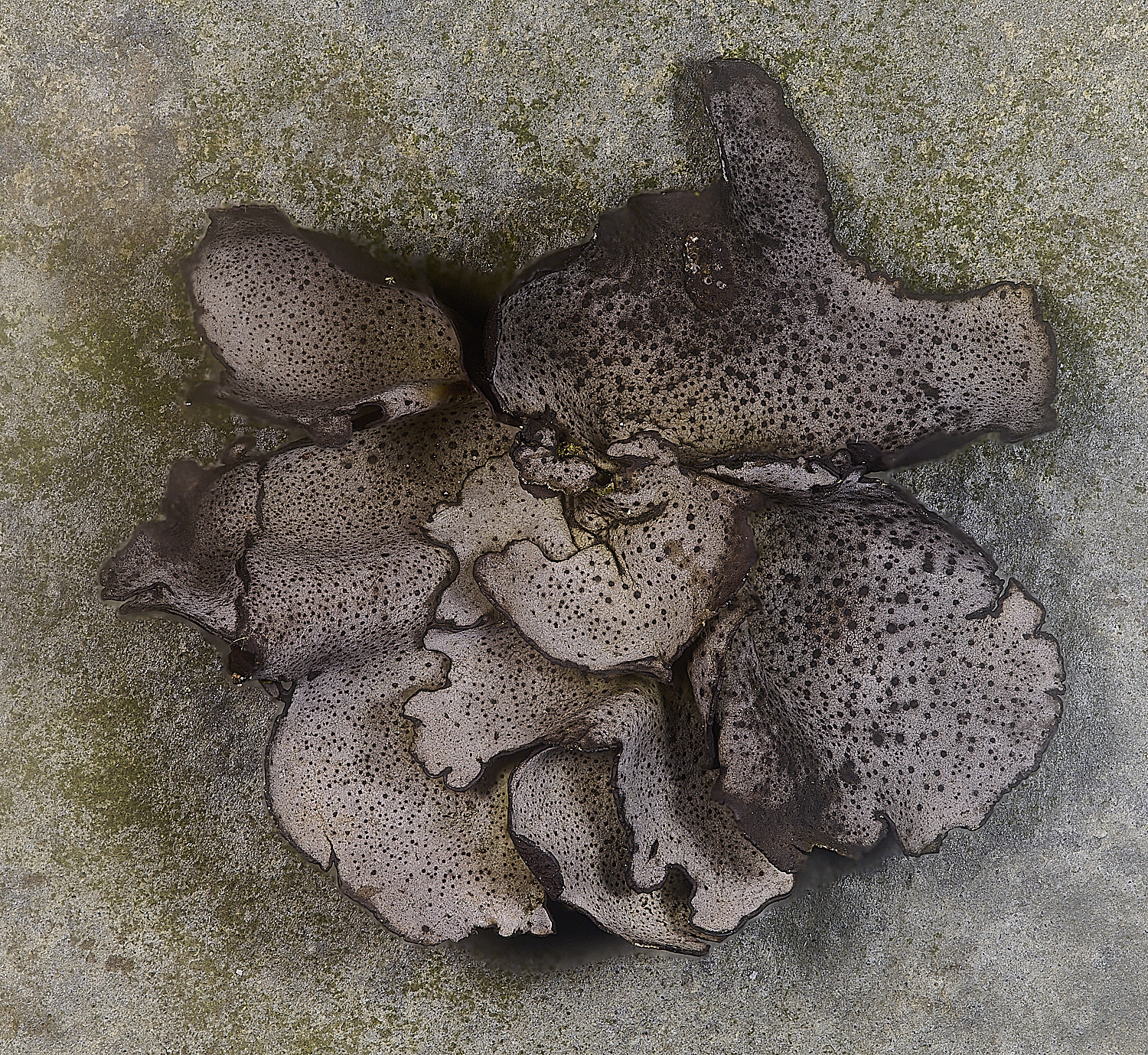
Leathery pale grey-brown lobes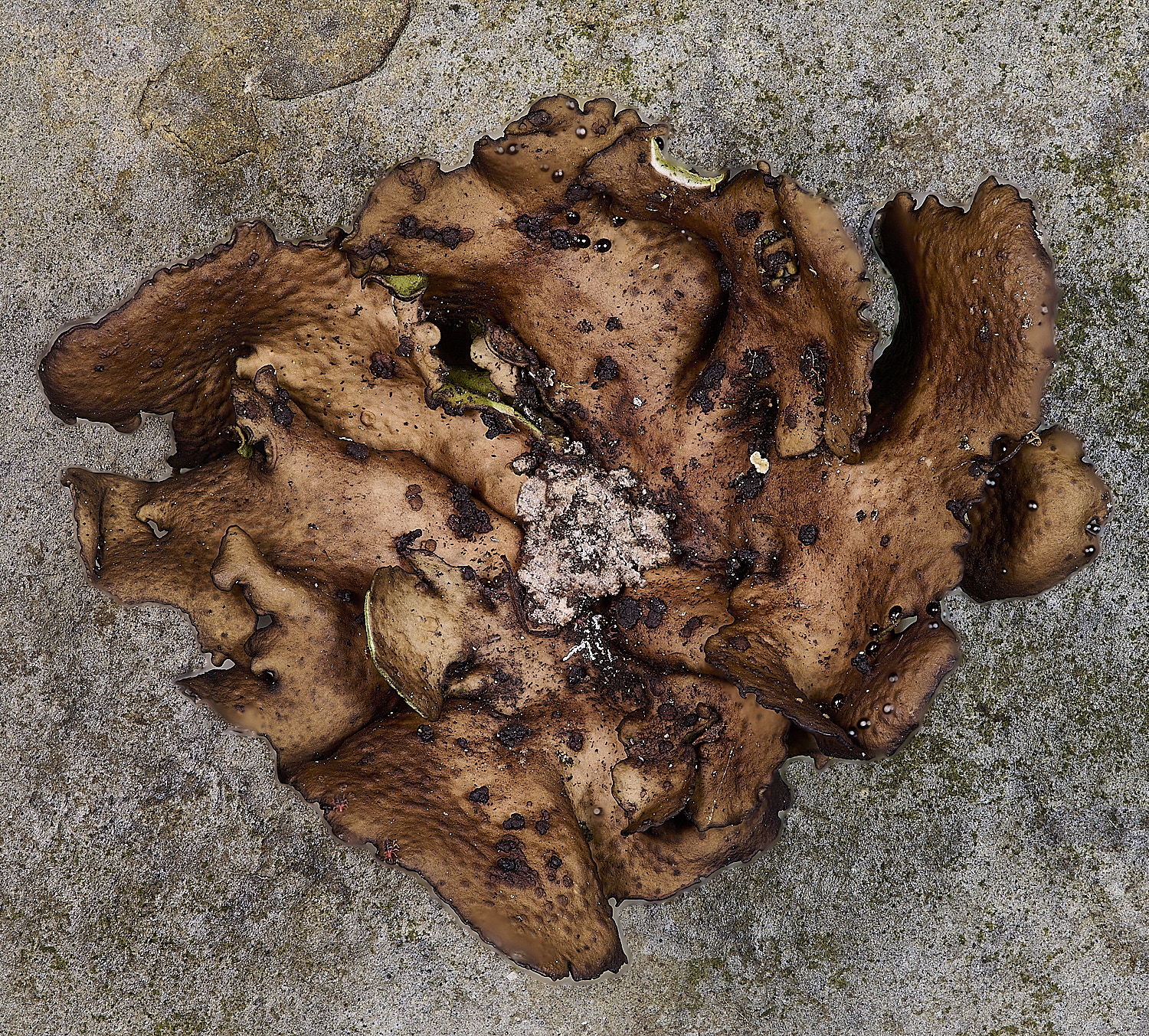
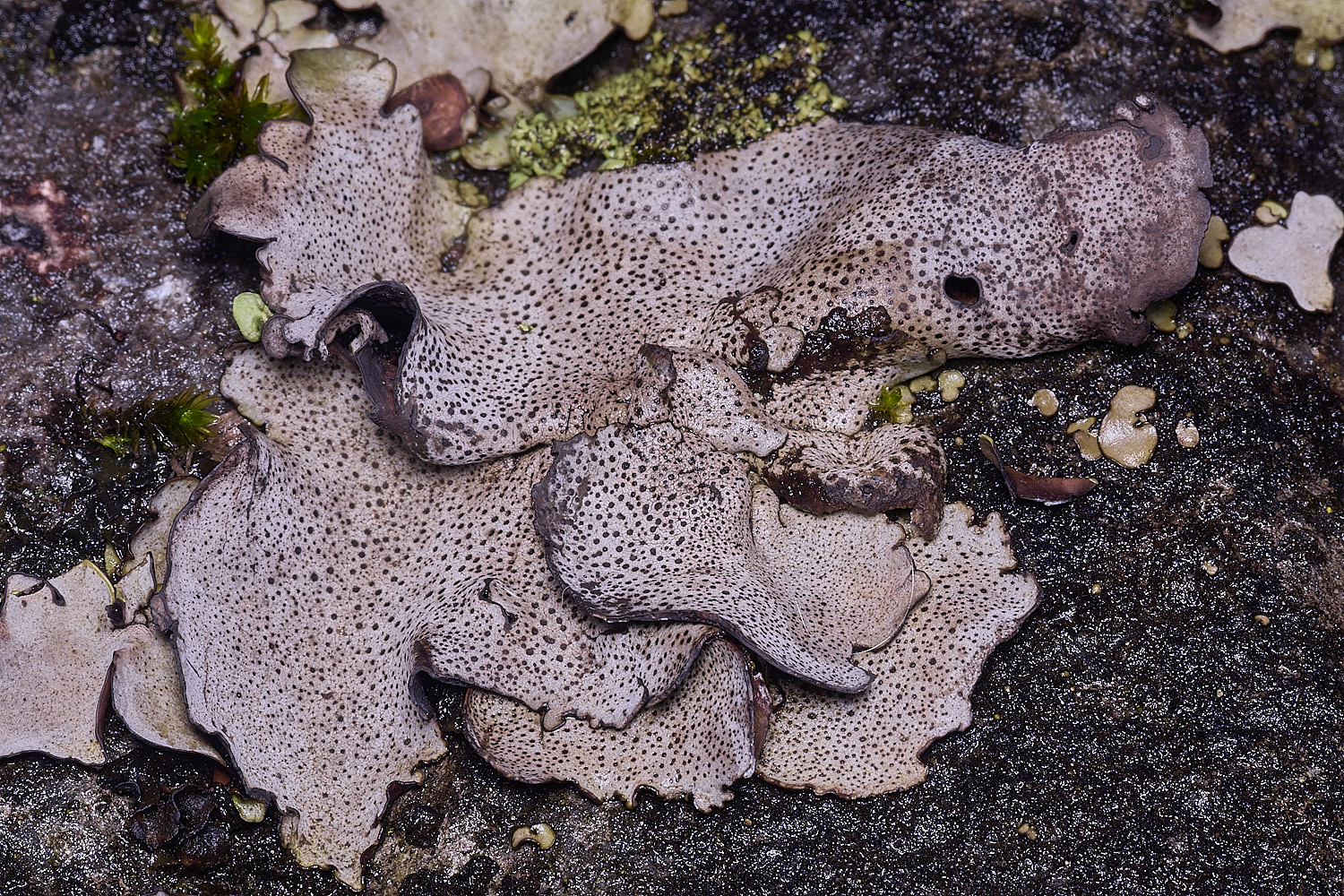
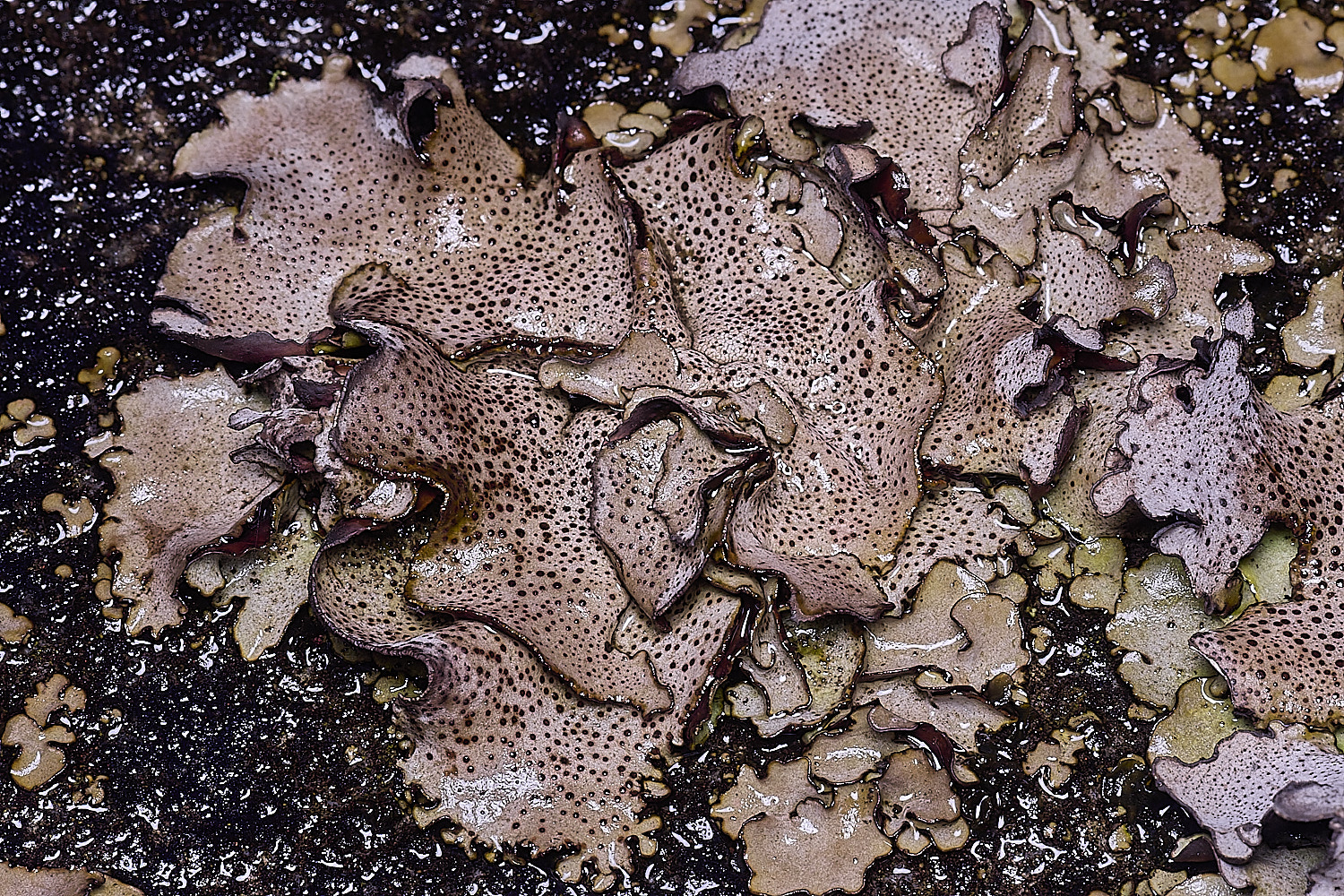
A tan colour on the underside.
One of the few lichen species with a single holdfast. 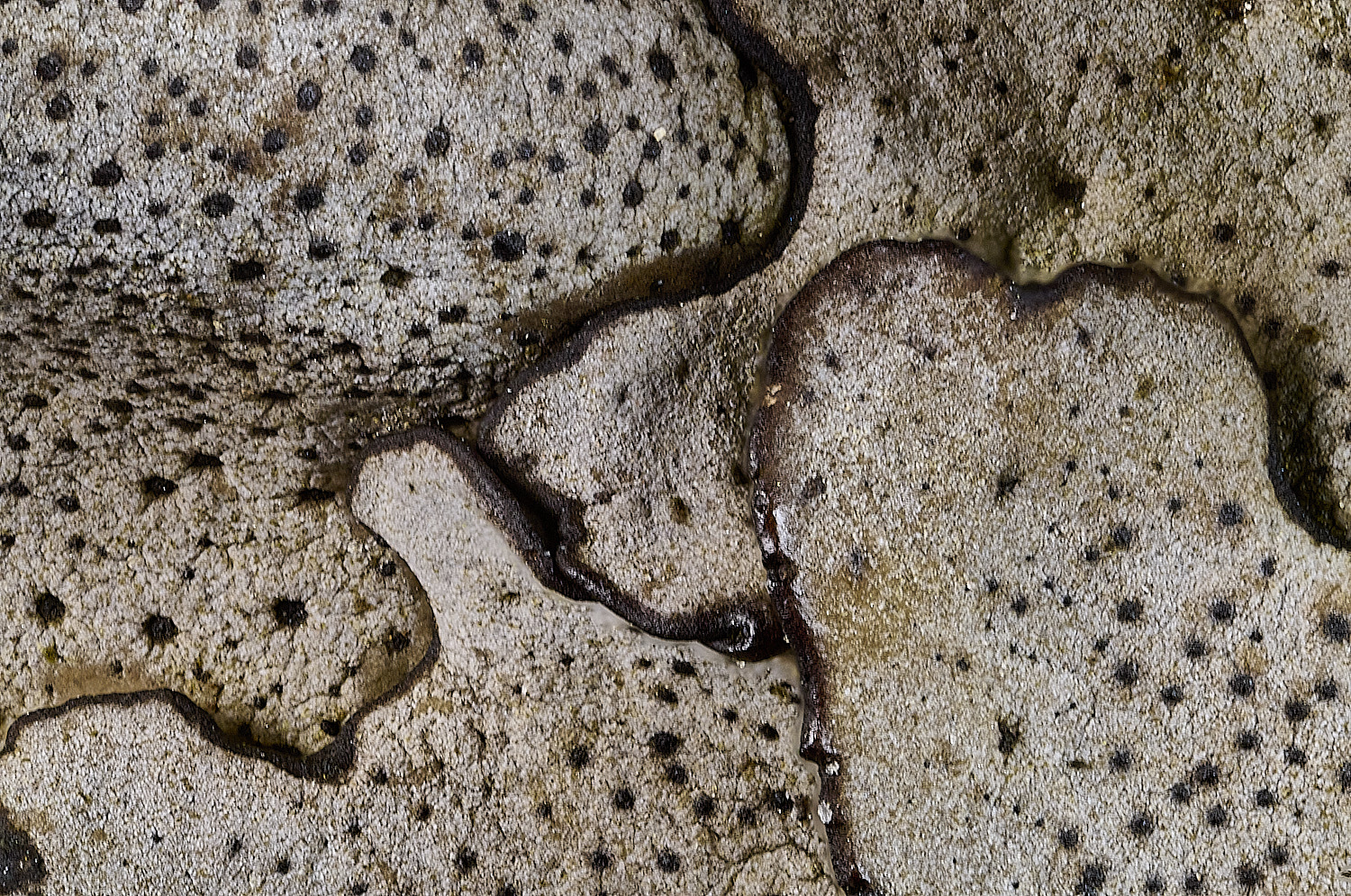
5x life size
The immersed perithecia comspicuous as small black dots (ostioles) all over the thallus.
Dermatocarpon miniatum
This is the only Norfolk site for this species. More usually found on coastal rocks on the west. Although as in this case can be found on damp calcareous chest tombs.
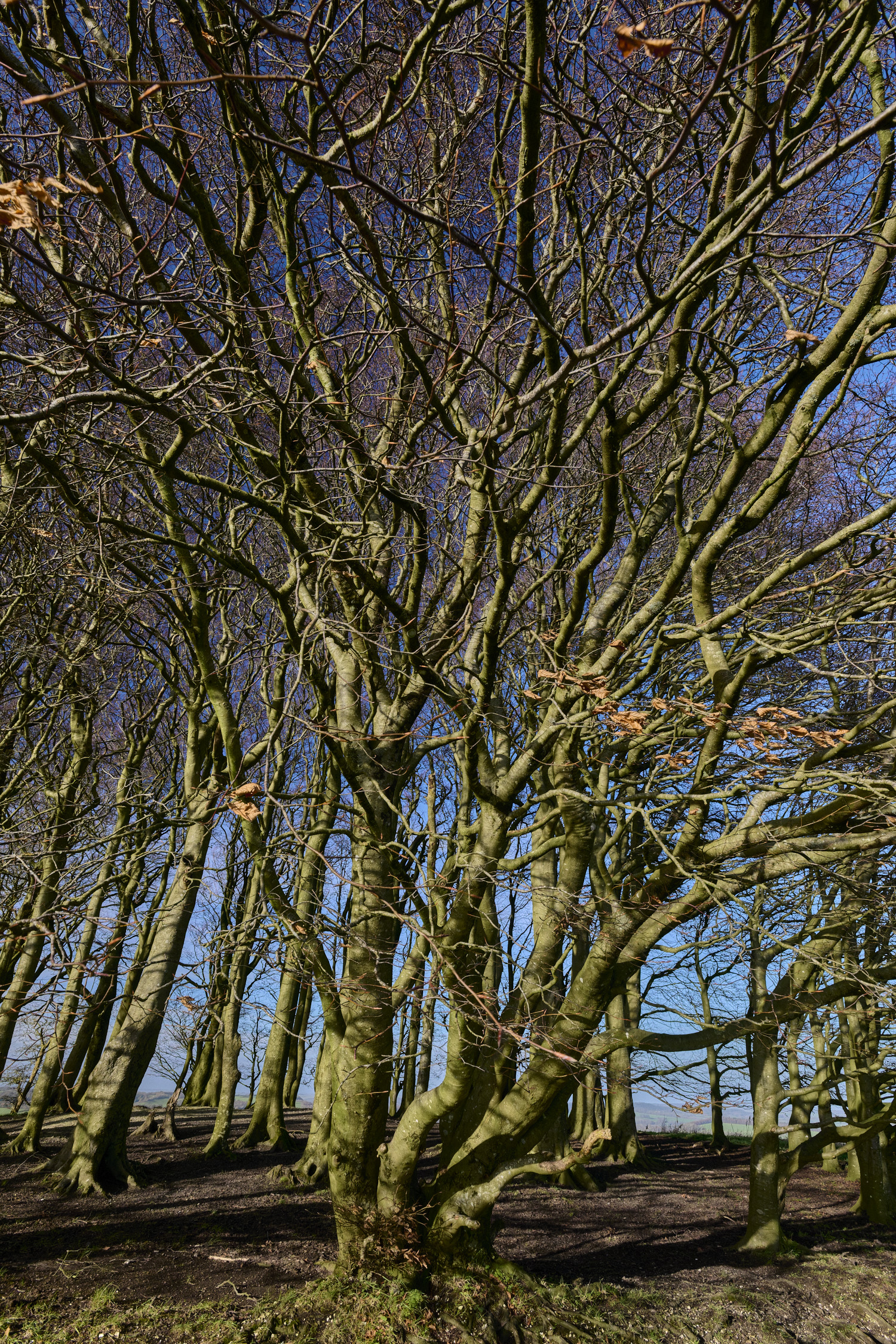
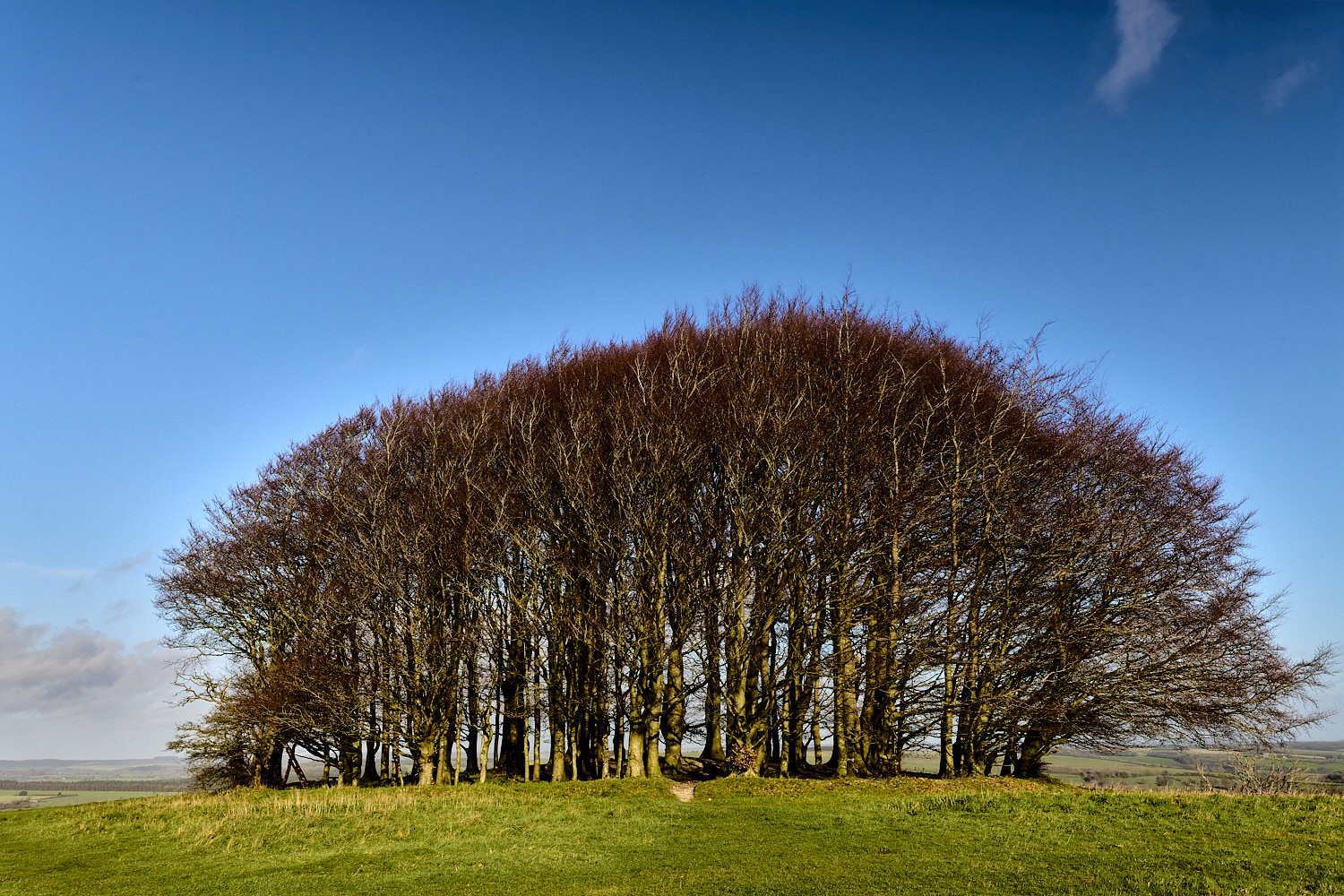
Pepperbox Hill - Wiltshire


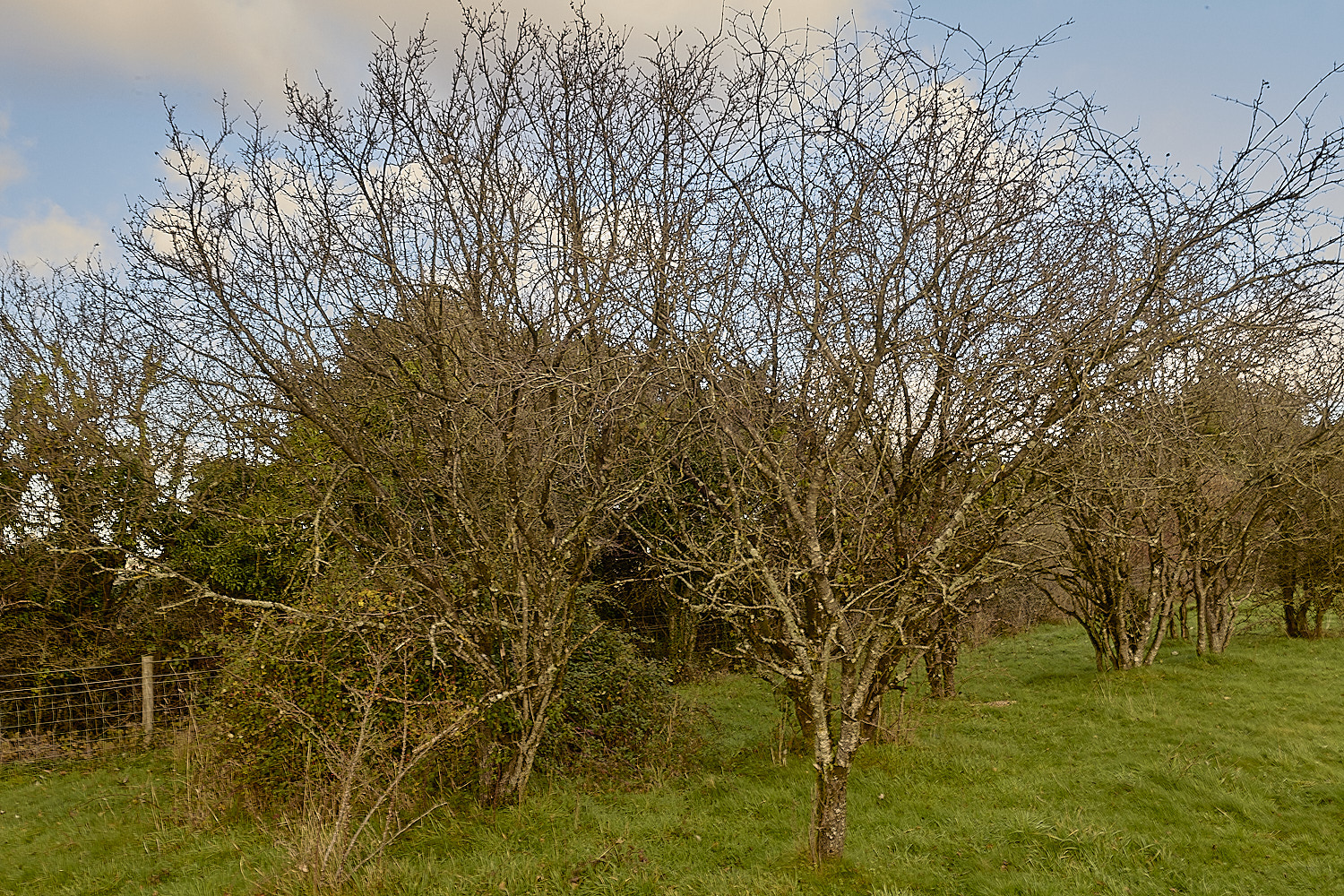
Blackthorn ( Prunus spinosa)


Dilated Scalewort (Frullenia dilatata)
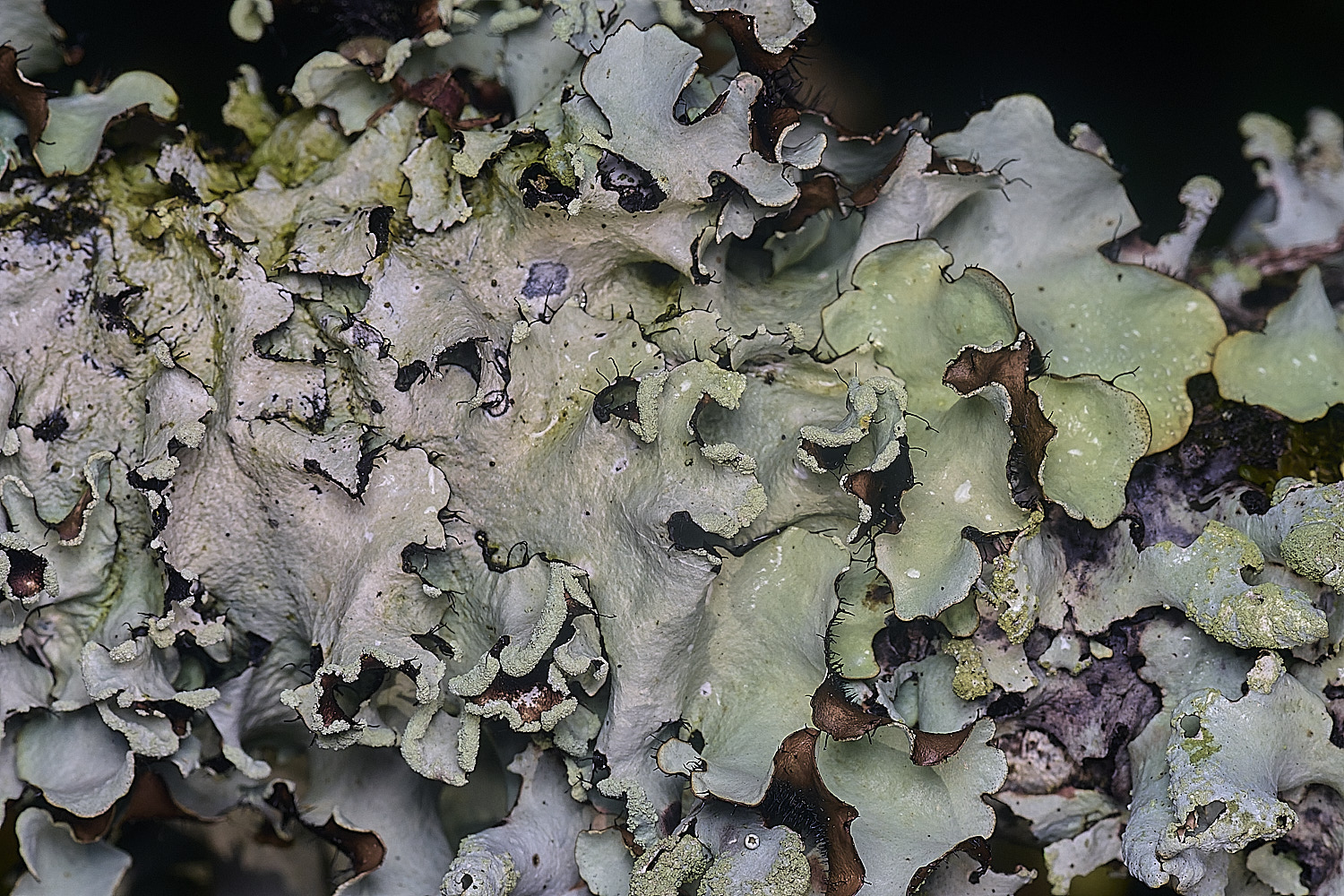
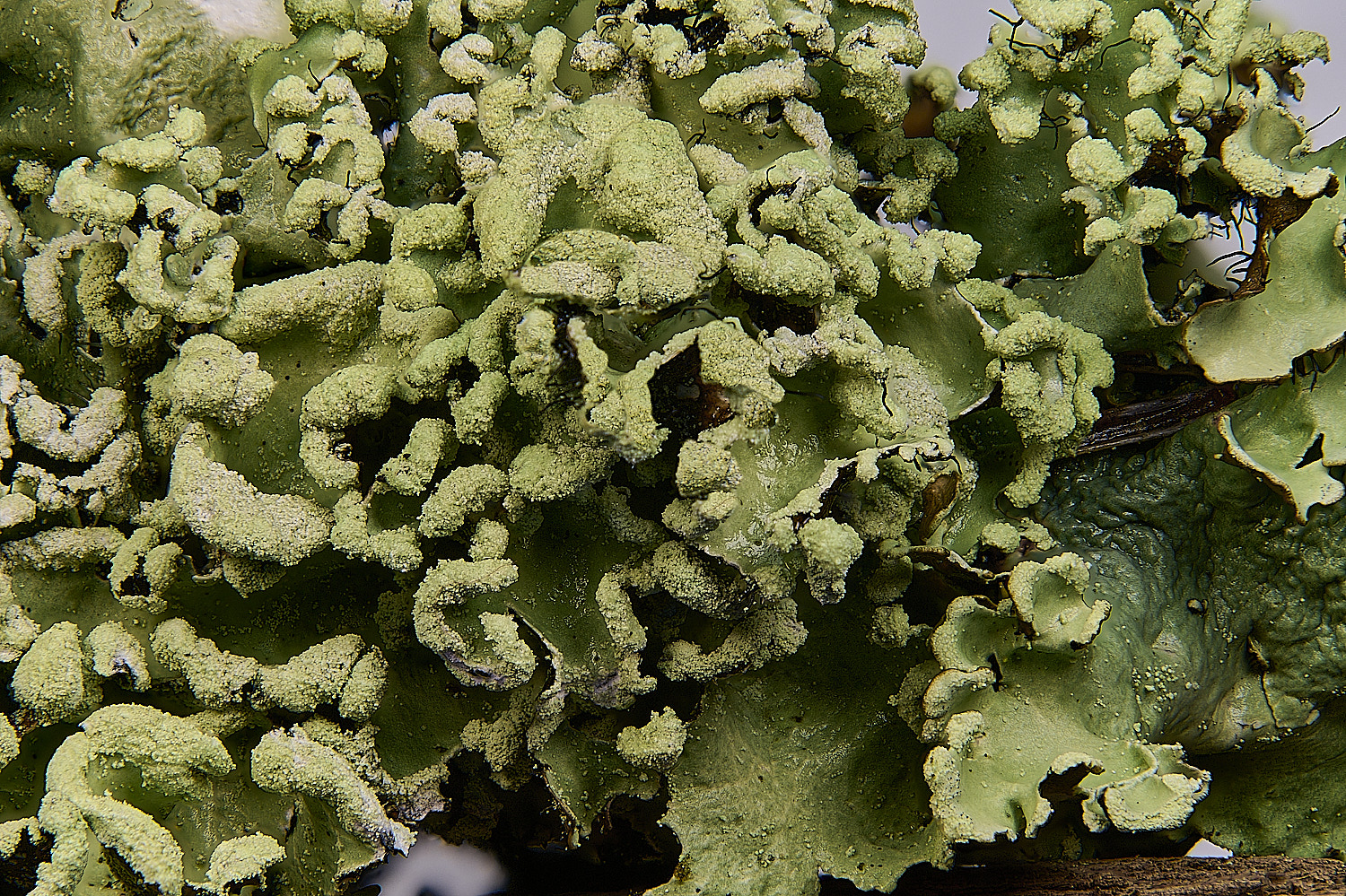
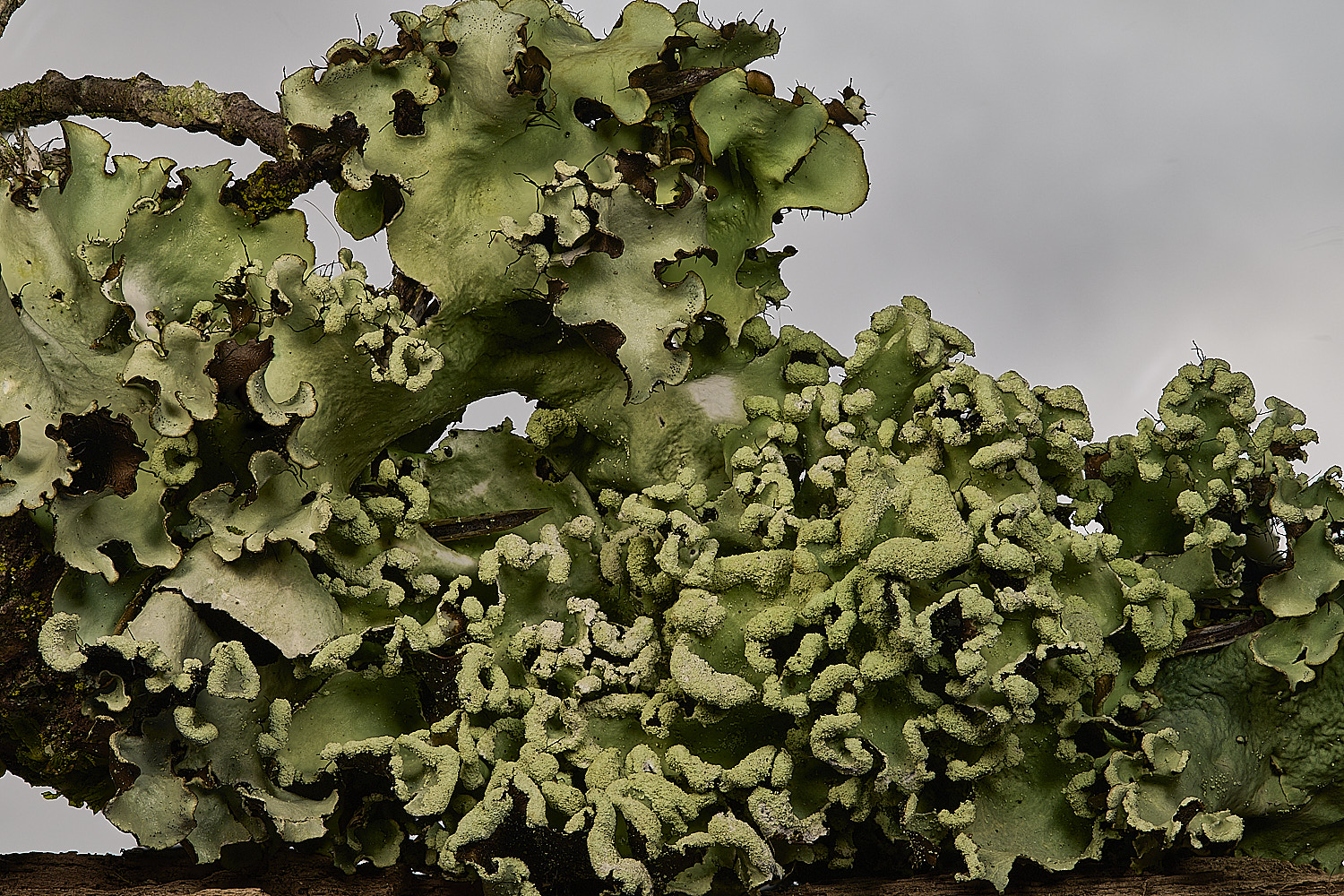
Common Green Shield (Flavoparmeila caperata)
Ramalina farinacea?
Narrow strap like lobes
Oval shaped soralia 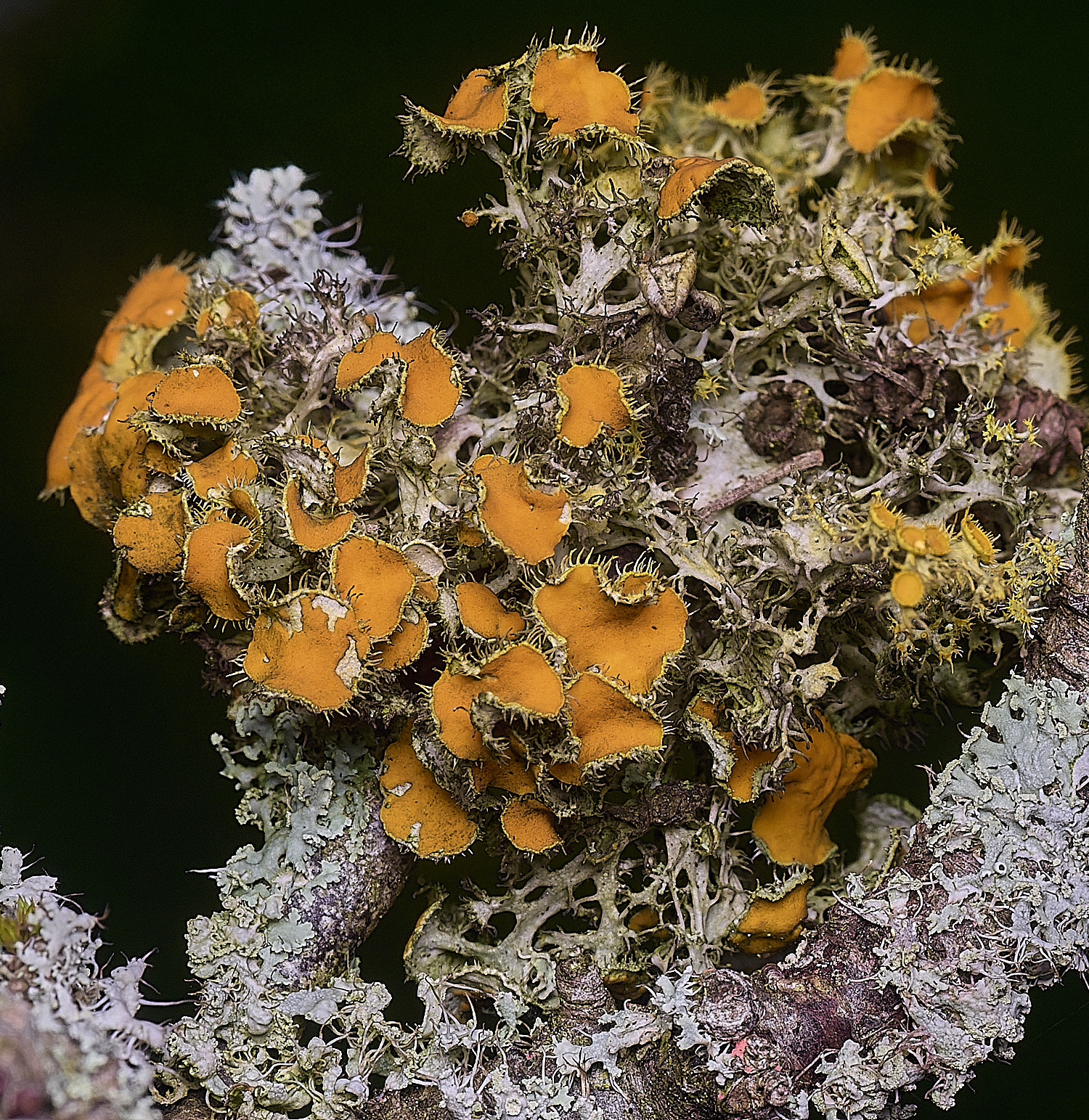
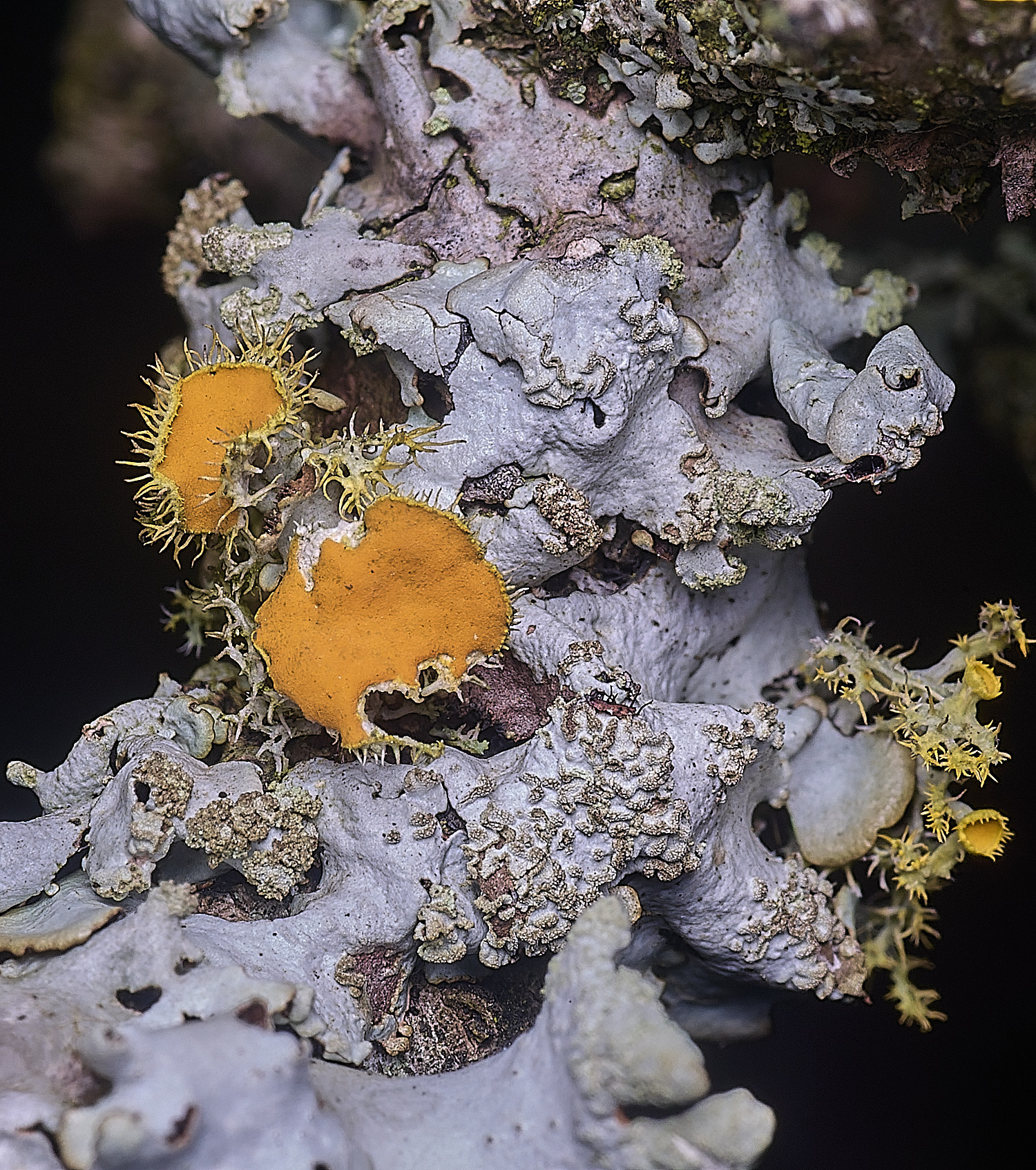
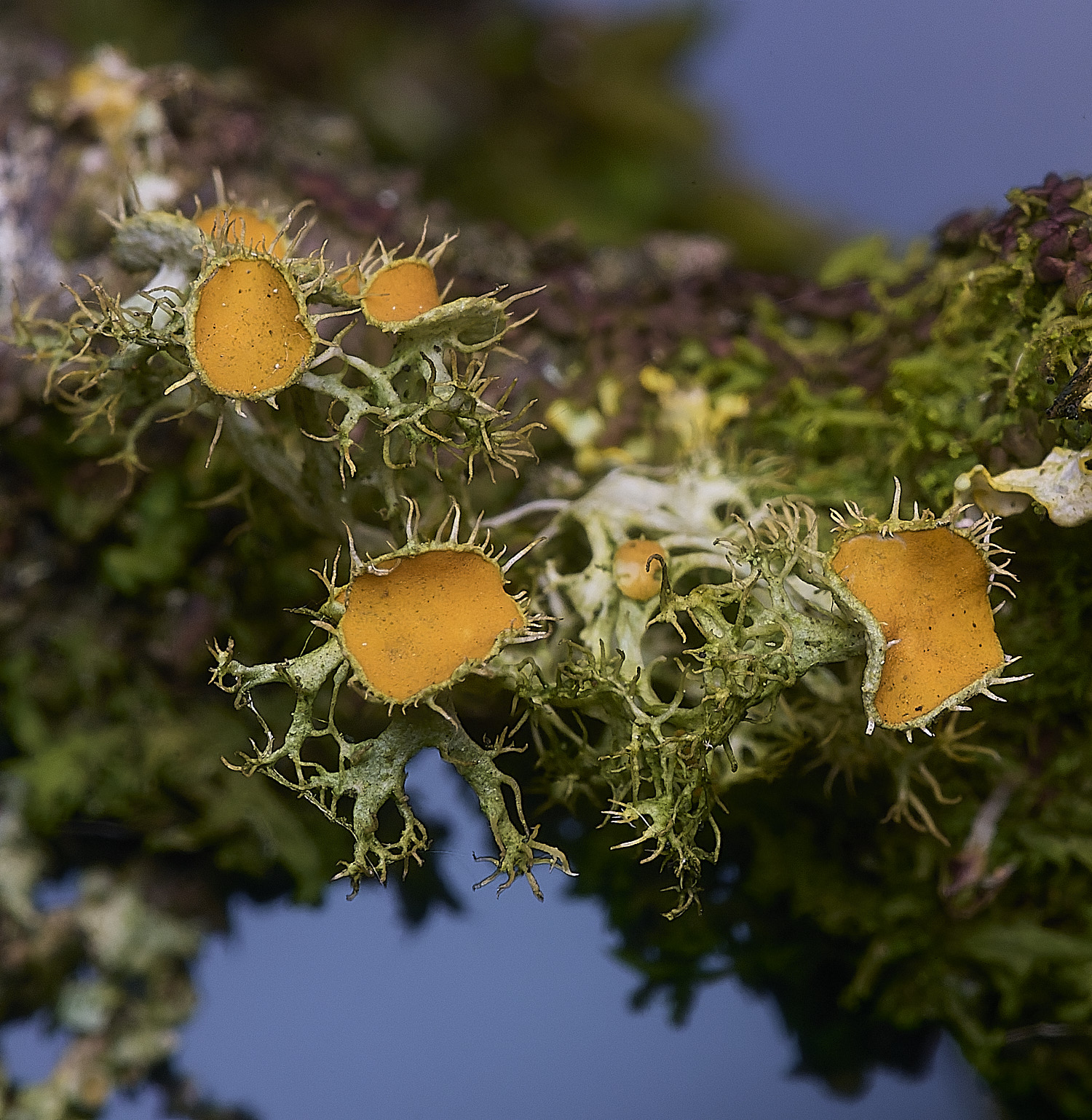
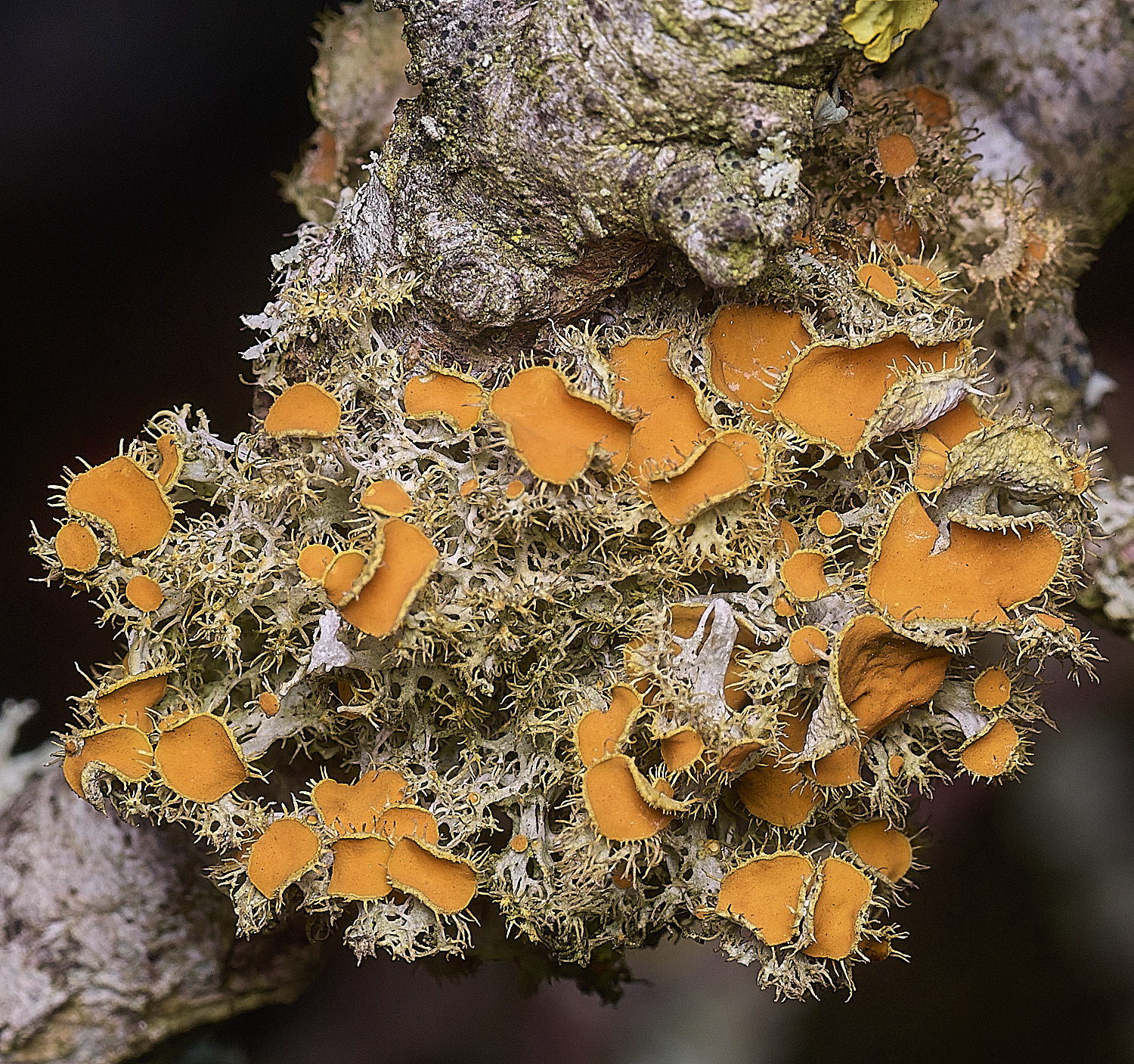
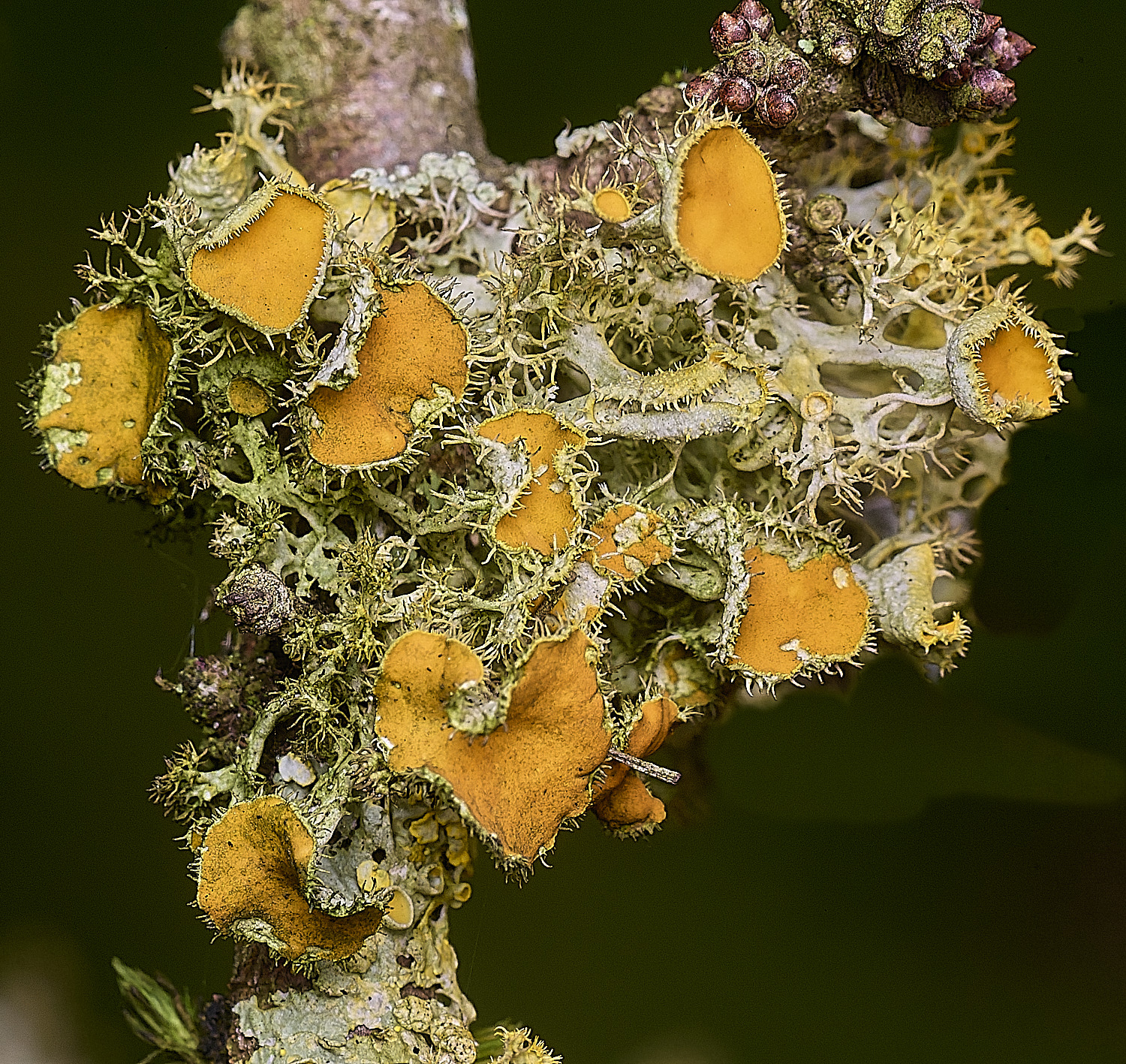
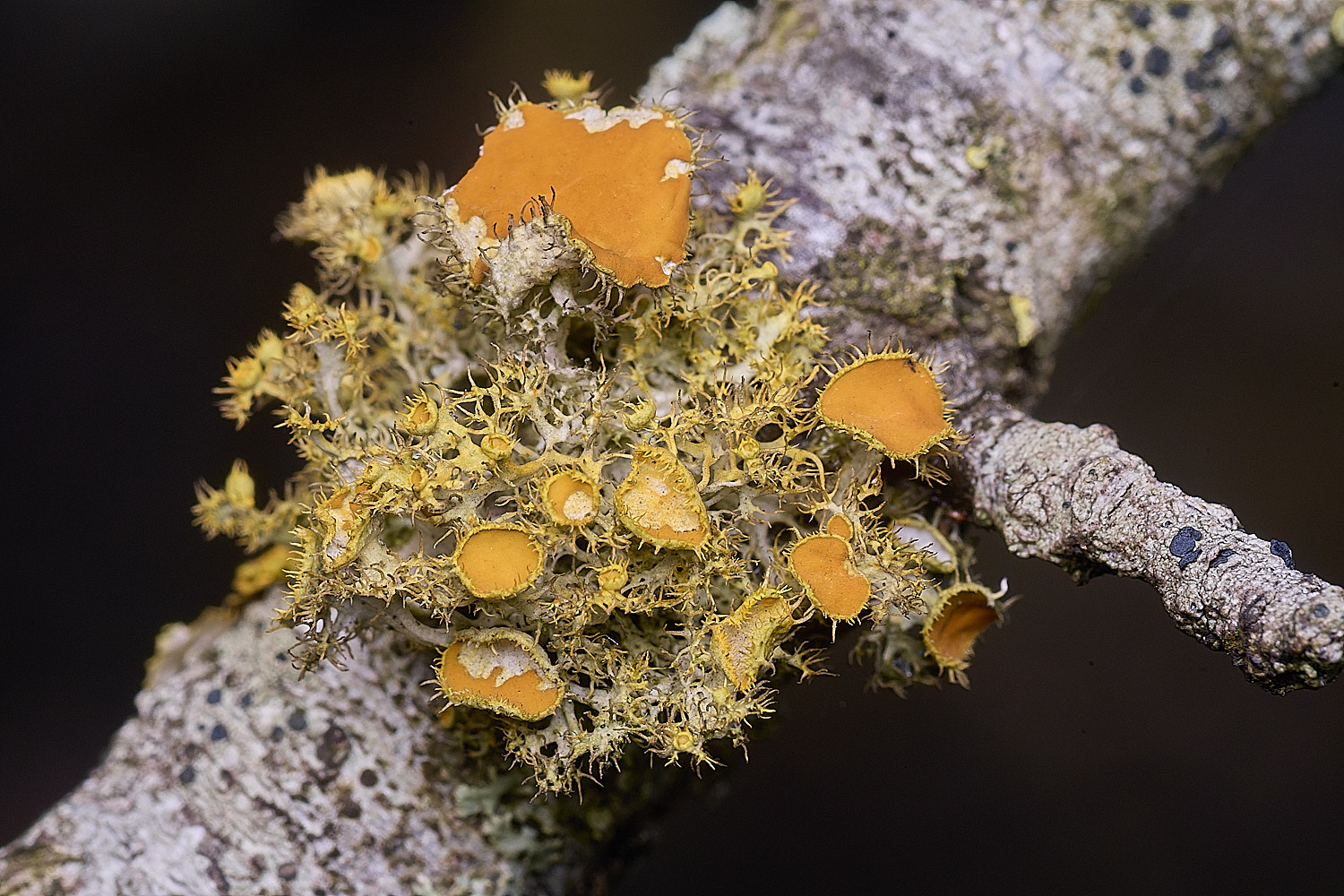
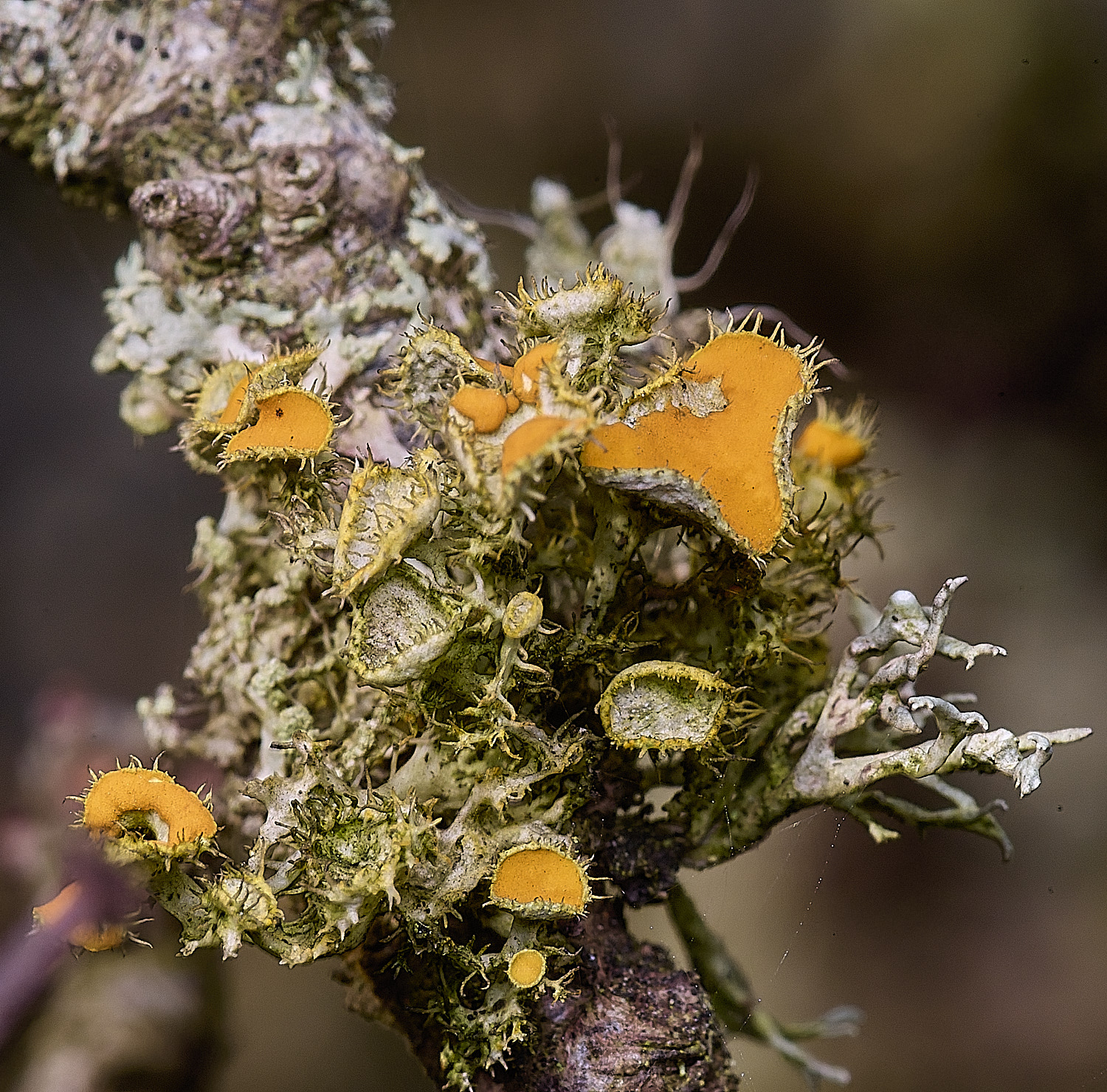

Goldeneye Lichen (Teloschistes chrysophthalmus)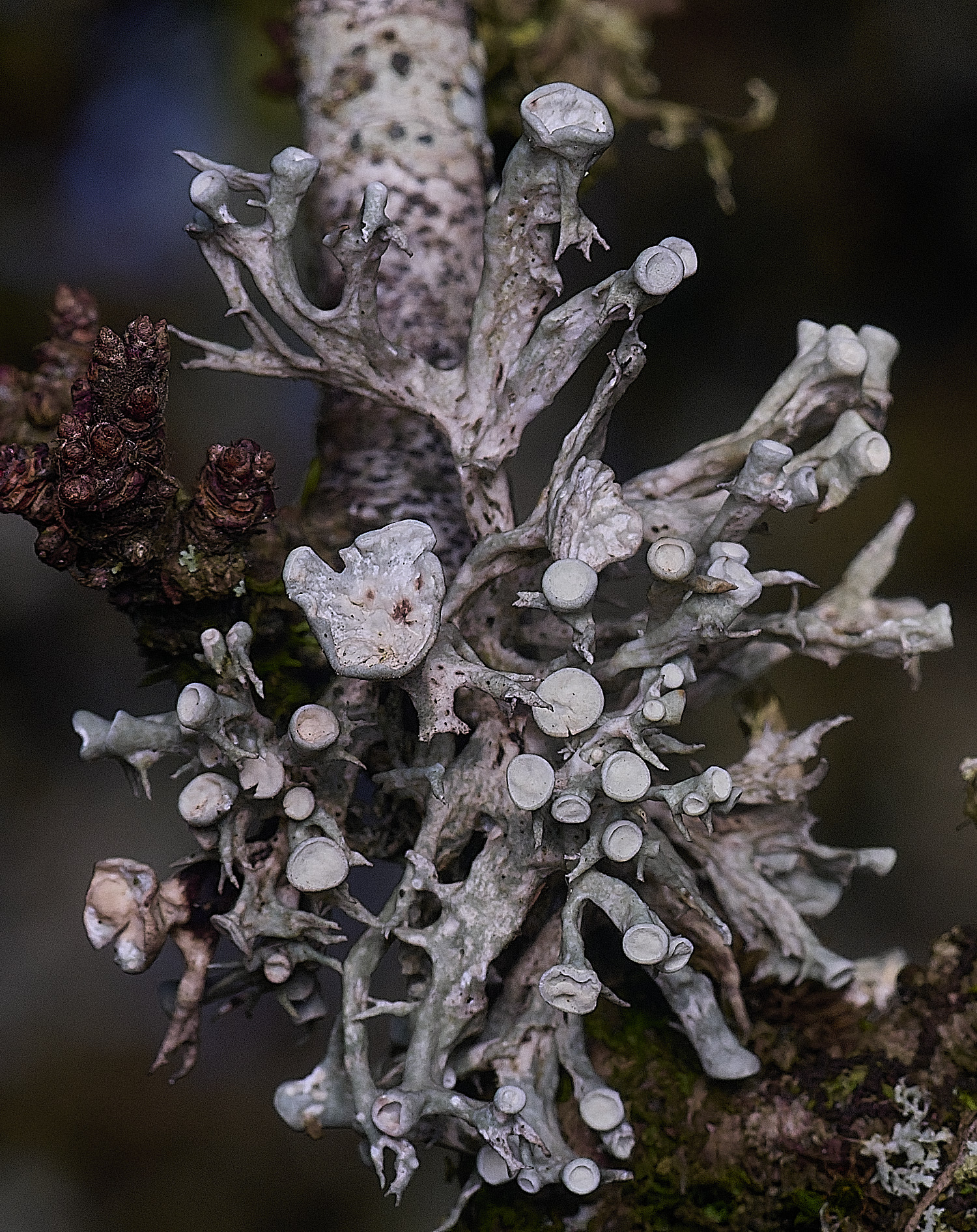
Lichen Sp
Ramalina fastigiata 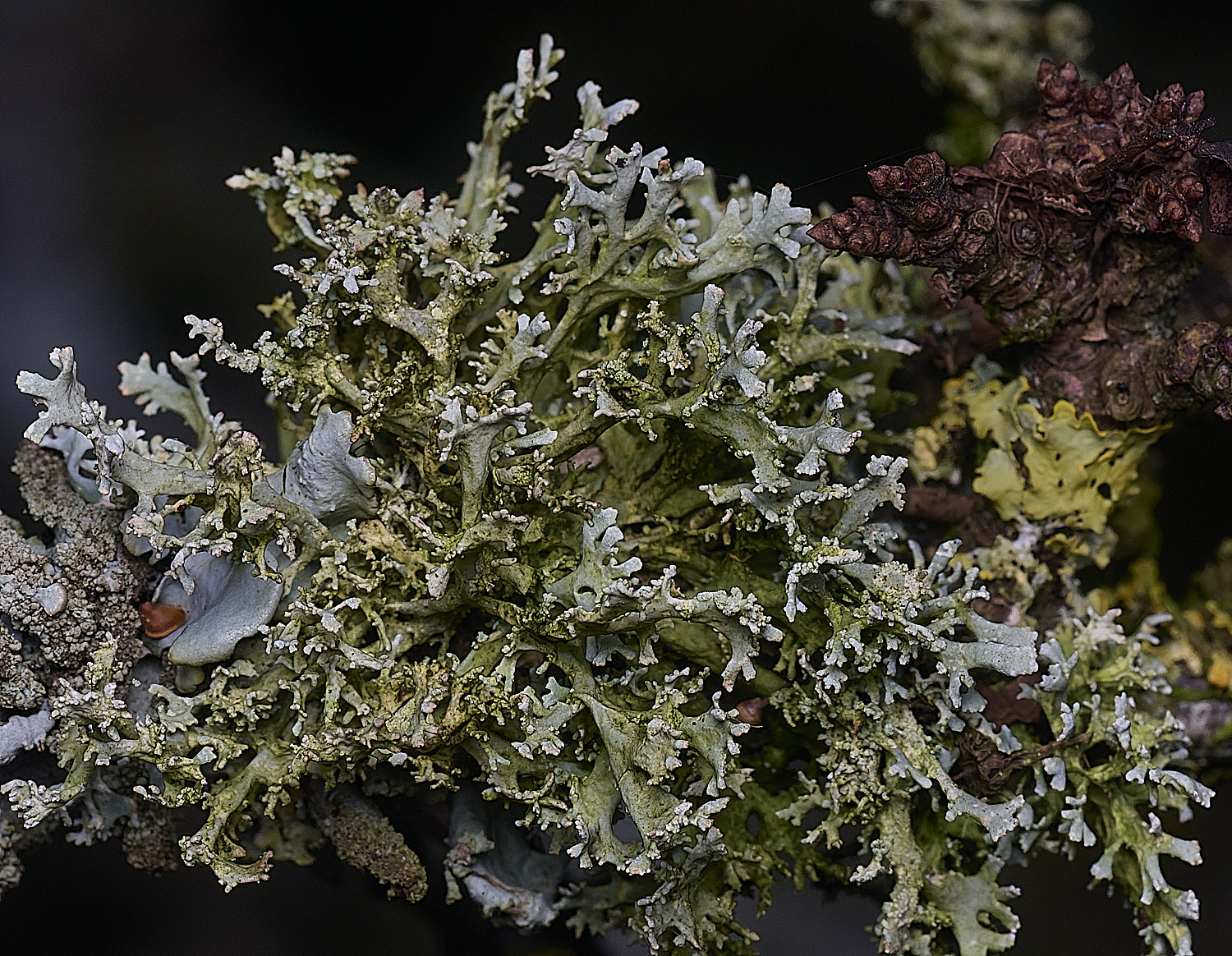
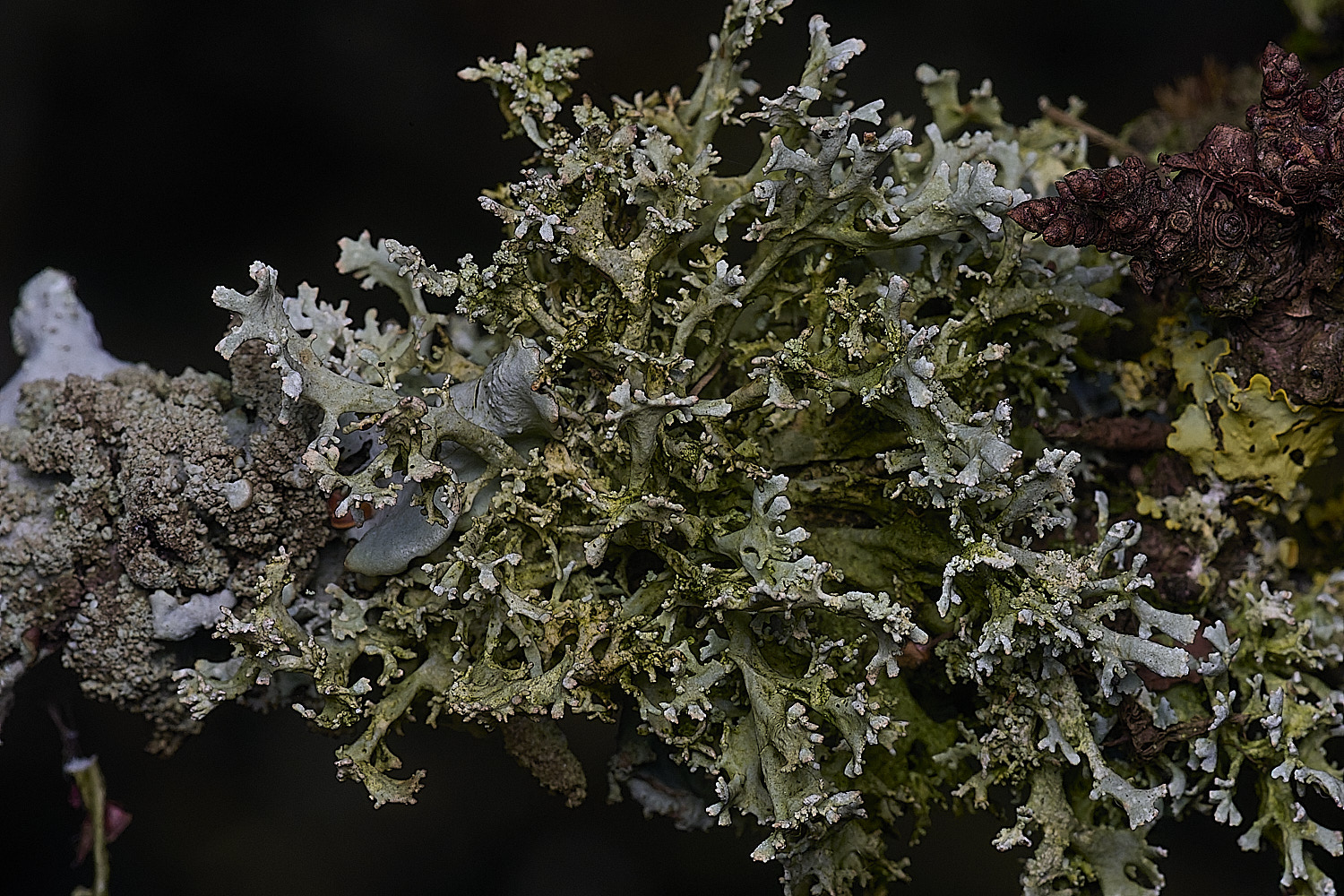
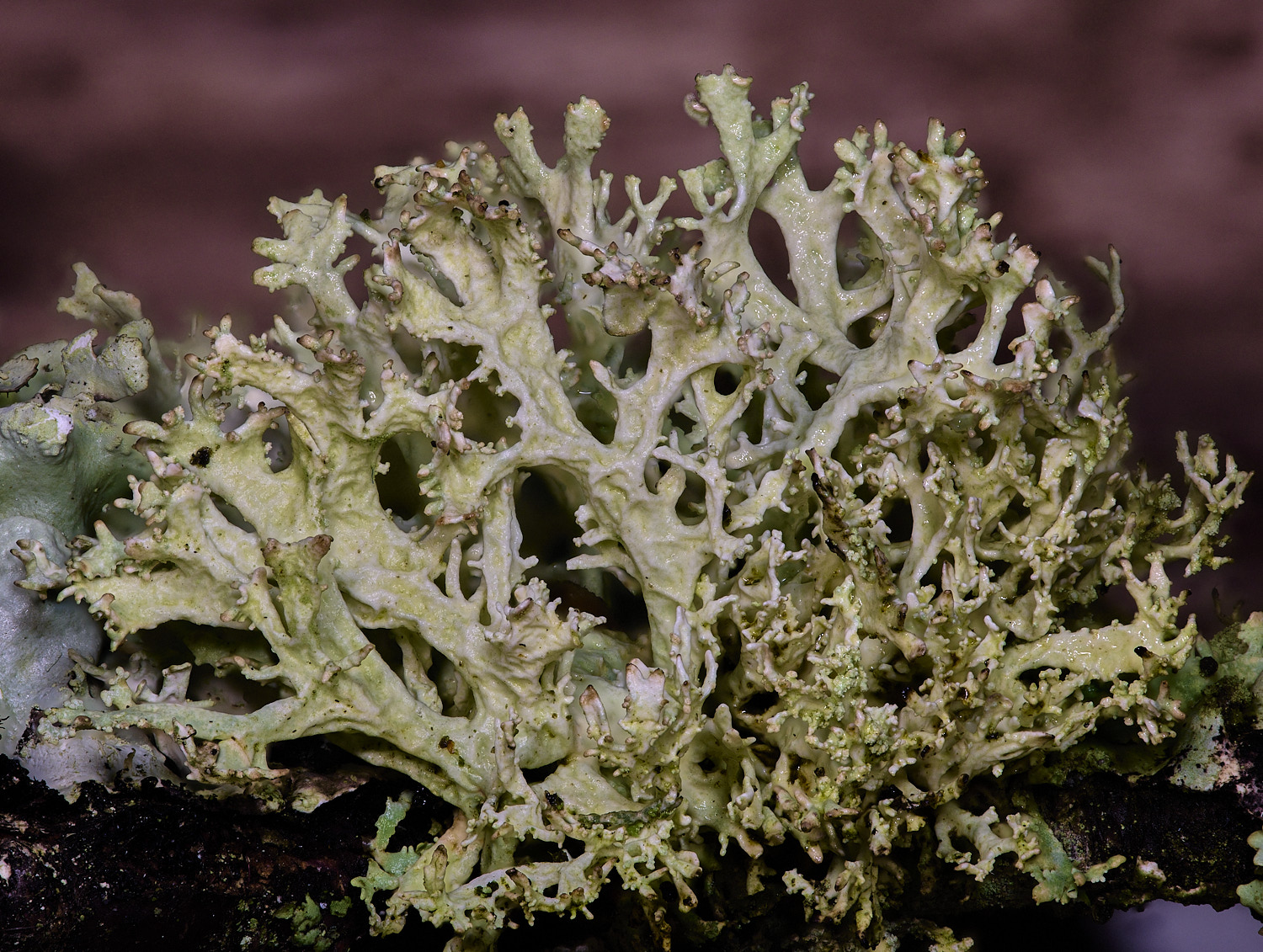
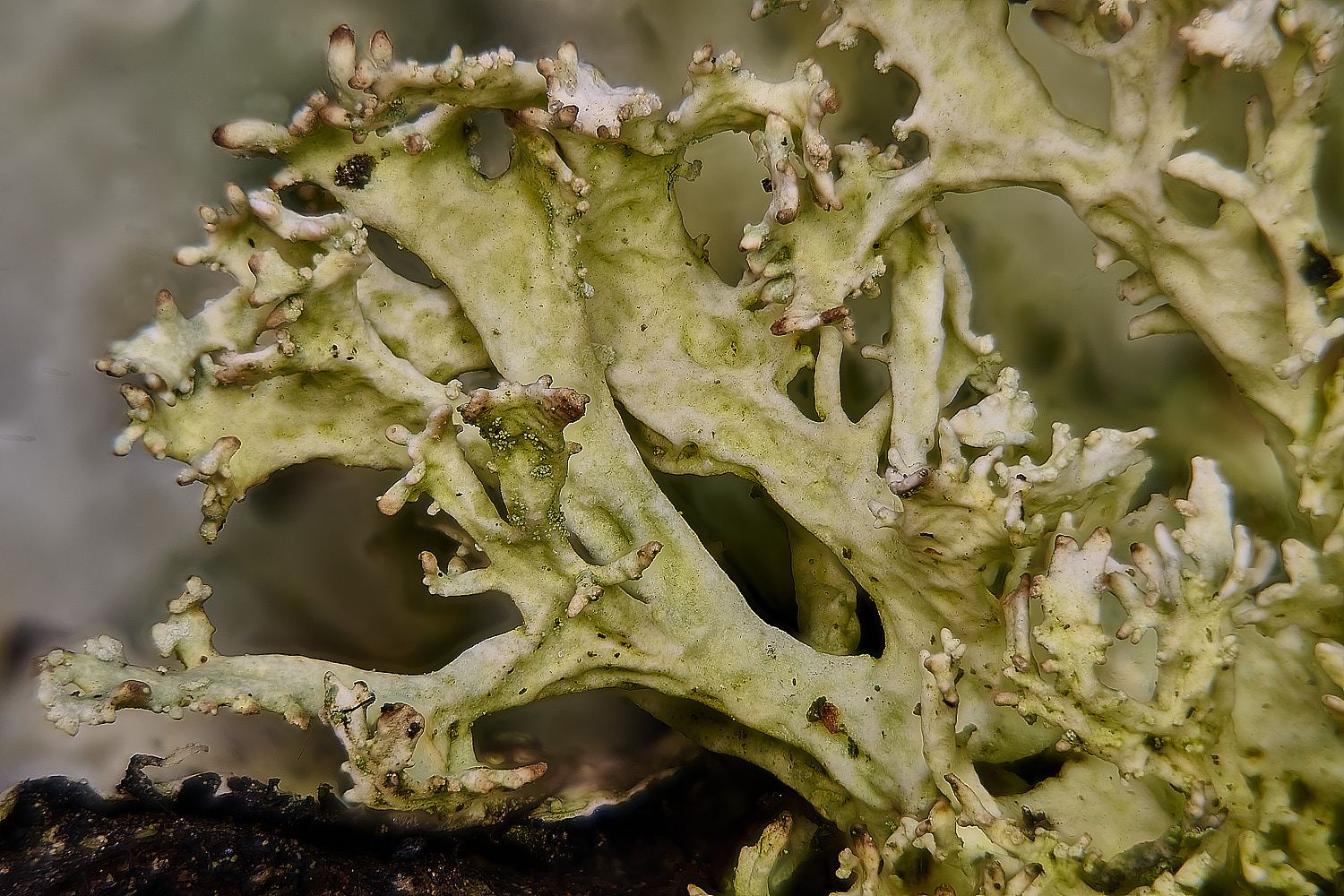
Ramalina Sp? 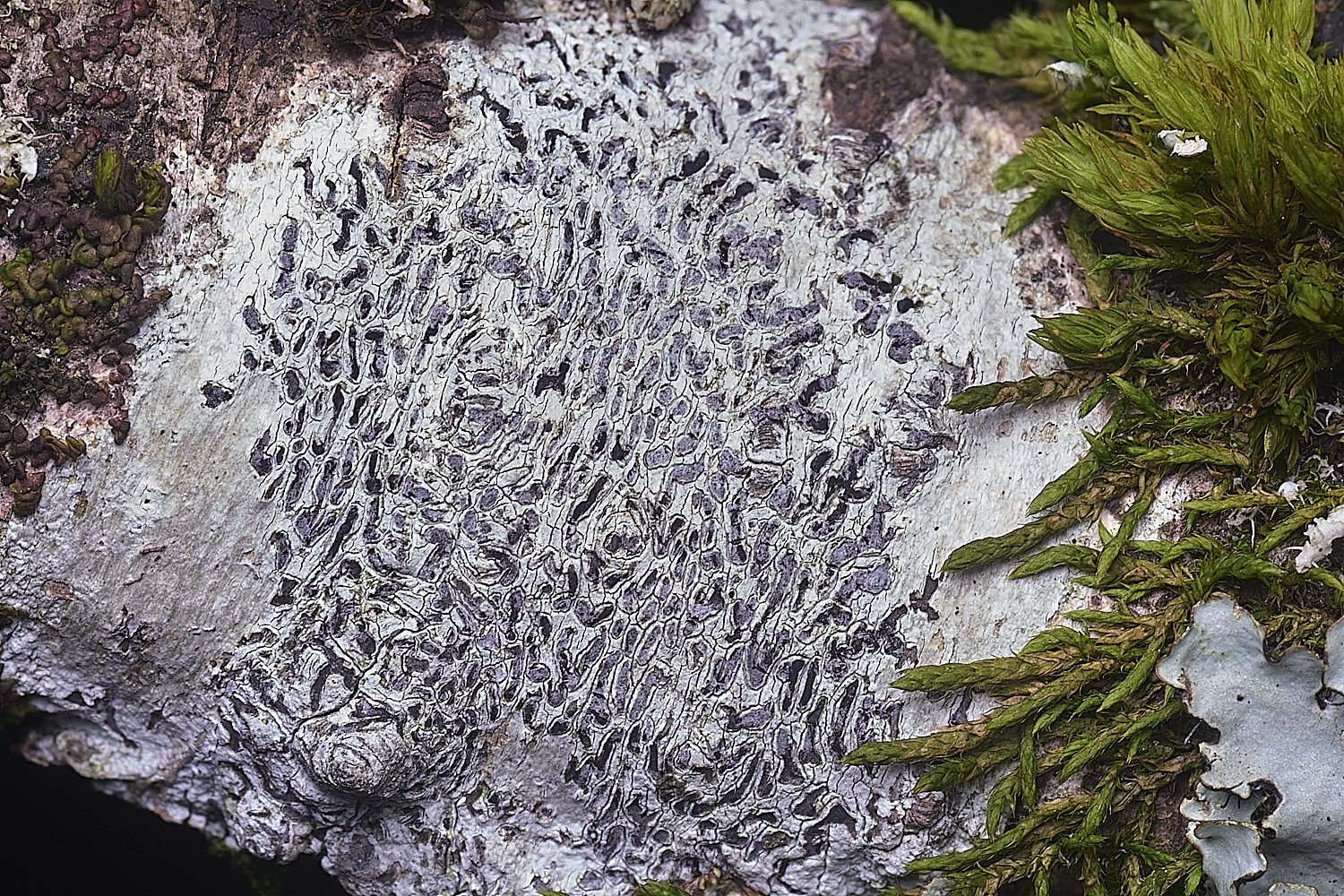
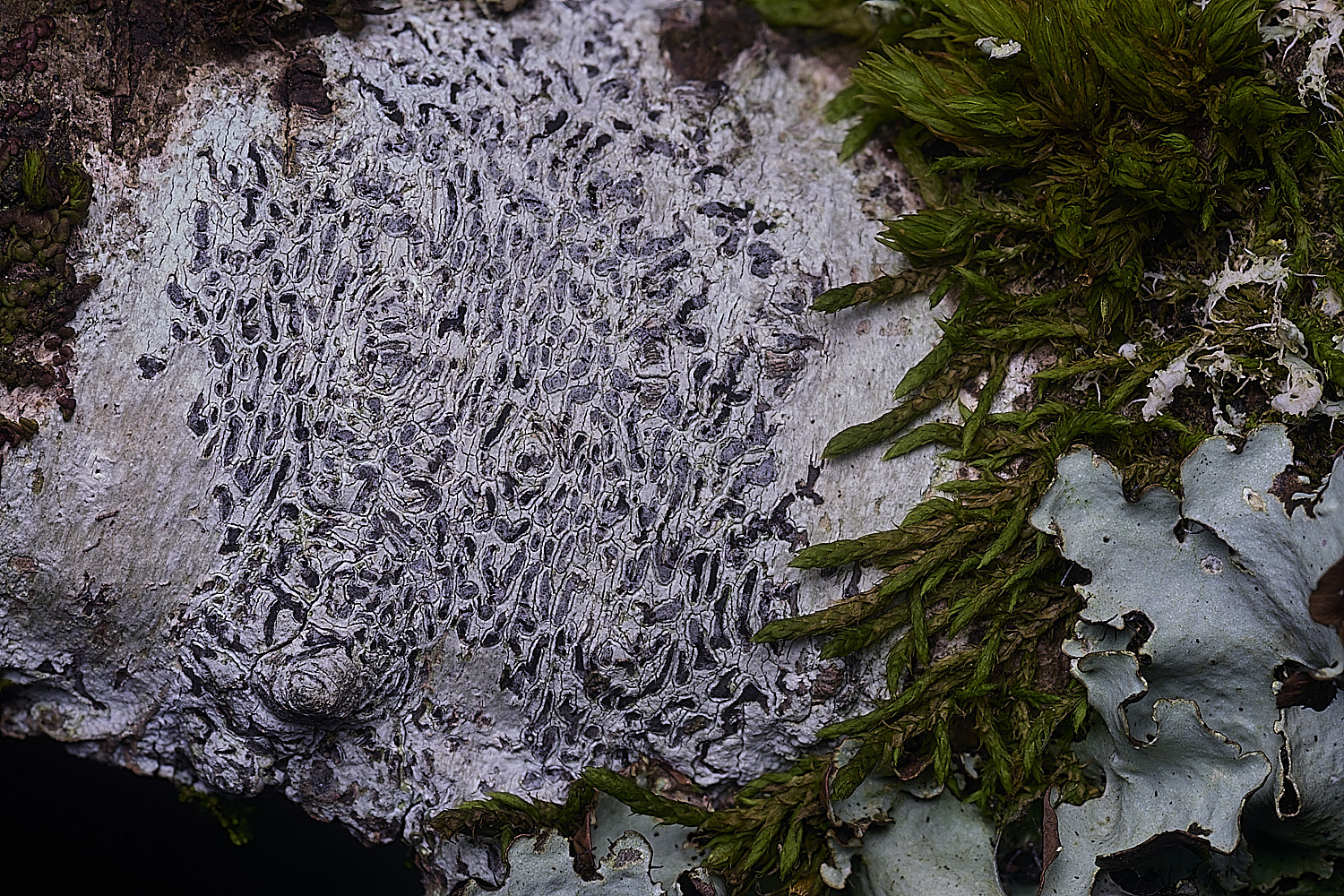
Lichen Sp
Script Lichen Sp 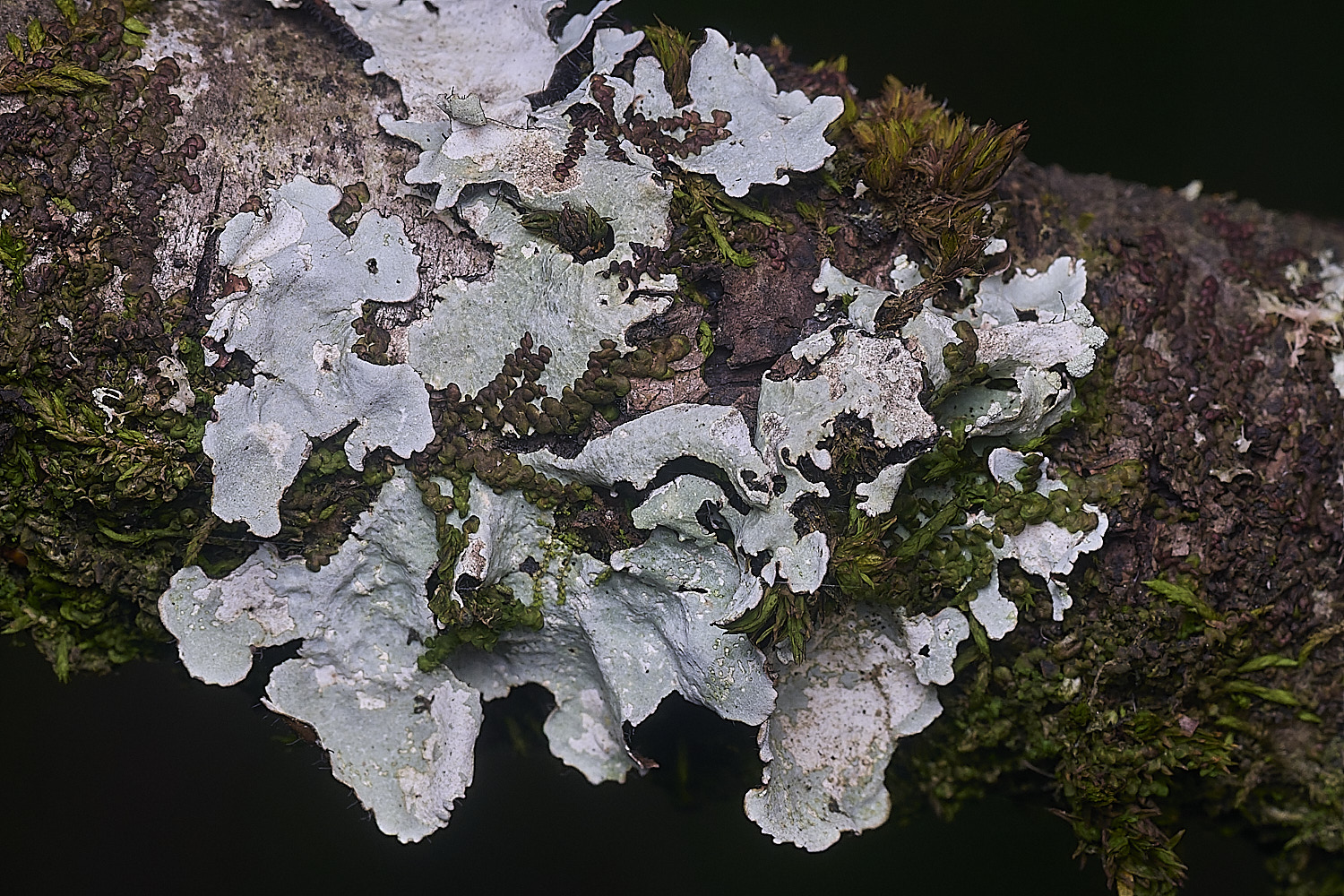
Lichen Sp ? 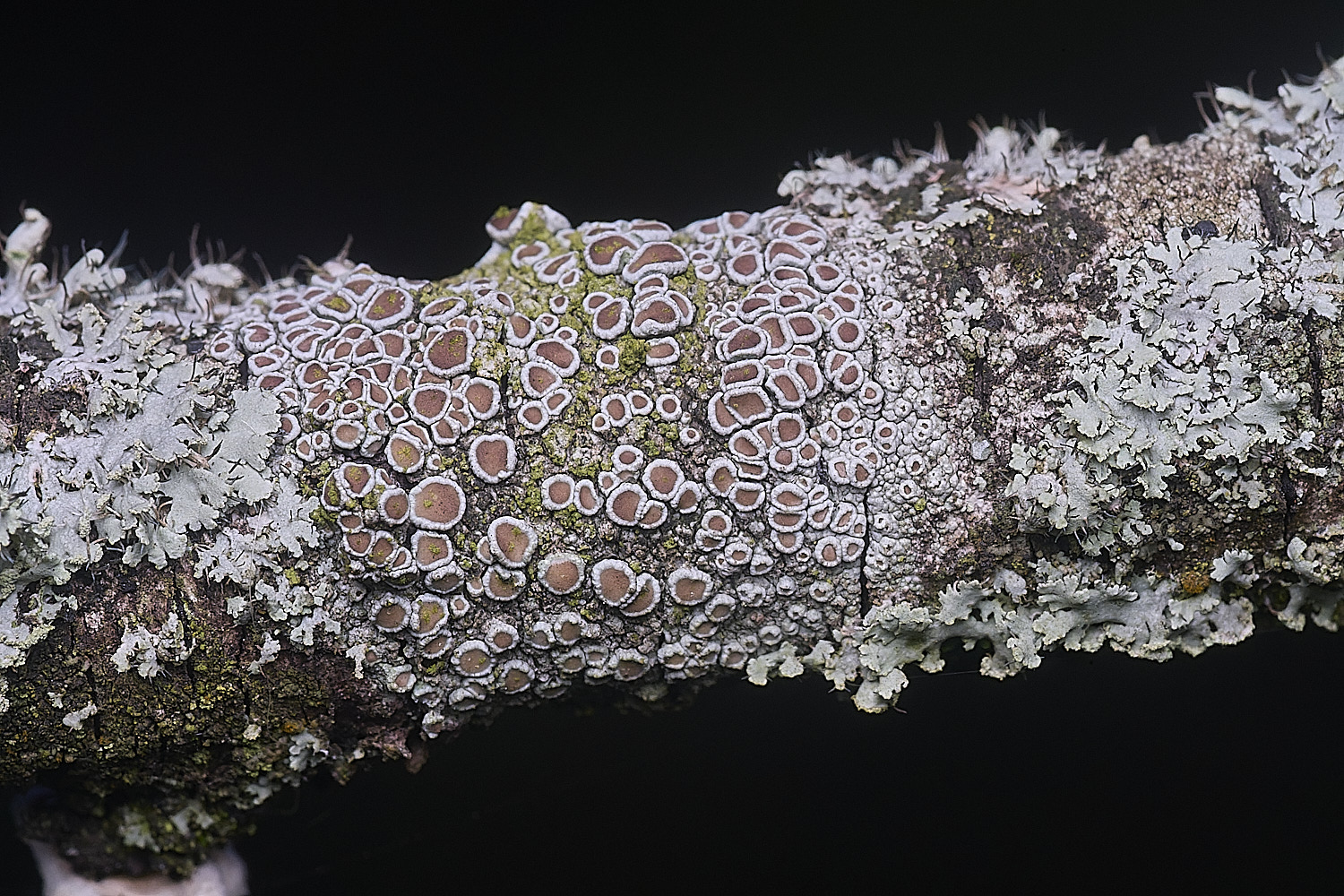
Lecanora hybocarpa?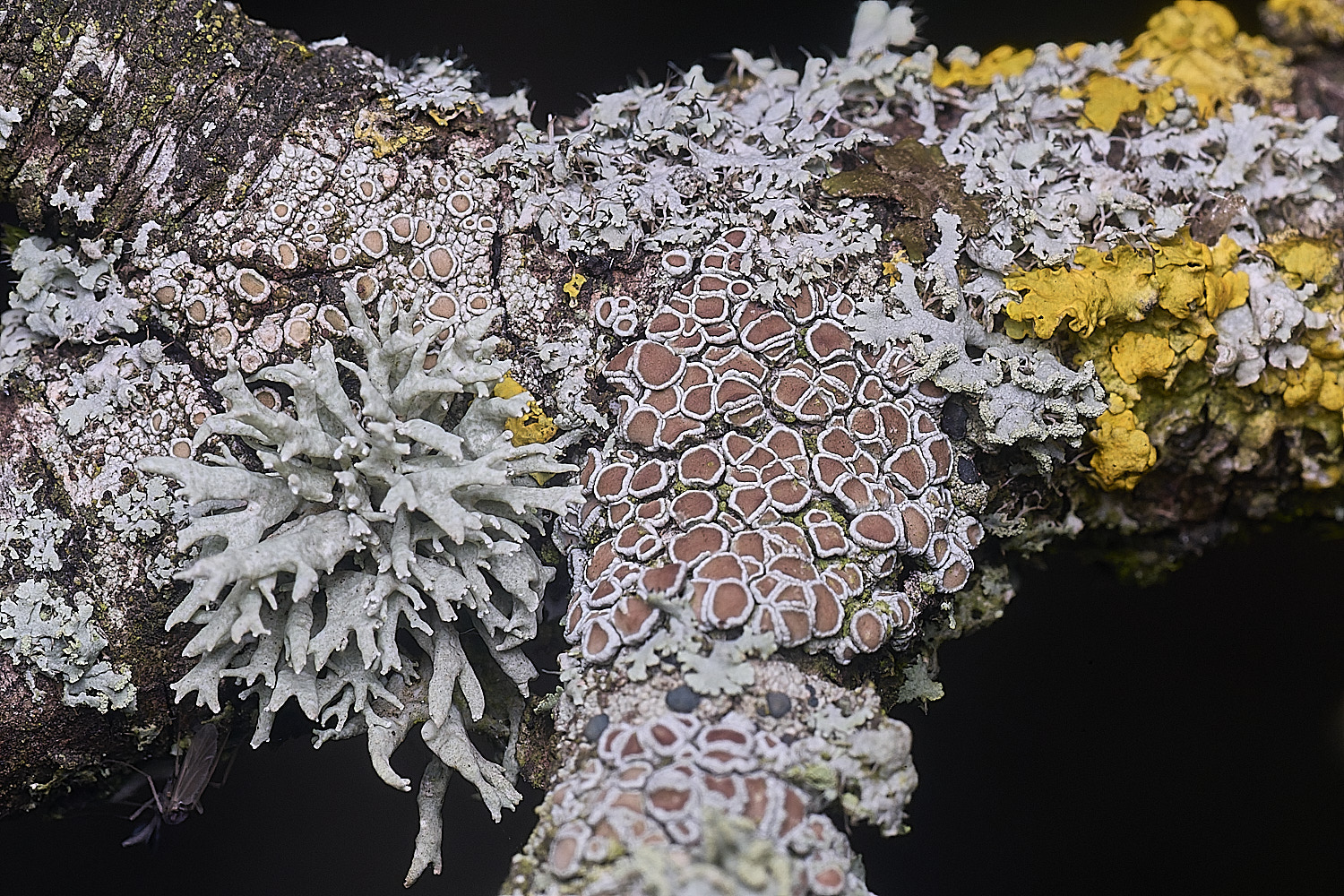
Evernia prunastri, Lecanora hybocarpa and Xanthoria parietina? 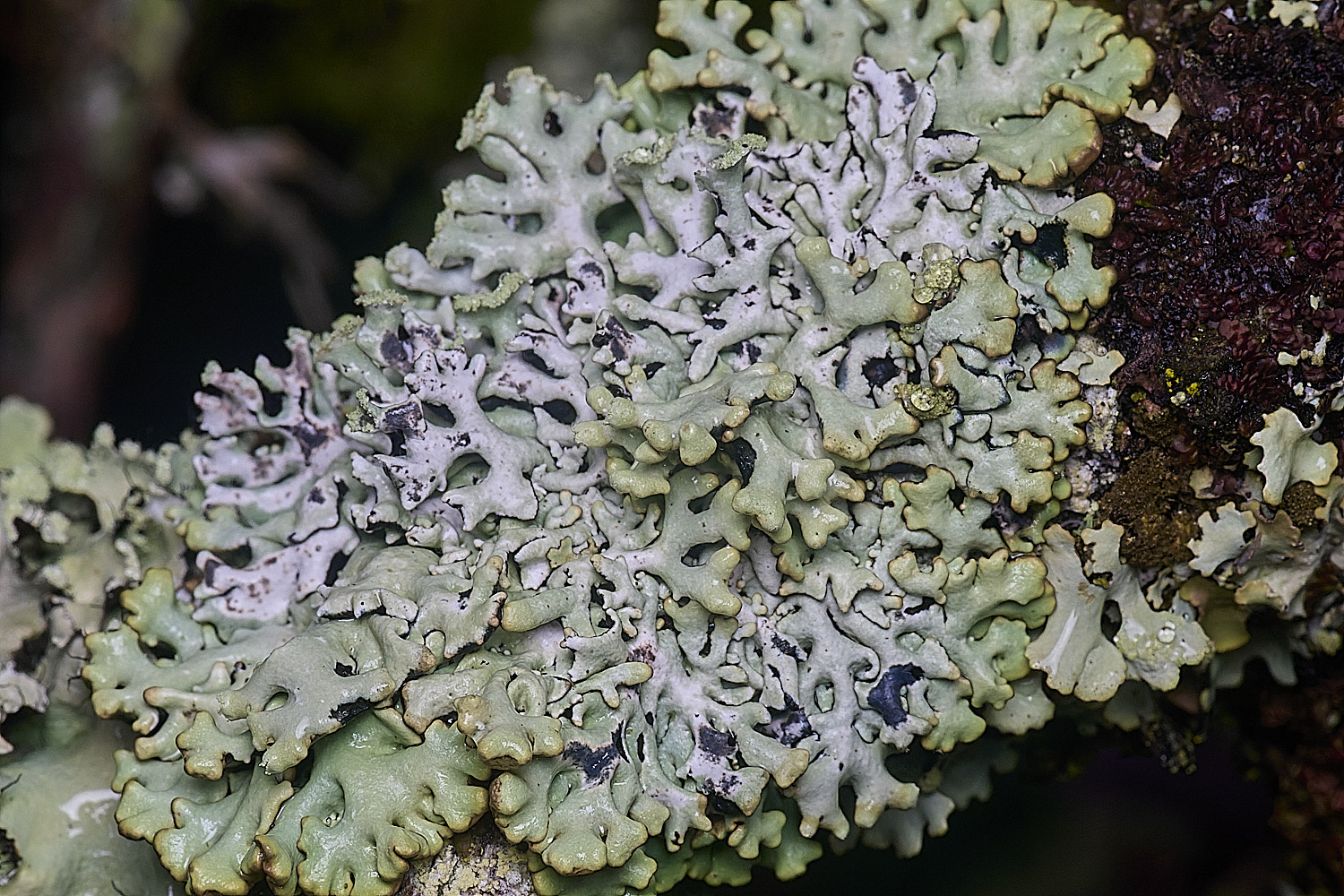
Lichen Sp
Hooded Tube Lichen (Hypogymnia physodes)? 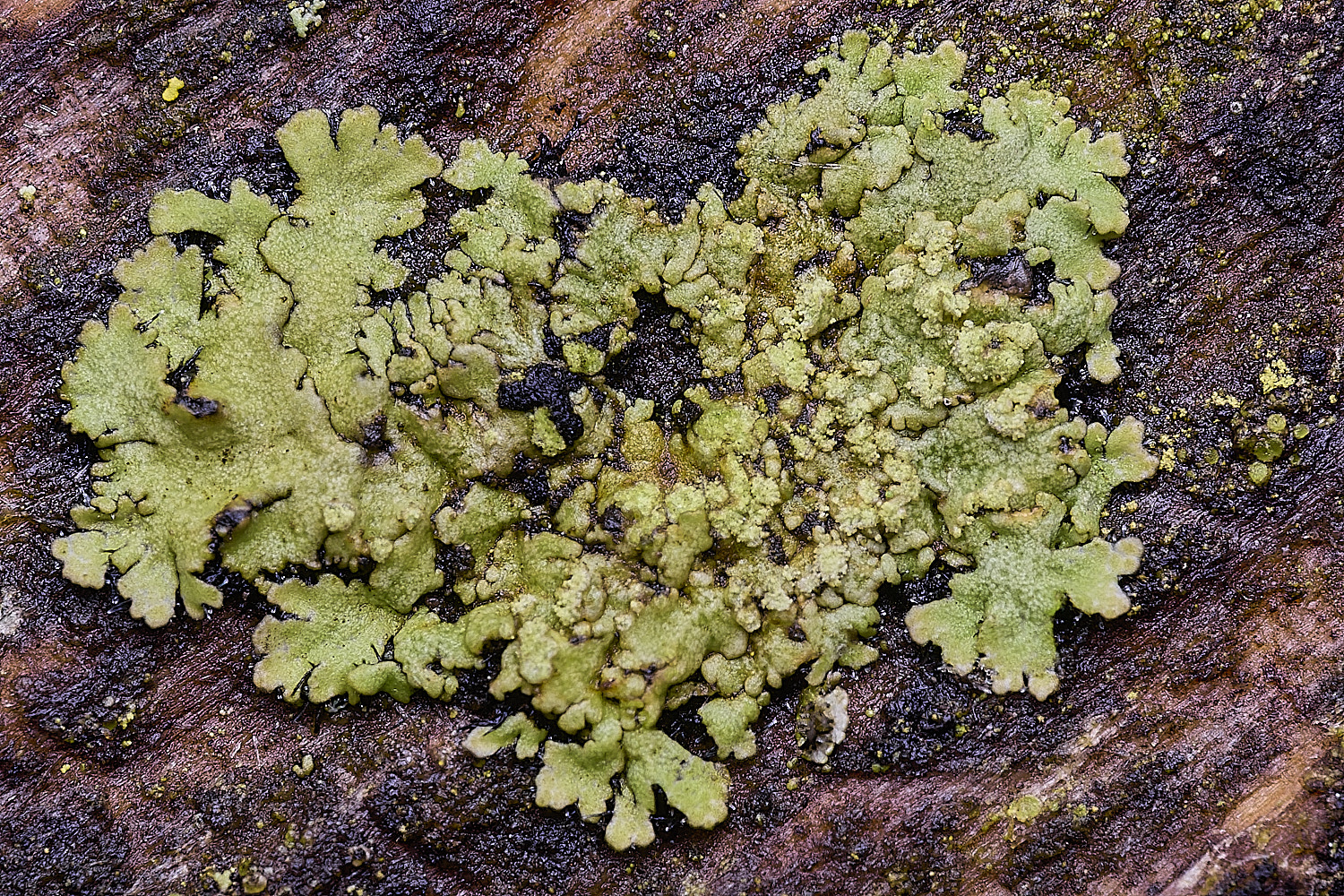
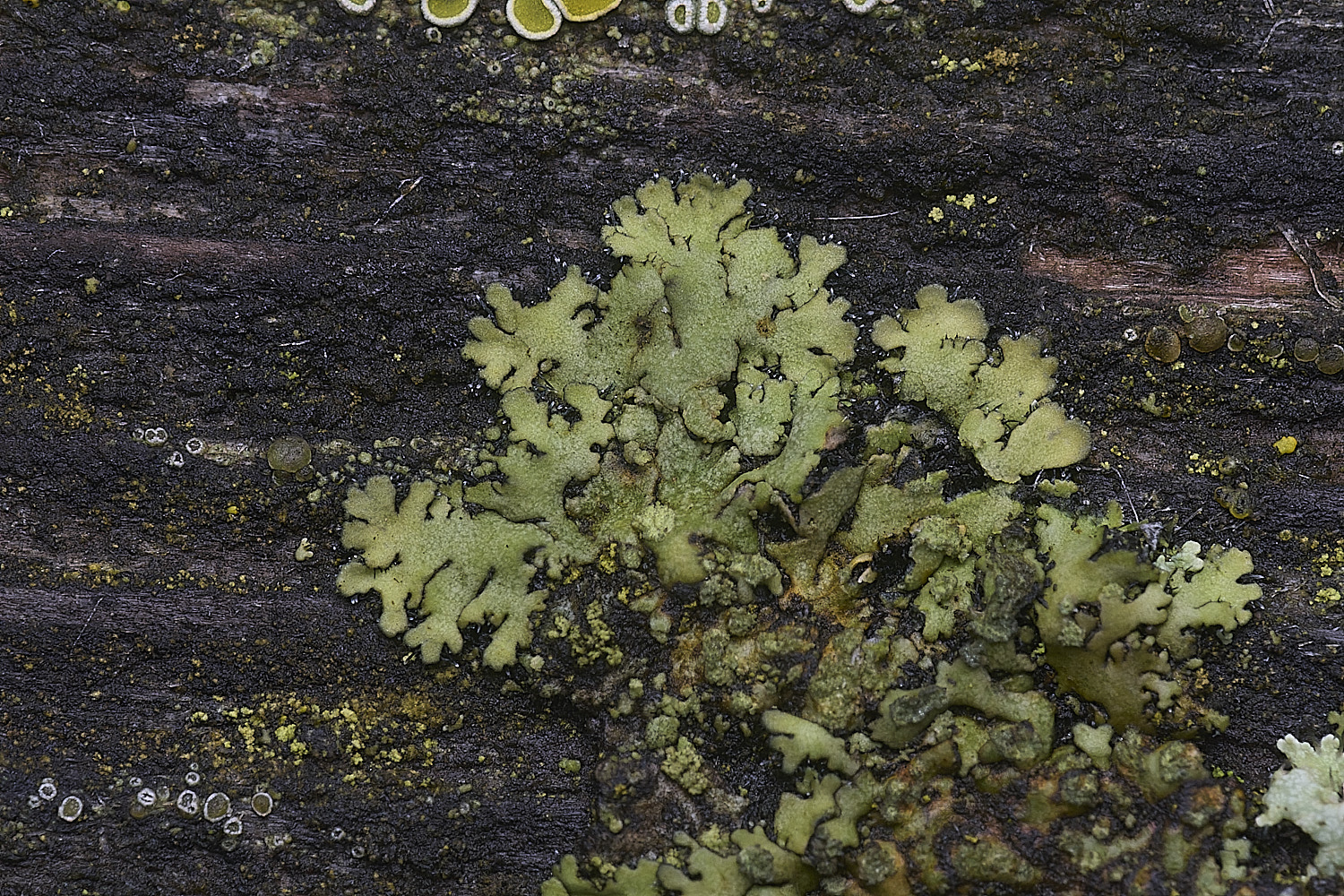
Lichen Sp ?
Physconia grisea? 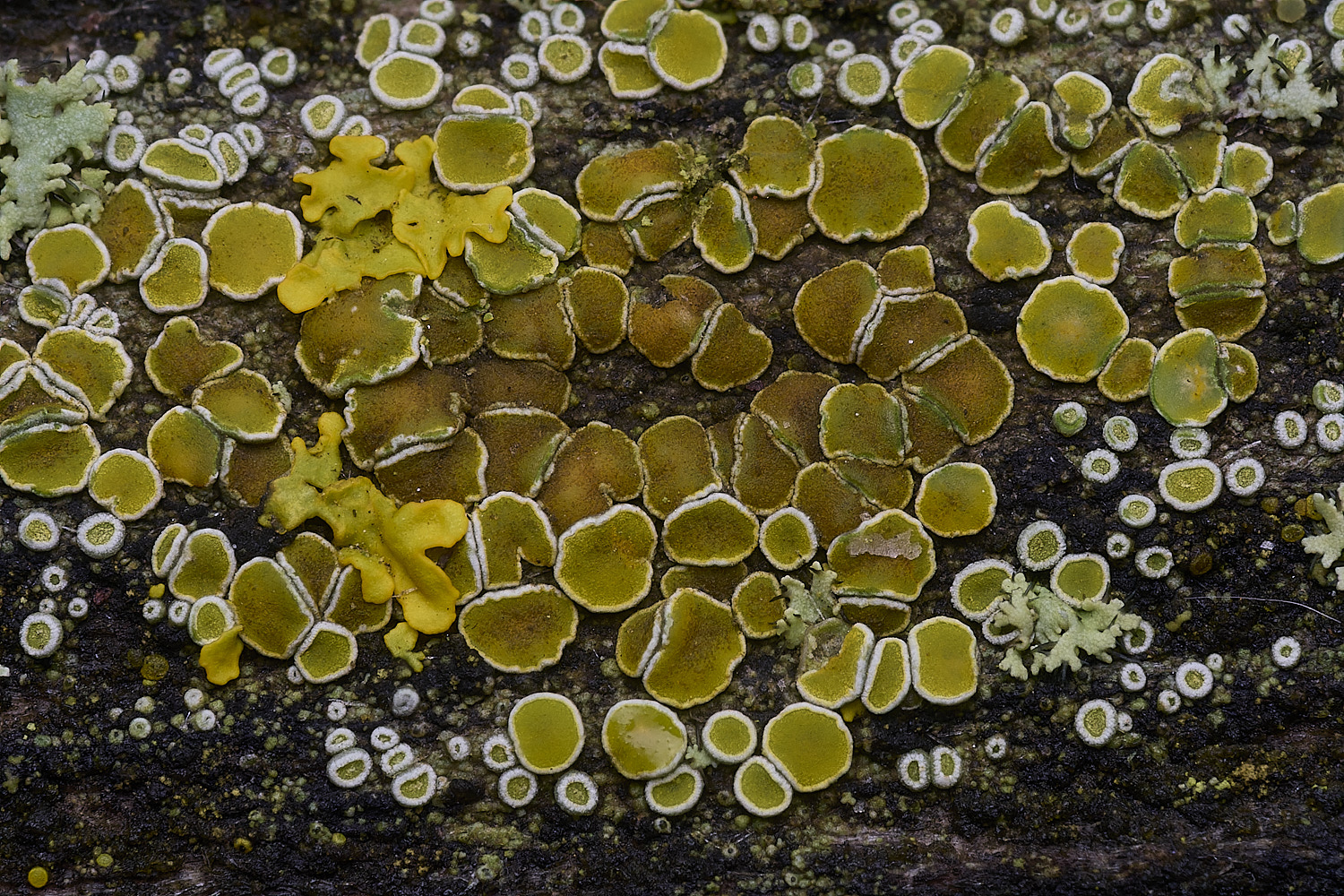
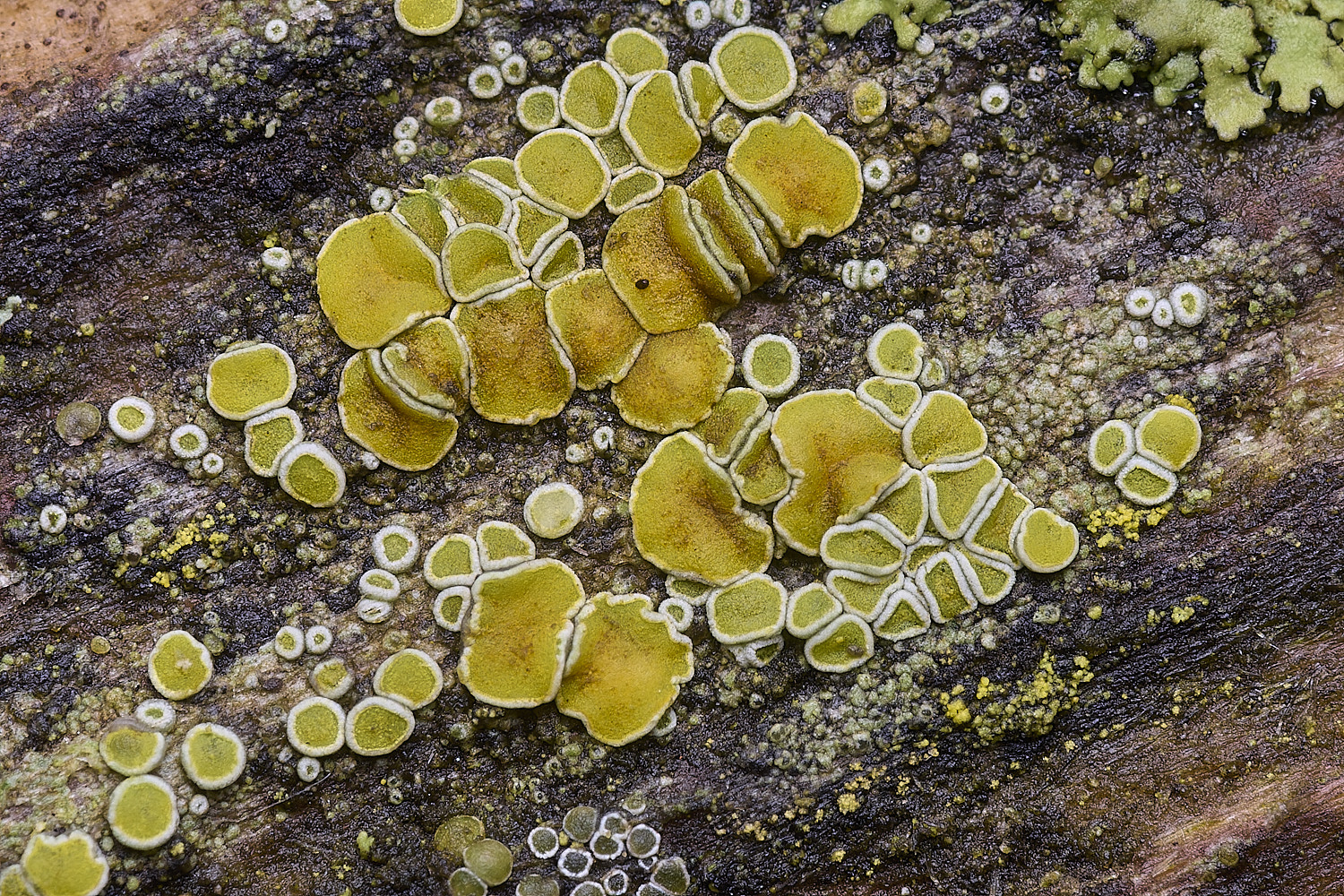
Lichen Sp ? 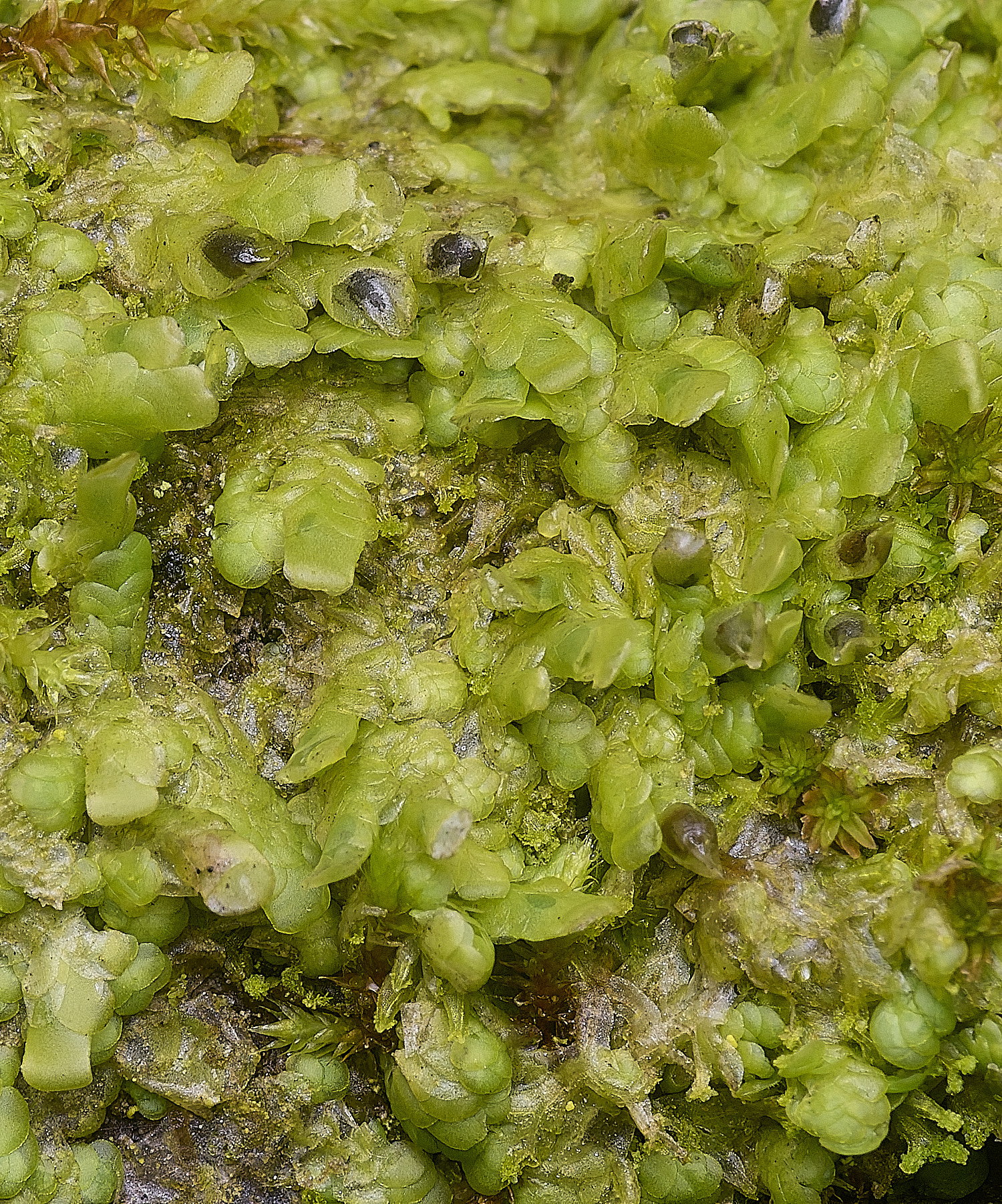
Flat-leaved Scalewort (Radula complanata)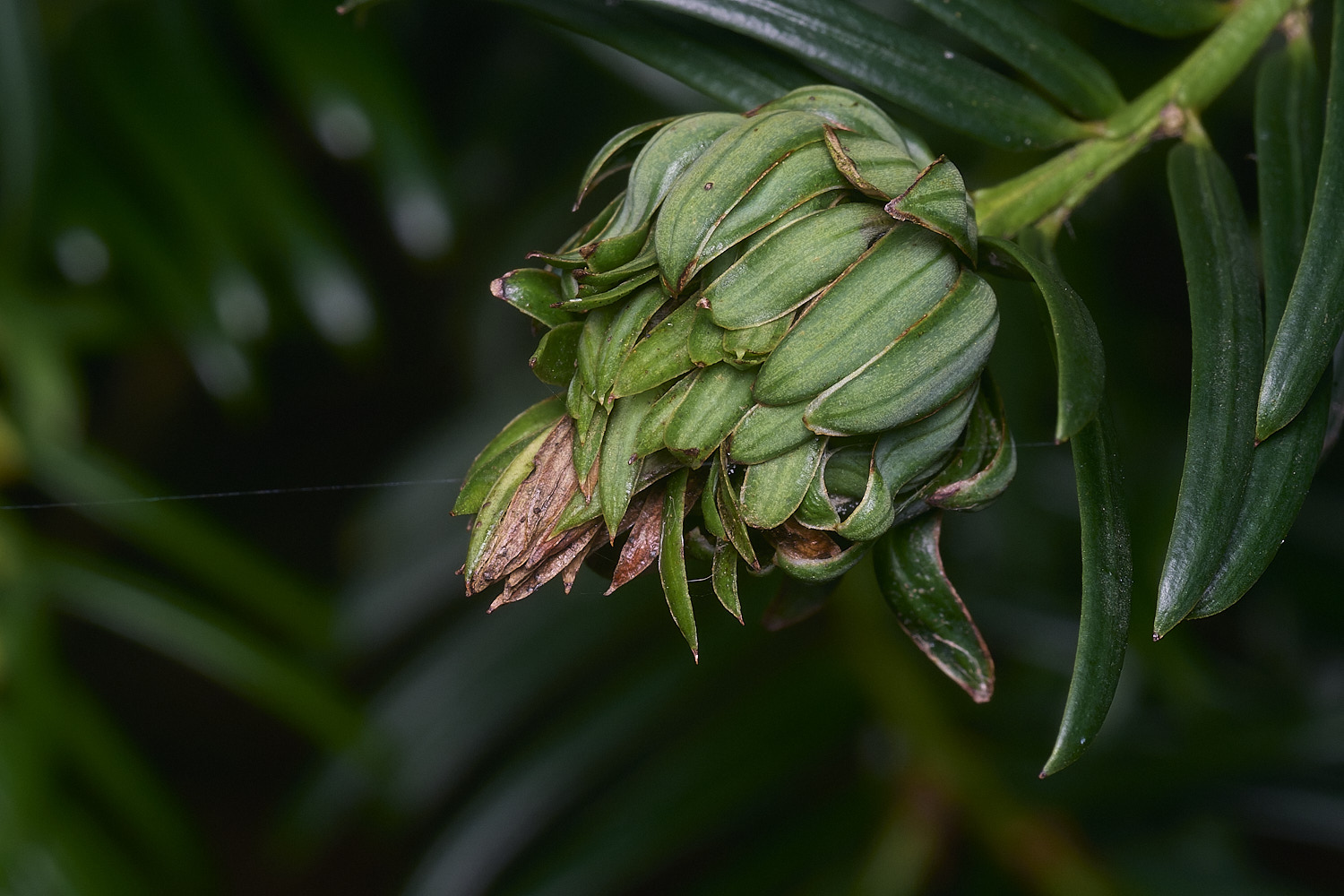
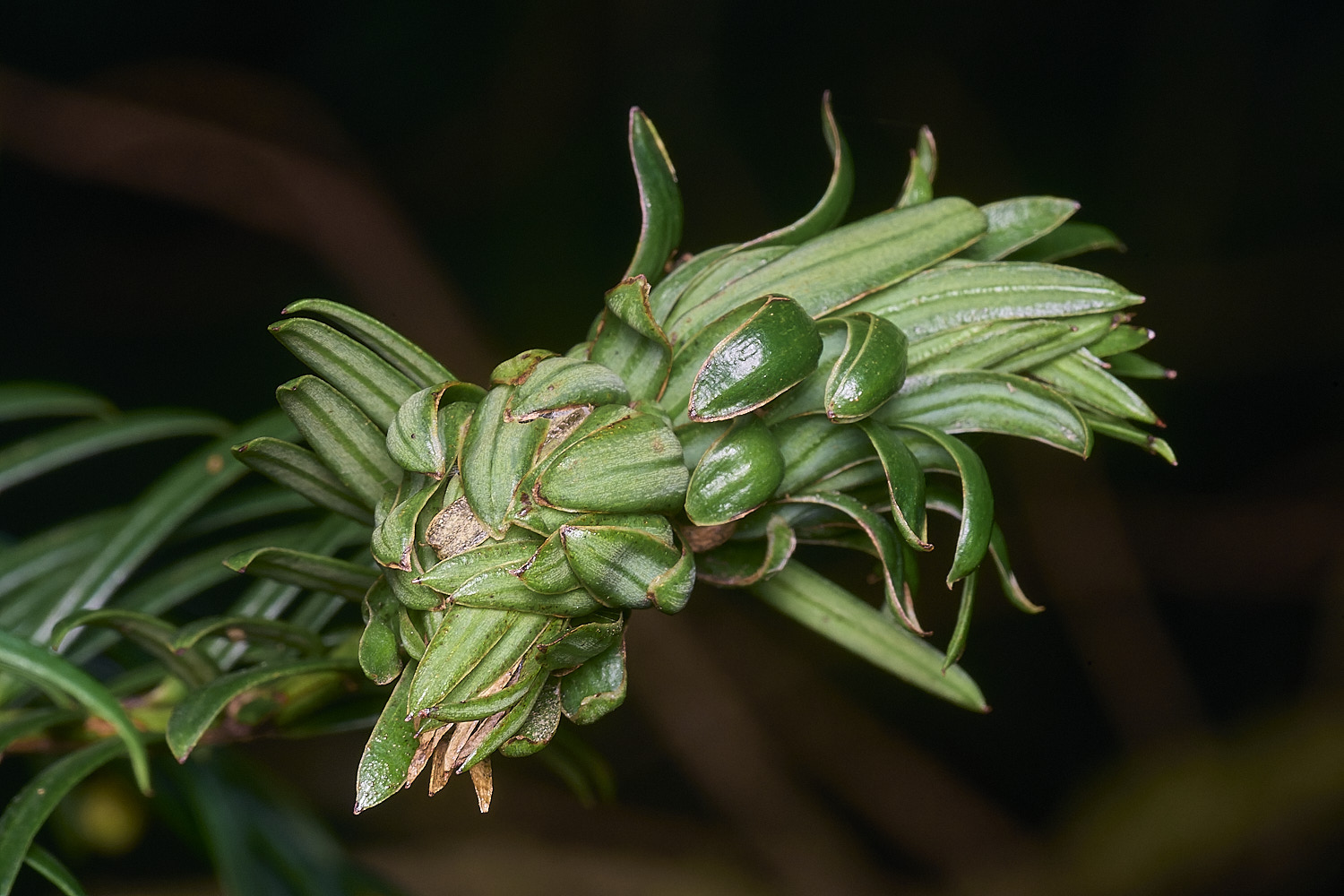
Yew Gall
Gall caused by the Yew Gall Midge (Taxomyia taxi)?