
Cawston Heath
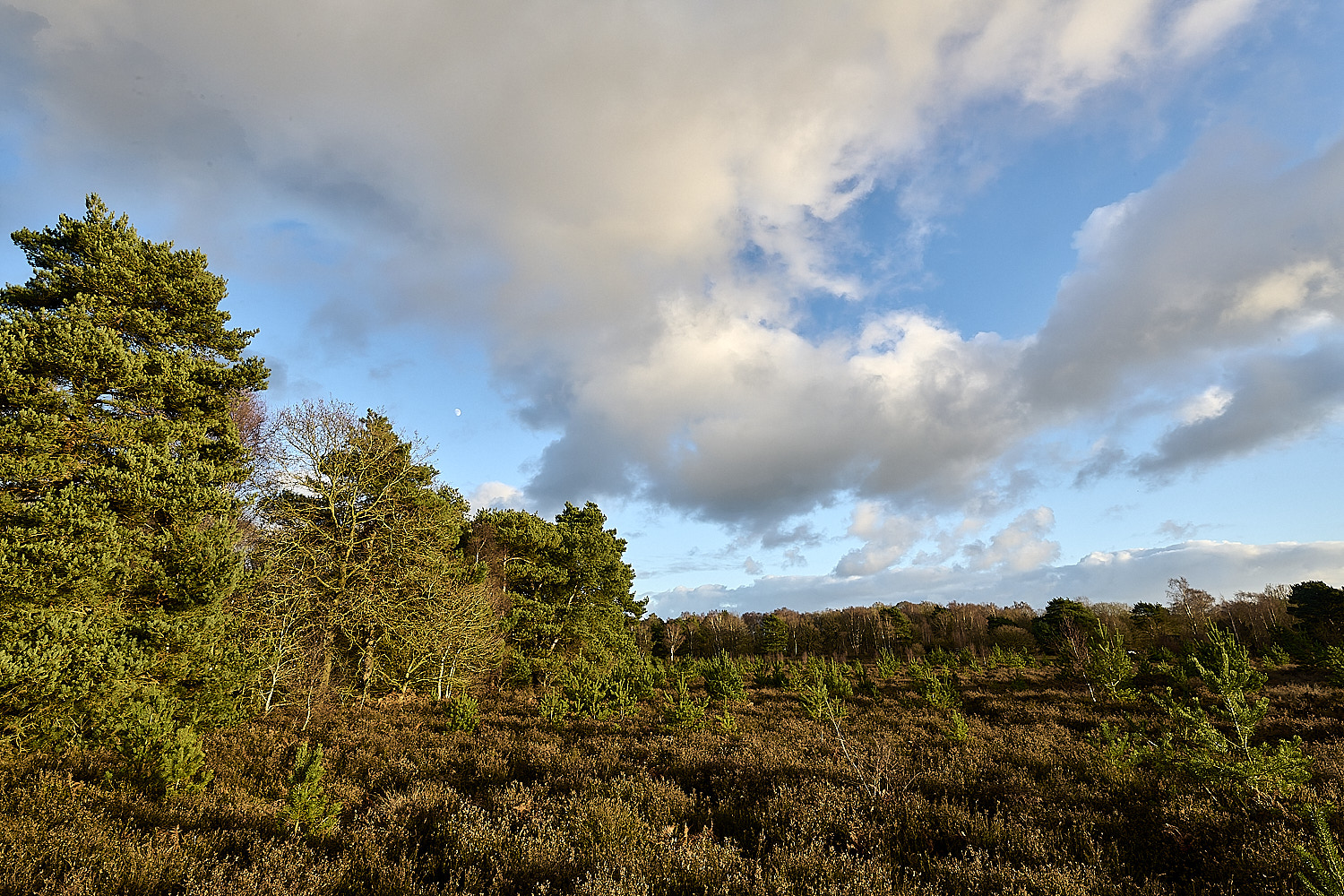
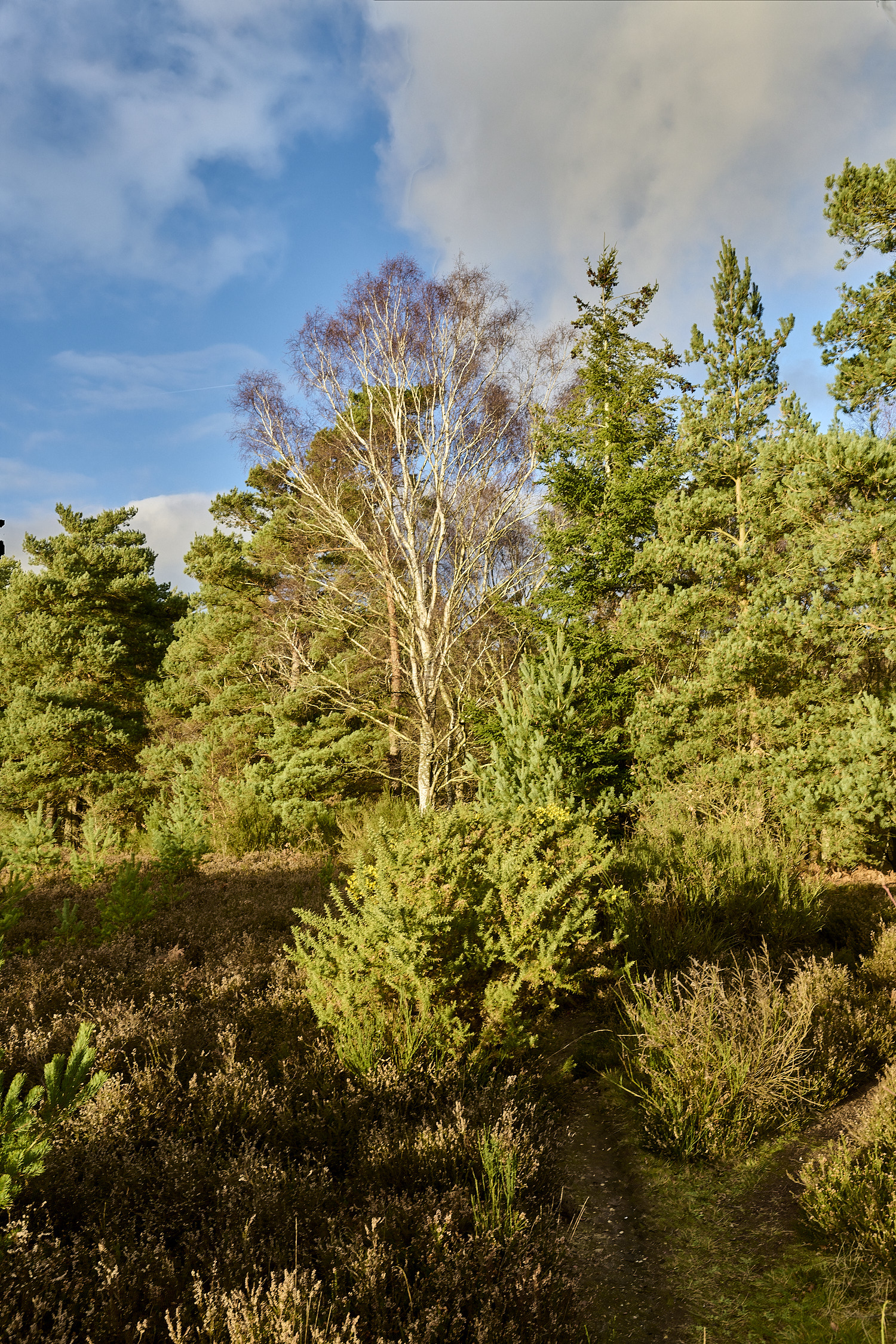
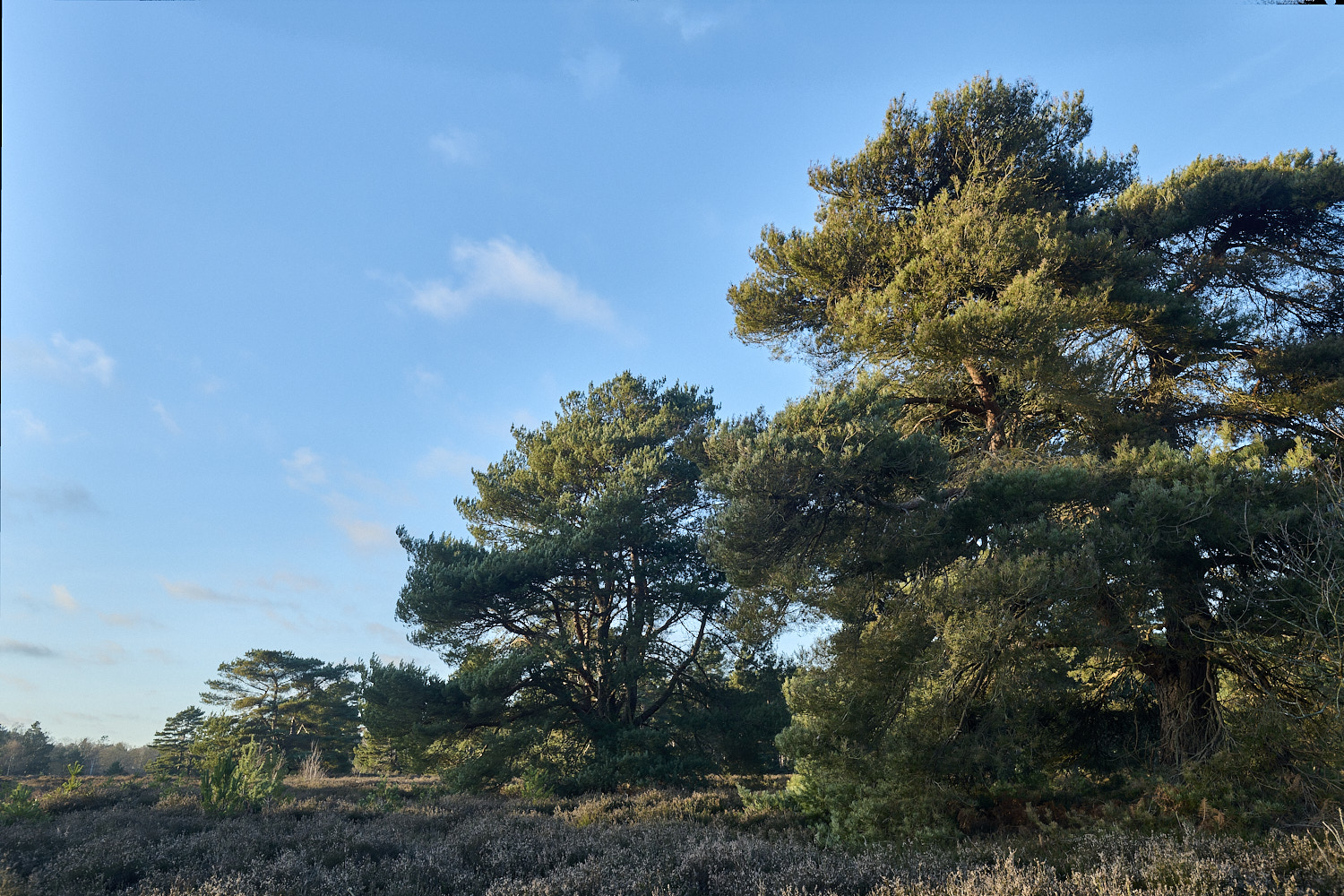
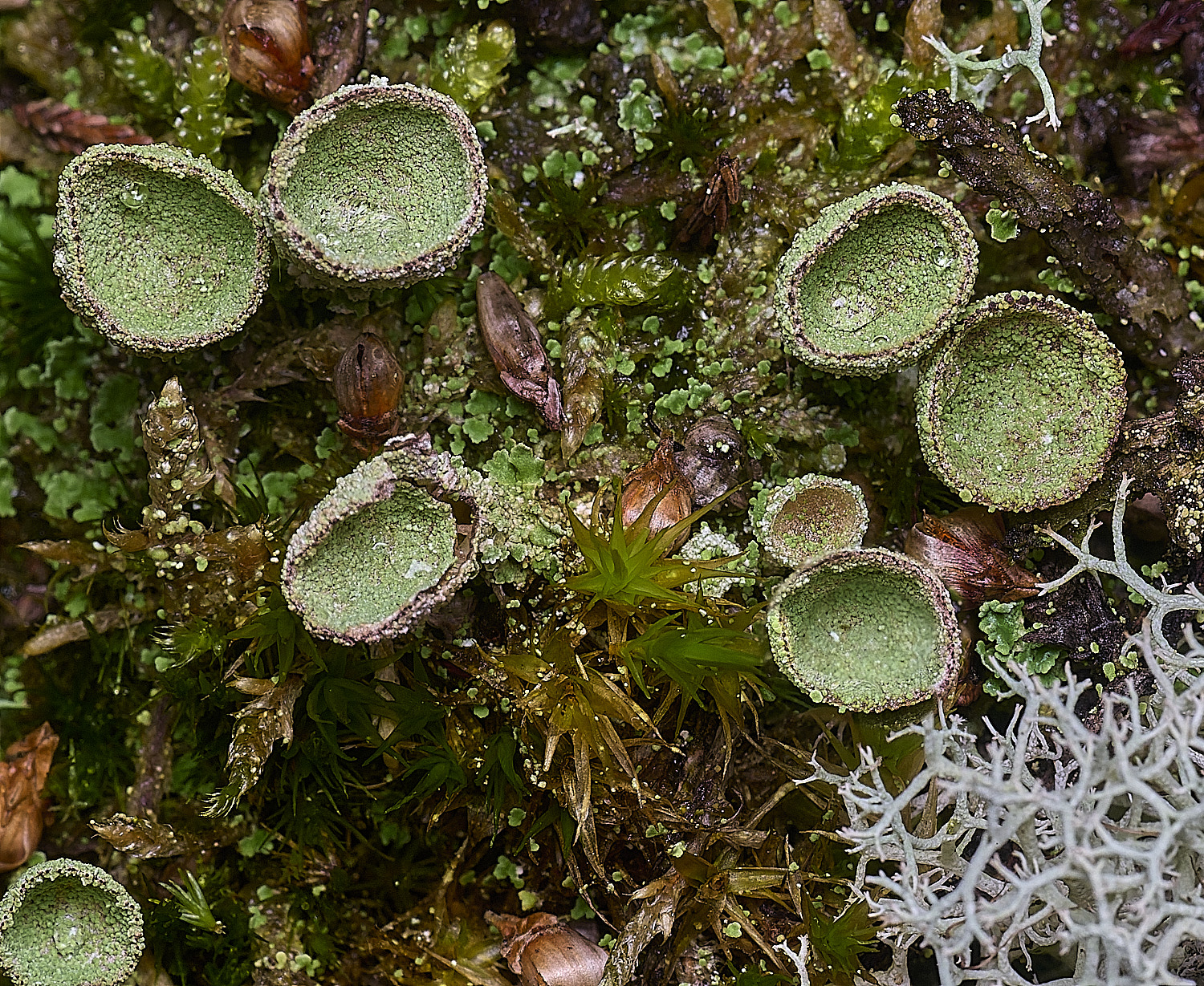
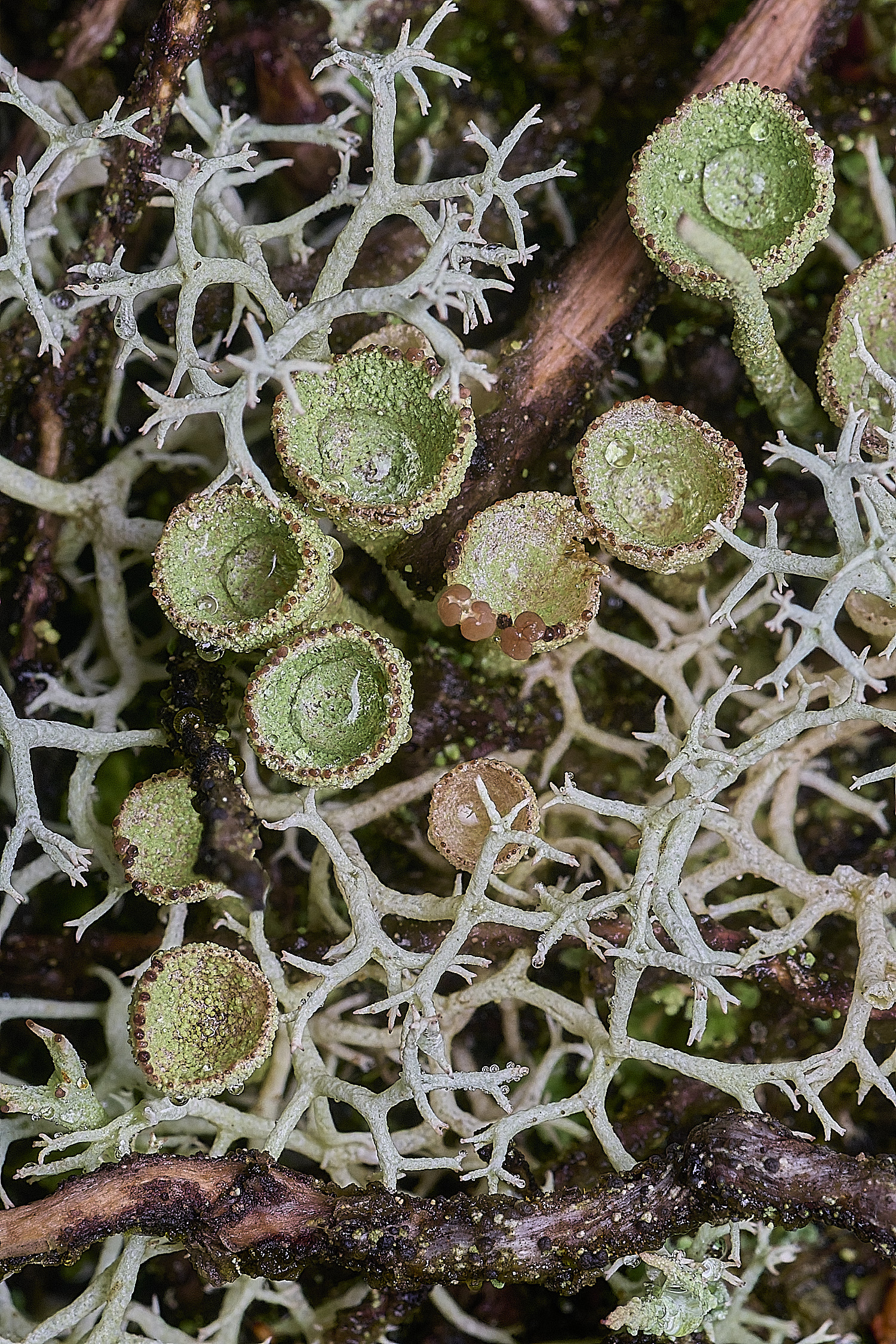
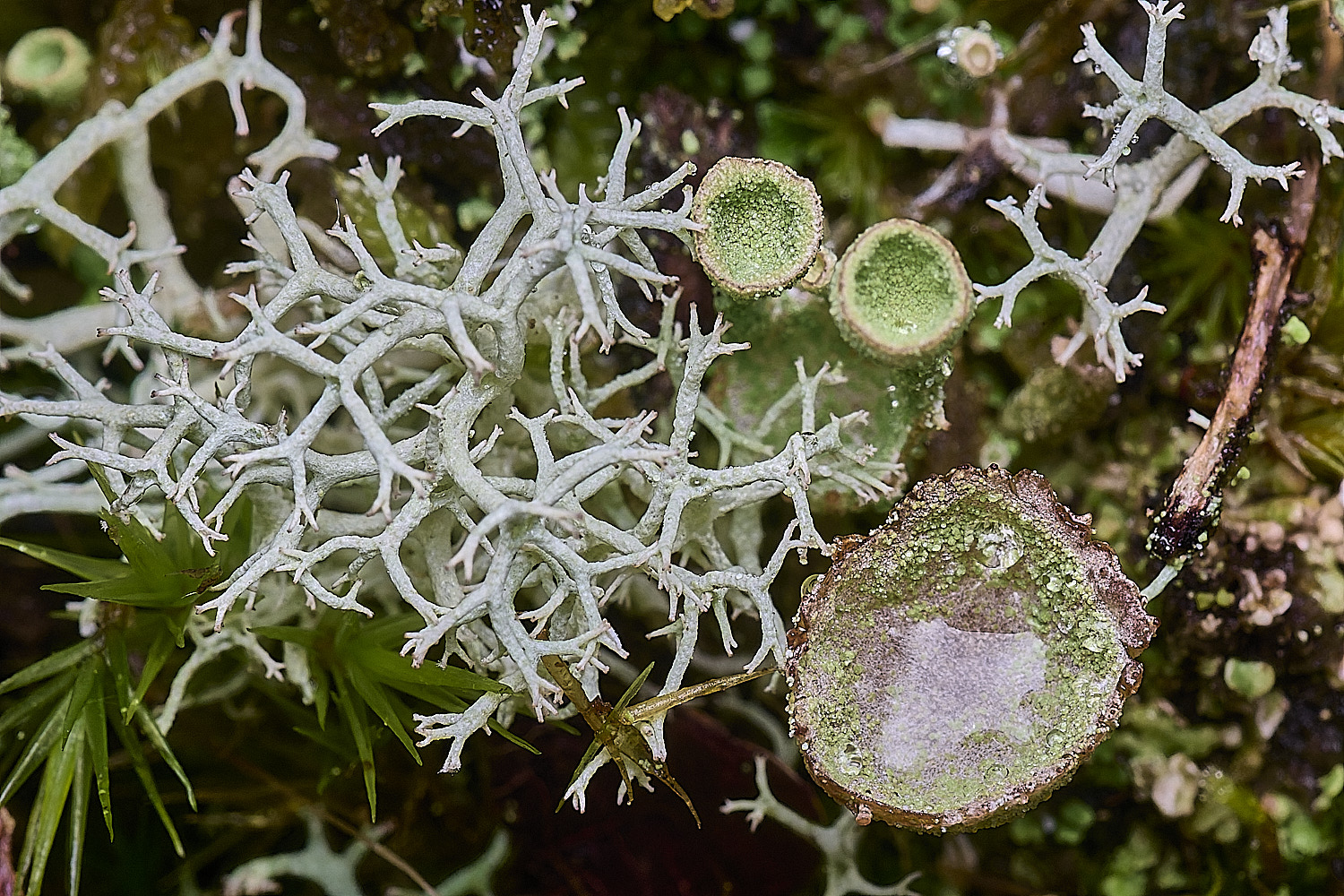
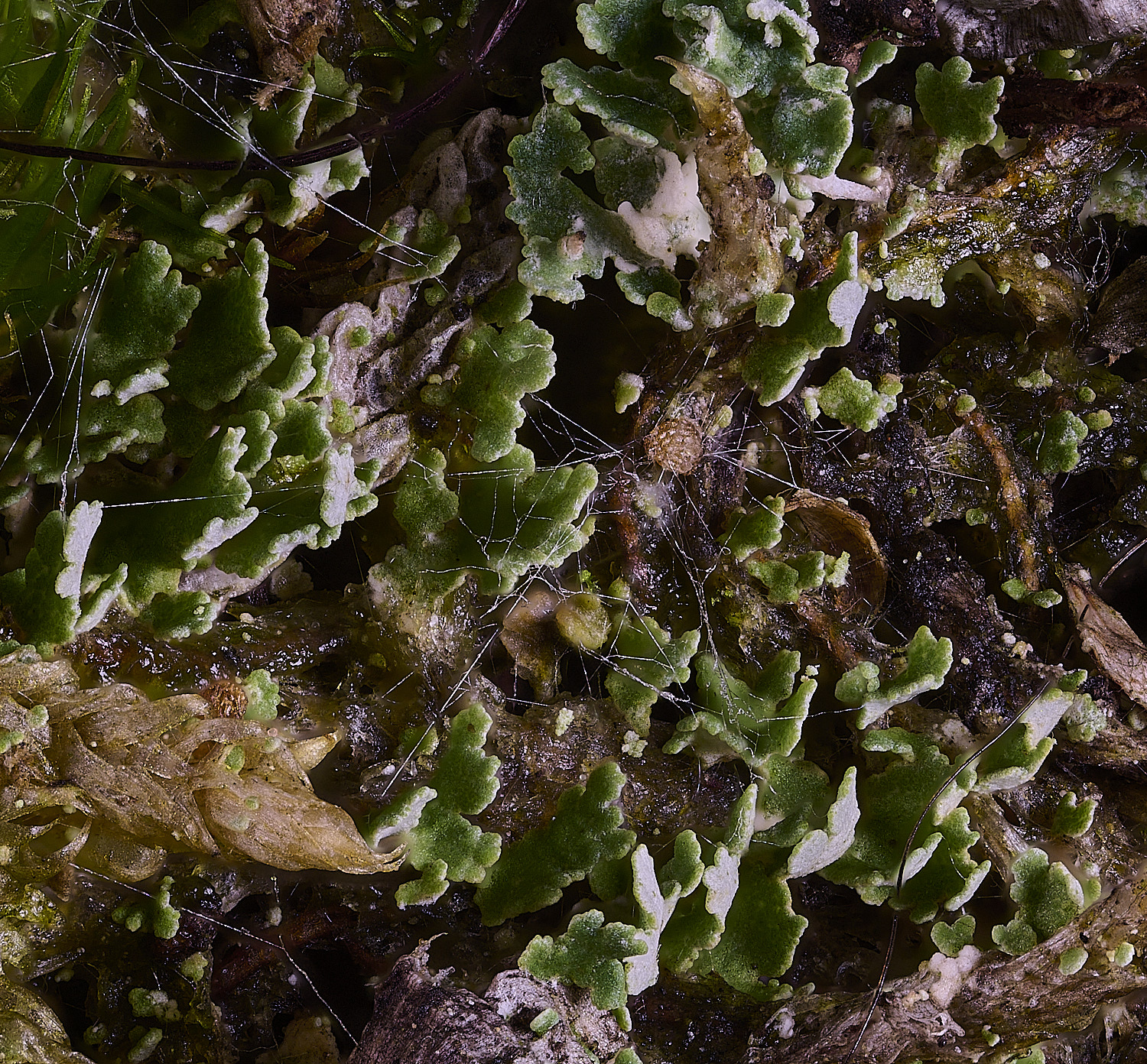
x2.5
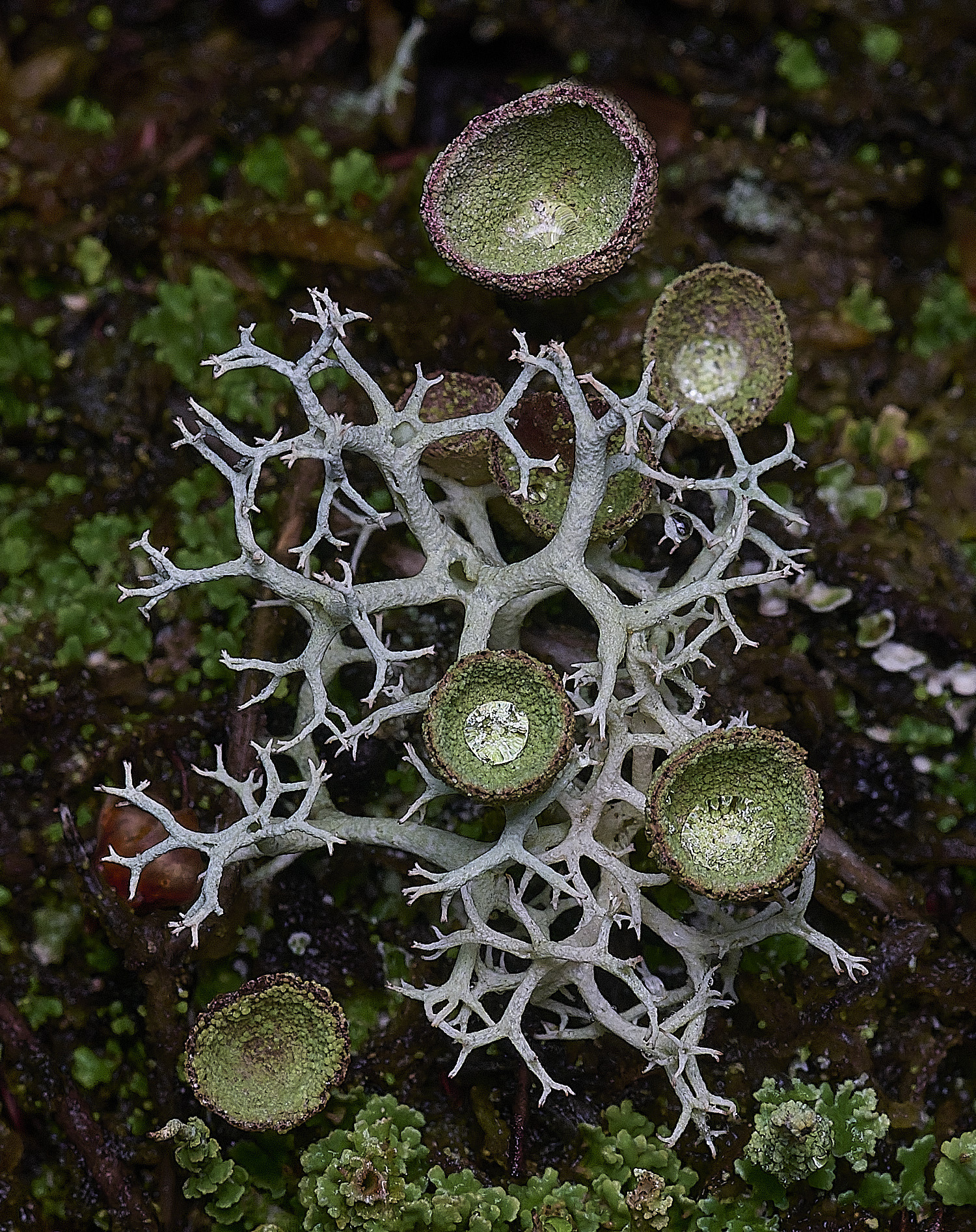
Cladonia fimbriata accompanied by Cladonia portentosa
Generic Key - Thallus squamulose Key C Pg 35
Cladonia - green, yellowish-green or grey mats of squamules, often erect and overlapping and bearing hollow podetia
Cladonia Key Pg 141
1 Apothecia brown, K- or if absent , squamules never with orange underside 10 Primary thallus squamulose. Podetia prominent or not.
11 Thallus of podetia or podetia growing from basal squamules.
12Thallus with podetia which are not usually interwoven, sparsely or not branched, and which may have a cup at the tip.
32 Podetia not split longitudinally. 34
Podetia without perforated tops and not forming tiers from one edge.
35 Podetia terminating in a wide cup
45 Podetia simple, regular (to 3cm tall), and/or long (to 6cm tall often slightly branched
(apothecia rarely on short stalks around rim of cup)
47 Podetia sorediate or squamulose warted 48 Podetia finely sorediate
50 KC - Cladonia fimbriata
LGB I3
1 Some squamules present, either scattered or forming a ± continuous, persistent basal thallus
and/or dispersed on podetia (Cladonia morphotype) .................................................................................. 2
Apothecia flesh-coloured (rarely pinkish) to brown-black, K–, or absent; undersides of basal
squamules pale, grey-black or yellow-green, never K+ purple .................................................................20
Basal squamules not dominant, numerous to very sparse or restricted to the lower part of
the podetia only; podetia dominant ...........................................................................................................43
Podetia and squamules C– .........................................................................................................................44
Scyphi present, mostly as wide as or wider than the podetial stalk ...........................................................45
Podetia not yellow tinged (without usnic acid) .........................................................................................53
Podetia entirely or at least partly sorediate or with delimited convex corticate granules ..........................66
Podetia and scyphi ± sorediate ..................................................................................................................70
Scyphi not centrally perforate ....................................................................................................................71
Difficult to go beyond here without PD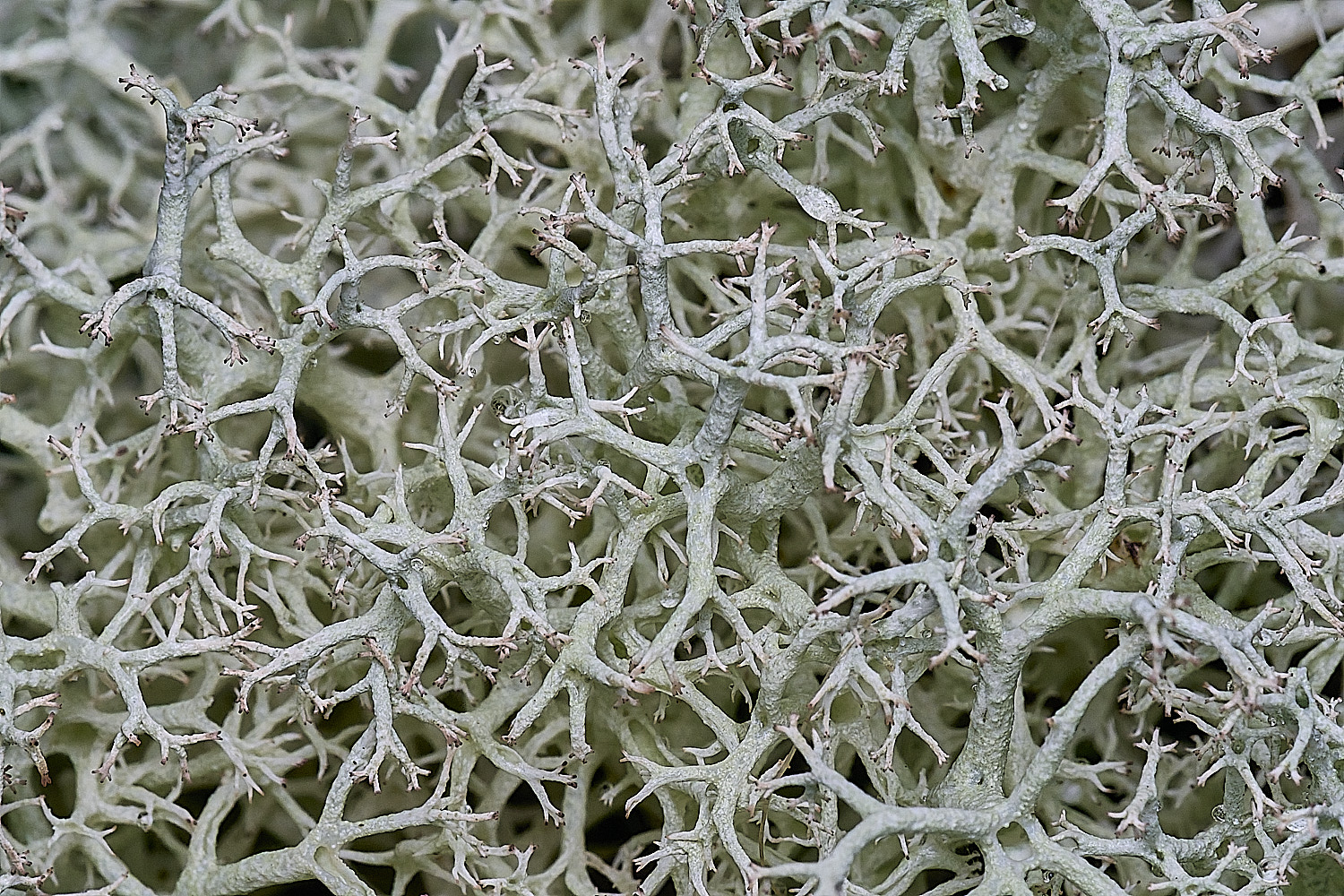
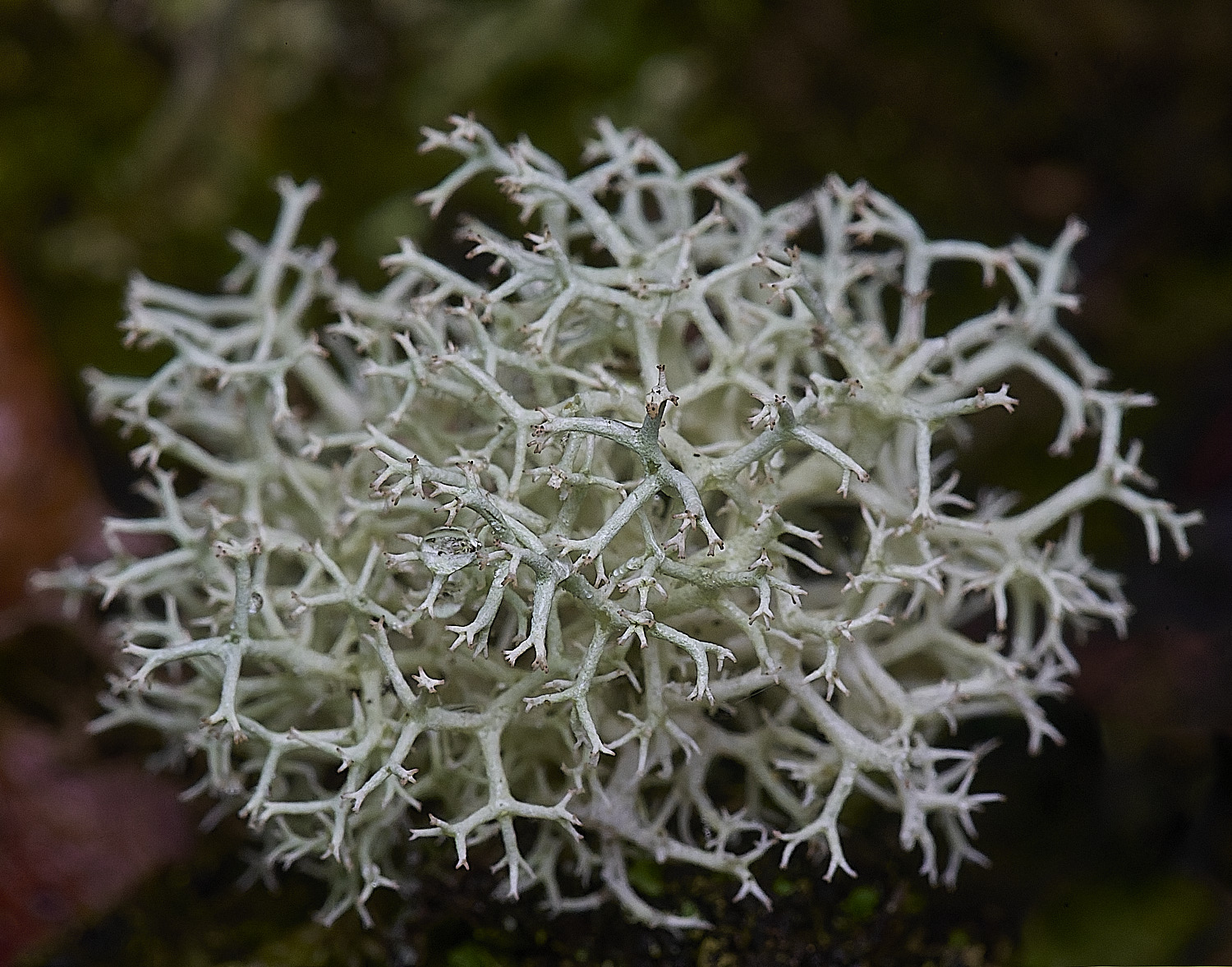
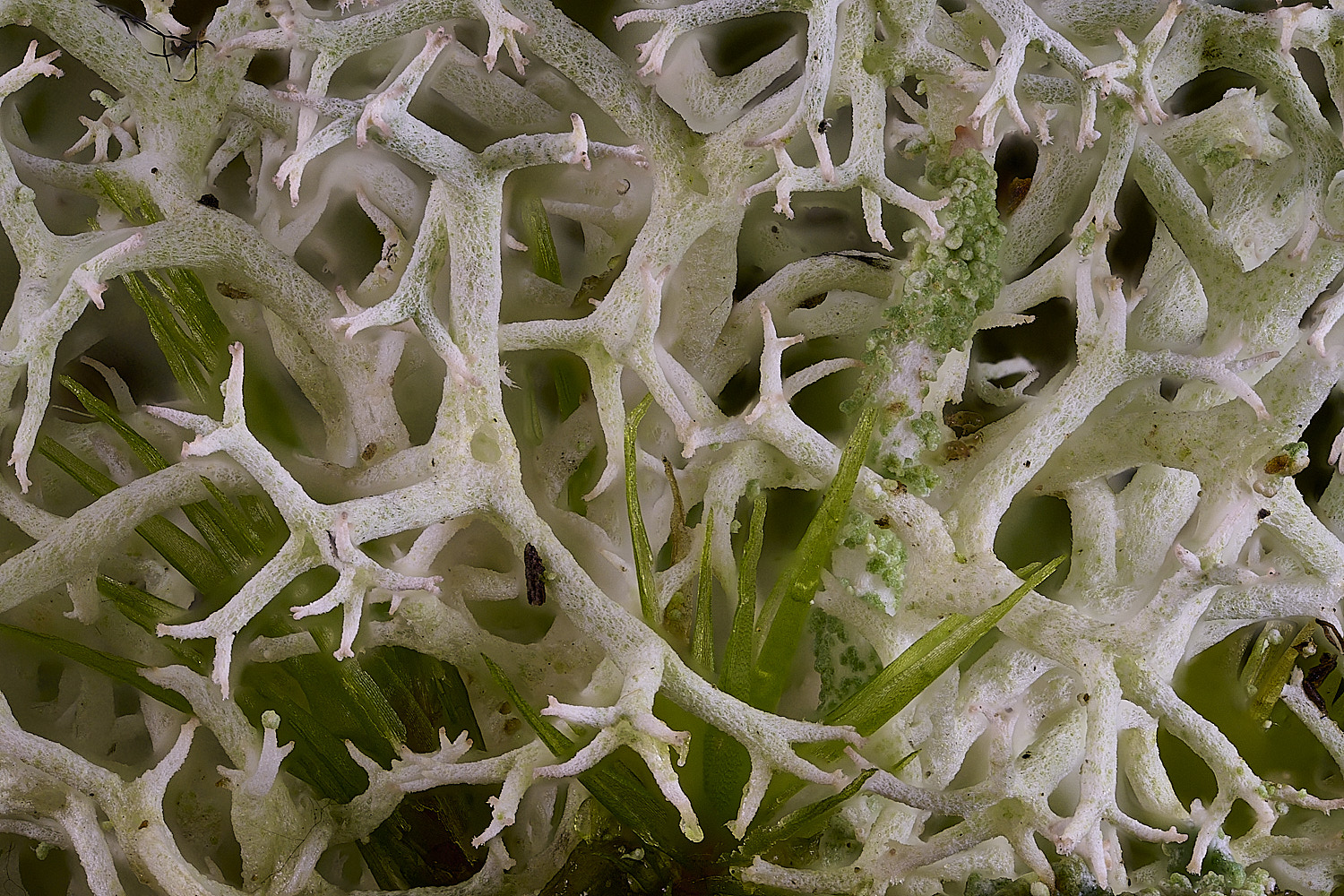
Cladonia portentosa
DOBSON - Main Key - Thallus fruticose
Generic Key - Thallus clearly hollow or orange Key Q Pg 47
Cladonia - Tangled mat of greyish or yellow green brancjes of hollow podetia which often grow from basal squamules.
Cladonia Key Pg 141
1 Apothecia brown, K- or if absent , squamules never with orange underside
10 Primary thallus squamulose. Podetia prominent or not.
11 Thallus of podetia or podetia growing from basal squamules.
12Thallus an interwoven often much branched mat of tubular podetia.
13 K-
16 A P reaction needed
But 17 Thallus pale grey to green grey, richly branched C portentosa
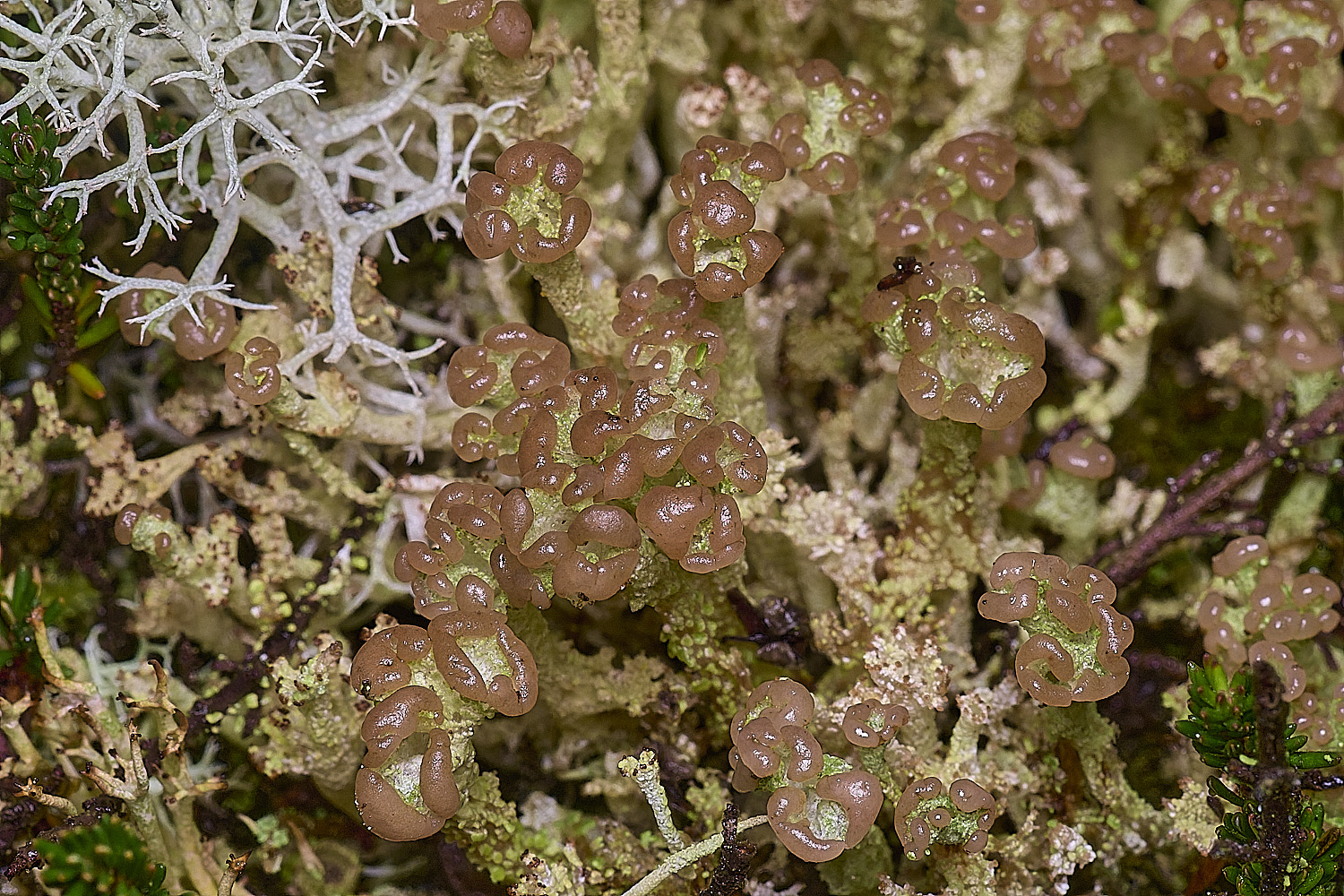
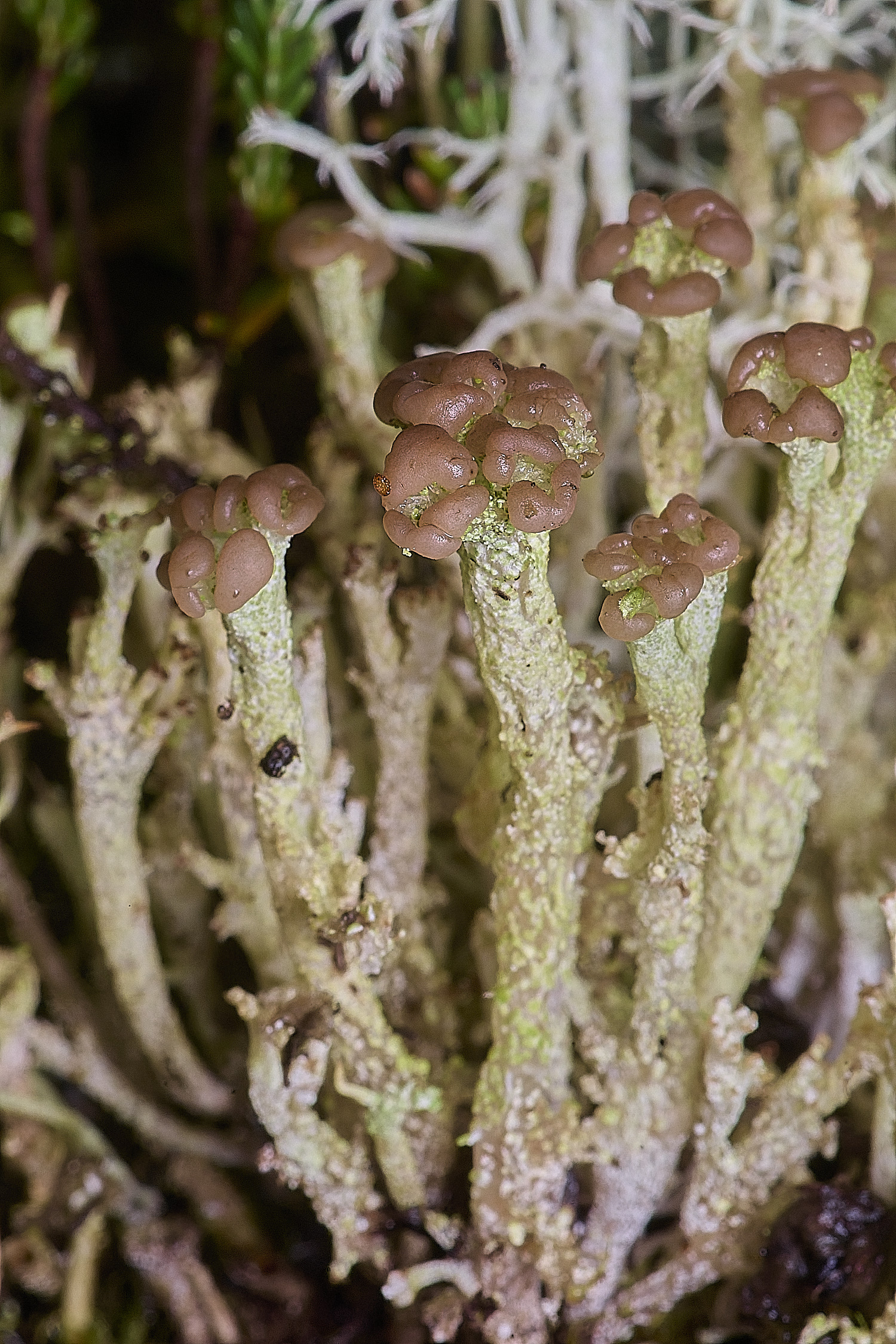
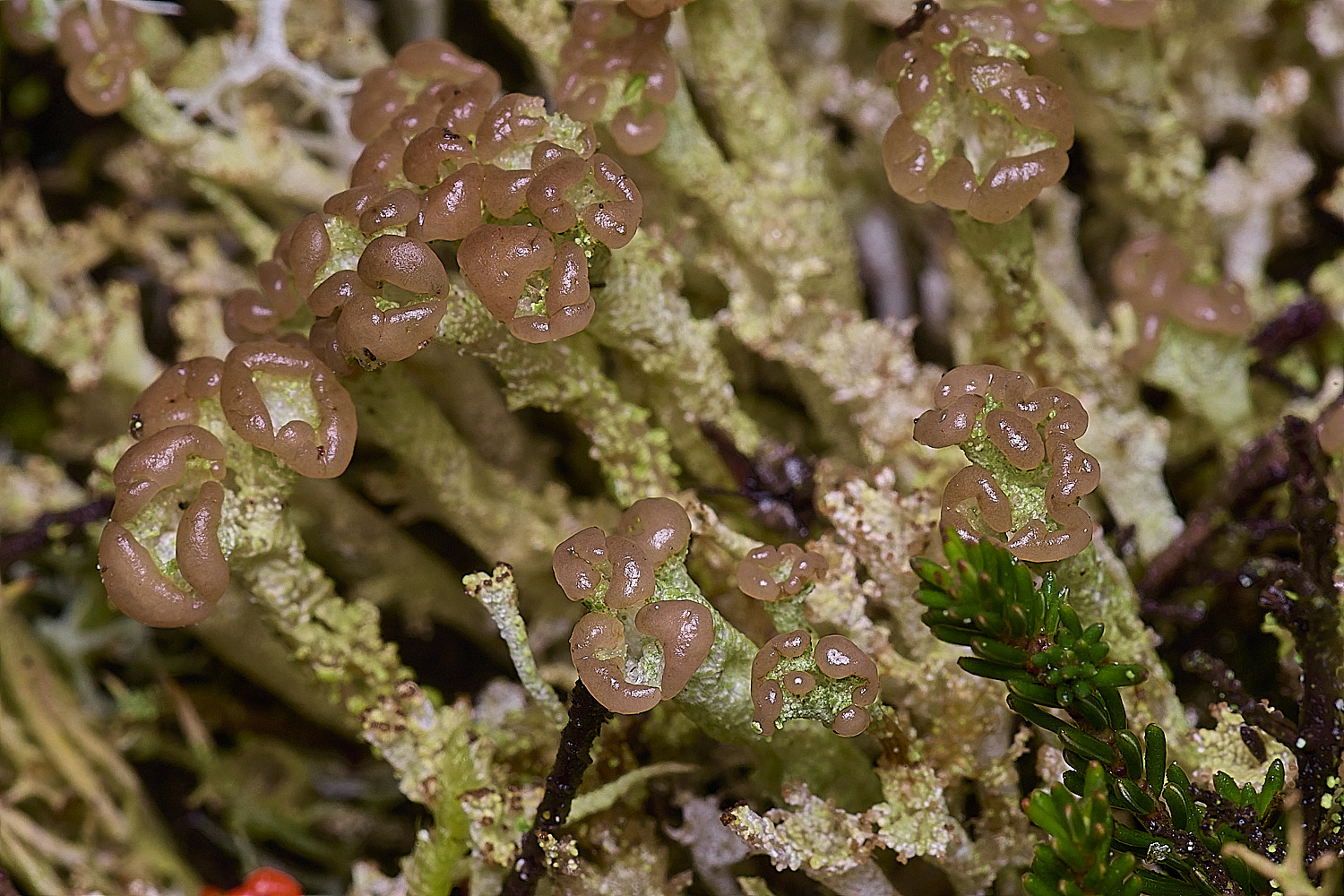
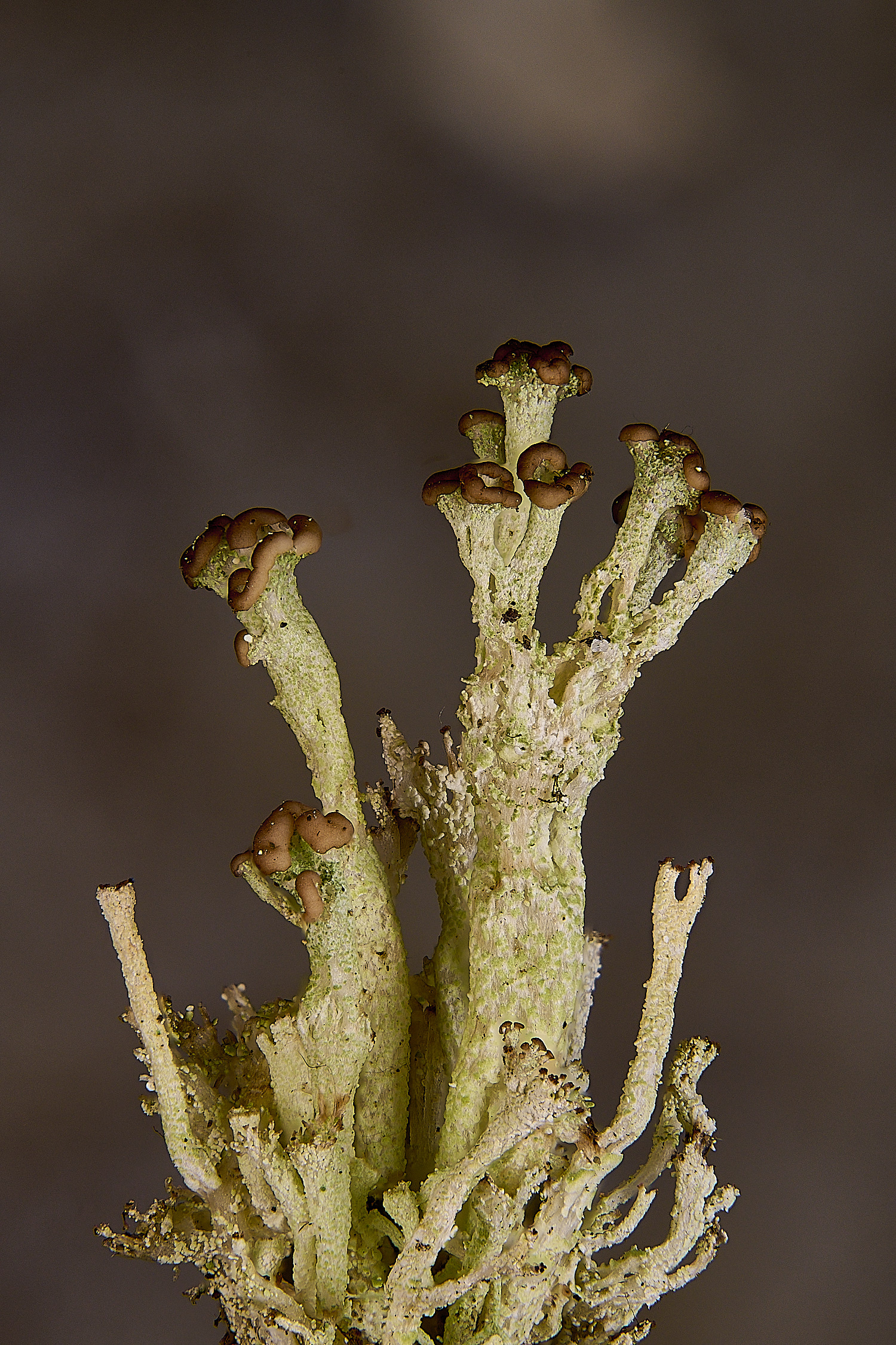
Cladonia ramulosa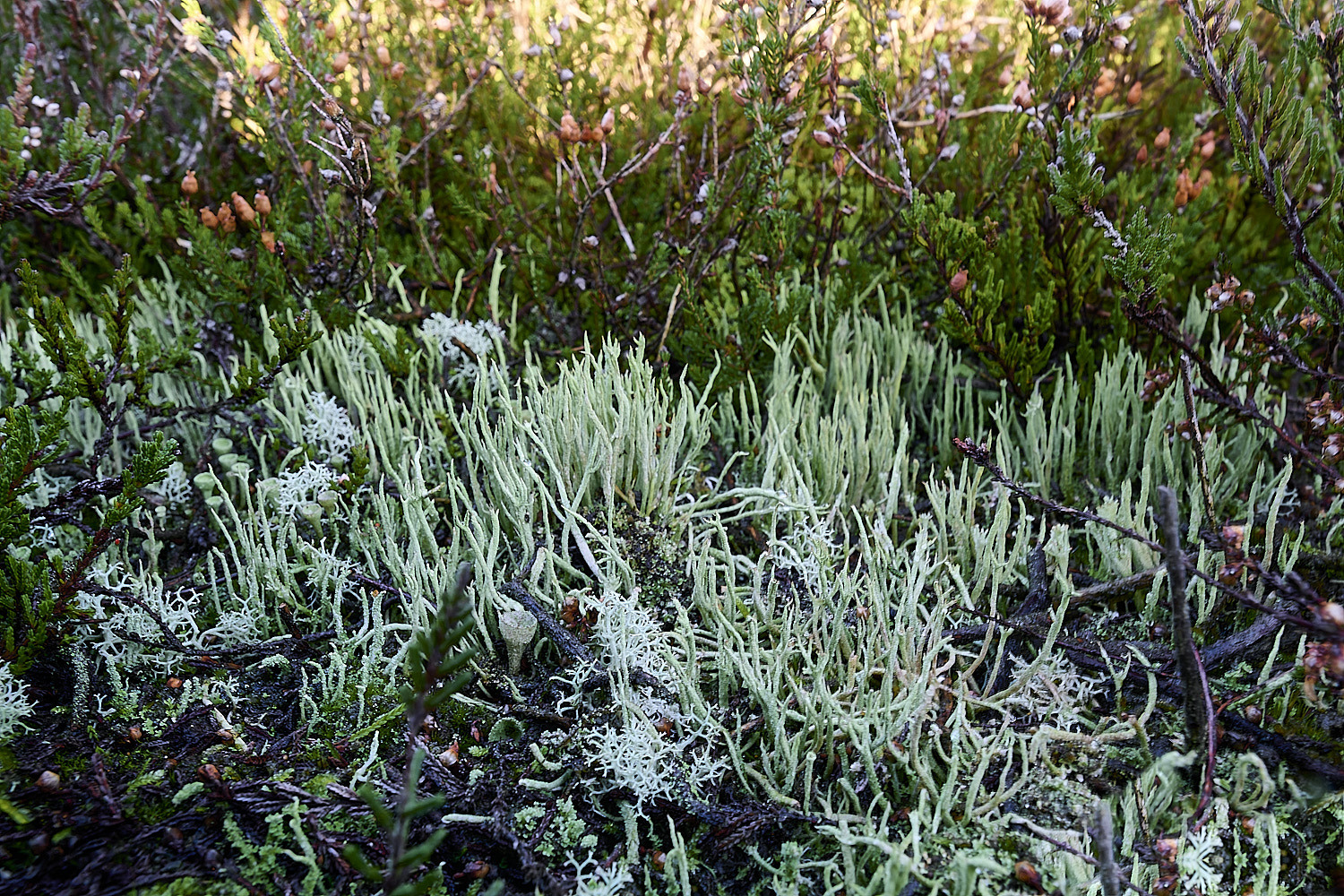
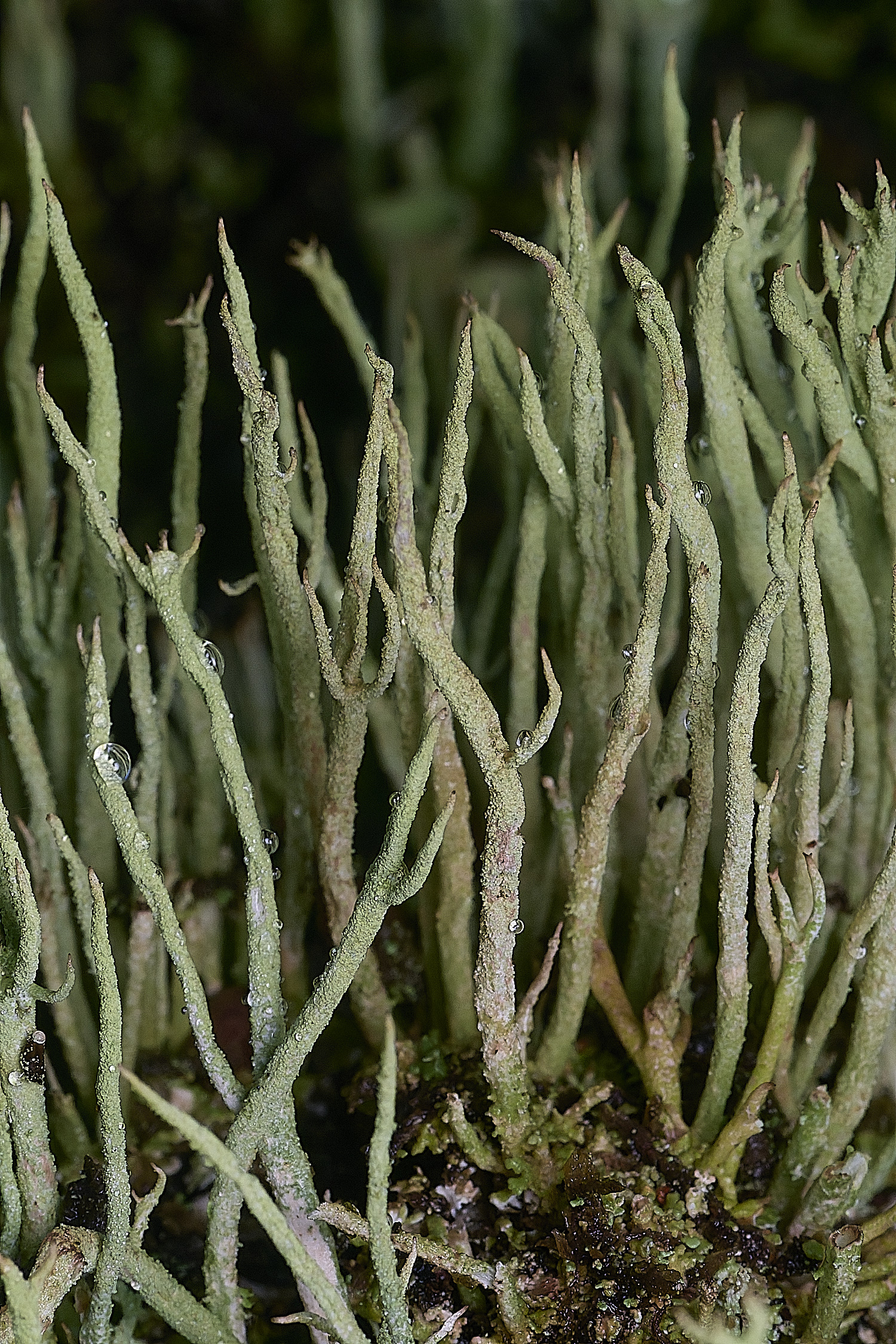

Cladonia glauca
Dobson
1 Apothecia brown 10 Primary thallus squamulose. Podetia prominent or not. 11 Thallus of podetia or podetia growing from basal squamules. 12
Thallus with podetia which are not usually interwoven, sparsely or not branched, and which may have a cup at the tip. 32 Some podetia with longitudinal splits
33 K-, Podetia with soredia and squamules UV - ice blue - Cladonia glauca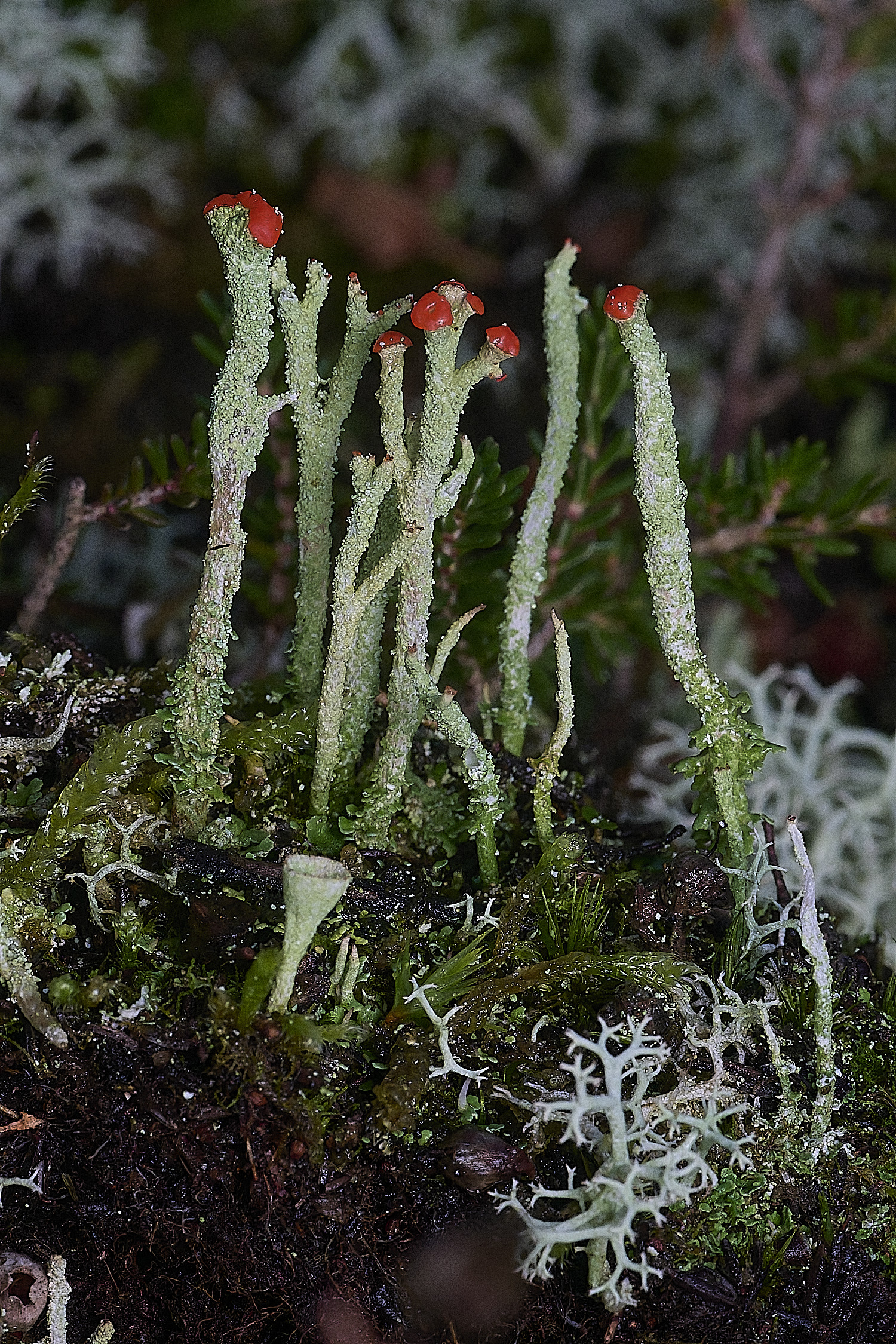
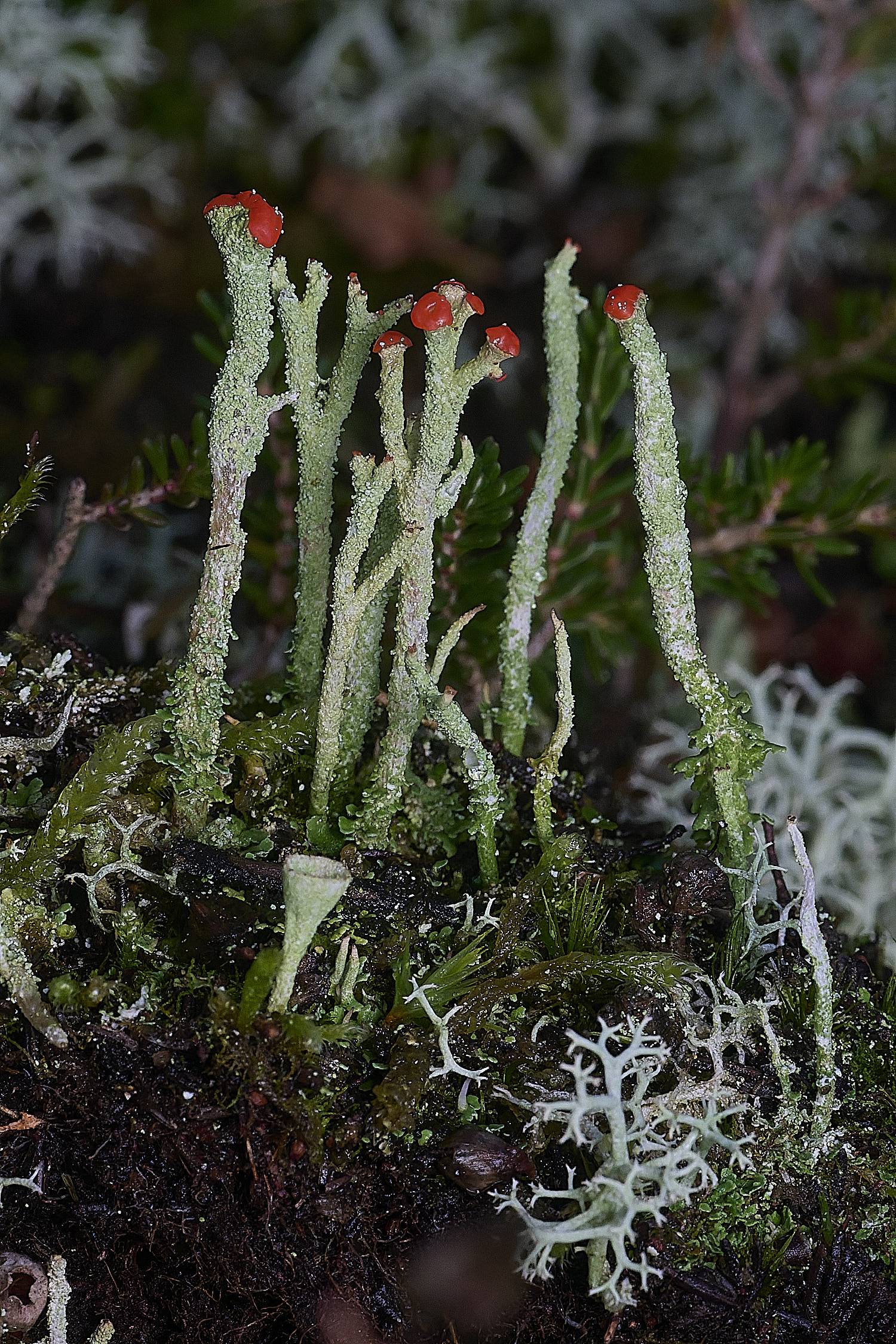
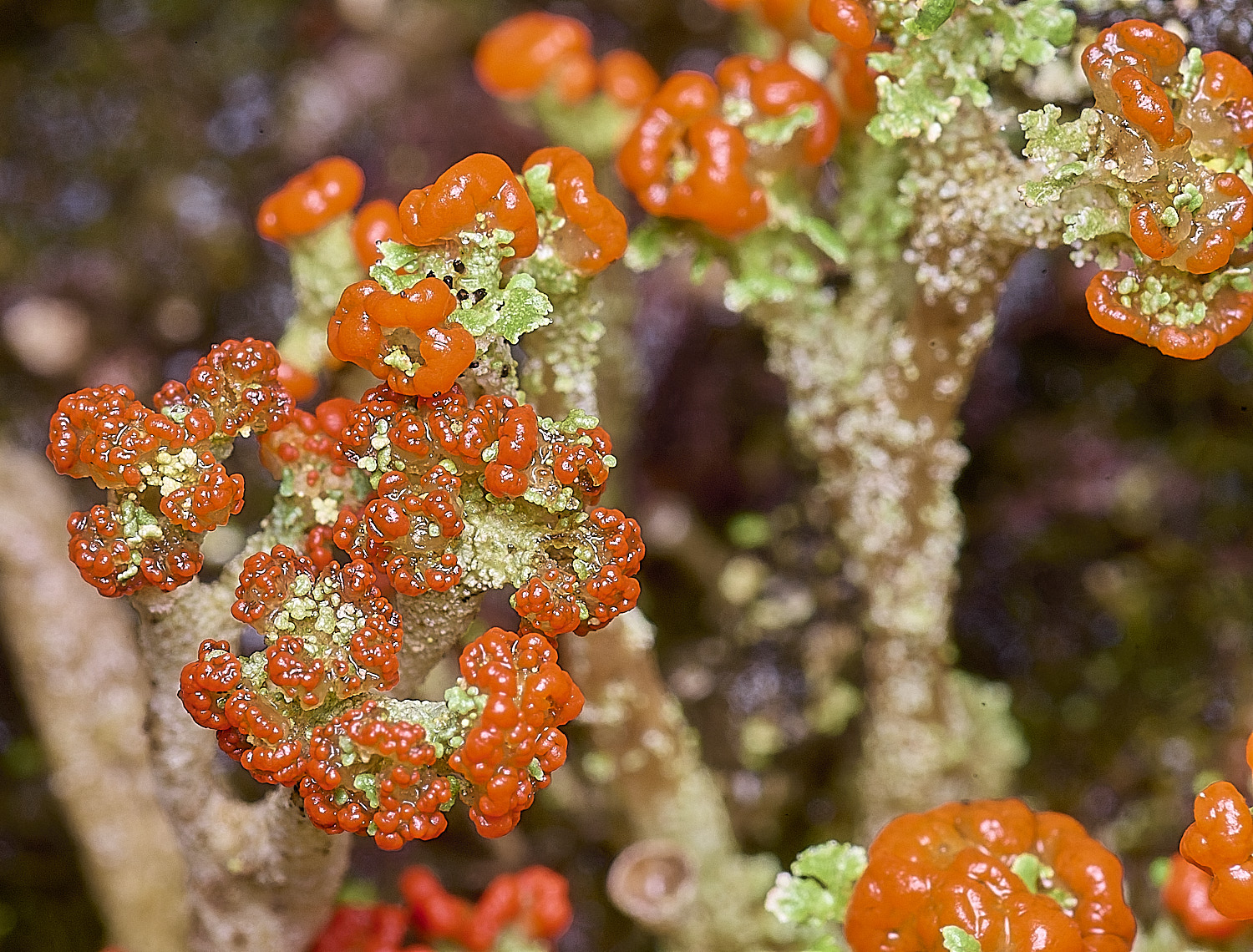

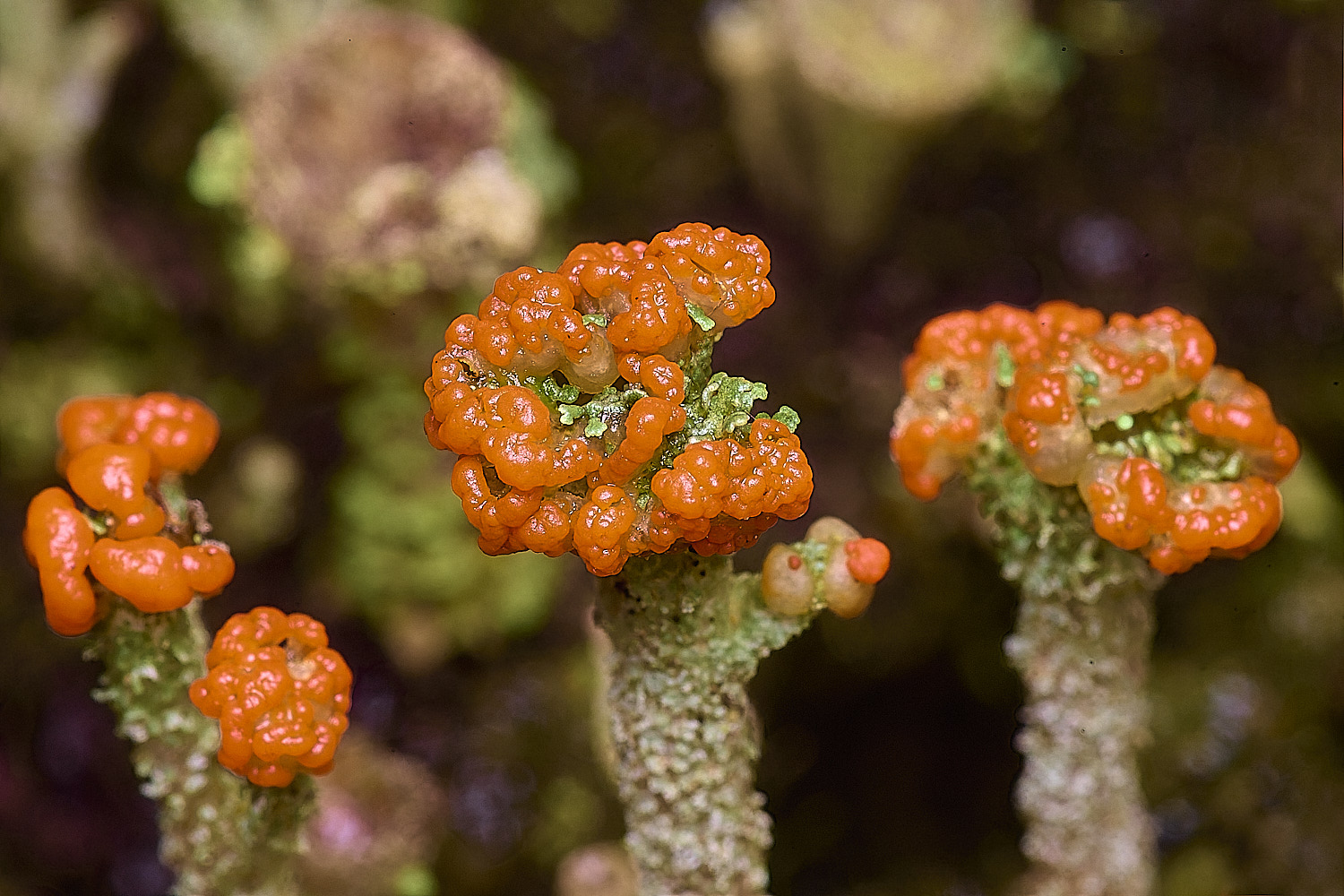
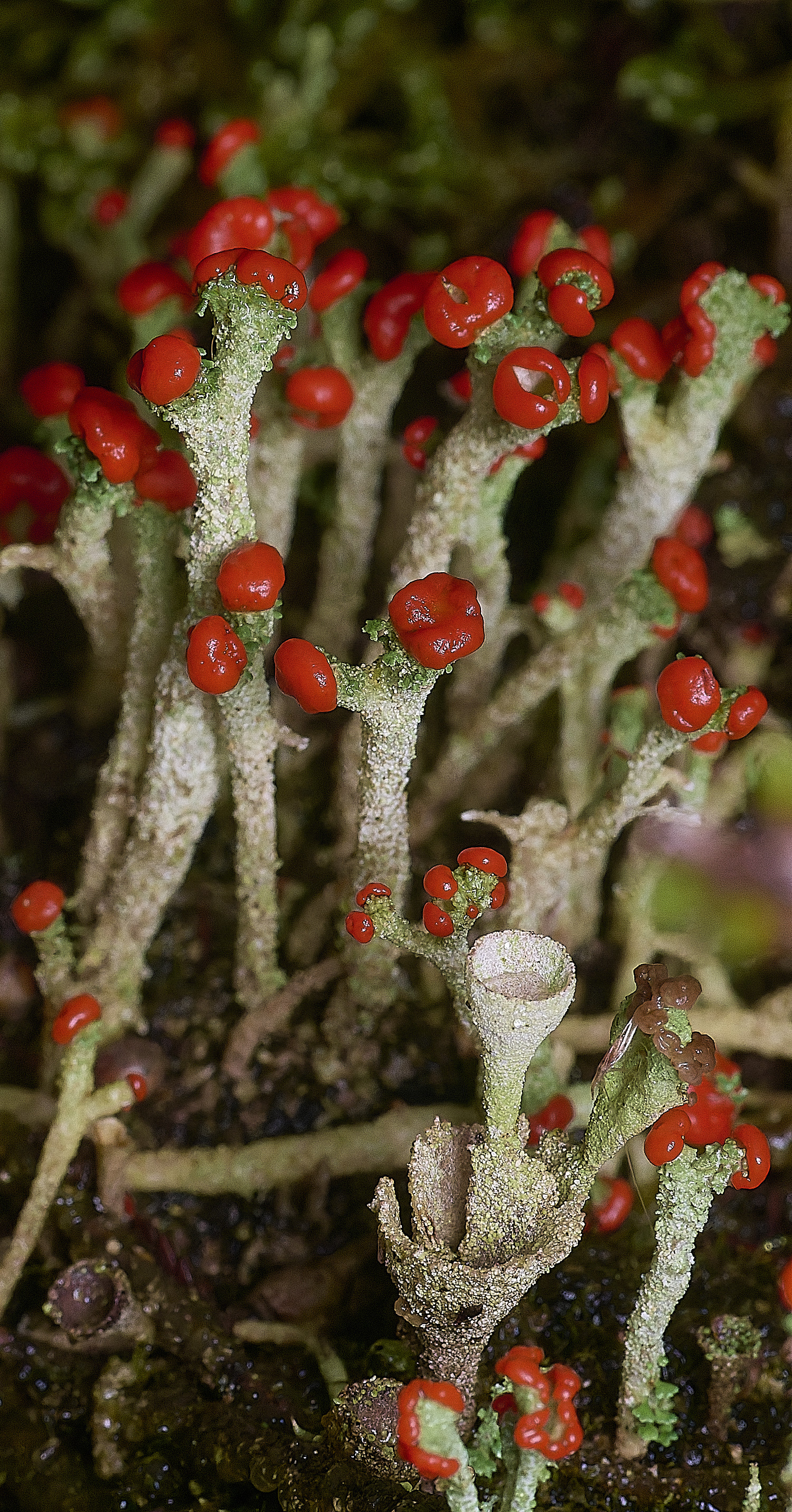
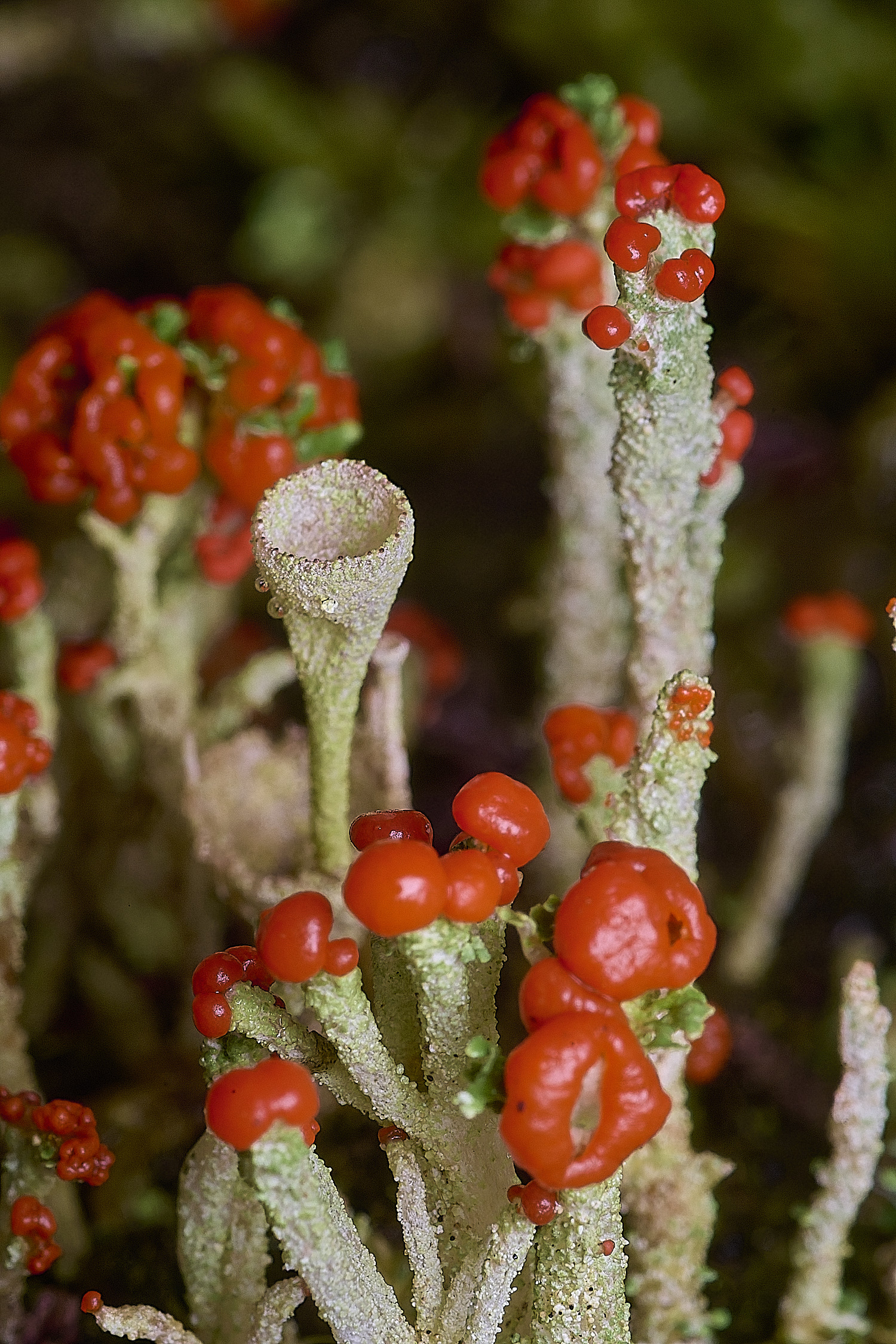
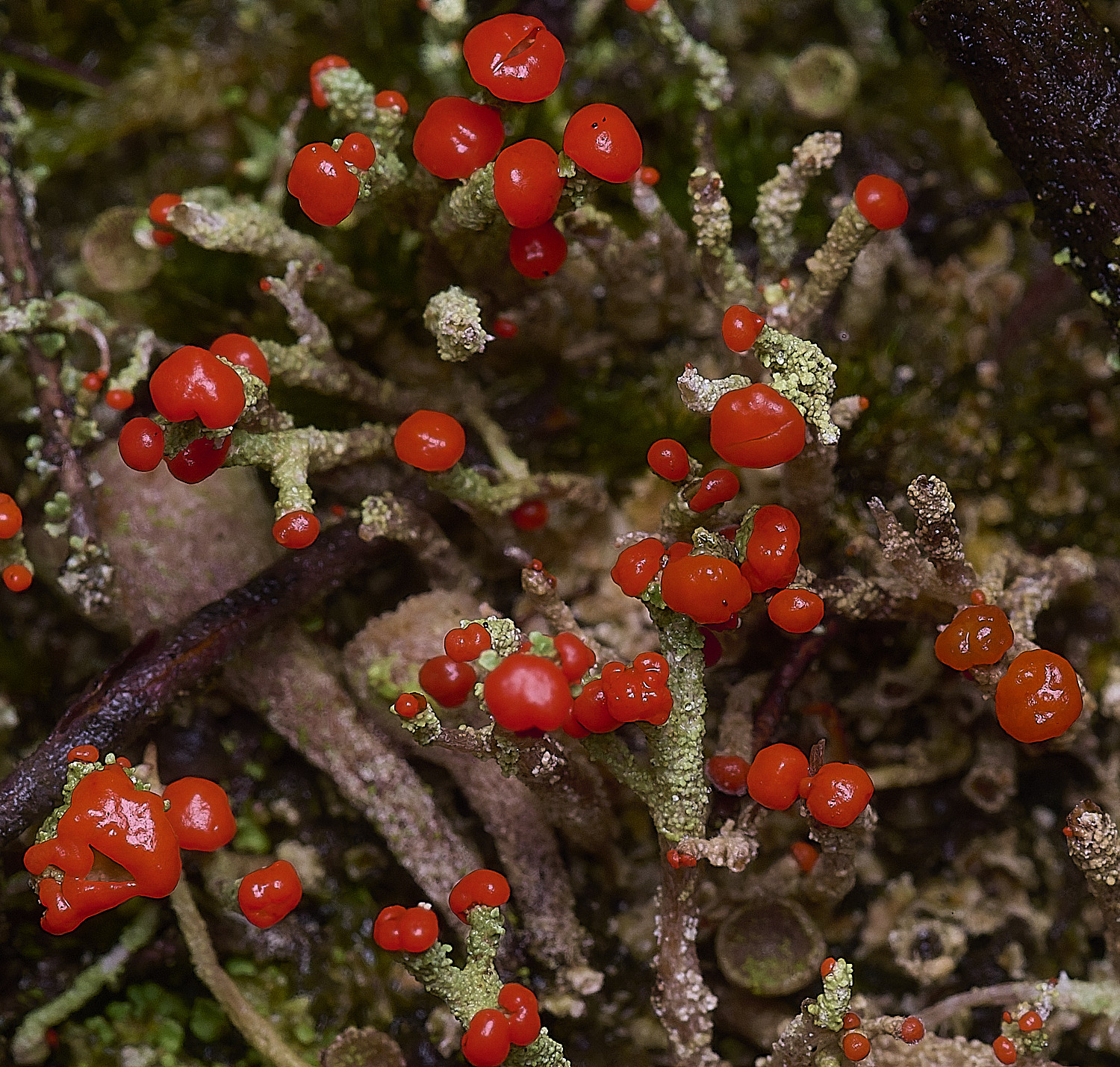
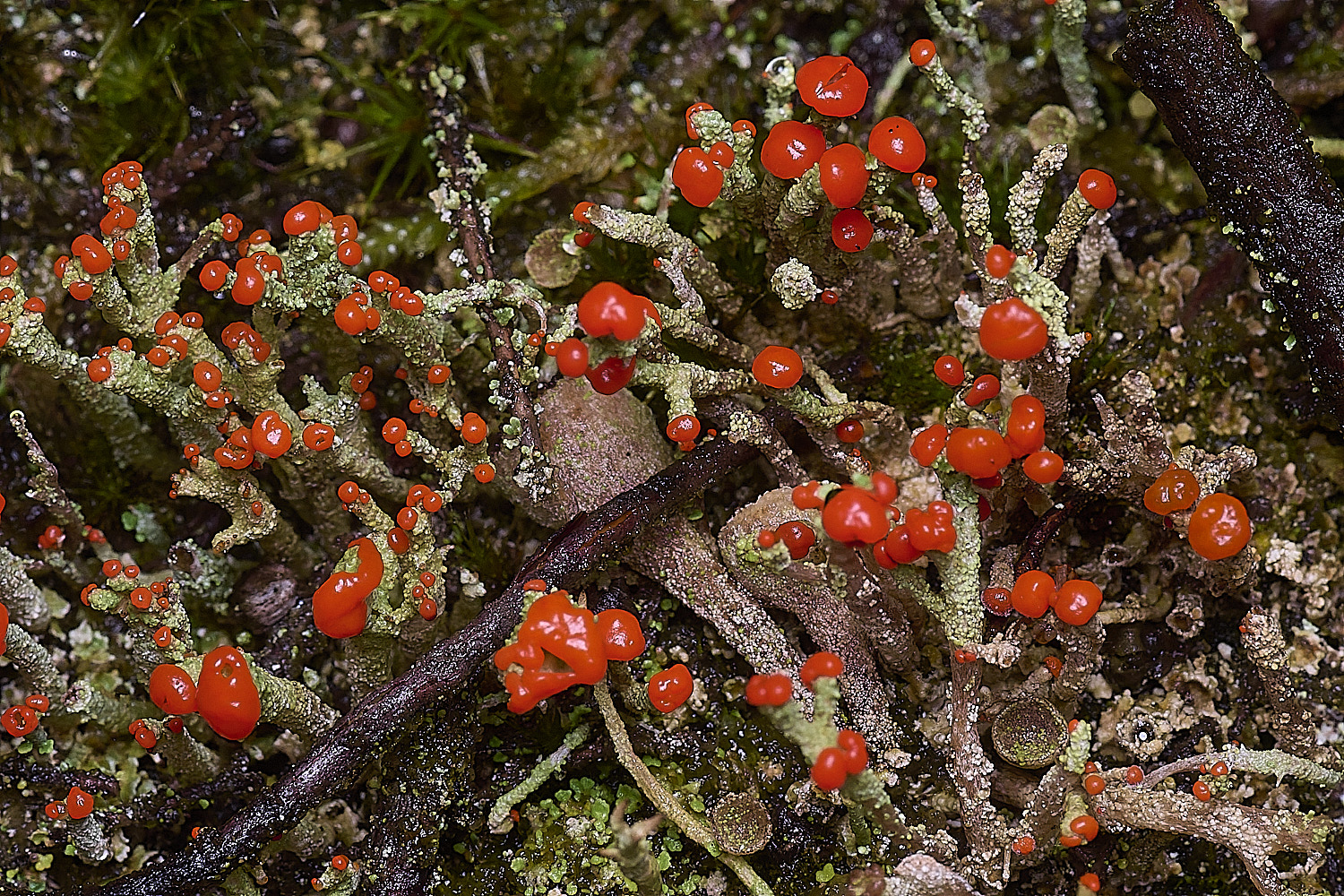
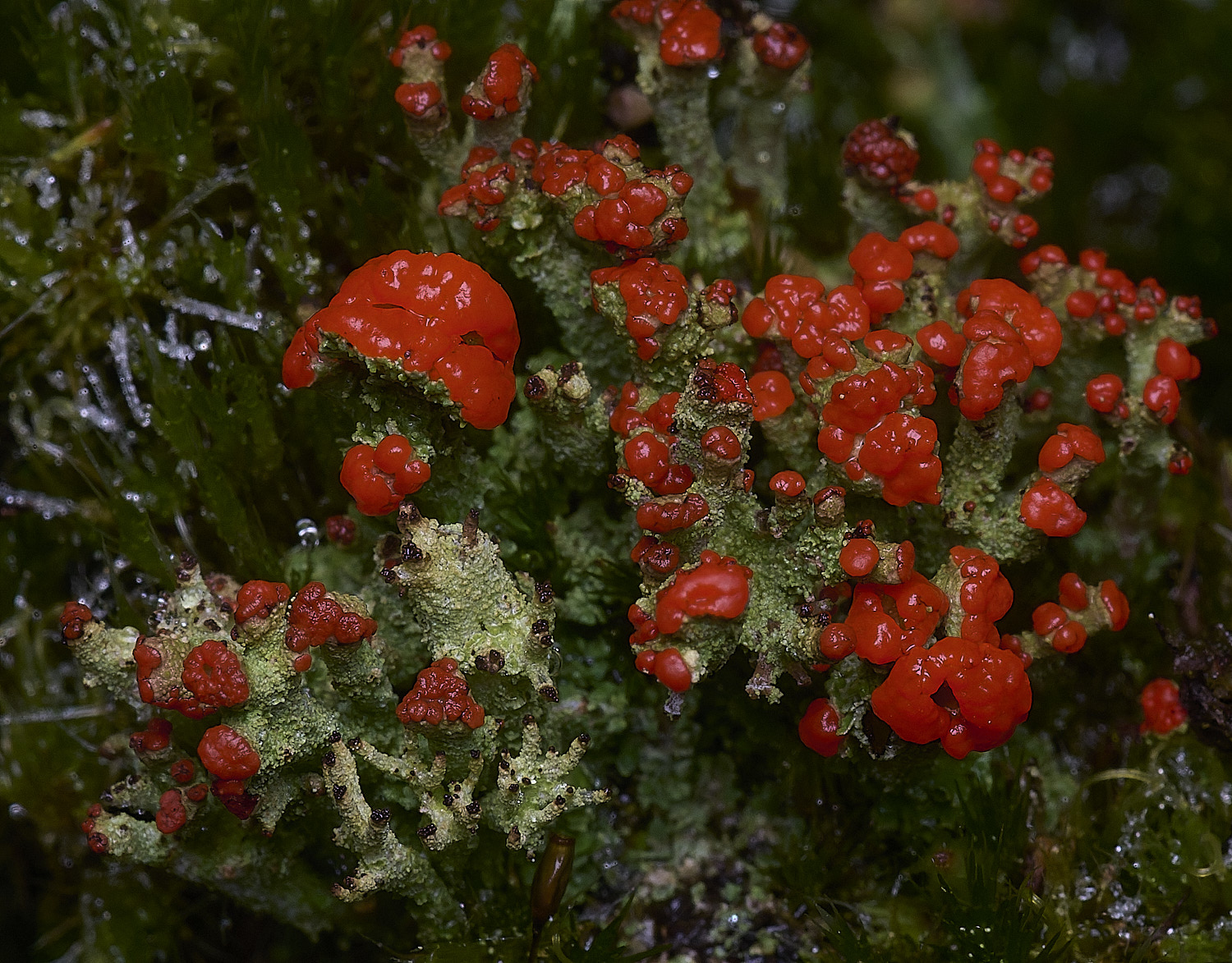
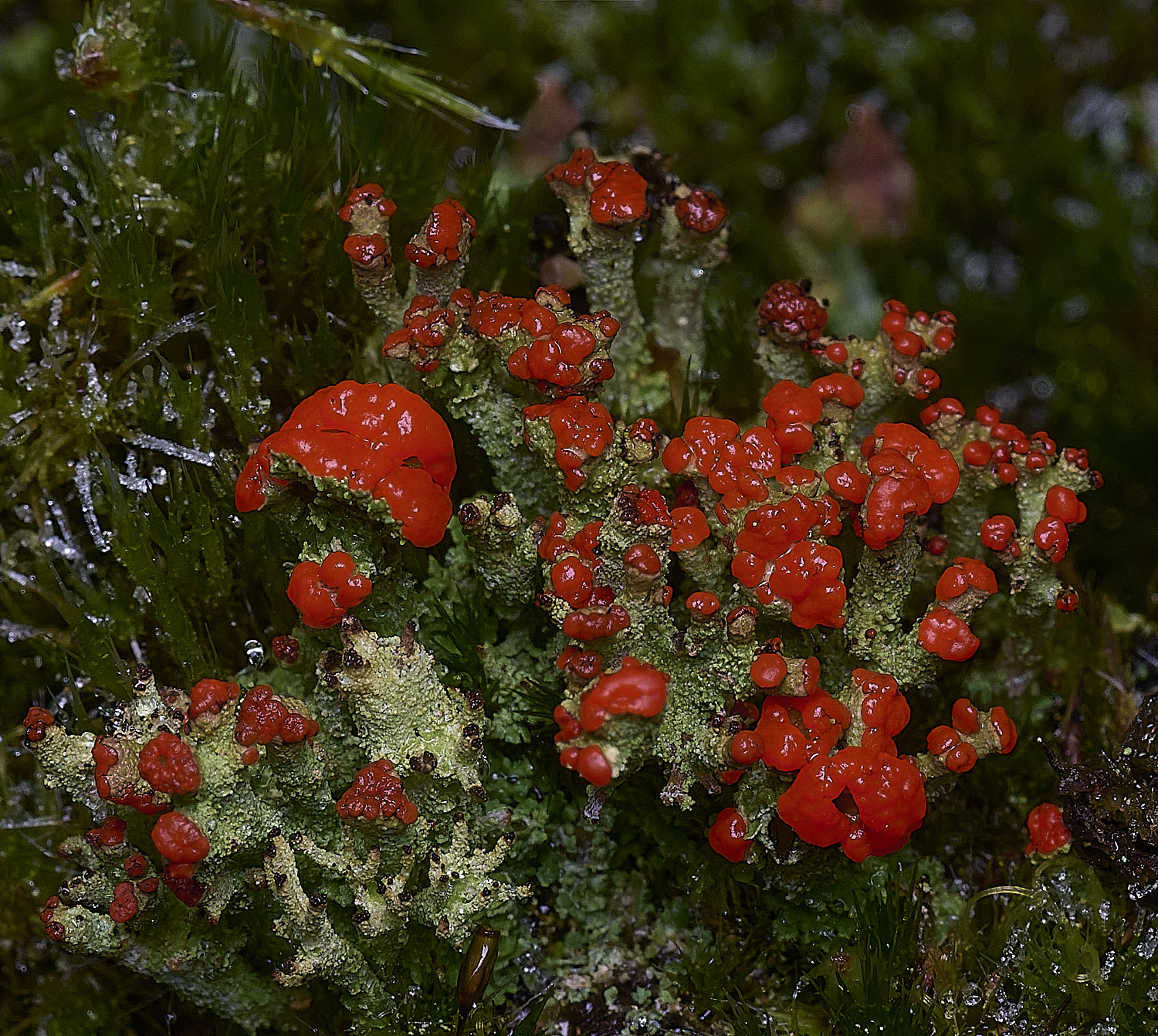
Cladonia floerkeana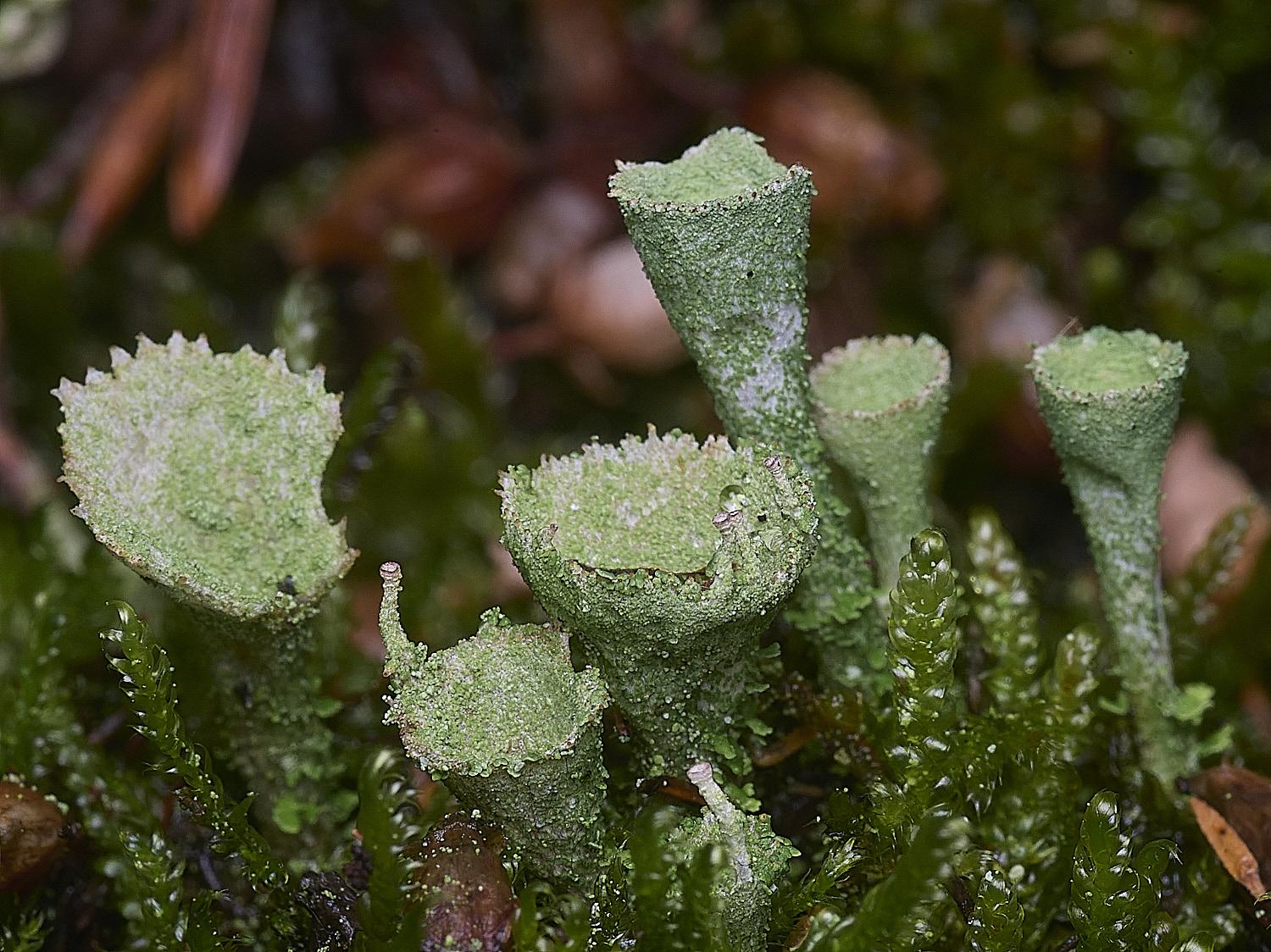

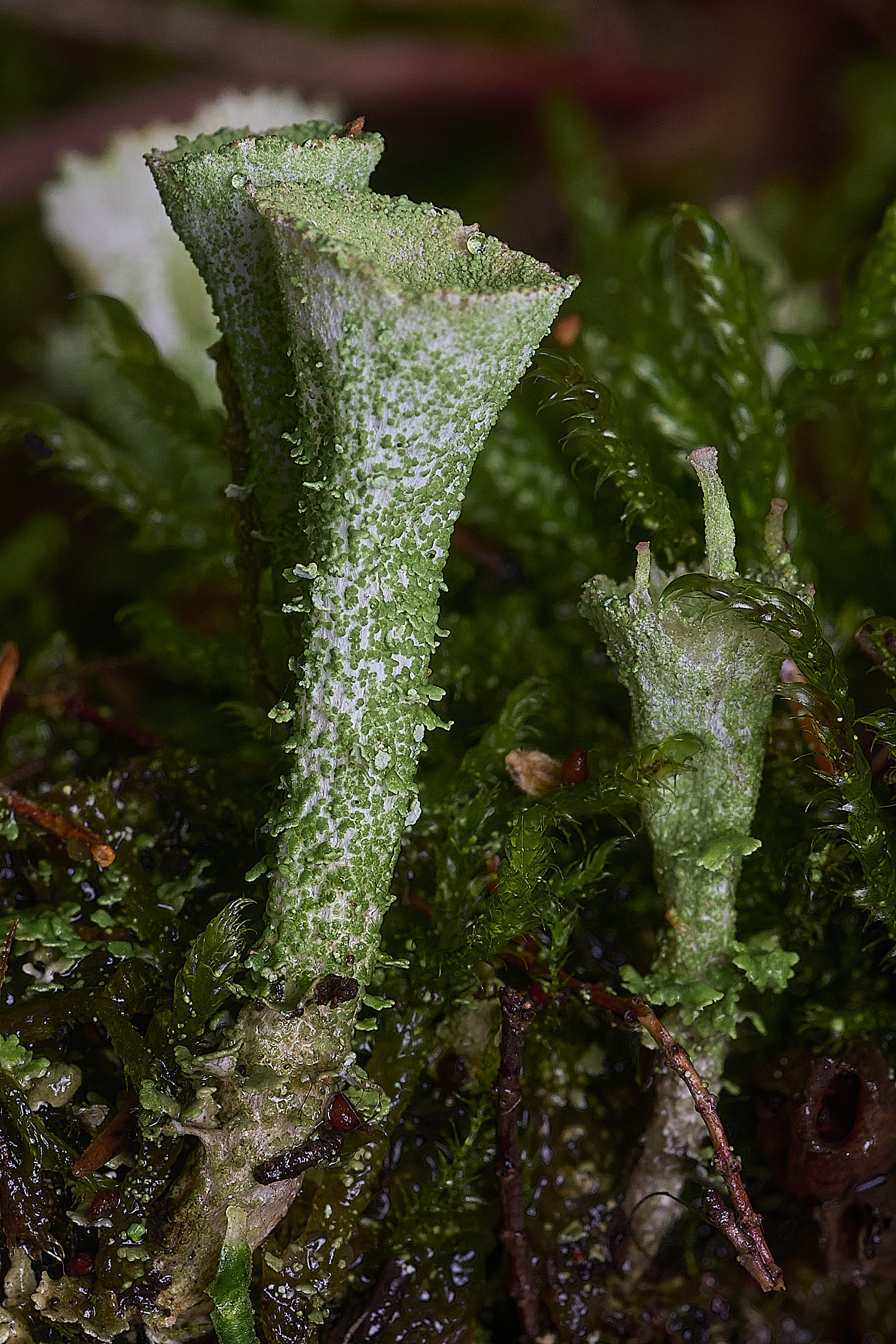
Cladonia Sp? 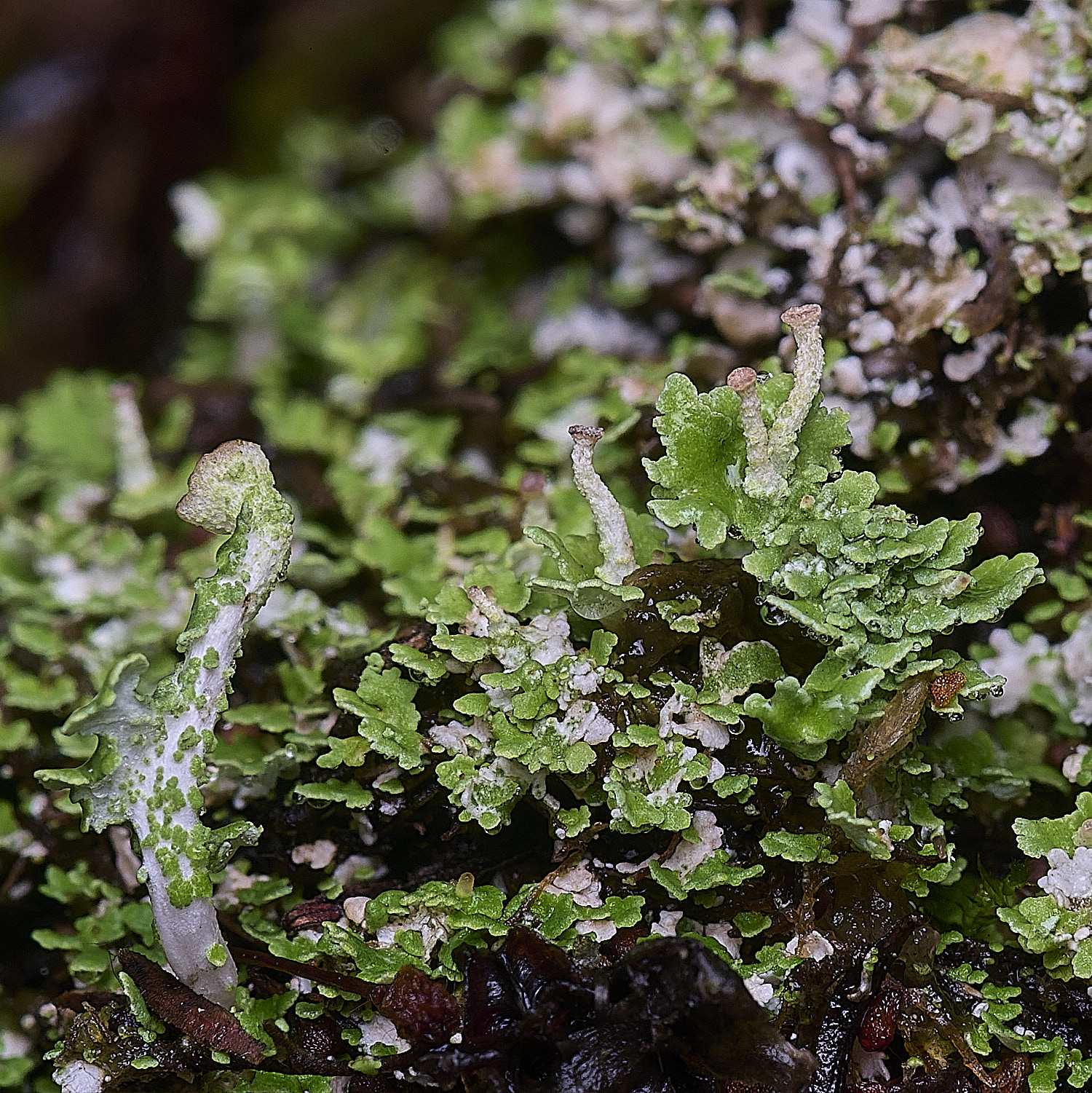
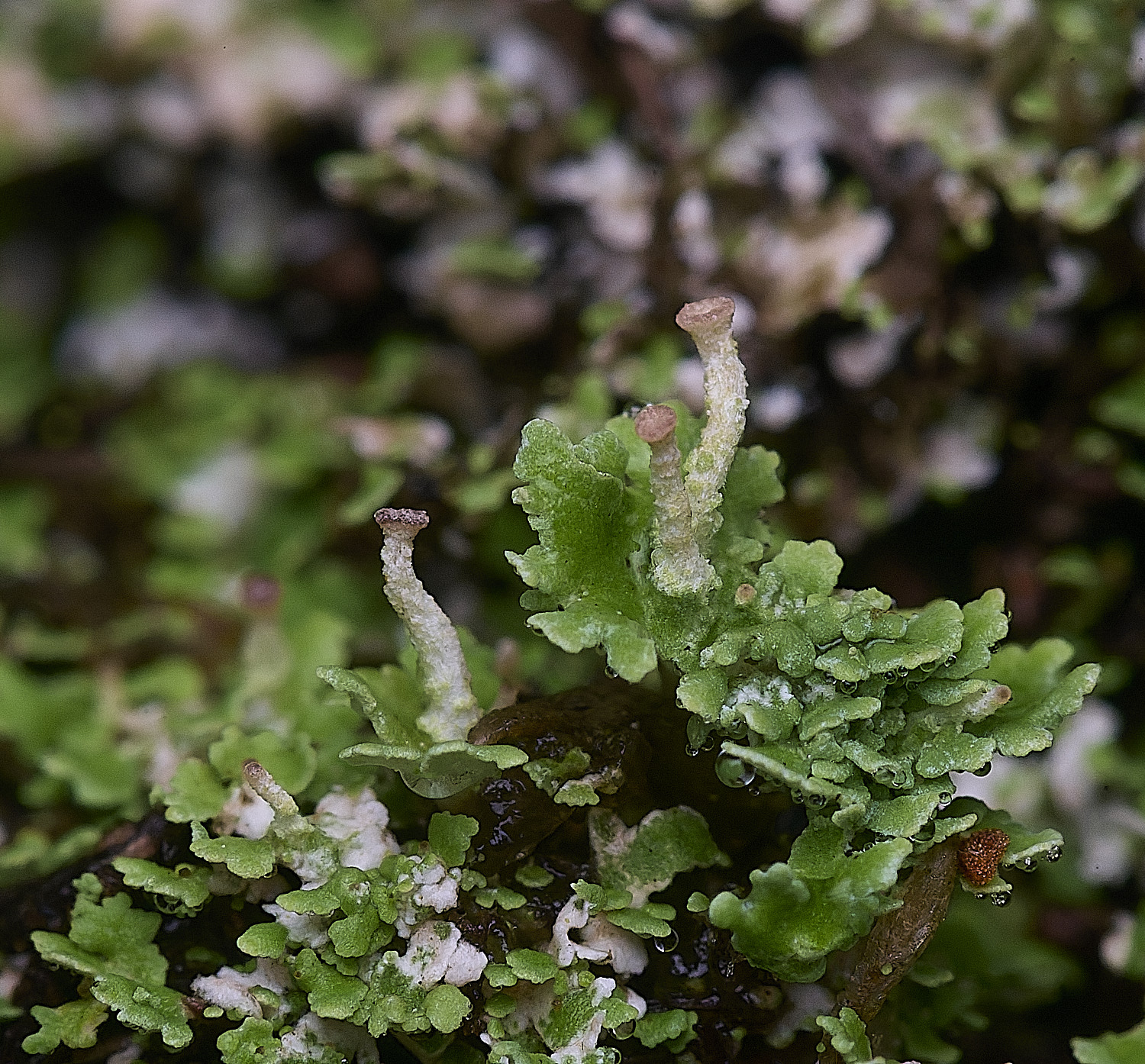
Cladomia Sp?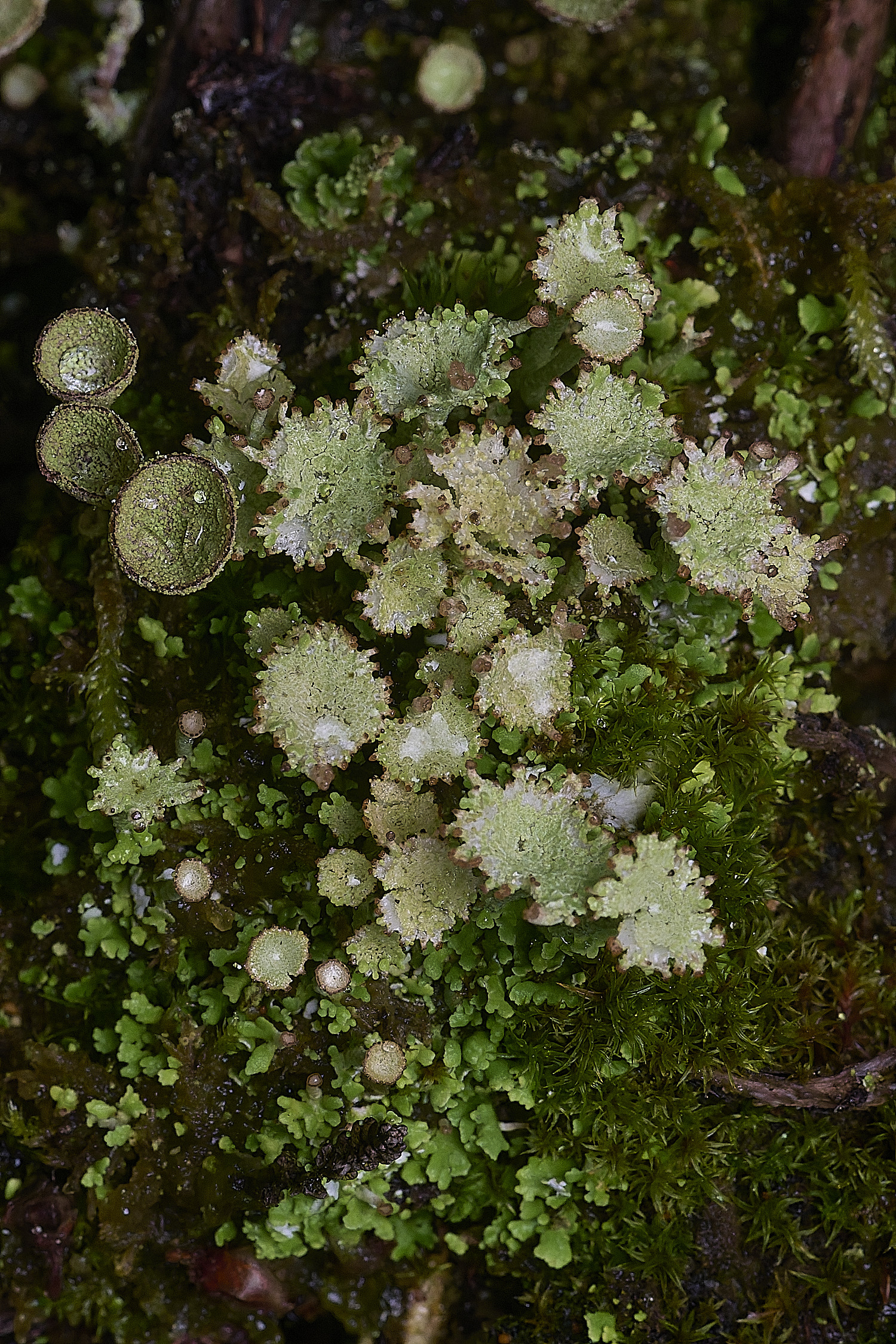

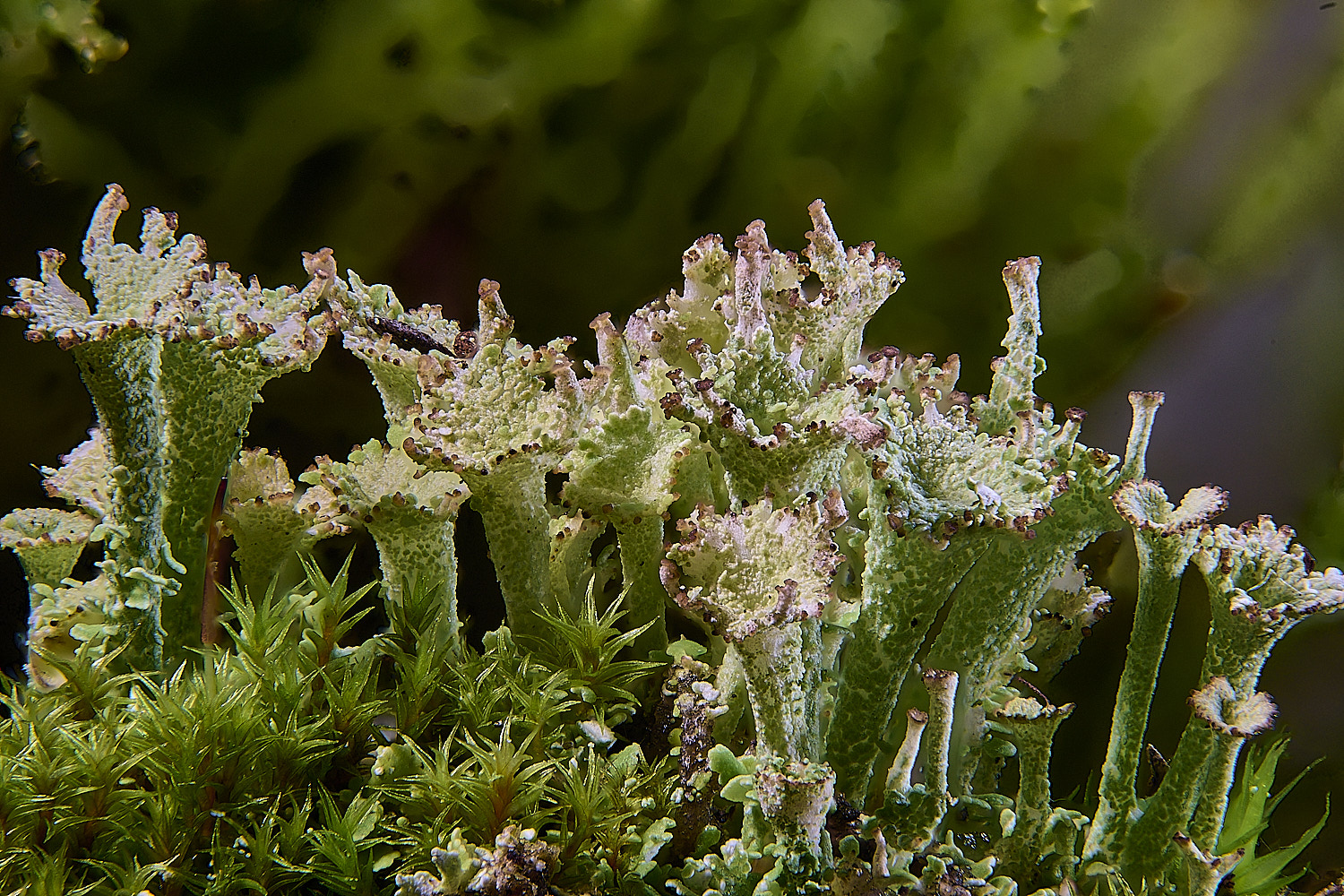
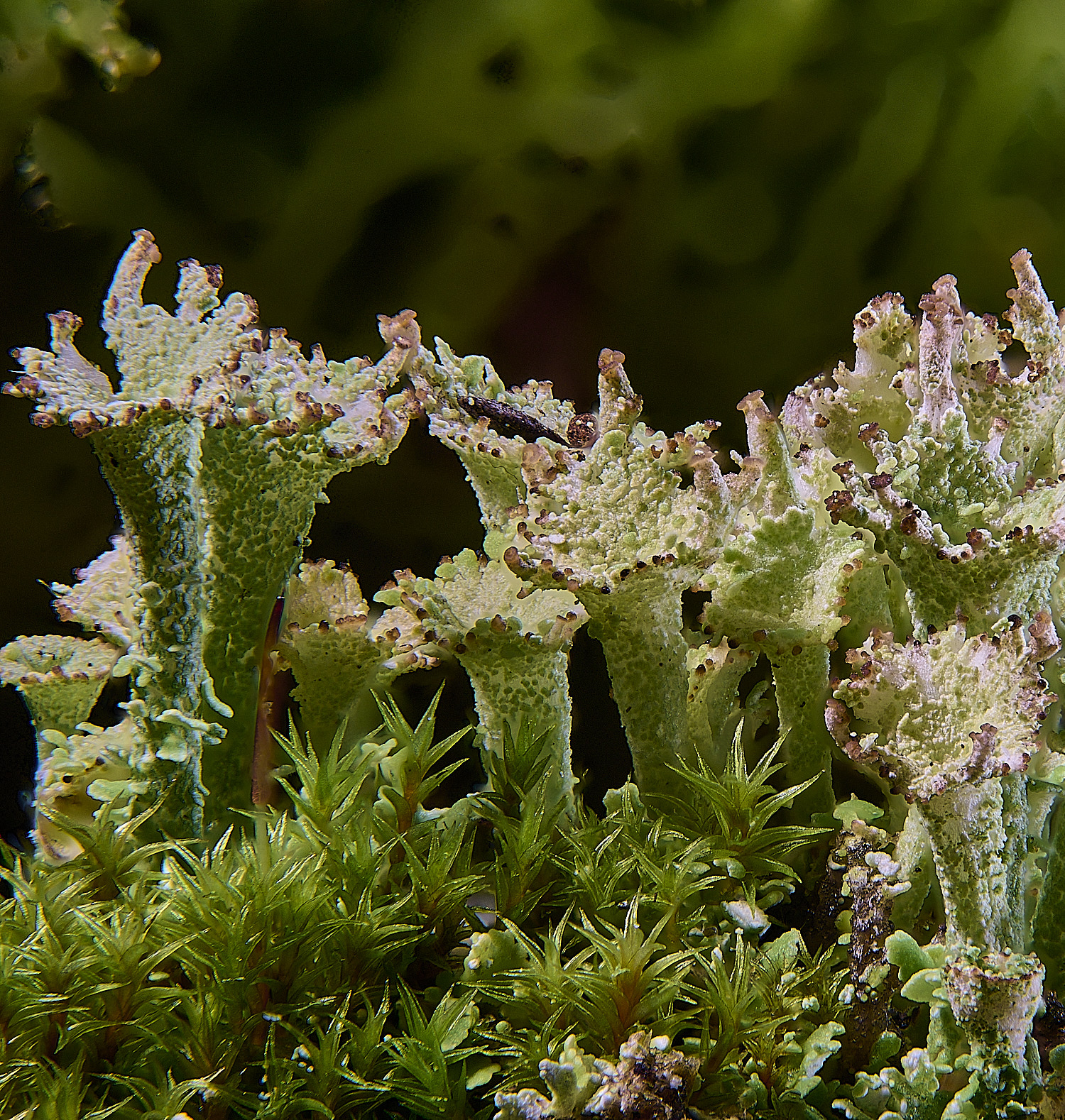
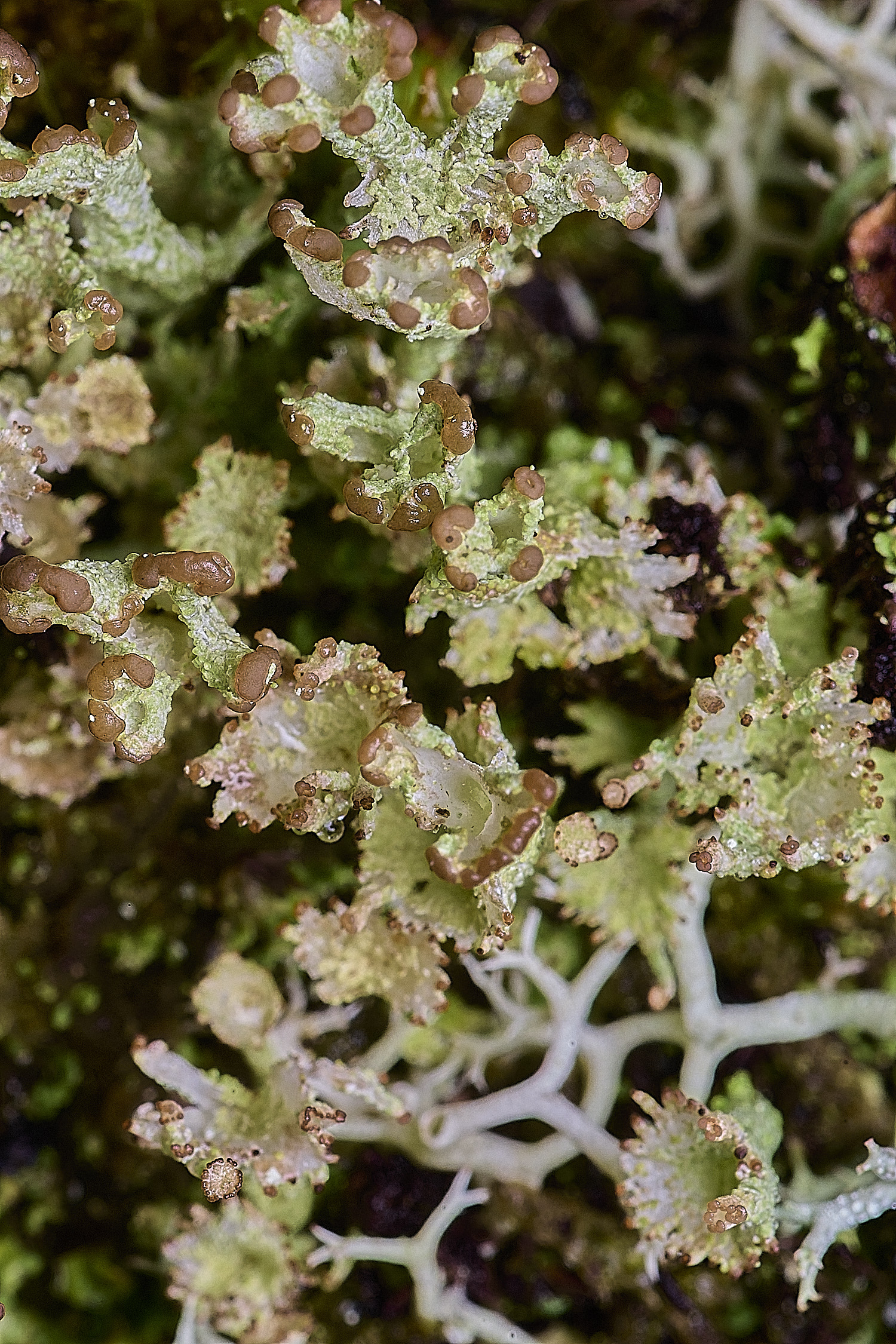
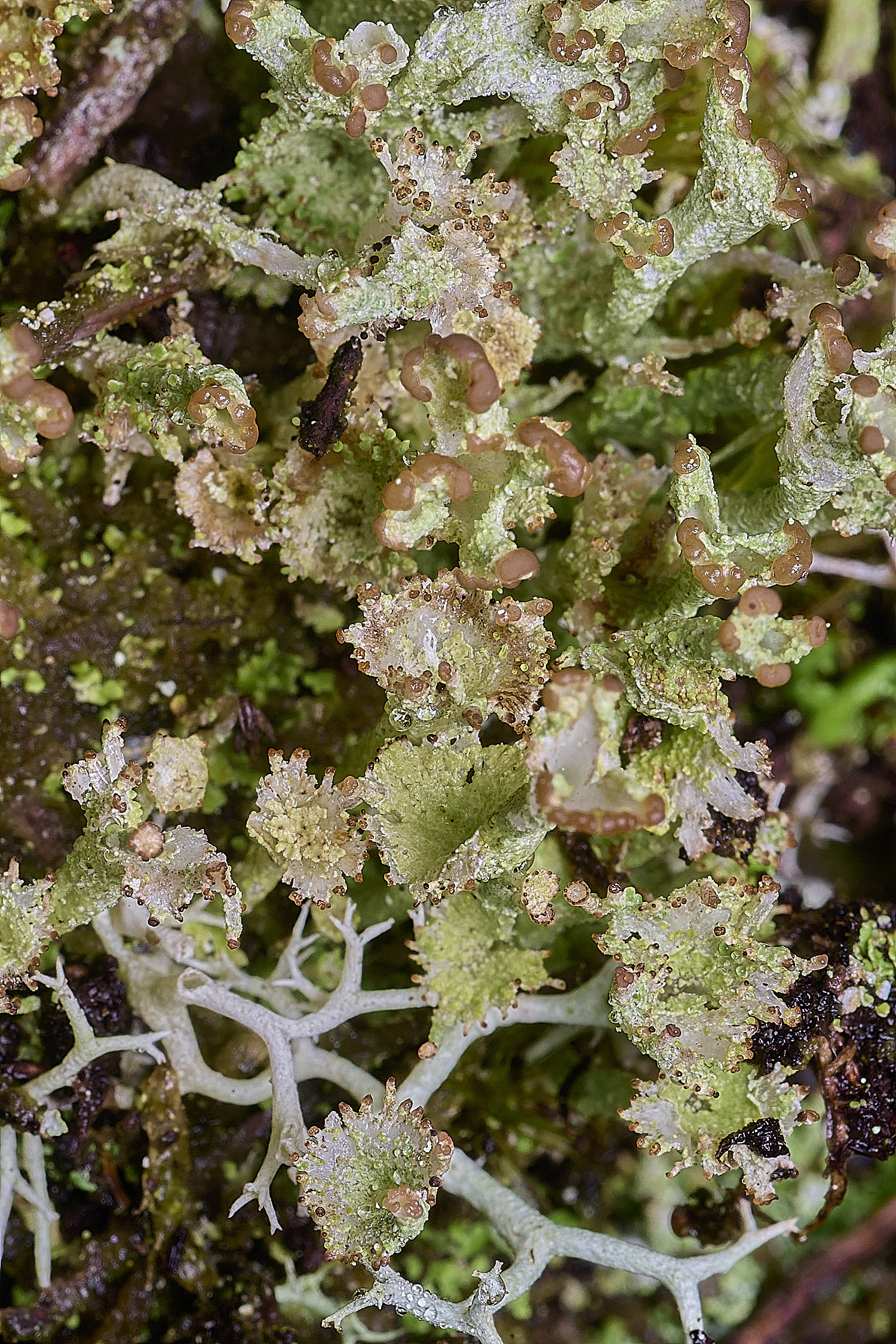

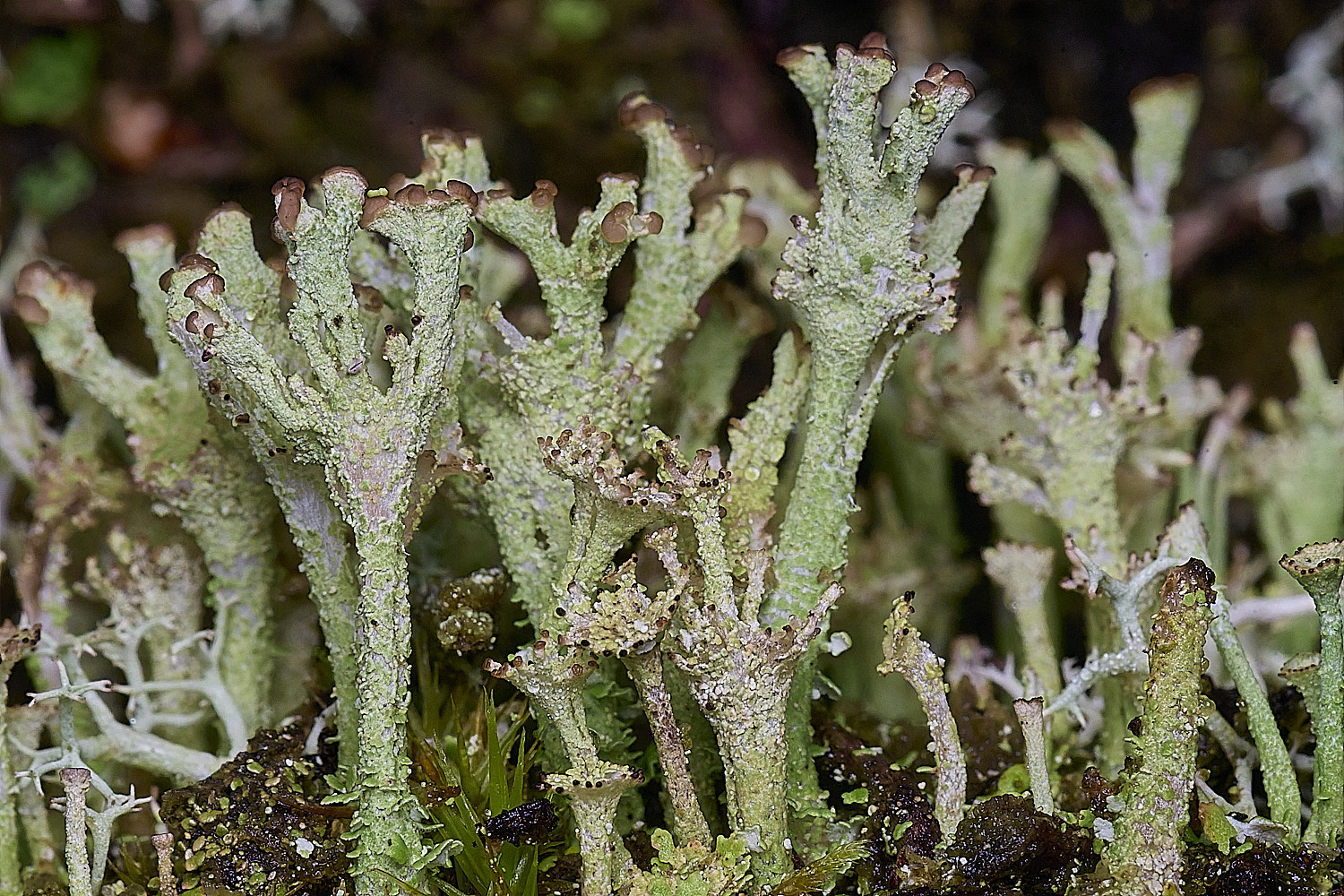
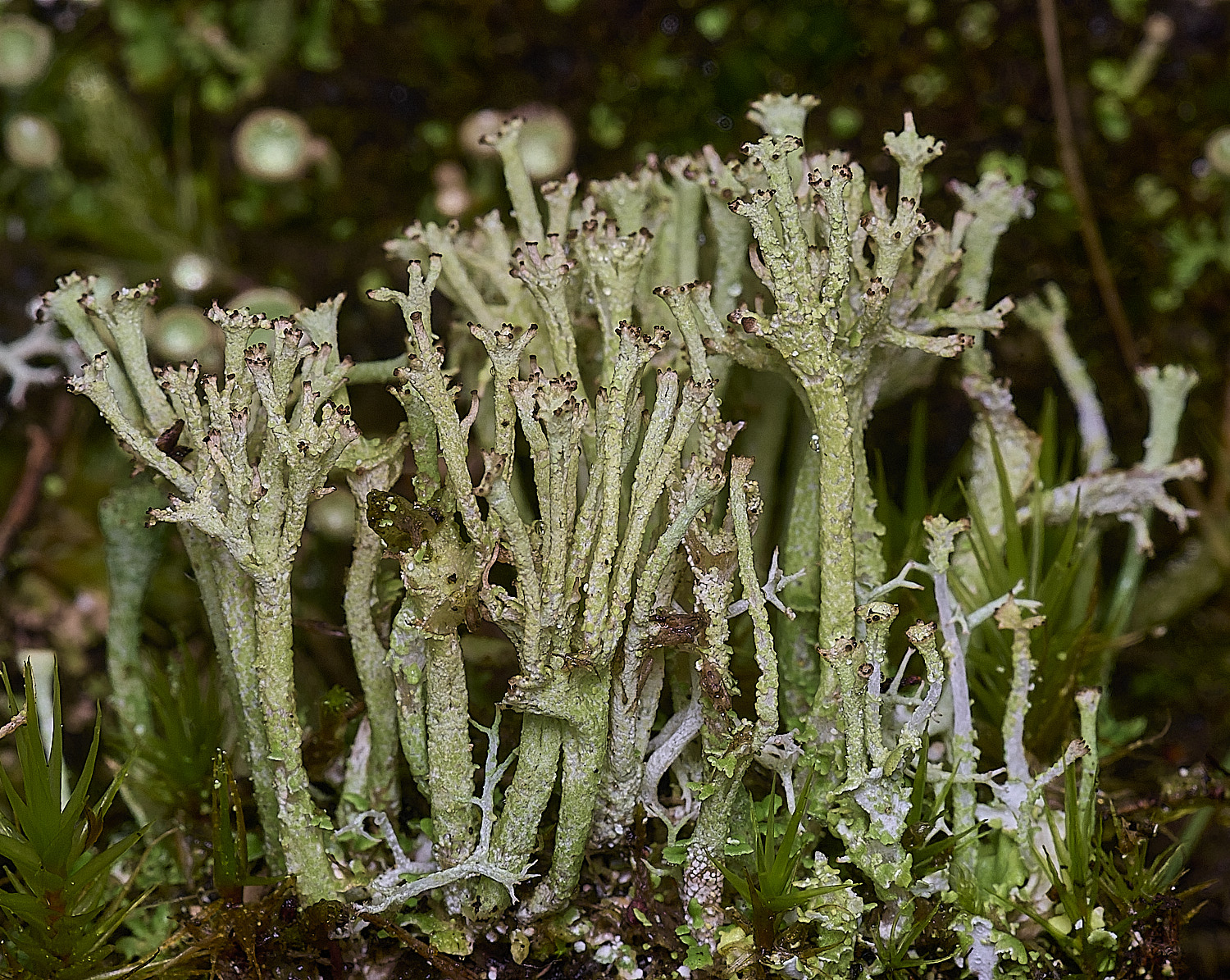

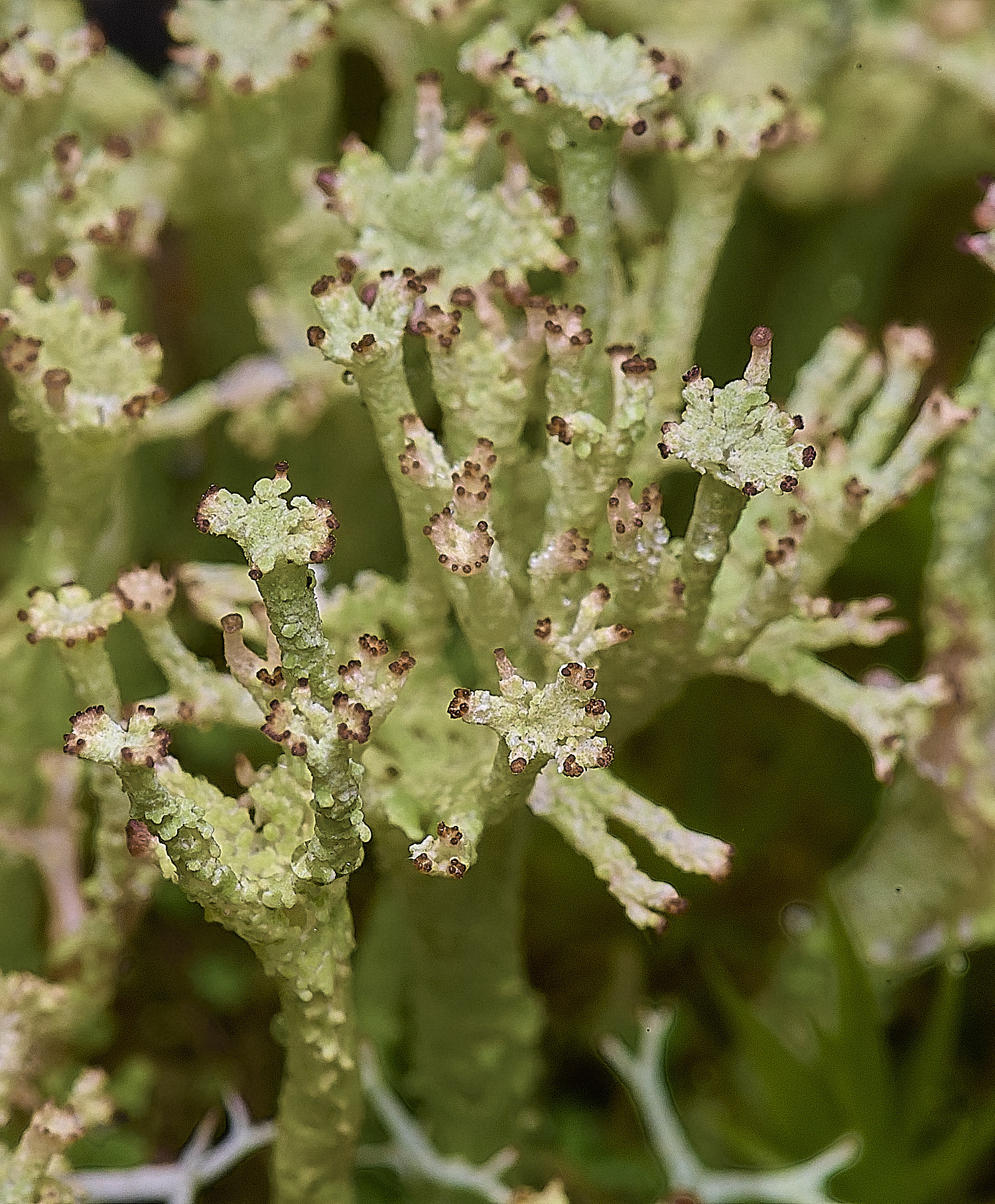
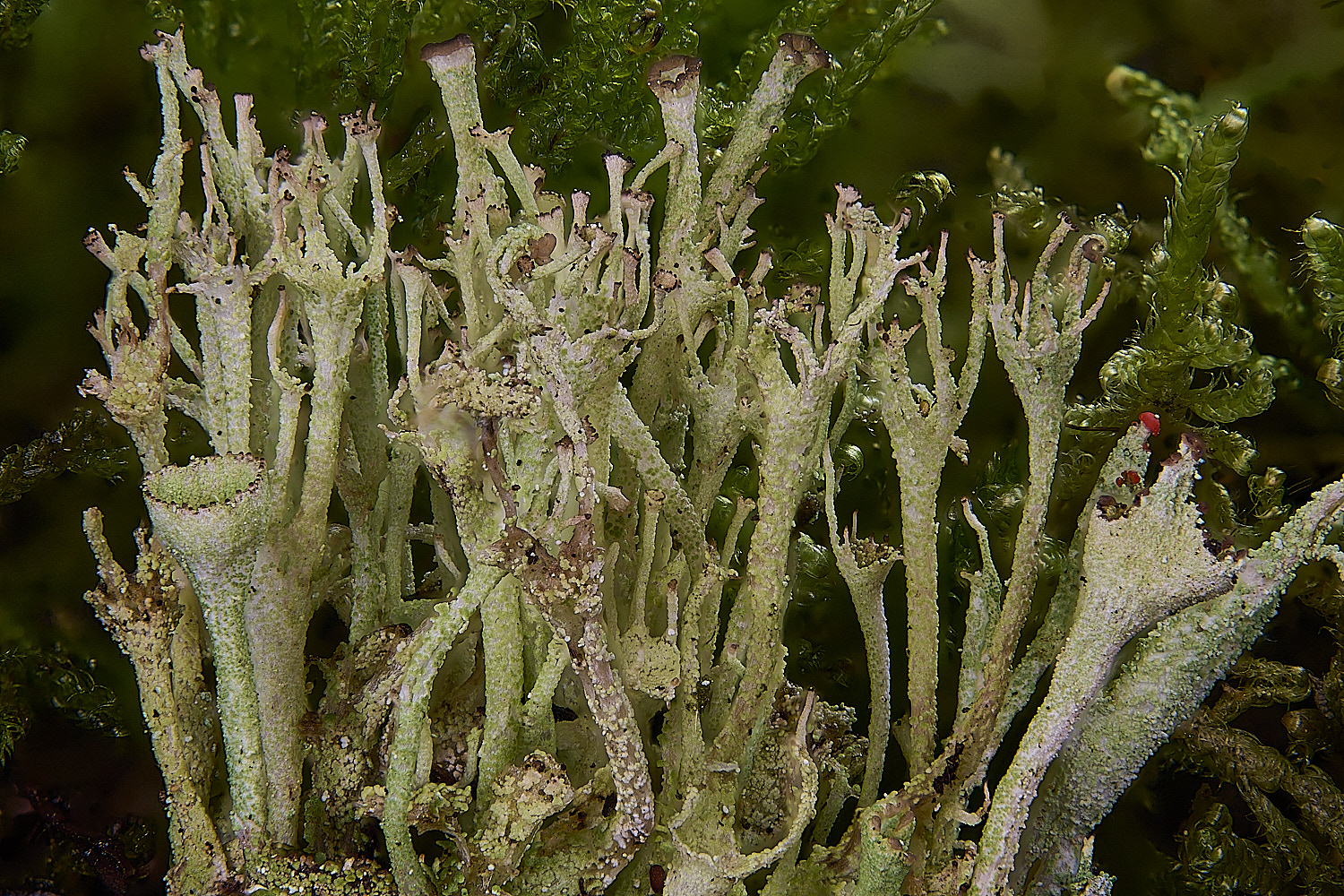
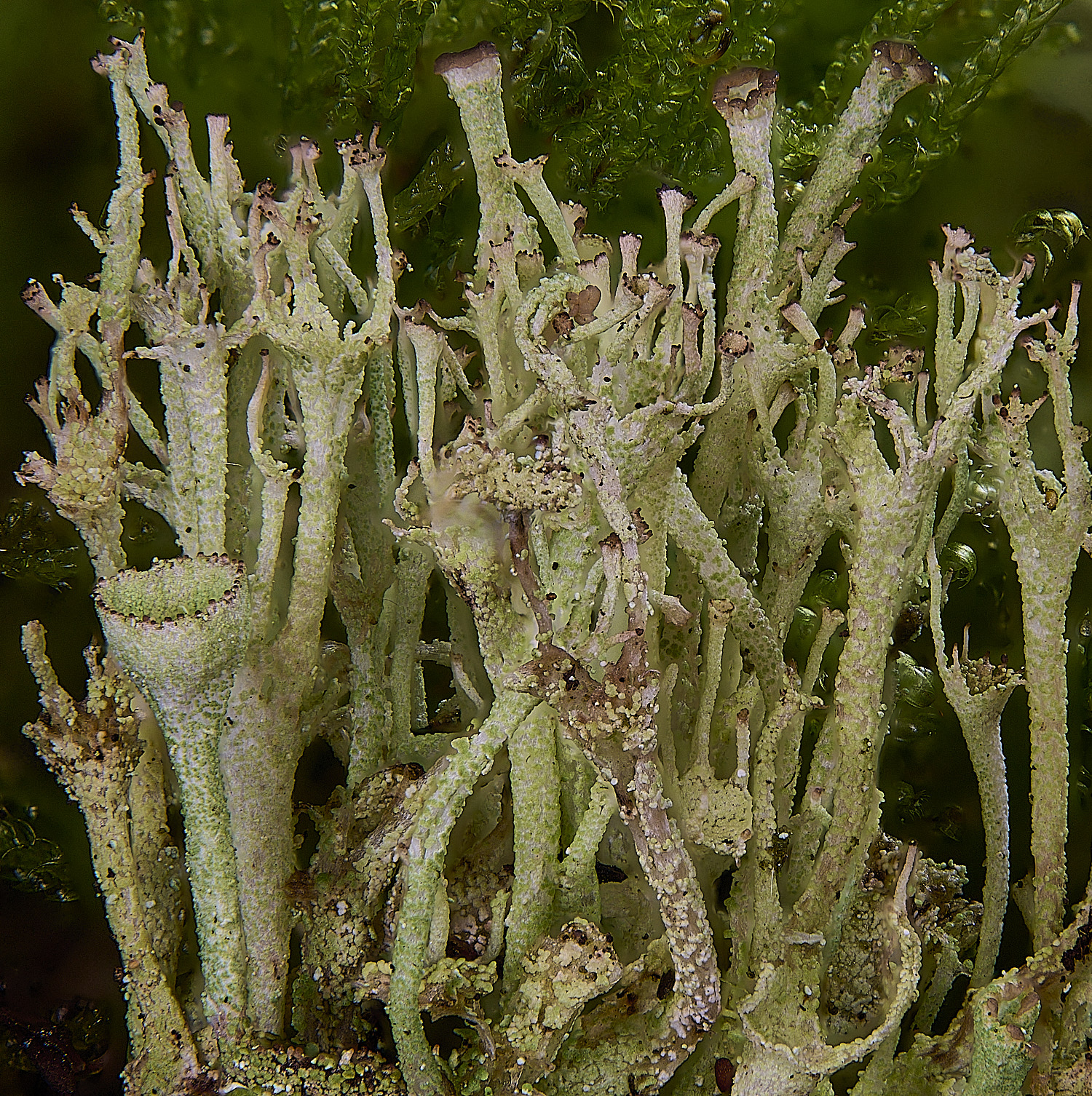
All forms of Cladonia chlorophaea???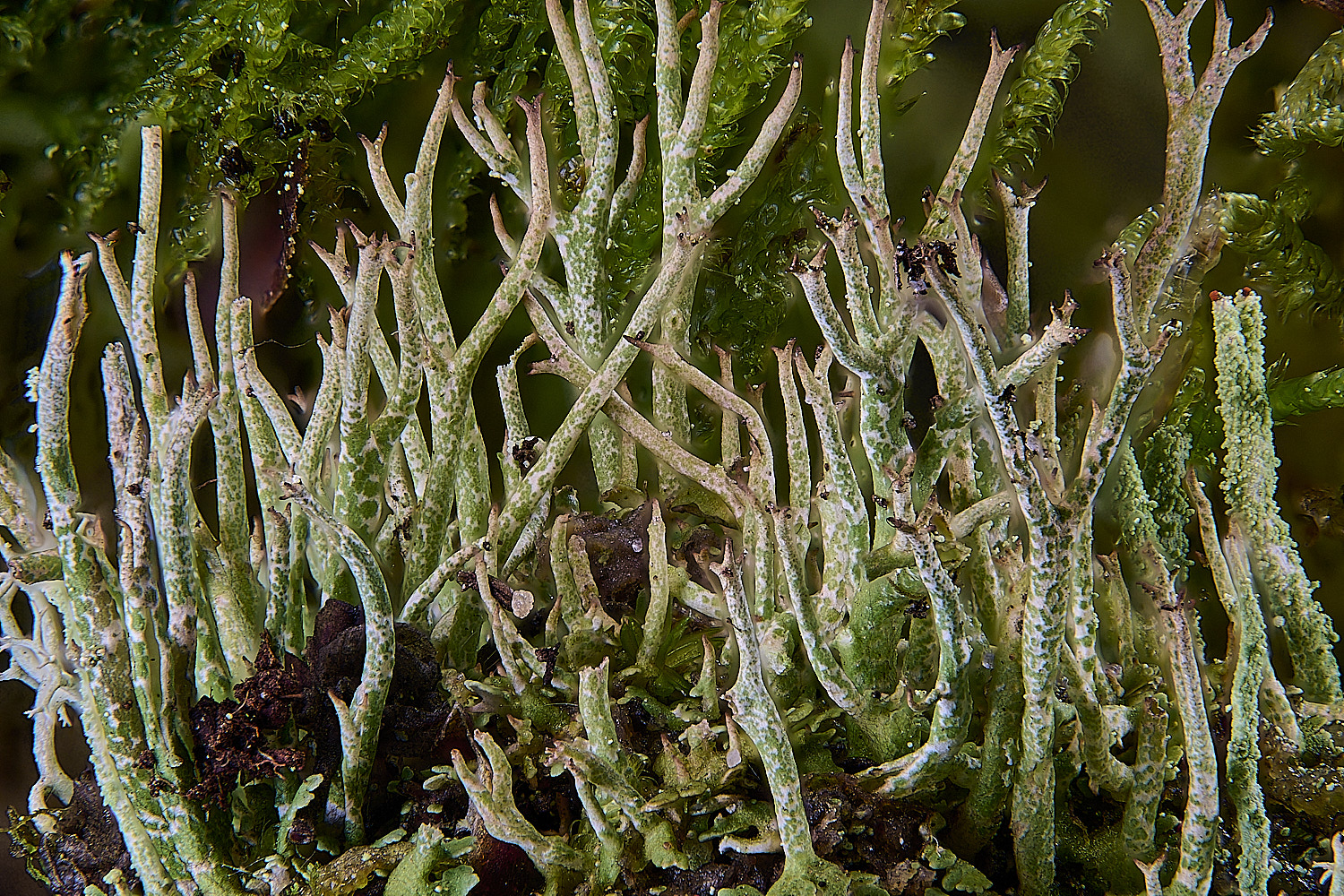
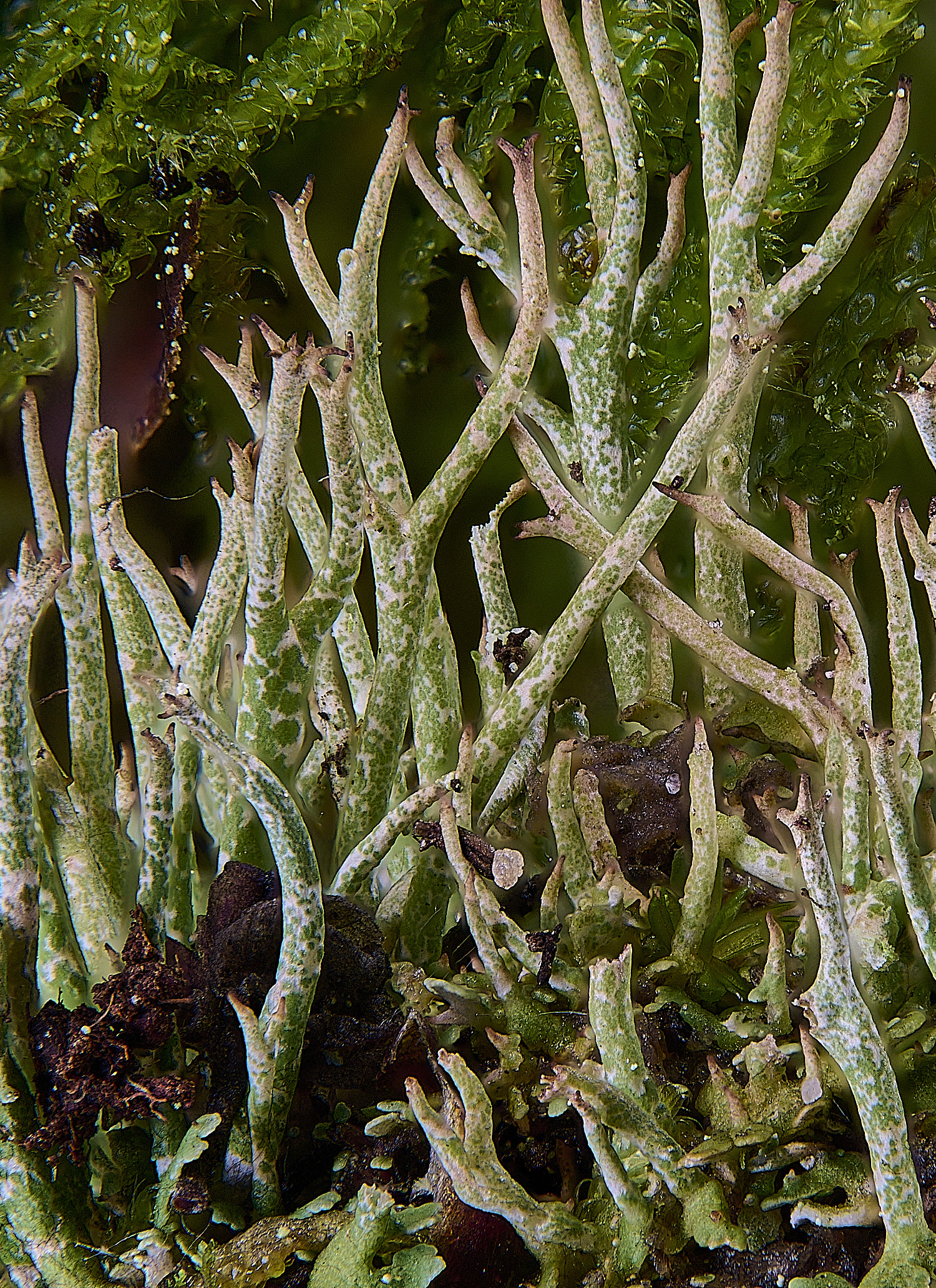
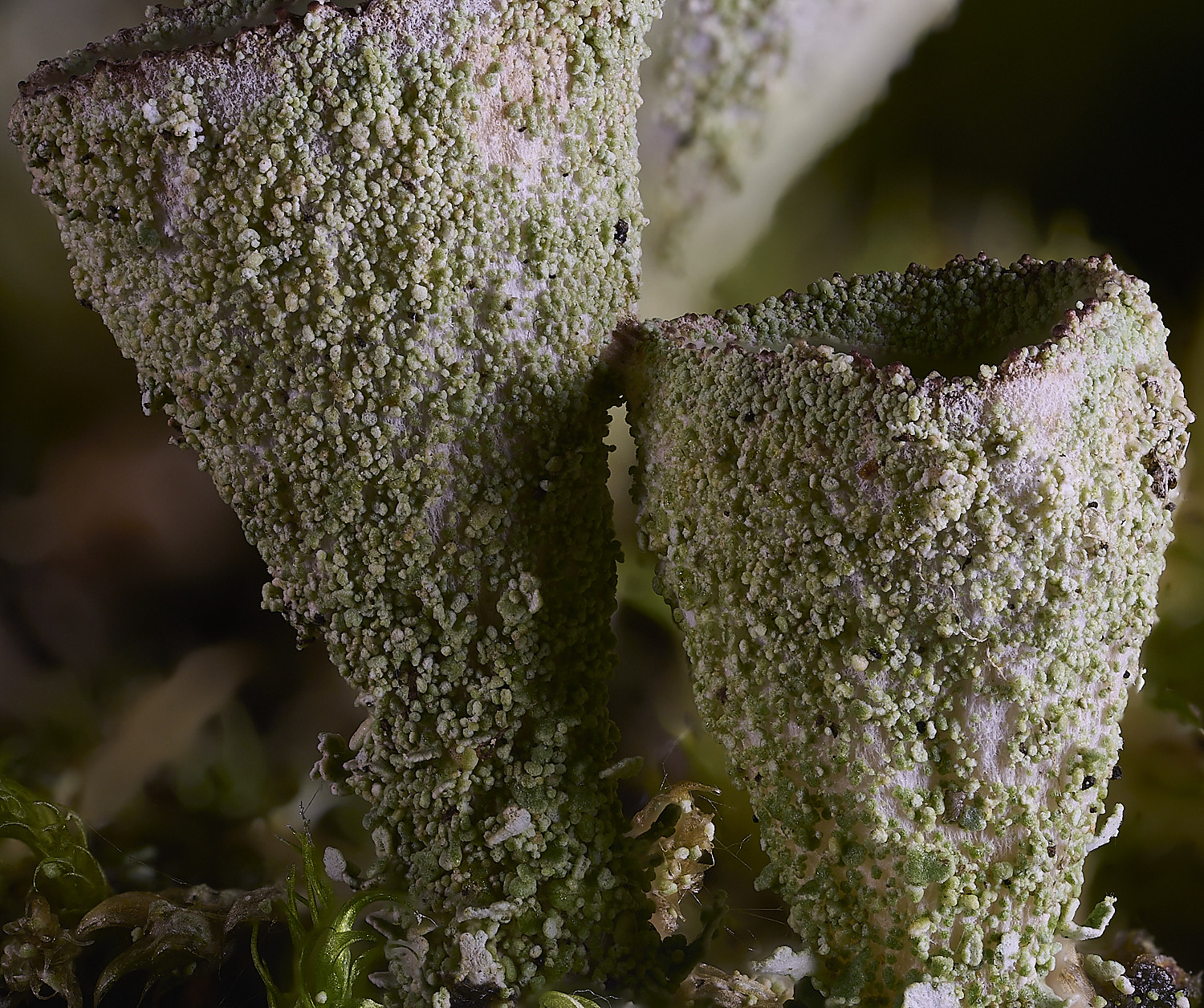
From the Norfolk Recorder
This one showed negative spot tests and UV blue/white thus Cladonia crispata (Although a very small specimen)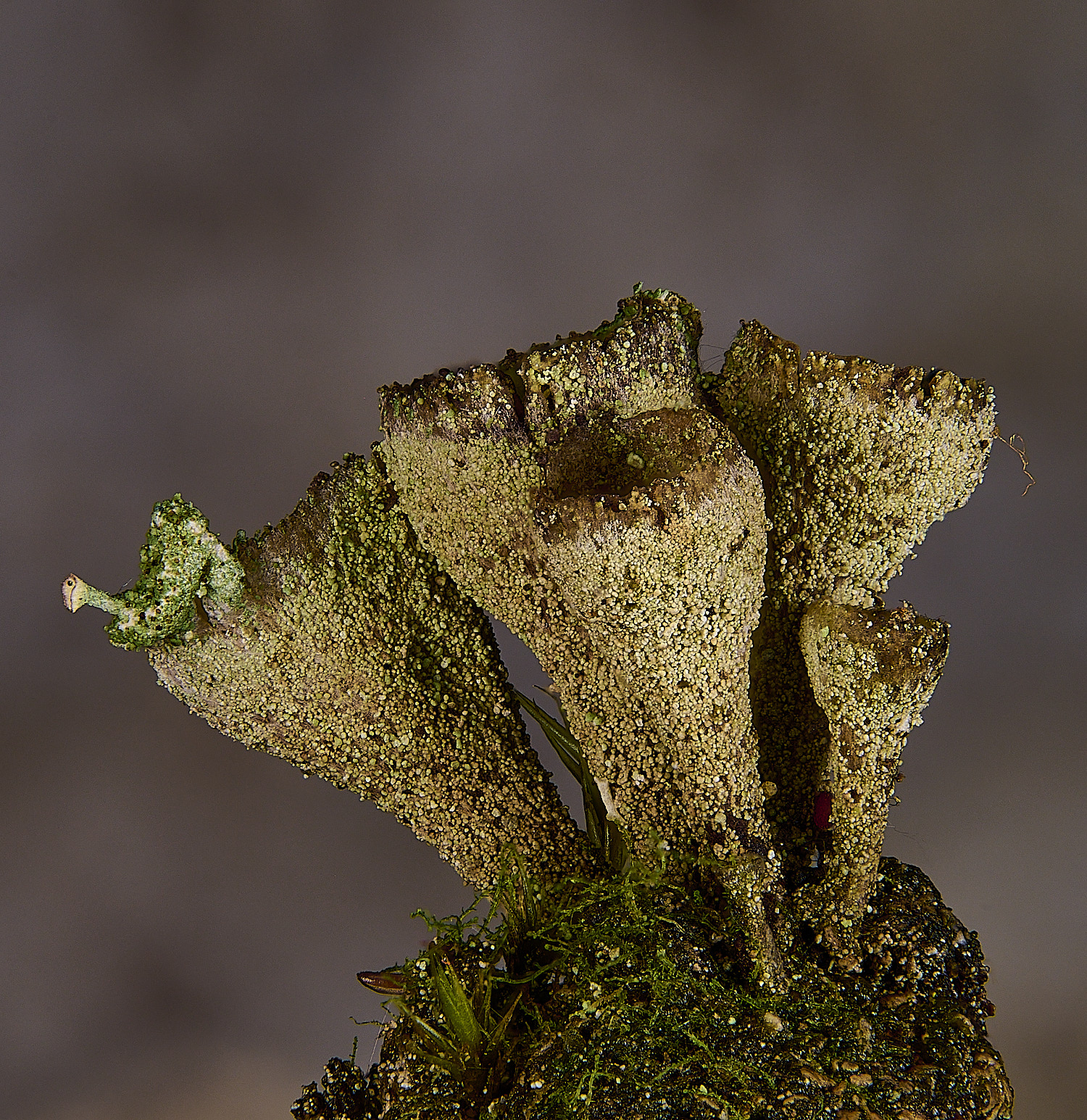
Again from the recorder, despite the brown colour of the cups
the spot tests were P+ red, K-, & UV- so they rest at C chlorophaea s. lat